A recipe that says "a pinch of salt" is either careless or assuming you understand that salt in desserts is not a seasoning — it's a structural and sensory ingredient. The difference between a good chocolate dessert and a great one is often a small amount of salt. The difference between a sweet puddle and a complex flavor is salt making the sweet parts actually taste like something.
How Salt Affects Taste Perception
Salt has a specific role in sweetness. It enhances sweet perception, not by making something sweeter, but by suppressing the bitter and acidic undertones that compete with sweetness. When you taste something very sweet without salt, the sweetness can feel one-dimensional and occasionally cloying. The sugar taste dominates everything else. Add salt, and suddenly the other flavors in the dessert become perceptible. A chocolate cake becomes complex instead of just chocolate-y. A fruit tart becomes bright instead of flat.
This is not salt as seasoning. This is salt as a signal amplifier. Salt ions interact with taste receptors in a way that quiets the background noise, letting sweetness come through clean.
The effect is subtle. A tiny pinch of salt in a large batch of batter makes an obvious difference. The same pinch in a small portion of frosting barely registers. Concentration matters.
How Much Is Enough
This depends on the application. For a cake batter, a quarter teaspoon per twelve servings is usually enough. For a ganache or mousse, slightly more — a quarter teaspoon per two cups. For a caramel, a full teaspoon per cup of finished caramel if you want salted caramel, or a quarter teaspoon if you want salt to simply enhance without being noticeable.
The issue with recipes that say "a pinch" is that a pinch is vague and inconsistent. My pinch is larger than yours. Professional bakers measure salt by weight. If you don't have a scale, measure by volume consistently — a quarter teaspoon, not a vague pinch. Write it down so you can repeat it.
Too much salt in a dessert is immediately obvious and unpleasant — it burns the mouth and overshadows sweetness. This is rare because salt-sweetness balance tips toward under-salting more often than over. But if you ever taste a dessert that feels simultaneously sweet and burnt-tasting, that's salt overdose.
Salt Type Matters More Than People Realize
Not all salt is equal in baking. Table salt is fine crystals with anti-caking agents added. Kosher salt is larger crystals, usually without additives. Sea salt is somewhere in between, depending on which sea salt and how fine it's ground.
These behave differently because crystal size affects how salt dissolves. Table salt dissolves quickly and evenly because the crystals are tiny. A tablespoon of table salt is denser and saltier than a tablespoon of kosher salt because there's more salt per volume. If you're scaling a recipe and it calls for kosher salt but you only have table salt, you can't just use the same volume. Use roughly two-thirds the volume, or use weight if you have a scale.
For desserts, fine sea salt or table salt is preferable to kosher salt because it dissolves more uniformly. You don't want residual crystals in ganache or frosting. If you use fleur de sel or other fancy finishing salts, use them only on top, as a garnish. In the batter or filling, fine salt is better.
Taste salt matters for the final flavor. A high-quality sea salt from a specific region might have mineral notes that improve a chocolate dessert. Table salt is neutral. For a caramel or a finishing touch, the salt source matters. For batter mixed with fifty other ingredients, it doesn't.
Specific Applications
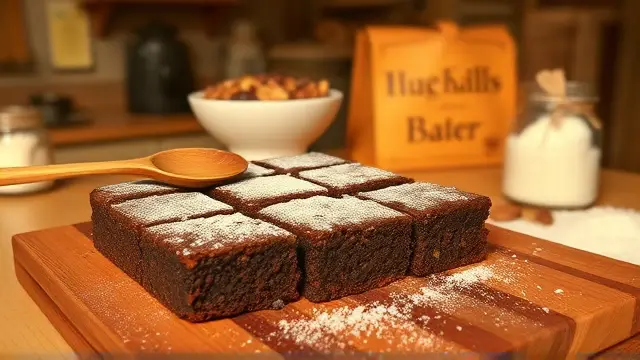
In brownies and chocolate cakes, salt is not optional. Judy's Brownies don't explicitly mention salt, but they should. A quarter teaspoon in dark chocolate brownies makes the chocolate flavor expand. Without it, the brownies taste flat and one-note. Some cooks add salt to the top for visual interest and salt-sweet contrast, but salt in the batter is the real work.
In caramel, salt is structural. Caramel is sugar reduced to the edge of burning, then cooled to a glassy hardness. Salt in caramel prevents large sugar crystals from forming — the salt ions interfere with crystal growth. This keeps the texture smooth instead of grainy. For salted caramel sauce, add salt to the hot caramel. For salted caramel candy, you might add it to the mixture before pouring, or sprinkle it on top as the caramel sets. Either way, the salt isn't just flavor. It's texture.
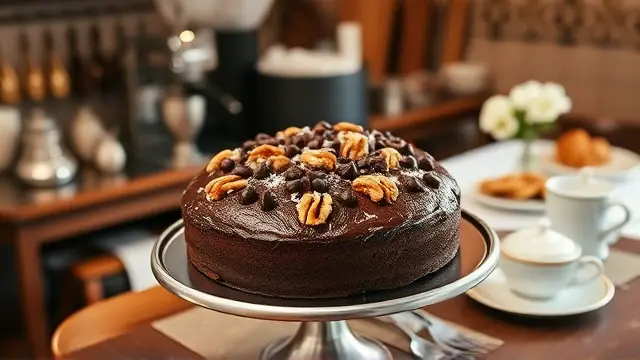
In Chocolate Pudding Cake, salt makes the chocolate flavor readable instead of muddied. A quarter teaspoon in the batter and again in the sauce will make the pudding taste richer without tasting salty.
In cookies, salt in the dough improves the flavor of brown sugar if it's used. Chocolate Chip Cookies are better with salt because it amplifies the sweetness of the chips against the background of the dough. Without salt, the cookies taste like sugar with a grain-flour backdrop. With salt, the different sweetness notes separate and become distinct.
In pastry cream or custards, salt is optional but good. It won't solve a problems if the custard is broken or curdled, but it will make a properly cooked custard taste more like itself.
Salt as a Finishing Element
Fleur de sel or other coarse, mineral-rich salt on top of a dessert is different from salt in the batter. This is salt as a flavor element, not a structural one. A sprinkle of finishing salt on salted caramel, on chocolate mousse, on a dark chocolate dessert creates a salt-sweet contrast that some people find very appealing. It's not essential. It's a choice about texture and flavor interest.
If you use salt as a finish, the grains need to be visible and the flavor needs to be noticeable. This isn't about being subtle. This is about making salt a deliberate part of the eating experience.
The Rule
Salt in desserts is never just a pinch. It's always a measured amount for a specific reason. Either it's enhancing sweetness, it's preventing crystallization, or it's providing a flavor contrast. Know which job it's doing, and use the right amount. "A pinch" is something someone wrote who didn't want to make the decision themselves. Make the decision. Measure the salt. You'll taste the difference.