Norwegian Lefse
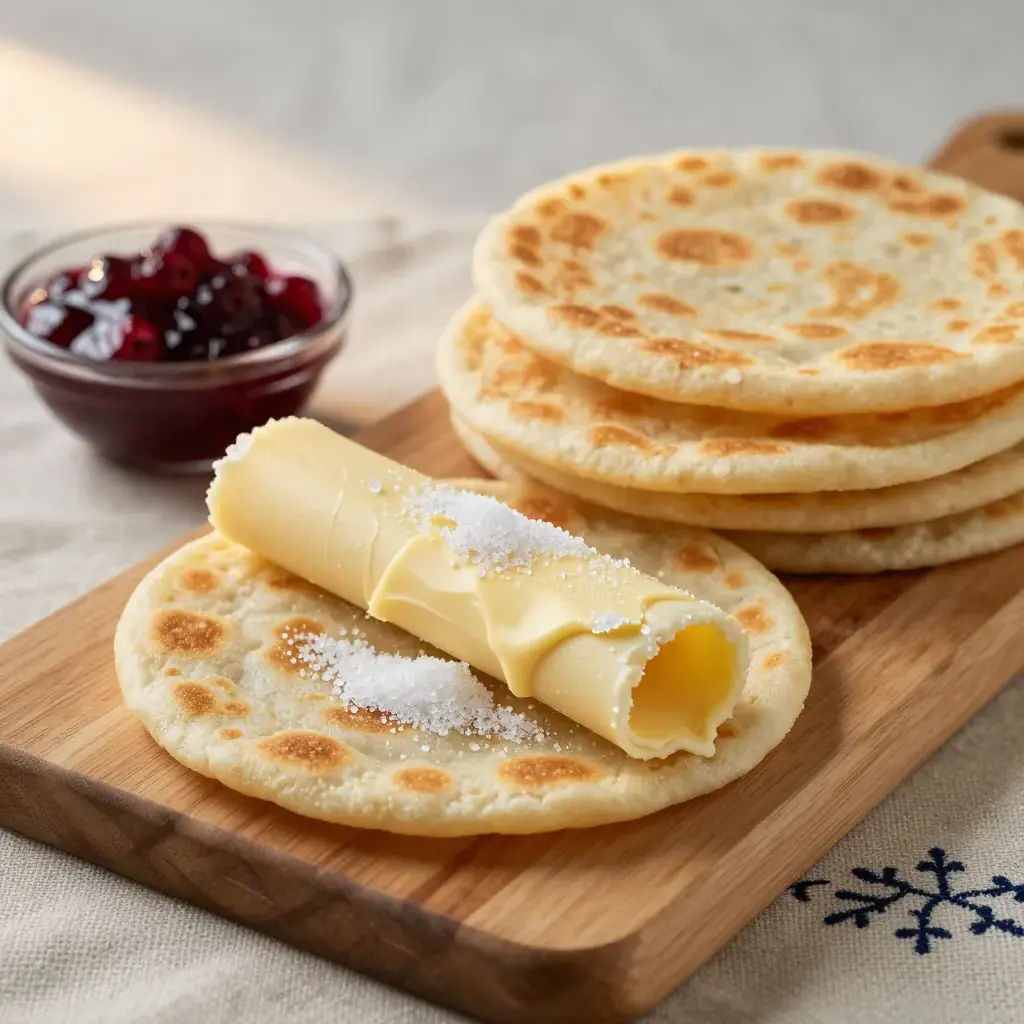
In Minnesota, Wisconsin, and the Dakotas, lefse is not just a food — it is a cultural identity marker for communities of Norwegian descent. This soft, griddle-cooked potato flatbread is made every November and December in what can only be described as a seasonal ritual, with specialized tools (a grooved rolling pin, a long wooden lefse stick) passed down through generations. Traditionally spread with butter and white sugar, or lingonberry jam, it is the Scandinavian-American Midwest at its most elemental.
Serves: 12 (makes about 12 rounds)
Ingredients
- 900g (2 lbs) Russet potatoes, peeled and cut into even chunks
- 60g (¼ cup / ½ stick) unsalted butter, cold, cut into pieces
- 60ml (¼ cup) heavy cream
- 1 tsp fine salt
- 1 tsp granulated sugar
- 210-240g (1¾-2 cups) all-purpose flour, plus more for rolling
To serve:
- Softened butter
- White sugar or brown sugar
- Lingonberry jam (optional)
Instructions
- Boil potatoes in well-salted water until completely tender, 18-20 minutes. Drain thoroughly and return to the pot over low heat for 2-3 minutes, stirring, to evaporate all surface moisture — dry potatoes are essential.
- Pass hot potatoes through a potato ricer or food mill into a large bowl. Do NOT use a mixer (it creates gluey potatoes). Add cold butter pieces and stir until melted, then mix in cream, salt, and sugar.
- Spread potato mixture onto a baking sheet in an even layer and refrigerate uncovered until completely cold, at least 2 hours or overnight. The dough must be cold to roll.
- Work in flour, starting with 210g (1¾ cups), kneading gently until a soft, pliable dough forms. It should not be sticky. Add more flour a tablespoon at a time as needed.
- Divide dough into 12 equal balls (about 70g / 2.5 oz each). Keep covered with a clean towel.
- Heat a dry griddle or large cast iron skillet over medium-high heat — no oil. The surface should be very hot.
- On a well-floured board, roll one ball as thin as possible — about 3mm (⅛ inch) or thinner, into a rough circle about 25-28cm (10-11 inches) across. Use a lefse stick or a thin spatula to transfer carefully to the dry griddle.
- Cook 45-60 seconds per side until light brown spots appear across the surface. Transfer to a clean towel and cover immediately to keep soft.
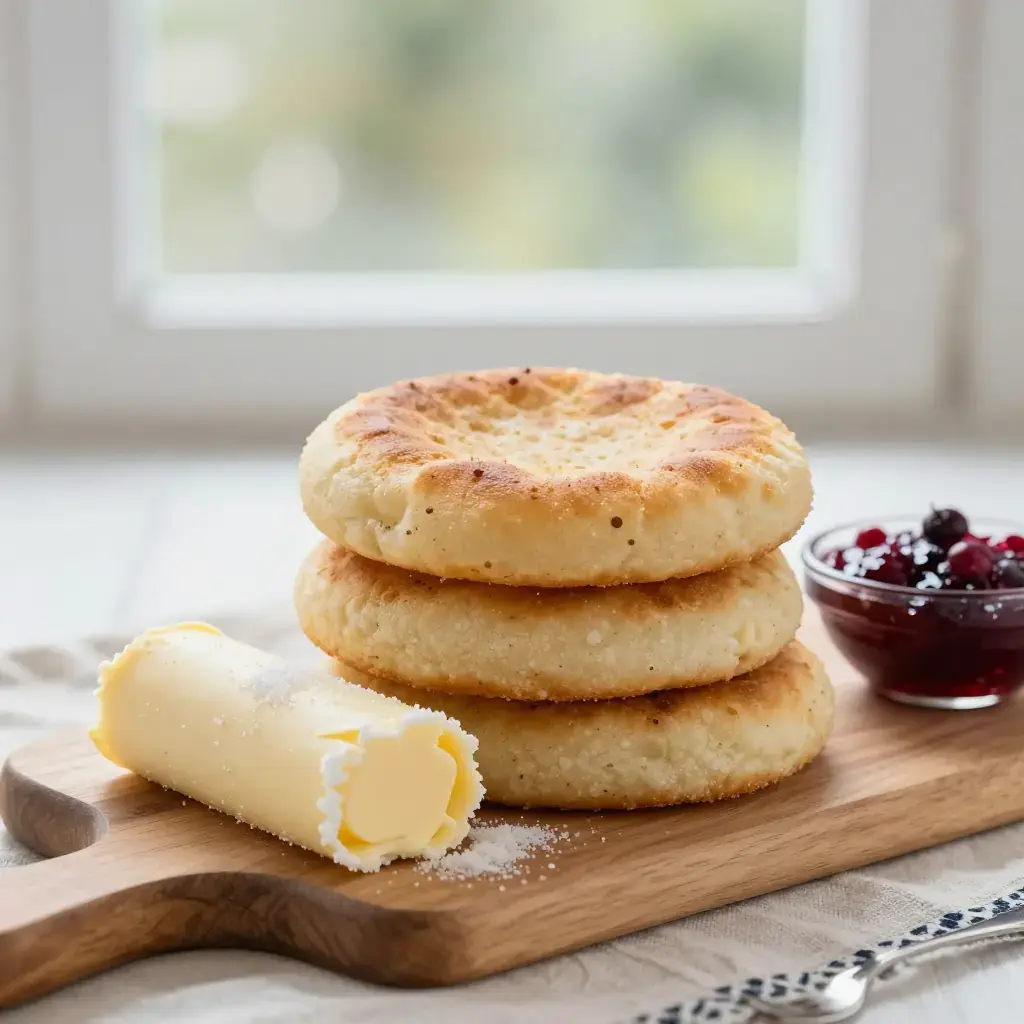
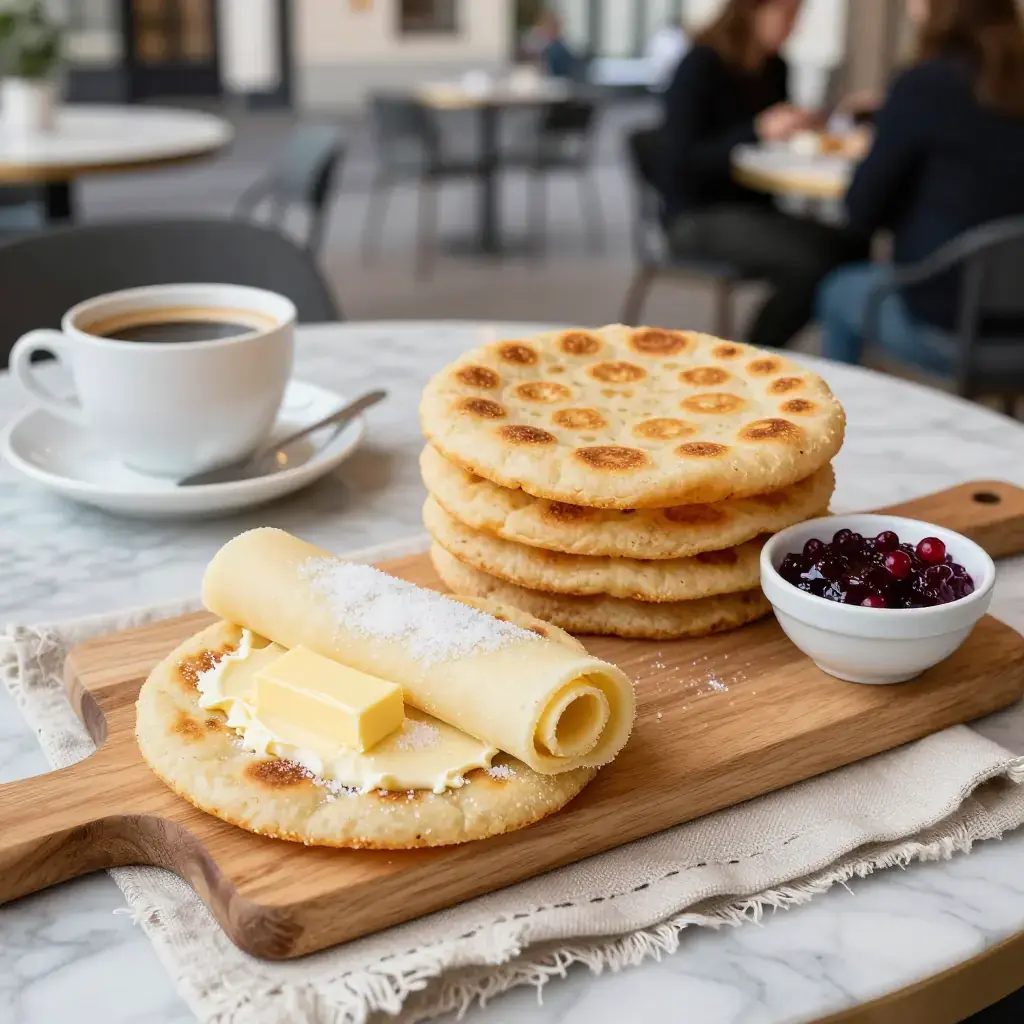
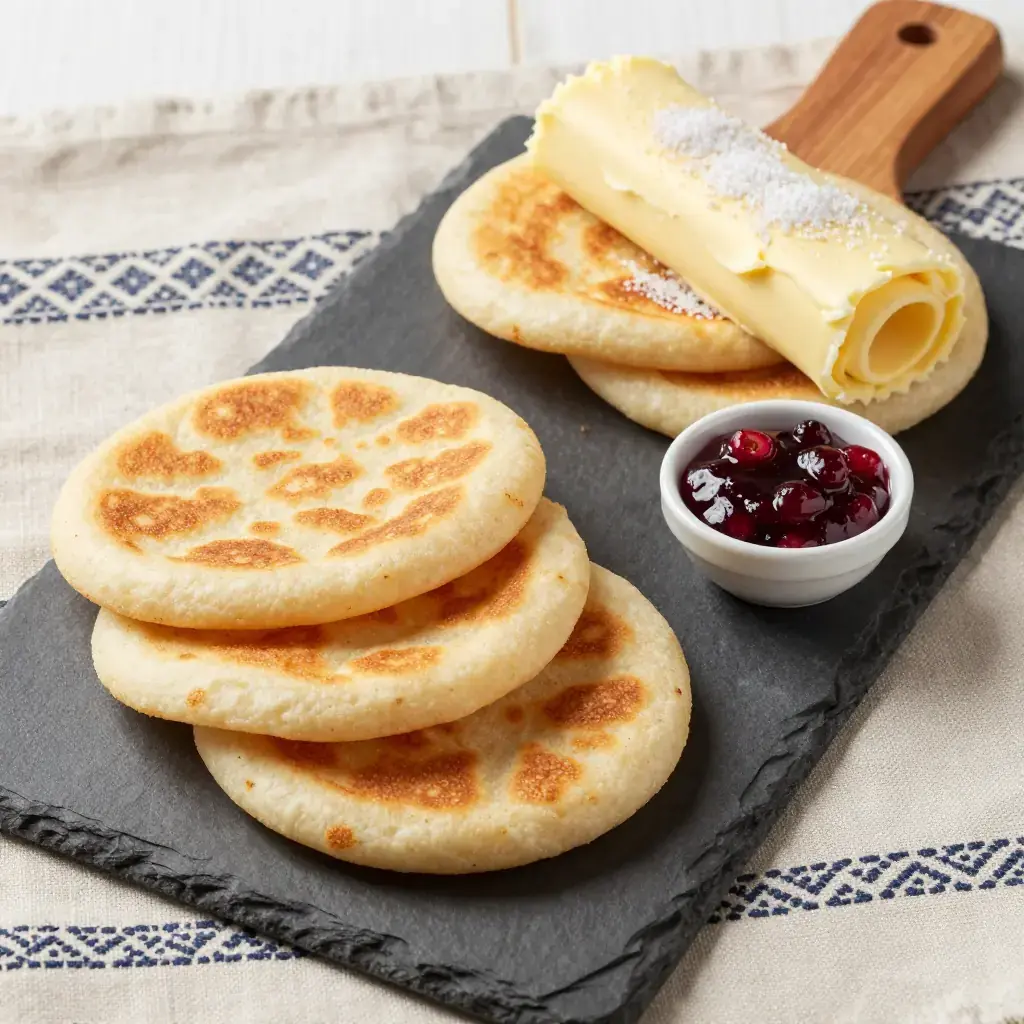
- Serve warm spread with softened butter and a dusting of white sugar, then rolled or folded. Lefse can also be made ahead and reheated briefly in a damp cloth in the microwave.
Cook's Notes: The dough must be cold — many Midwest cooks refrigerate overnight before rolling. Work quickly and keep unrolled balls covered to prevent drying. Lefse freezes well; stack between sheets of wax paper and seal in a zip-lock bag for up to 3 months.
All Revisions
generated
# Norwegian Lefse In Minnesota, Wisconsin, and the Dakotas, lefse is not just a food — it is a cultural identity marker for communities of Norwegian descent. This soft, griddle-cooked potato flatbread is made every November and December in what can only be described as a seasonal ritual, with specialized tools (a grooved rolling pin, a long wooden lefse stick) passed down through generations. Traditionally spread with butter and white sugar, or lingonberry jam, it is the Scandinavian-American Midwest at its most elemental. Serves: 12 (makes about 12 rounds) ## Ingredients - 900g (2 lbs) Russet potatoes, peeled and cut into even chunks - 60g (¼ cup / ½ stick) unsalted butter, cold, cut into pieces - 60ml (¼ cup) heavy cream - 1 tsp fine salt - 1 tsp granulated sugar - 210-240g (1¾-2 cups) all-purpose flour, plus more for rolling **To serve:** - Softened butter - White sugar or brown sugar - Lingonberry jam (optional) ## Instructions 1. Boil potatoes in well-salted water until completely tender, 18-20 minutes. Drain thoroughly and return to the pot over low heat for 2-3 minutes, stirring, to evaporate all surface moisture — dry potatoes are essential. 2. Pass hot potatoes through a potato ricer or food mill into a large bowl. Do NOT use a mixer (it creates gluey potatoes). Add cold butter pieces and stir until melted, then mix in cream, salt, and sugar. 3. Spread potato mixture onto a baking sheet in an even layer and refrigerate uncovered until completely cold, at least 2 hours or overnight. The dough must be cold to roll. 4. Work in flour, starting with 210g (1¾ cups), kneading gently until a soft, pliable dough forms. It should not be sticky. Add more flour a tablespoon at a time as needed. 5. Divide dough into 12 equal balls (about 70g / 2.5 oz each). Keep covered with a clean towel. 6. Heat a dry griddle or large cast iron skillet over medium-high heat — no oil. The surface should be very hot. 7. On a well-floured board, roll one ball as thin as possible — about 3mm (⅛ inch) or thinner, into a rough circle about 25-28cm (10-11 inches) across. Use a lefse stick or a thin spatula to transfer carefully to the dry griddle. 8. Cook 45-60 seconds per side until light brown spots appear across the surface. Transfer to a clean towel and cover immediately to keep soft. 9. Serve warm spread with softened butter and a dusting of white sugar, then rolled or folded. Lefse can also be made ahead and reheated briefly in a damp cloth in the microwave. **Cook's Notes:** The dough must be cold — many Midwest cooks refrigerate overnight before rolling. Work quickly and keep unrolled balls covered to prevent drying. Lefse freezes well; stack between sheets of wax paper and seal in a zip-lock bag for up to 3 months.Images

Tags
- american-midwest
- breakfast
- comfort-food
- heirloom
- historical
- vegetarian
- weekend-project