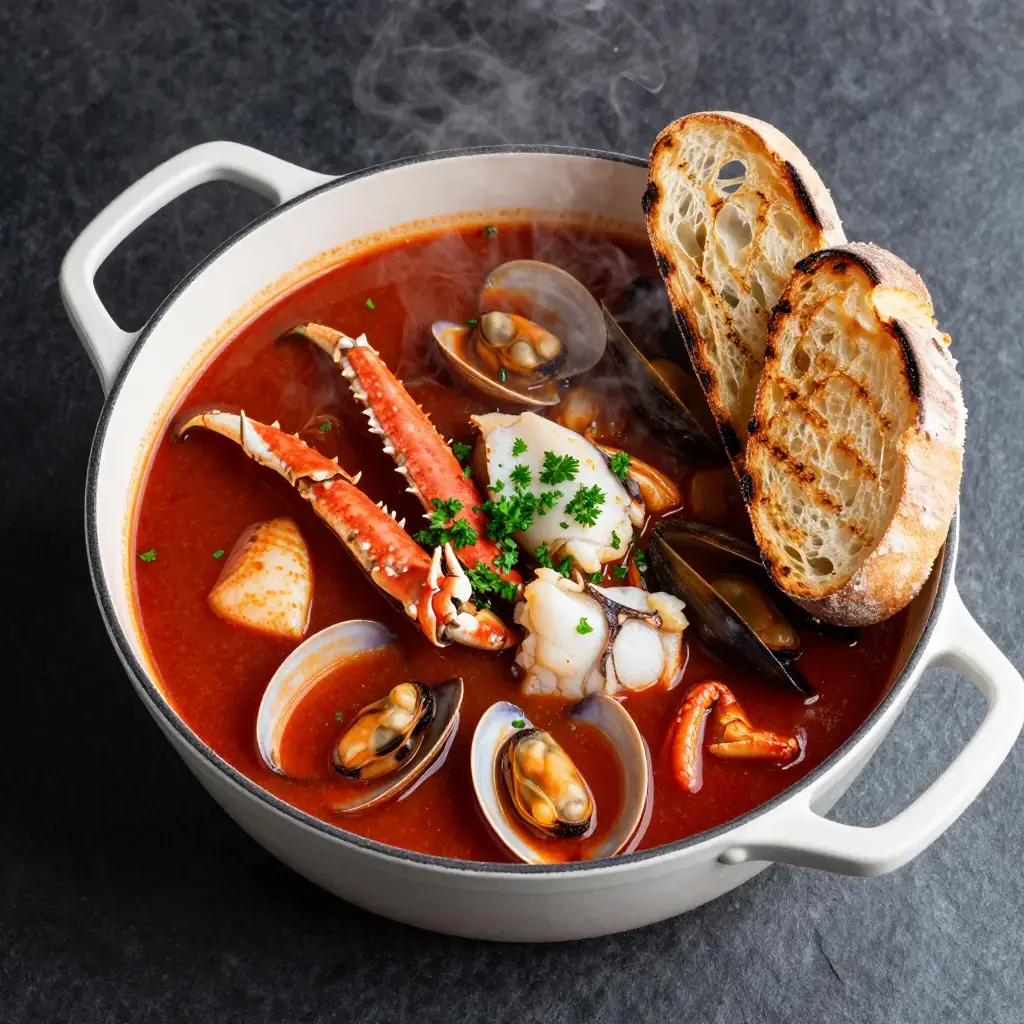
Dungeness Crab Cioppino
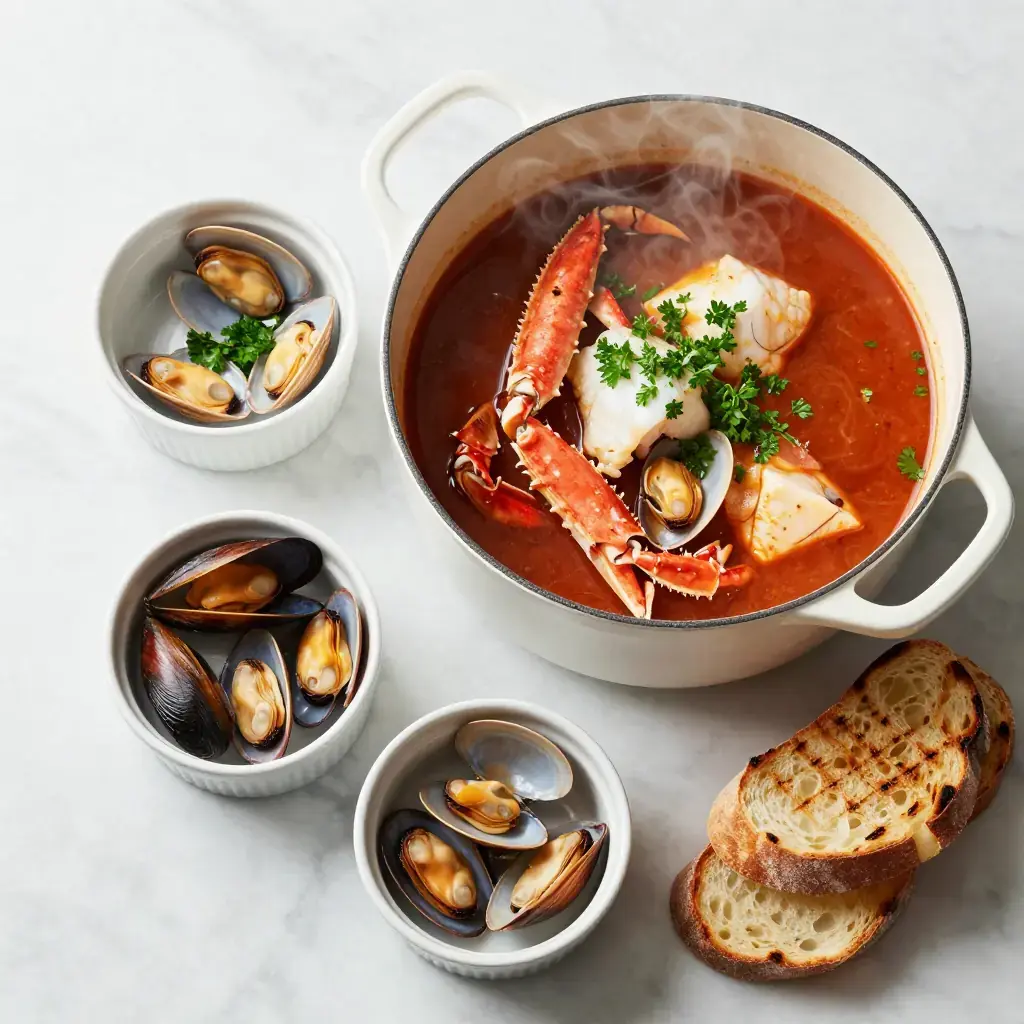
Cioppino was born on the San Francisco waterfront but belongs to the entire Pacific Northwest coast, where Dungeness crab season turns this fisherman's stew into a winter ritual. The name likely comes from the Ligurian dialect word for "to chop," and the dish has been claimed by every crab boat from Bodega Bay to the Strait of Juan de Fuca.
Serves: 4
Ingredients
- 2 whole Dungeness crabs (about 1.4 kg / 3 lbs total), cleaned and cracked
- 450g (1 lb) clams, scrubbed
- 450g (1 lb) mussels, debearded
- 450g (1 lb) firm white fish (lingcod or halibut), cut into 5cm (2 in) chunks
- 3 tbsp (45ml) olive oil
- 1 large yellow onion, diced
- 1 fennel bulb, thinly sliced, fronds reserved
- 6 garlic cloves, minced
- 2 tsp (4g) crushed red pepper flakes
- 1 cup (240ml) dry white wine
- 800g (28 oz) canned crushed San Marzano tomatoes
- 480ml (2 cups) fish or clam stock
- 2 tbsp (30g) tomato paste
- 1 tsp (2g) dried oregano
- Salt and black pepper to taste
- Large handful fresh flat-leaf parsley, roughly chopped
- Sourdough bread, thickly sliced, for serving
Instructions
- Heat olive oil in a large Dutch oven over medium heat. Add onion and fennel and cook, stirring occasionally, until softened and lightly golden, about 10 minutes.
- Add garlic and red pepper flakes and cook until fragrant, about 1 minute.
- Pour in white wine and let it reduce by half, about 3 minutes.
- Stir in tomatoes, fish stock, tomato paste, and oregano. Season with salt and pepper. Bring to a gentle boil, then reduce heat and simmer uncovered for 20 minutes to develop flavor.
- Add the cracked crab pieces to the pot, nestling them into the broth. Cover and cook 5 minutes.
- Add clams, cover and cook 3 minutes. Add mussels, cover and cook until both open, 4-5 minutes more. Discard any that remain closed.
- Gently fold in the fish chunks. Cook uncovered until just opaque, 3-4 minutes.
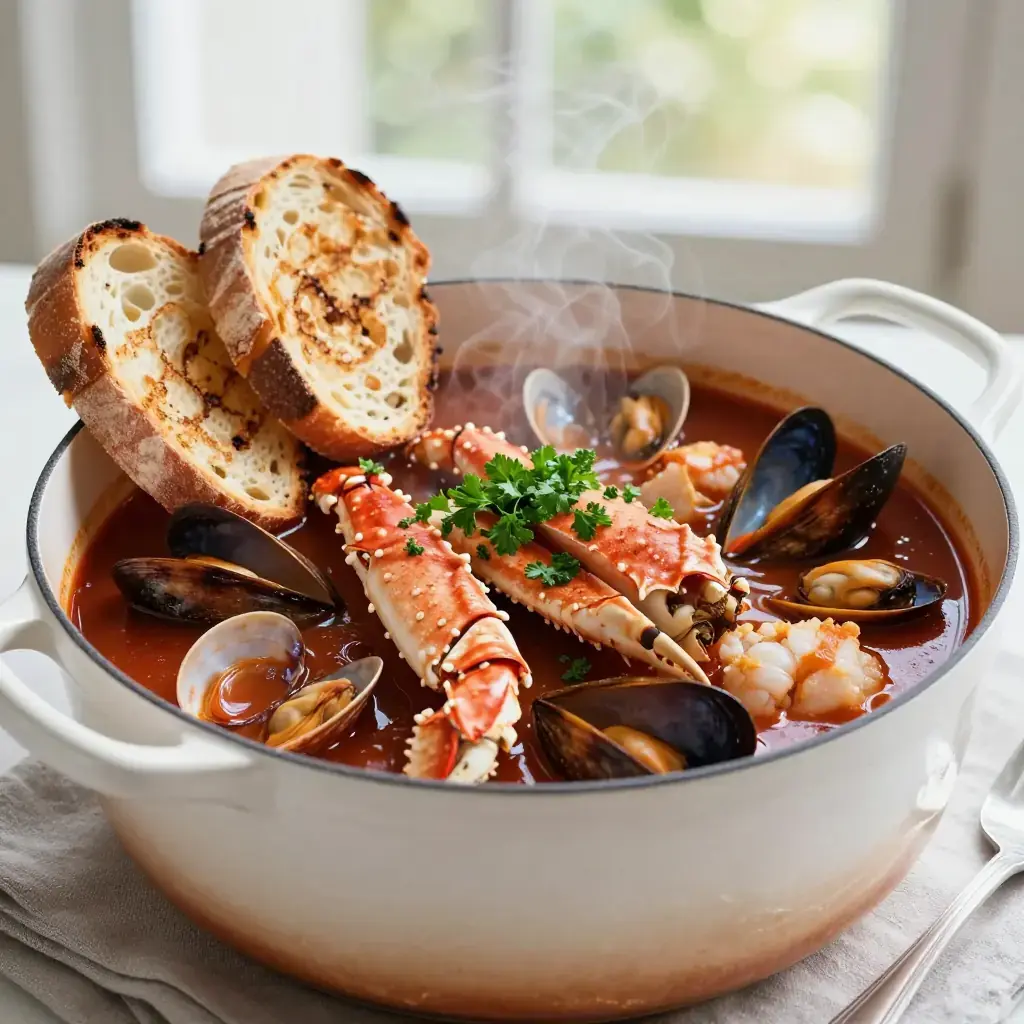
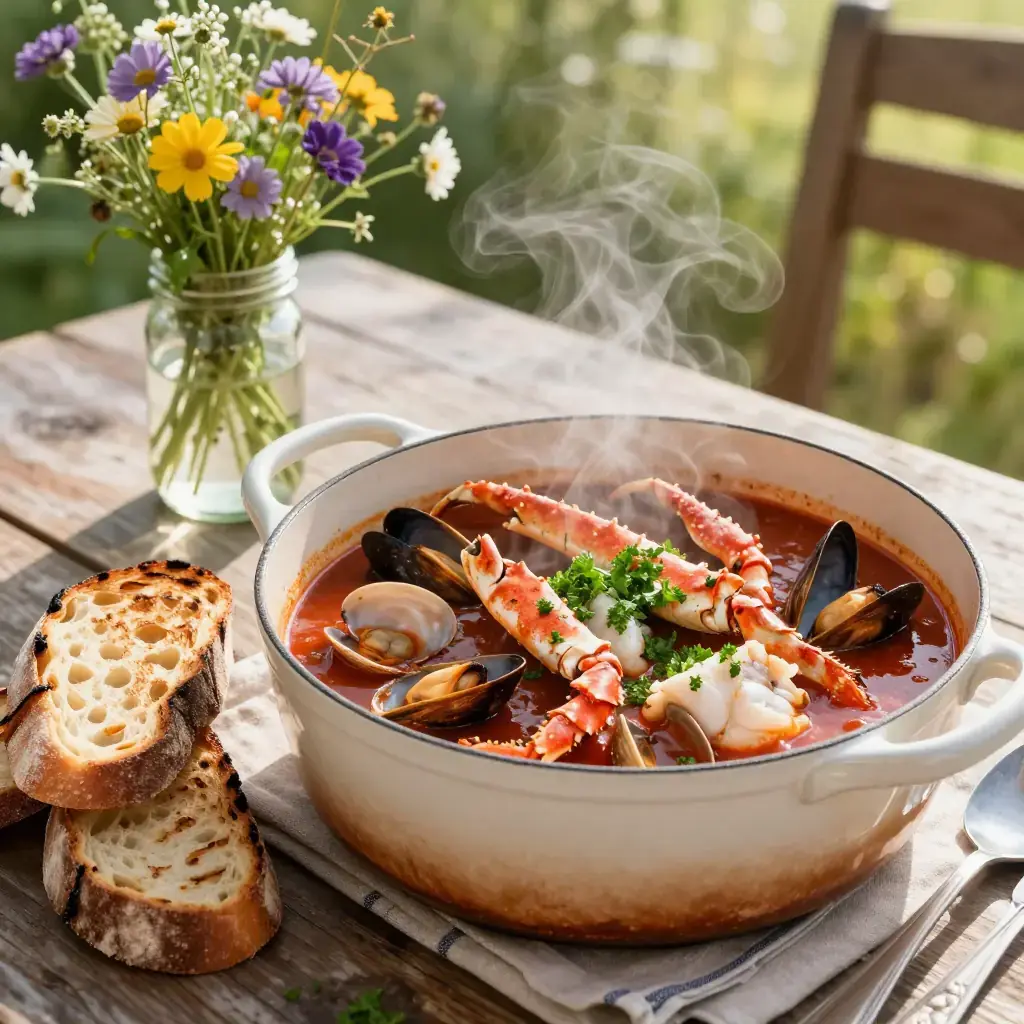
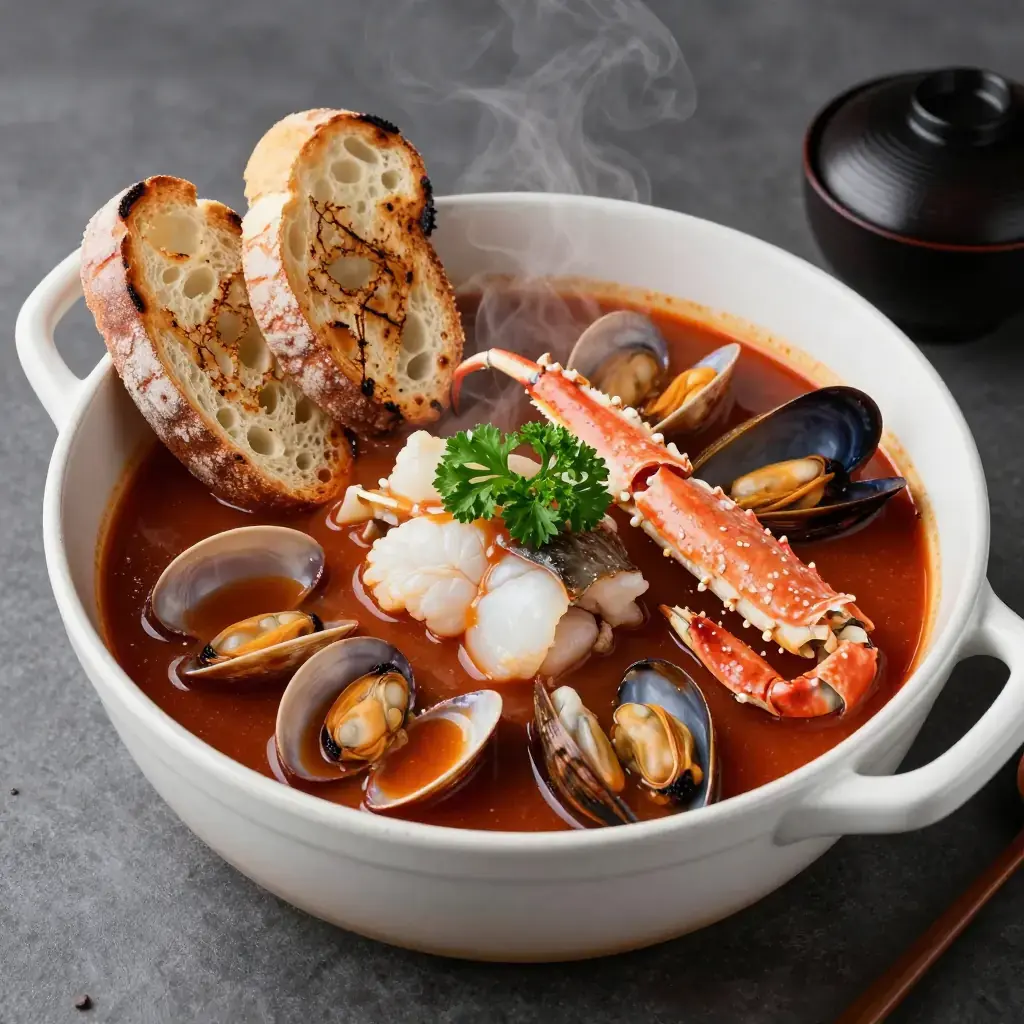
- Ladle into deep bowls, scatter parsley and fennel fronds over top, and serve immediately with grilled sourdough for dunking.
Cook's Notes: Ask your fishmonger to clean and crack the crabs to save time. The base can be made a day ahead through step 4 — this actually improves the flavor. For extra depth, add a Parmesan rind to the simmering broth.
All Revisions
generated
# Dungeness Crab Cioppino Cioppino was born on the San Francisco waterfront but belongs to the entire Pacific Northwest coast, where Dungeness crab season turns this fisherman's stew into a winter ritual. The name likely comes from the Ligurian dialect word for "to chop," and the dish has been claimed by every crab boat from Bodega Bay to the Strait of Juan de Fuca. Serves: 4 ## Ingredients - 2 whole Dungeness crabs (about 1.4 kg / 3 lbs total), cleaned and cracked - 450g (1 lb) clams, scrubbed - 450g (1 lb) mussels, debearded - 450g (1 lb) firm white fish (lingcod or halibut), cut into 5cm (2 in) chunks - 3 tbsp (45ml) olive oil - 1 large yellow onion, diced - 1 fennel bulb, thinly sliced, fronds reserved - 6 garlic cloves, minced - 2 tsp (4g) crushed red pepper flakes - 1 cup (240ml) dry white wine - 800g (28 oz) canned crushed San Marzano tomatoes - 480ml (2 cups) fish or clam stock - 2 tbsp (30g) tomato paste - 1 tsp (2g) dried oregano - Salt and black pepper to taste - Large handful fresh flat-leaf parsley, roughly chopped - Sourdough bread, thickly sliced, for serving ## Instructions 1. Heat olive oil in a large Dutch oven over medium heat. Add onion and fennel and cook, stirring occasionally, until softened and lightly golden, about 10 minutes. 2. Add garlic and red pepper flakes and cook until fragrant, about 1 minute. 3. Pour in white wine and let it reduce by half, about 3 minutes. 4. Stir in tomatoes, fish stock, tomato paste, and oregano. Season with salt and pepper. Bring to a gentle boil, then reduce heat and simmer uncovered for 20 minutes to develop flavor. 5. Add the cracked crab pieces to the pot, nestling them into the broth. Cover and cook 5 minutes. 6. Add clams, cover and cook 3 minutes. Add mussels, cover and cook until both open, 4-5 minutes more. Discard any that remain closed. 7. Gently fold in the fish chunks. Cook uncovered until just opaque, 3-4 minutes. 8. Ladle into deep bowls, scatter parsley and fennel fronds over top, and serve immediately with grilled sourdough for dunking. **Cook's Notes:** Ask your fishmonger to clean and crack the crabs to save time. The base can be made a day ahead through step 4 — this actually improves the flavor. For extra depth, add a Parmesan rind to the simmering broth.Images
Tags
- american-pacific-nw
- authentic
- dinner-party
- hot-soup
- one-pot
- seafood
- winter