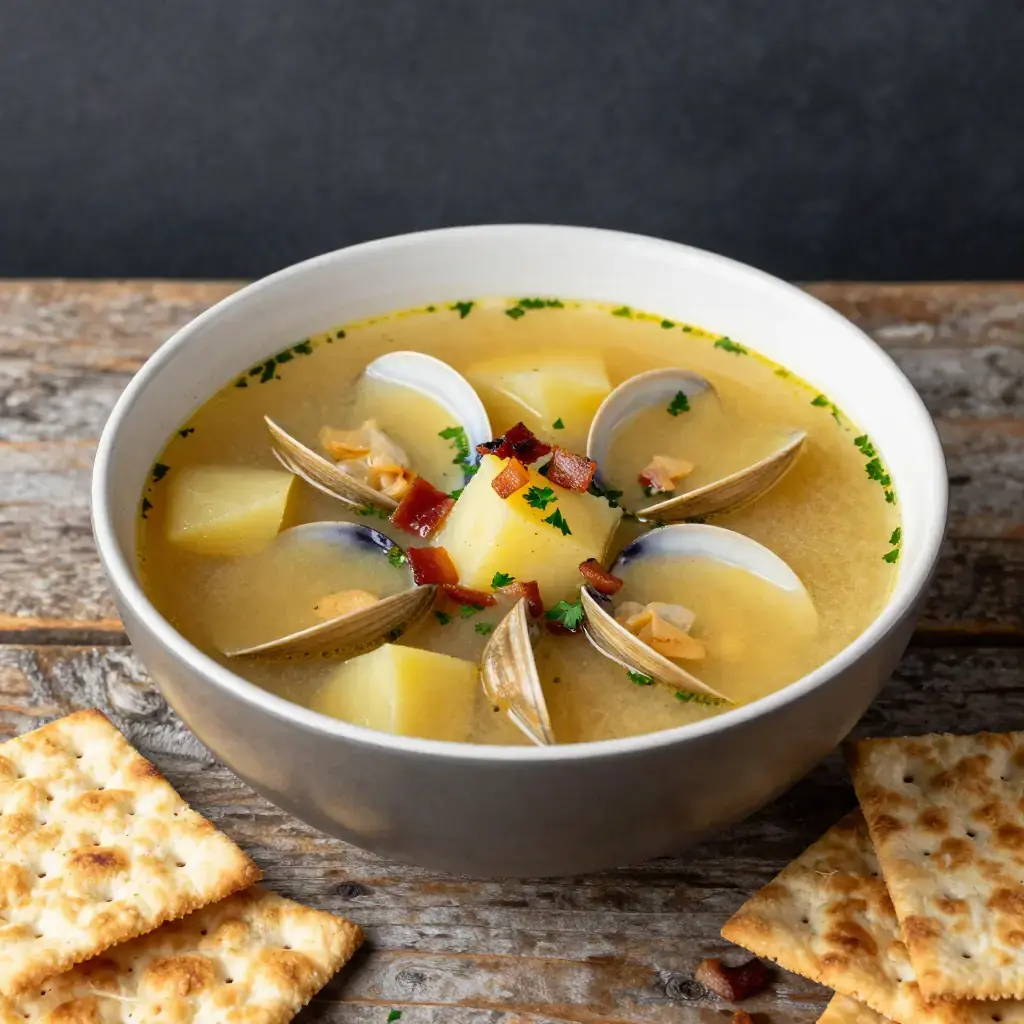
Rhode Island Clear Clam Chowder
While New England is famous for its cream-based chowder, Rhode Island's indigenous clear broth version is older still — a clean, briny bowl that lets the clams speak for themselves, rooted in the fishing communities of Narragansett Bay.
Serves: 4
Ingredients
- 2 dozen littleneck clams (about 1.4 kg / 3 lb), scrubbed
- 240ml (1 cup) dry white wine
- 4 strips thick-cut bacon, diced
- 1 large onion, finely diced
- 3 stalks celery, diced
- 3 medium Yukon Gold potatoes (about 600g / 1.3 lb), cut into 1.5cm (½ inch) cubes
- 720ml (3 cups) clam juice (reserved from steaming plus bottled)
- 2 sprigs fresh thyme
- 1 bay leaf
- 2 tbsp (30ml) unsalted butter
- Salt and freshly ground black pepper
- 2 tbsp fresh flat-leaf parsley, chopped
Instructions
-
Steam the clams: Bring wine and 240ml (1 cup) water to a boil in a large pot over high heat. Add clams, cover, and steam 6–8 minutes until all shells open. Discard any that don't open. Remove clams, strain the broth through a fine mesh sieve lined with cheesecloth, and reserve. Once cool enough to handle, shuck clam meat from shells and roughly chop if large.
-
In the same pot over medium heat, cook bacon until crisp and fat is rendered, about 6 minutes. Remove bacon with a slotted spoon and set aside. Pour off all but 1 tbsp of fat.
-
Add onion and celery to the pot and cook over medium heat until softened, about 5 minutes. Do not brown.
-
Add potatoes, reserved clam broth, and enough bottled clam juice to reach 1 litre (4 cups) total liquid. Add thyme sprigs and bay leaf. Bring to a boil, then reduce to a simmer and cook until potatoes are just tender, 12–15 minutes.
-
Stir in clam meat and butter. Simmer gently for 2 minutes — do not boil or clams will toughen. Taste and season with salt and pepper. Remove thyme and bay leaf.
-
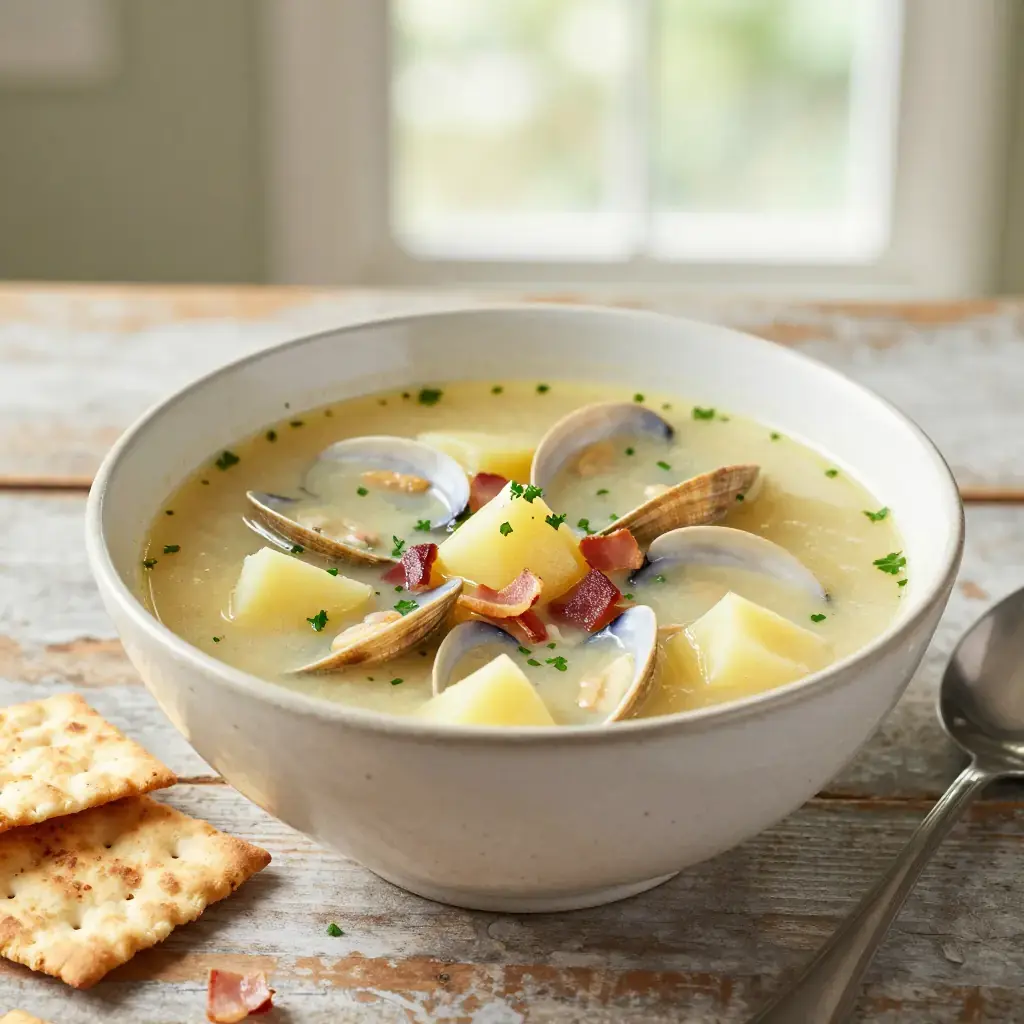
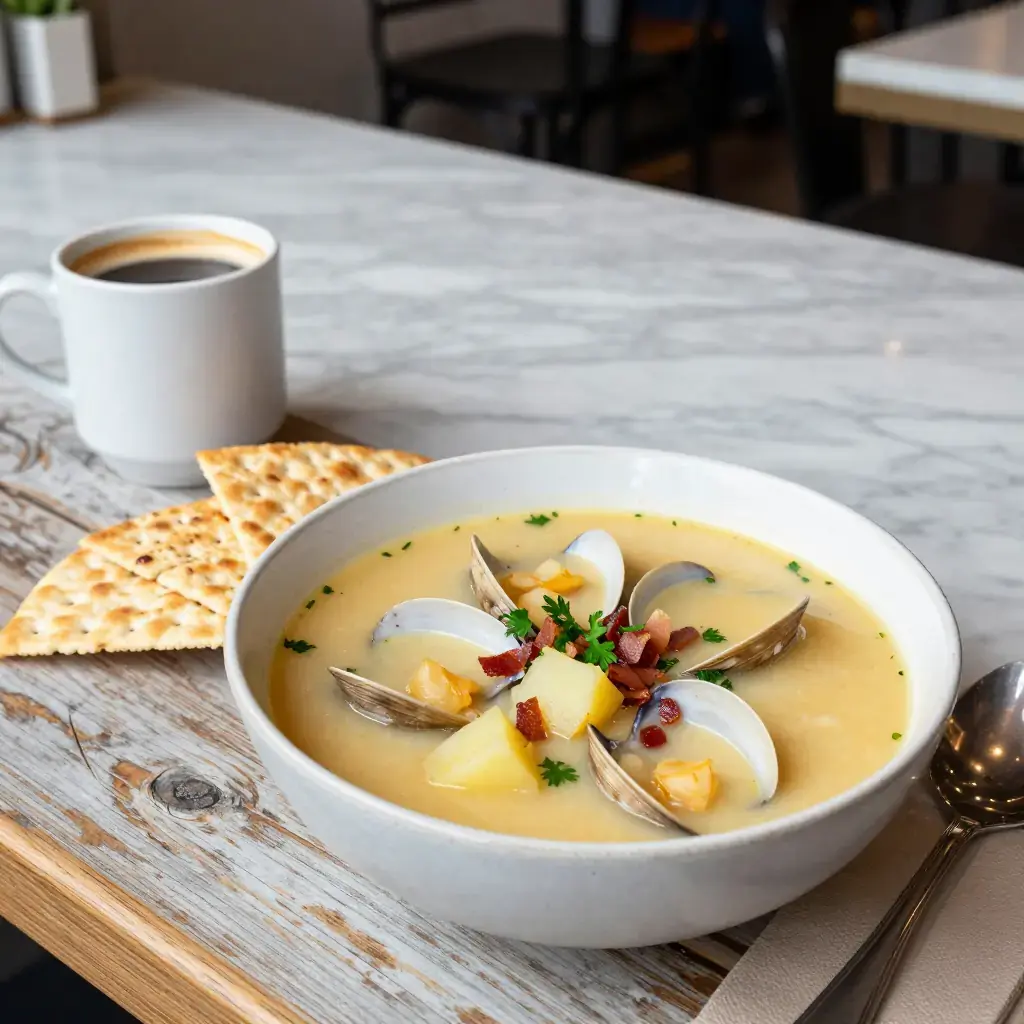
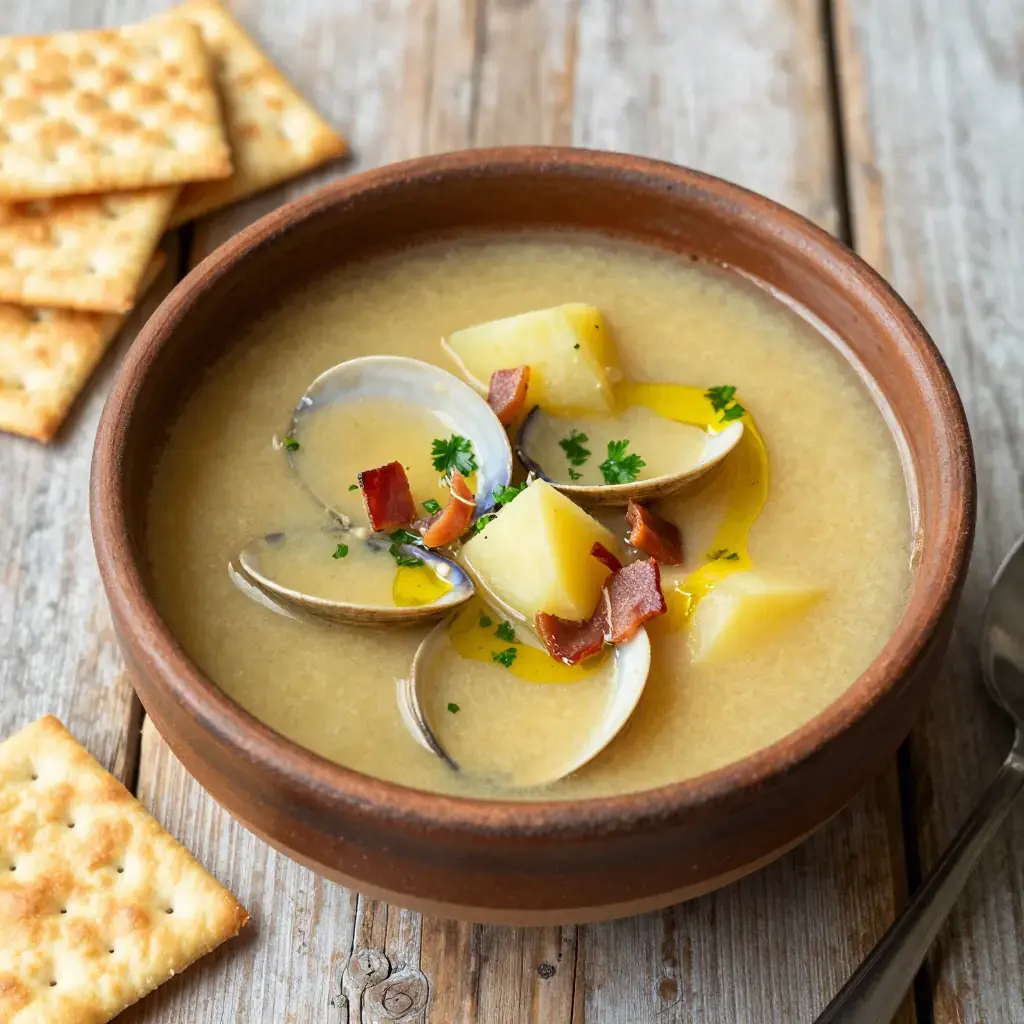
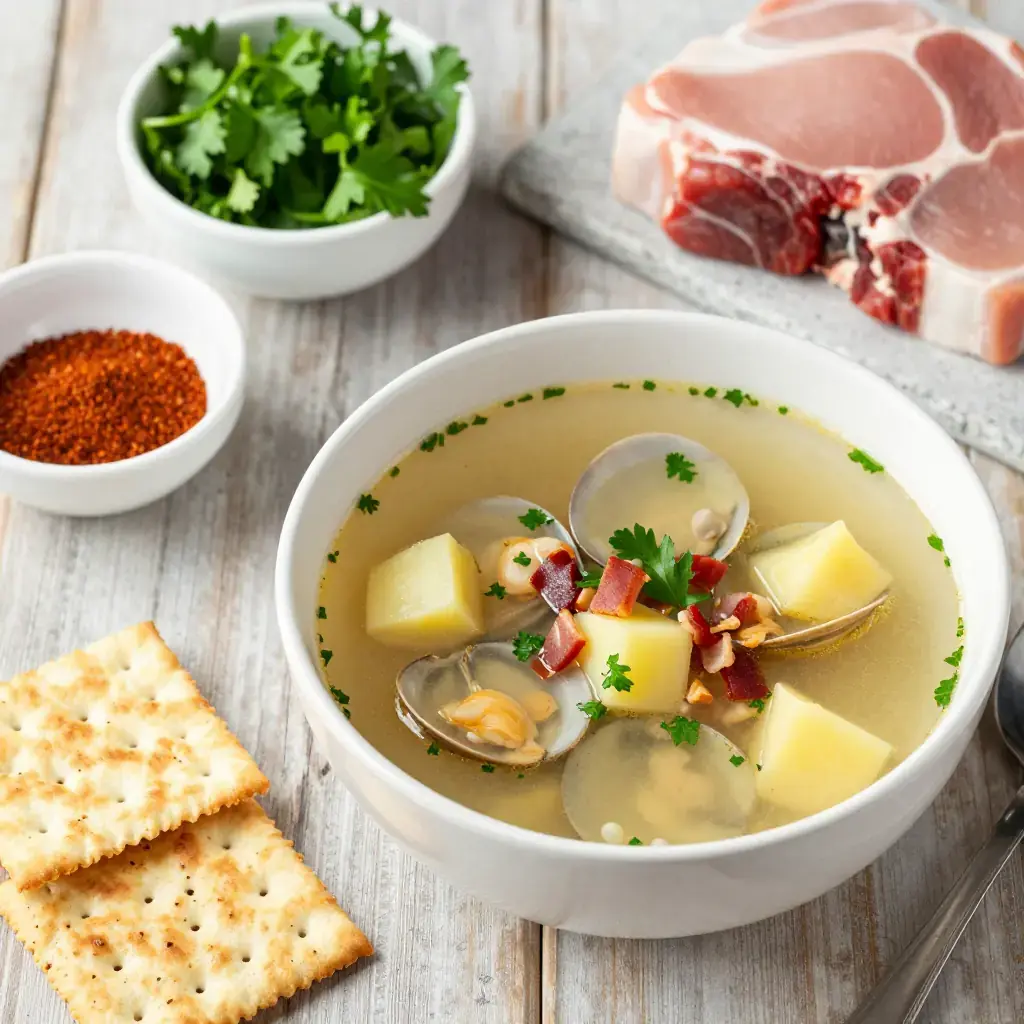
Ladle into bowls, garnish with reserved bacon crumbles and fresh parsley. Serve with oyster crackers.
Cook's Notes: The clear broth tradition reflects the Italian and Portuguese fishing communities of Rhode Island who favored lighter broths over cream. Use the freshest littlenecks you can find — the quality of the clams is everything in this dish. Bottled clam juice brands vary widely in saltiness; taste before adding any additional salt.
All Revisions
generated
# Rhode Island Clear Clam Chowder While New England is famous for its cream-based chowder, Rhode Island's indigenous clear broth version is older still — a clean, briny bowl that lets the clams speak for themselves, rooted in the fishing communities of Narragansett Bay. Serves: 4 ## Ingredients - 2 dozen littleneck clams (about 1.4 kg / 3 lb), scrubbed - 240ml (1 cup) dry white wine - 4 strips thick-cut bacon, diced - 1 large onion, finely diced - 3 stalks celery, diced - 3 medium Yukon Gold potatoes (about 600g / 1.3 lb), cut into 1.5cm (½ inch) cubes - 720ml (3 cups) clam juice (reserved from steaming plus bottled) - 2 sprigs fresh thyme - 1 bay leaf - 2 tbsp (30ml) unsalted butter - Salt and freshly ground black pepper - 2 tbsp fresh flat-leaf parsley, chopped ## Instructions 1. Steam the clams: Bring wine and 240ml (1 cup) water to a boil in a large pot over high heat. Add clams, cover, and steam 6–8 minutes until all shells open. Discard any that don't open. Remove clams, strain the broth through a fine mesh sieve lined with cheesecloth, and reserve. Once cool enough to handle, shuck clam meat from shells and roughly chop if large. 2. In the same pot over medium heat, cook bacon until crisp and fat is rendered, about 6 minutes. Remove bacon with a slotted spoon and set aside. Pour off all but 1 tbsp of fat. 3. Add onion and celery to the pot and cook over medium heat until softened, about 5 minutes. Do not brown. 4. Add potatoes, reserved clam broth, and enough bottled clam juice to reach 1 litre (4 cups) total liquid. Add thyme sprigs and bay leaf. Bring to a boil, then reduce to a simmer and cook until potatoes are just tender, 12–15 minutes. 5. Stir in clam meat and butter. Simmer gently for 2 minutes — do not boil or clams will toughen. Taste and season with salt and pepper. Remove thyme and bay leaf. 6. Ladle into bowls, garnish with reserved bacon crumbles and fresh parsley. Serve with oyster crackers. **Cook's Notes:** The clear broth tradition reflects the Italian and Portuguese fishing communities of Rhode Island who favored lighter broths over cream. Use the freshest littlenecks you can find — the quality of the clams is everything in this dish. Bottled clam juice brands vary widely in saltiness; taste before adding any additional salt.Images
Tags
- american-new-england
- authentic
- comfort-food
- dinner
- heirloom
- hot-soup
- one-pot
- seafood