If using a charcoal grill: pile coals on one side, create a cool side opposite. Place a drip pan on the cool side filled with water.
Soak hardwood chunks in water for at least 30 minutes.
Bring the grill to your target temperature and hold it steady.
Preparation
Remove the brisket from the cooler 30 minutes before cooking.
Trim excess fat from the fat cap, leaving about ¼-inch layer for flavor and protection.
Apply a dry rub: combine salt, pepper, and optional garlic and onion powder. Rub all over the meat, paying attention to edges and crevices.
Place soaked wood chunks directly on hot coals (if using charcoal) or in the firebox (if using a smoker).
Smoking Phase 1: Low and Slow (0-8 hours)
Place the brisket fat-side up on the cool side of the grill, away from direct heat.
Close the lid and maintain 225-250°F for the entire cook.
After 2 hours, insert a meat thermometer into the thickest part of the brisket (the flat). Do not disturb the meat; just insert the thermometer.
Smoke without opening the lid unnecessarily until the internal temperature reaches 160°F. This typically takes 5-8 hours depending on size and your grill's consistency.
Add more wood chunks every 1-2 hours to maintain smoke.
Wrapping Phase: The Texas Crutch (160°F onward)
When the brisket reaches 160°F internal temperature, remove it from the grill.
Wrap tightly in heavy-duty foil, leaving a small opening at the top.
Pour 1 cup of beef broth (or apple cider vinegar mixed with water) into the opening before fully sealing.
Place the wrapped brisket back on the cool side of the grill.
Close the lid and continue smoking at 250°F.
Do not open the package during this phase.
Finishing Phase (160°F to 203°F)
Continue cooking until the internal temperature reaches 190-203°F in the thickest part of the brisket. This typically takes another 3-4 hours.
When a fork inserts into the meat with almost no resistance, it's ready.
The entire cook usually takes 12-16 hours depending on brisket size and temperature consistency.
Resting
Remove the brisket from the grill and let it rest in the foil for at least 20-30 minutes. This allows the juices to redistribute.
Keep it wrapped and warm during this time.
Slicing
Carefully unwrap the brisket (the foil will be very hot and contain hot liquid).
Save the cooking liquid for serving alongside the meat.
Slice against the grain: the flat and point have different grain directions, so adjust your knife accordingly.
Slice to your preferred thickness (¼-inch is traditional).
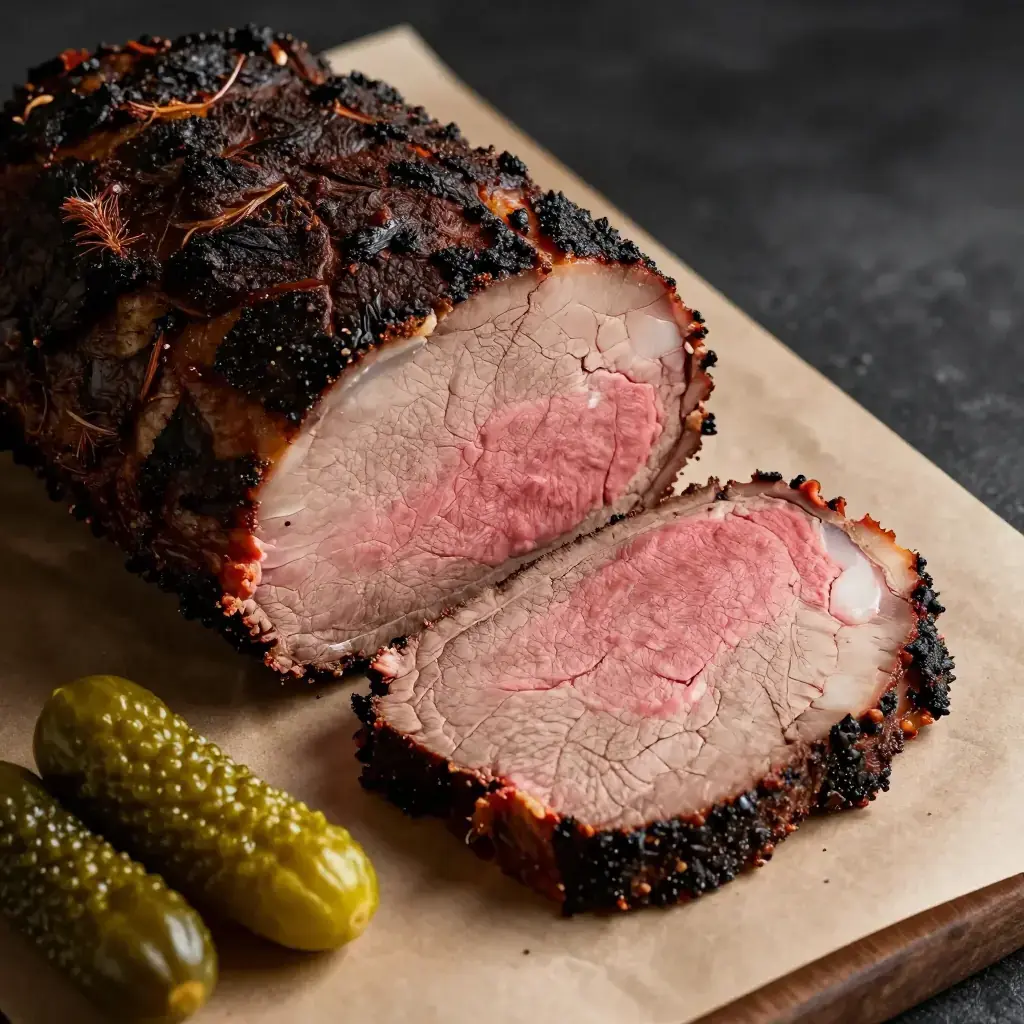
Serve sliced with the drippings on the side, alongside white bread and pickles.
Notes
Patience is essential: Resist the urge to open the grill constantly. Each time you do, you extend the cooking time by 15-20 minutes.
Thermometer is critical: Don't rely on time alone. Every brisket is different. Use a reliable meat thermometer to know when the meat is done.
Fat cap: The fat cap protects the meat and adds flavor. Don't trim it all off, but a thin cap (¼-inch) prevents excessive fat from penetrating the meat.
Bark: The dark, crusty exterior is called "bark" and is full of smoky flavor. This is the best part of the brisket.
Stall: Around 165-170°F, the brisket may stop rising in temperature. This is the "stall." The wrapping helps push through it.
Storage: Leftover brisket keeps well, wrapped, in the refrigerator for 4-5 days. Reheat gently in foil at 300°F.
Smoke selection: Oak and hickory are traditional. Mesquite is intense and often overpowers brisket. Avoid cherry or fruit woods for extended cooks; they can become bitter.
All Revisions
generated
## Ingredients
- 1 beef brisket (packer cut, 10-14 lbs)
- 2 tablespoons kosher salt
- 2 tablespoons freshly ground black pepper
- 1 tablespoon garlic powder (optional)
- 1 tablespoon onion powder (optional)
- Oak or hickory hardwood chunks (about 3-4 chunks)
- Beef broth or apple cider vinegar (1 cup, for wrapping)
## Instructions
### Setup
1. Prepare your smoker (or two-zone charcoal grill setup). Target temperature: 225-250°F.
2. If using a charcoal grill: pile coals on one side, create a cool side opposite. Place a drip pan on the cool side filled with water.
3. Soak hardwood chunks in water for at least 30 minutes.
4. Bring the grill to your target temperature and hold it steady.
### Preparation
1. Remove the brisket from the cooler 30 minutes before cooking.
2. Trim excess fat from the fat cap, leaving about ¼-inch layer for flavor and protection.
3. Apply a dry rub: combine salt, pepper, and optional garlic and onion powder. Rub all over the meat, paying attention to edges and crevices.
4. Place soaked wood chunks directly on hot coals (if using charcoal) or in the firebox (if using a smoker).
### Smoking Phase 1: Low and Slow (0-8 hours)
1. Place the brisket fat-side up on the cool side of the grill, away from direct heat.
2. Close the lid and maintain 225-250°F for the entire cook.
3. After 2 hours, insert a meat thermometer into the thickest part of the brisket (the flat). Do not disturb the meat; just insert the thermometer.
4. Smoke without opening the lid unnecessarily until the internal temperature reaches 160°F. This typically takes 5-8 hours depending on size and your grill's consistency.
5. Add more wood chunks every 1-2 hours to maintain smoke.
### Wrapping Phase: The Texas Crutch (160°F onward)
1. When the brisket reaches 160°F internal temperature, remove it from the grill.
2. Wrap tightly in heavy-duty foil, leaving a small opening at the top.
3. Pour 1 cup of beef broth (or apple cider vinegar mixed with water) into the opening before fully sealing.
4. Place the wrapped brisket back on the cool side of the grill.
5. Close the lid and continue smoking at 250°F.
6. Do not open the package during this phase.
### Finishing Phase (160°F to 203°F)
1. Continue cooking until the internal temperature reaches 190-203°F in the thickest part of the brisket. This typically takes another 3-4 hours.
2. When a fork inserts into the meat with almost no resistance, it's ready.
3. The entire cook usually takes 12-16 hours depending on brisket size and temperature consistency.
### Resting
1. Remove the brisket from the grill and let it rest in the foil for at least 20-30 minutes. This allows the juices to redistribute.
2. Keep it wrapped and warm during this time.
### Slicing
1. Carefully unwrap the brisket (the foil will be very hot and contain hot liquid).
2. Save the cooking liquid for serving alongside the meat.
3. Slice against the grain: the flat and point have different grain directions, so adjust your knife accordingly.
4. Slice to your preferred thickness (¼-inch is traditional).
5. Serve sliced with the drippings on the side, alongside white bread and pickles.
## Notes
- **Patience is essential**: Resist the urge to open the grill constantly. Each time you do, you extend the cooking time by 15-20 minutes.
- **Thermometer is critical**: Don't rely on time alone. Every brisket is different. Use a reliable meat thermometer to know when the meat is done.
- **Fat cap**: The fat cap protects the meat and adds flavor. Don't trim it all off, but a thin cap (¼-inch) prevents excessive fat from penetrating the meat.
- **Bark**: The dark, crusty exterior is called "bark" and is full of smoky flavor. This is the best part of the brisket.
- **Stall**: Around 165-170°F, the brisket may stop rising in temperature. This is the "stall." The wrapping helps push through it.
- **Storage**: Leftover brisket keeps well, wrapped, in the refrigerator for 4-5 days. Reheat gently in foil at 300°F.
- **Smoke selection**: Oak and hickory are traditional. Mesquite is intense and often overpowers brisket. Avoid cherry or fruit woods for extended cooks; they can become bitter.