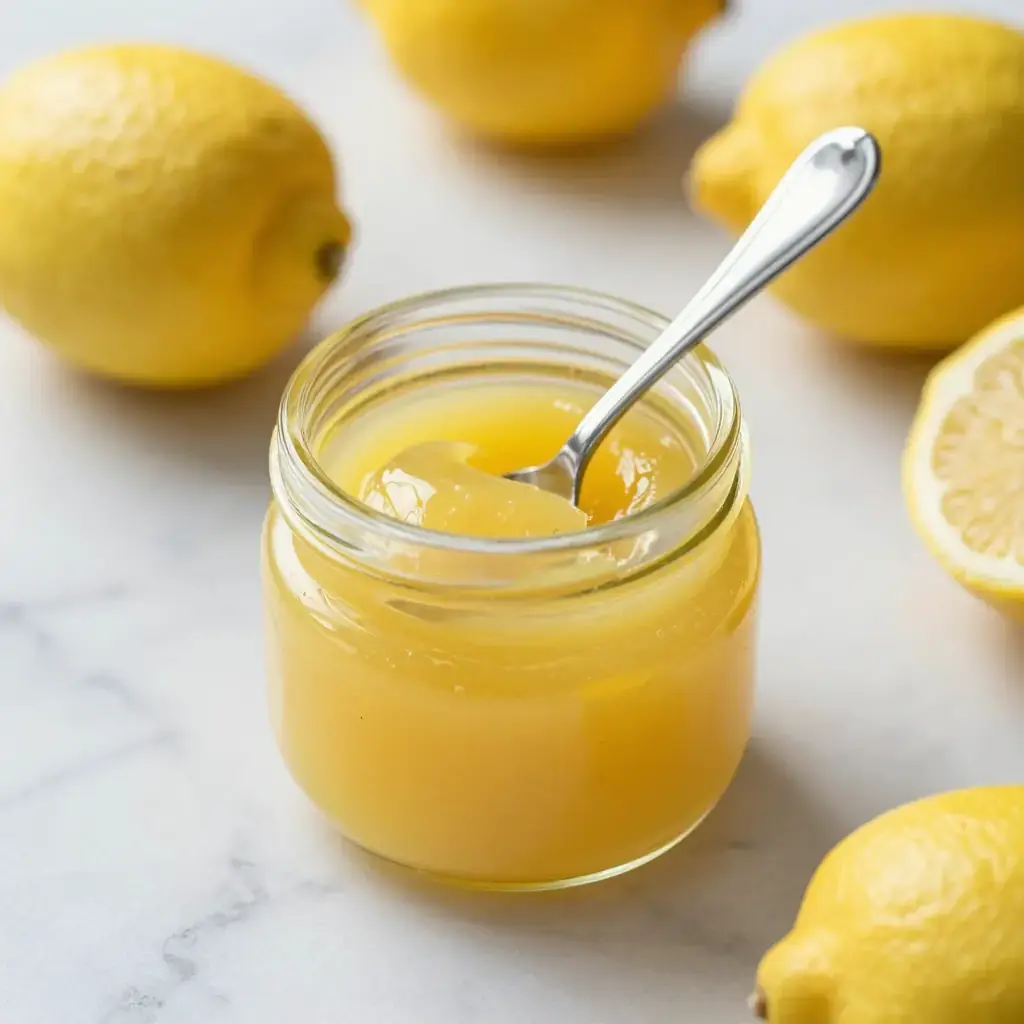
Ingredients
- 4 large egg yolks
- 1/2 cup fresh lemon juice (about 3-4 lemons)
- 1/2 cup sugar
- 4 tablespoons butter, cut into small pieces
- Pinch of fine sea salt
- Zest of 1 lemon (optional, for garnish or added flavor)
Instructions
Step 1: Combine Wet Ingredients
Whisk together egg yolks, lemon juice, and sugar in a medium heavy-bottomed saucepan. The mixture will be thin and liquid at this stage.
Step 2: Cook Over Gentle Heat
Place the saucepan over medium heat. Stir constantly with a whisk or wooden spoon. You're aiming for even heating, not hot spots on the bottom. The mixture will gradually thicken. This takes about 8-10 minutes.
Step 3: Check Temperature
Use a food thermometer to monitor the temperature. When it reaches 160°F, the eggs are sufficiently cooked and the curd has thickened. Don't let it go above 170°F or the yolks will overcook and the texture will become grainy.
Step 4: Add Butter
Remove the saucepan from heat. Add the butter pieces and salt. Stir until the butter melts completely and is fully incorporated. The warmth of the mixture will melt the butter without additional heat.
Step 5: Strain (Optional But Recommended)
For the smoothest texture, pour the curd through a fine-mesh sieve into a bowl, pressing it gently through with a spatula. This removes any cooked egg white bits that might make the texture grainy. This step is optional but produces noticeably better results.
Step 6: Cool
Place plastic wrap directly on the surface of the curd to prevent a skin from forming. Let it cool to room temperature, then transfer to a sterilized glass jar. It will thicken more as it cools.
Storage
Store in the refrigerator for up to 3 weeks. The butter acts as a preservative. If you omit the butter, reduce storage time to 1-2 weeks.
Notes
- Use only fresh lemon juice. Bottled juice contains preservatives that affect the flavor and texture.
- The key to smooth curd is constant stirring and monitoring temperature. Rushing the heat or leaving it unattended risks cooking the yolks unevenly.
- If the curd breaks or becomes grainy during cooking, it usually means the temperature exceeded 170°F. If this happens, strain it vigorously and accept a slightly coarser texture. It will still taste good.
- Curd thickens noticeably as it cools. Don't judge the final texture until it's fully cooled.
- Use on toast, swirled into yogurt, as a filling for cakes, or spooned over desserts.
Variations
Passion Fruit Curd: Replace lemon juice with passion fruit pulp and reduce the sugar to 1/3 cup (passion fruit is more acidic).
Lime Curd: Replace lemon juice with fresh lime juice. Use lime zest for garnish if desired.
Without Butter: Omit the butter for a lighter curd with shorter shelf life. The texture will be thinner but still spreadable when cooled.
All Revisions
generated
## Ingredients - 4 large egg yolks - 1/2 cup fresh lemon juice (about 3-4 lemons) - 1/2 cup sugar - 4 tablespoons butter, cut into small pieces - Pinch of fine sea salt - Zest of 1 lemon (optional, for garnish or added flavor) ## Instructions ### Step 1: Combine Wet Ingredients Whisk together egg yolks, lemon juice, and sugar in a medium heavy-bottomed saucepan. The mixture will be thin and liquid at this stage. ### Step 2: Cook Over Gentle Heat Place the saucepan over medium heat. Stir constantly with a whisk or wooden spoon. You're aiming for even heating, not hot spots on the bottom. The mixture will gradually thicken. This takes about 8-10 minutes. ### Step 3: Check Temperature Use a food thermometer to monitor the temperature. When it reaches 160°F, the eggs are sufficiently cooked and the curd has thickened. Don't let it go above 170°F or the yolks will overcook and the texture will become grainy. ### Step 4: Add Butter Remove the saucepan from heat. Add the butter pieces and salt. Stir until the butter melts completely and is fully incorporated. The warmth of the mixture will melt the butter without additional heat. ### Step 5: Strain (Optional But Recommended) For the smoothest texture, pour the curd through a fine-mesh sieve into a bowl, pressing it gently through with a spatula. This removes any cooked egg white bits that might make the texture grainy. This step is optional but produces noticeably better results. ### Step 6: Cool Place plastic wrap directly on the surface of the curd to prevent a skin from forming. Let it cool to room temperature, then transfer to a sterilized glass jar. It will thicken more as it cools. ## Storage Store in the refrigerator for up to 3 weeks. The butter acts as a preservative. If you omit the butter, reduce storage time to 1-2 weeks. ## Notes - Use only fresh lemon juice. Bottled juice contains preservatives that affect the flavor and texture. - The key to smooth curd is constant stirring and monitoring temperature. Rushing the heat or leaving it unattended risks cooking the yolks unevenly. - If the curd breaks or becomes grainy during cooking, it usually means the temperature exceeded 170°F. If this happens, strain it vigorously and accept a slightly coarser texture. It will still taste good. - Curd thickens noticeably as it cools. Don't judge the final texture until it's fully cooled. - Use on toast, swirled into yogurt, as a filling for cakes, or spooned over desserts. ## Variations **Passion Fruit Curd:** Replace lemon juice with passion fruit pulp and reduce the sugar to 1/3 cup (passion fruit is more acidic). **Lime Curd:** Replace lemon juice with fresh lime juice. Use lime zest for garnish if desired. **Without Butter:** Omit the butter for a lighter curd with shorter shelf life. The texture will be thinner but still spreadable when cooled.Images
Tags
- breakfast
- british
- gluten-free
- quick-and-easy
- snack
- vegetarian