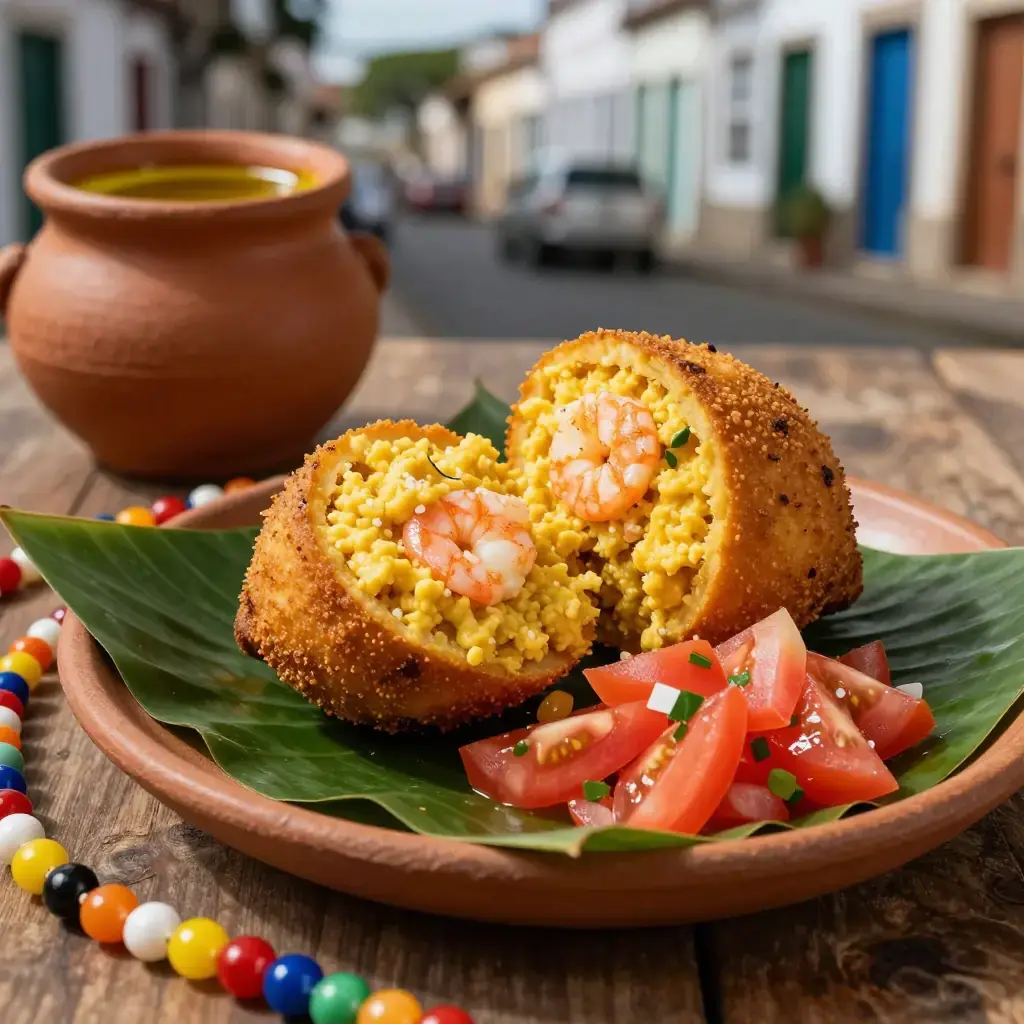
Acarajé com Vatapá (Bahian Black-Eyed Pea Fritters with Shrimp Paste)
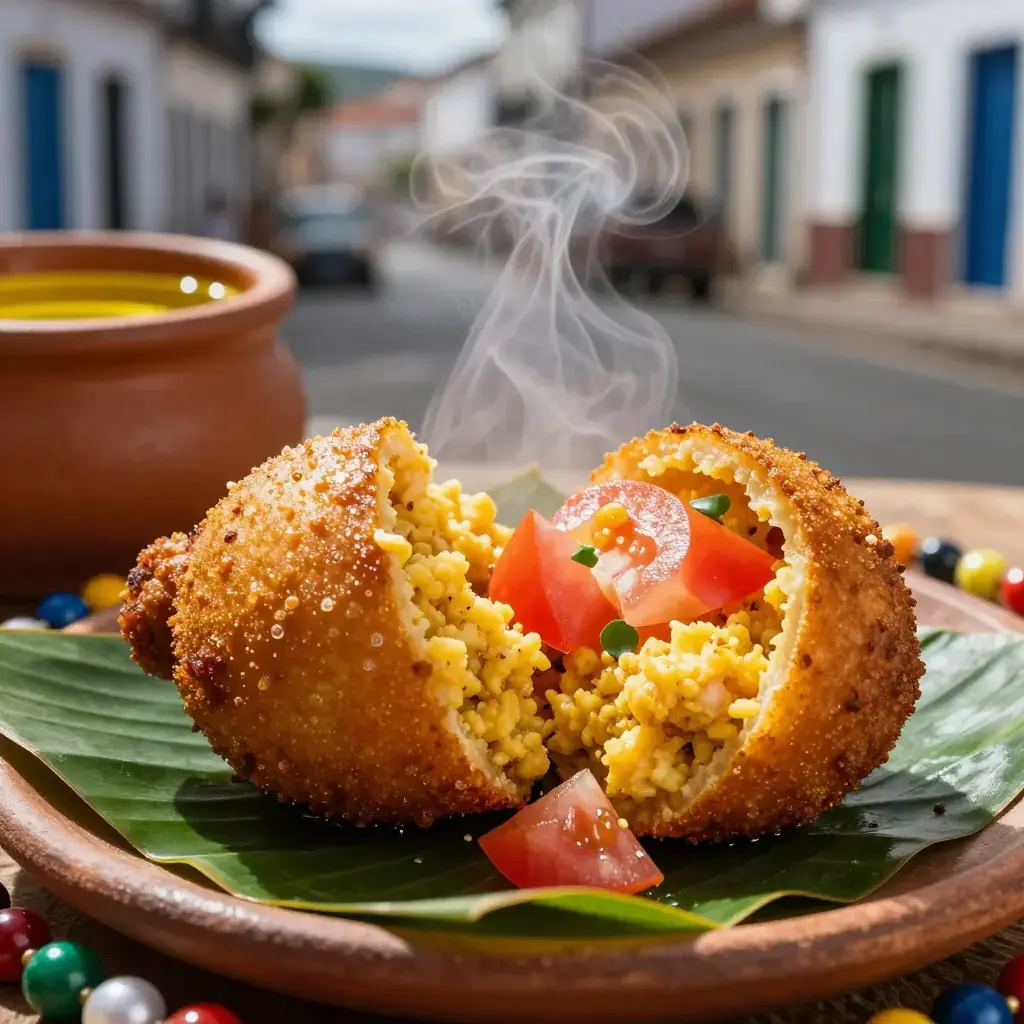
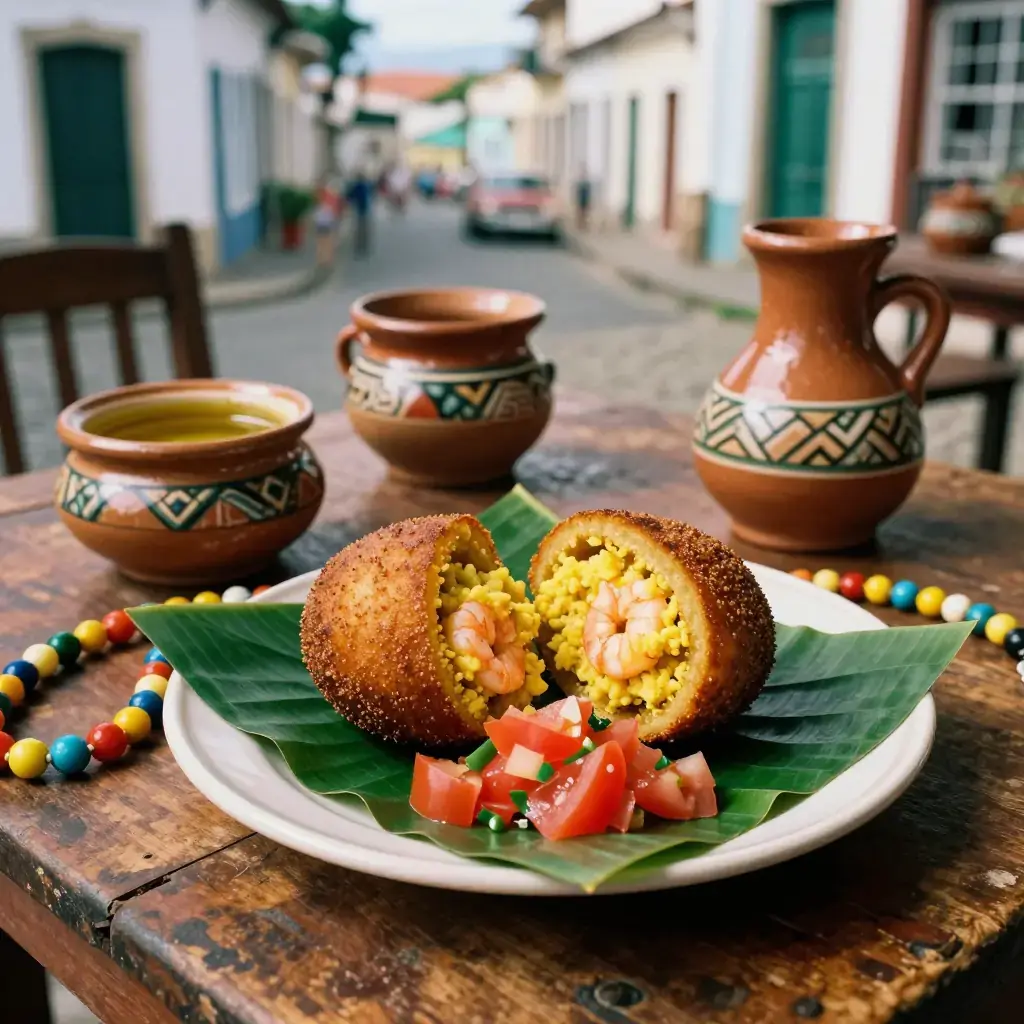
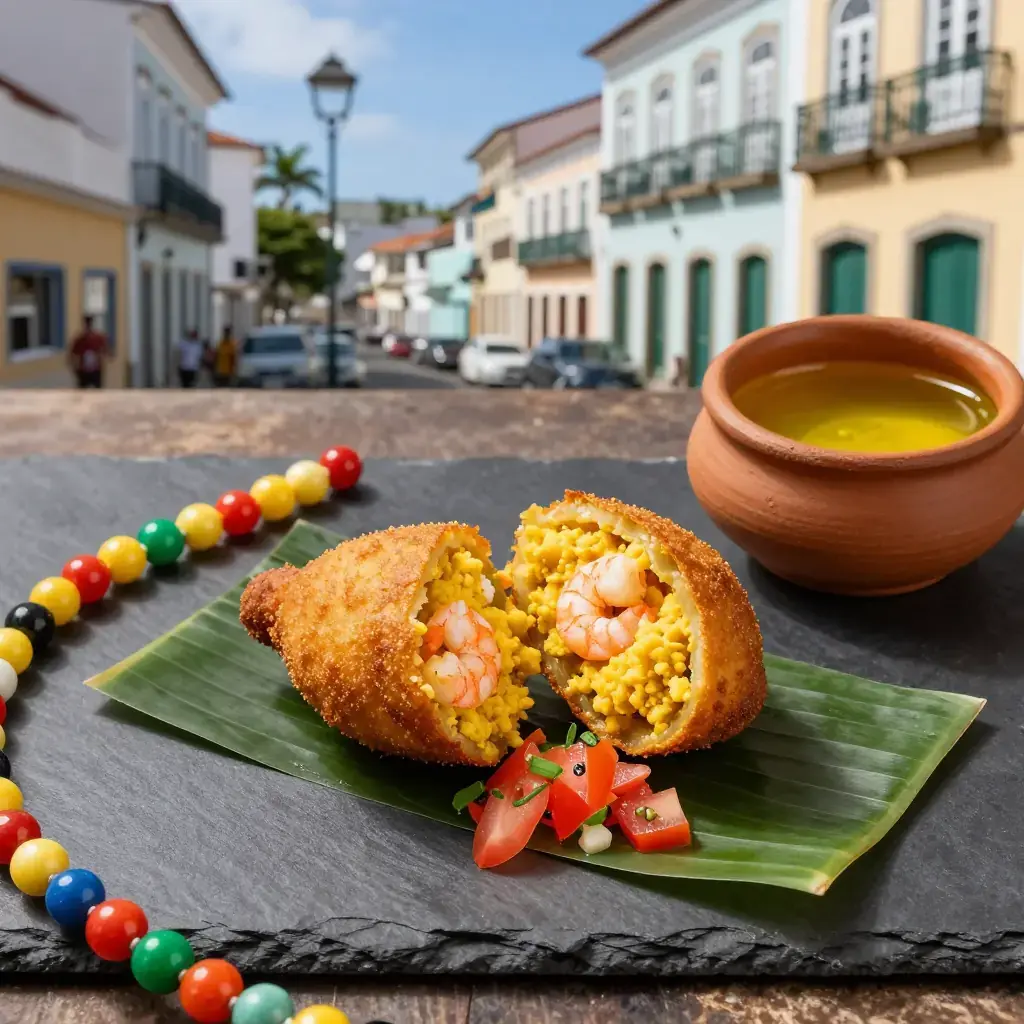
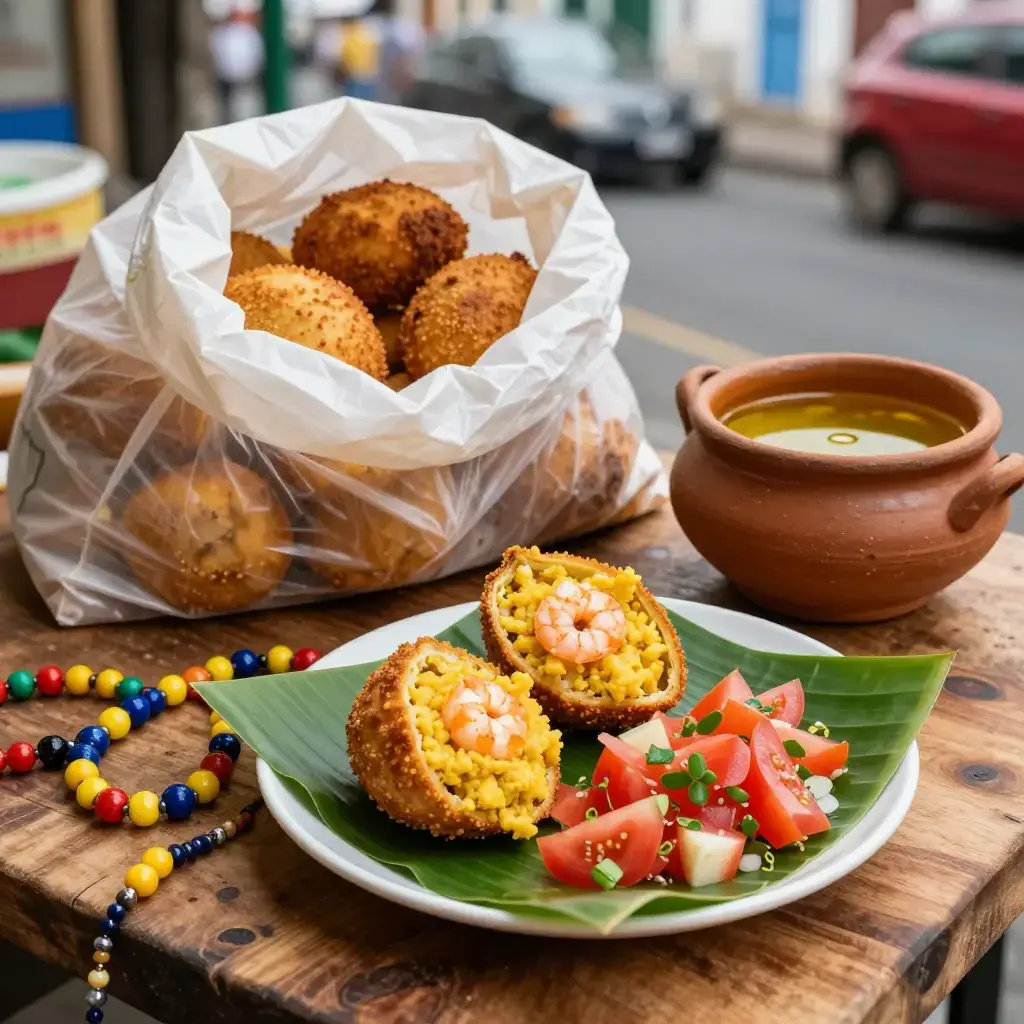
Acarajé is the sacred street food of Bahia, Brazil — a deep-fried black-eyed pea fritter cooked in palm oil (dendê) by the Baianas de Acarajé, the iconic women vendors dressed in white who line Salvador's streets. The fritter is split and filled with vatapá (a rich shrimp and nut paste) and salad. It carries deep Candomblé spiritual significance, as it is an offering to Iansã, the orisha of storms.
Serves: 4 (makes 8 fritters)
Ingredients
Acarajé:
- 400g (2 cups) dried black-eyed peas (feijão fradinho)
- 1 medium onion, roughly chopped
- 1 tsp salt
- Palm oil (dendê) for frying — 500ml (2 cups)
Vatapá (simplified):
- 200g (7 oz) dried shrimp (camarão seco), soaked 30 min and drained
- 100g (¾ cup) roasted peanuts
- 50g (½ cup) toasted cashews
- 2 slices white bread, crusts removed, soaked in 60ml coconut milk
- 200ml (¾ cup) coconut milk
- 2 tbsp (30ml) palm oil
- 1 small onion, diced
- 2 cloves garlic
- 1 tsp grated fresh ginger
- Salt and white pepper to taste
To serve:
- Tomato salad (tomate, cebola, azeite)
- Molho de pimenta (hot chilli sauce)
Instructions
- Soak black-eyed peas 8-12 hours. Drain and rub vigorously between palms or in a food processor to remove the skins. Rinse — the skins will float off.
- Blend skinned peas with onion and salt in a food processor, adding minimal water, until a thick, smooth, stiff paste forms. Beat the paste with a spoon for 3-4 minutes to aerate — it should be fluffy and hold a peak.
- For vatapá: blend dried shrimp, peanuts, cashews, soaked bread, and coconut milk to a coarse paste. Sauté onion and garlic in palm oil 5 minutes. Add shrimp paste, coconut milk, and ginger. Cook 15-20 minutes stirring constantly, until very thick and pull-away from the pan. Season and cool.
- Heat palm oil to 175°C (350°F) in a deep skillet. Shape acarajé paste into flattened ovals using two wet spoons. Fry 4-5 minutes per side until dark golden-brown and cooked through. Drain on paper towels.
- Split each fritter partway through. Fill with generous vatapá, tomato salad, and a dash of hot sauce.
Cook's Notes: Palm oil (dendê) is non-negotiable for authentic flavor — its fruity, earthy depth defines acarajé. Never substitute vegetable oil. The palm oil can be reused. Acarajé paste can be stored refrigerated up to 2 days before frying.
All Revisions
generated
# Acarajé com Vatapá (Bahian Black-Eyed Pea Fritters with Shrimp Paste) Acarajé is the sacred street food of Bahia, Brazil — a deep-fried black-eyed pea fritter cooked in palm oil (dendê) by the Baianas de Acarajé, the iconic women vendors dressed in white who line Salvador's streets. The fritter is split and filled with vatapá (a rich shrimp and nut paste) and salad. It carries deep Candomblé spiritual significance, as it is an offering to Iansã, the orisha of storms. Serves: 4 (makes 8 fritters) ## Ingredients **Acarajé:** - 400g (2 cups) dried black-eyed peas (feijão fradinho) - 1 medium onion, roughly chopped - 1 tsp salt - Palm oil (dendê) for frying — 500ml (2 cups) **Vatapá (simplified):** - 200g (7 oz) dried shrimp (camarão seco), soaked 30 min and drained - 100g (¾ cup) roasted peanuts - 50g (½ cup) toasted cashews - 2 slices white bread, crusts removed, soaked in 60ml coconut milk - 200ml (¾ cup) coconut milk - 2 tbsp (30ml) palm oil - 1 small onion, diced - 2 cloves garlic - 1 tsp grated fresh ginger - Salt and white pepper to taste **To serve:** - Tomato salad (tomate, cebola, azeite) - Molho de pimenta (hot chilli sauce) ## Instructions 1. Soak black-eyed peas 8-12 hours. Drain and rub vigorously between palms or in a food processor to remove the skins. Rinse — the skins will float off. 2. Blend skinned peas with onion and salt in a food processor, adding minimal water, until a thick, smooth, stiff paste forms. Beat the paste with a spoon for 3-4 minutes to aerate — it should be fluffy and hold a peak. 3. For vatapá: blend dried shrimp, peanuts, cashews, soaked bread, and coconut milk to a coarse paste. Sauté onion and garlic in palm oil 5 minutes. Add shrimp paste, coconut milk, and ginger. Cook 15-20 minutes stirring constantly, until very thick and pull-away from the pan. Season and cool. 4. Heat palm oil to 175°C (350°F) in a deep skillet. Shape acarajé paste into flattened ovals using two wet spoons. Fry 4-5 minutes per side until dark golden-brown and cooked through. Drain on paper towels. 5. Split each fritter partway through. Fill with generous vatapá, tomato salad, and a dash of hot sauce. **Cook's Notes:** Palm oil (dendê) is non-negotiable for authentic flavor — its fruity, earthy depth defines acarajé. Never substitute vegetable oil. The palm oil can be reused. Acarajé paste can be stored refrigerated up to 2 days before frying.Images
Tags
- authentic
- beans
- brazilian
- deep-fried
- historical
- late-night
- seafood
- snack