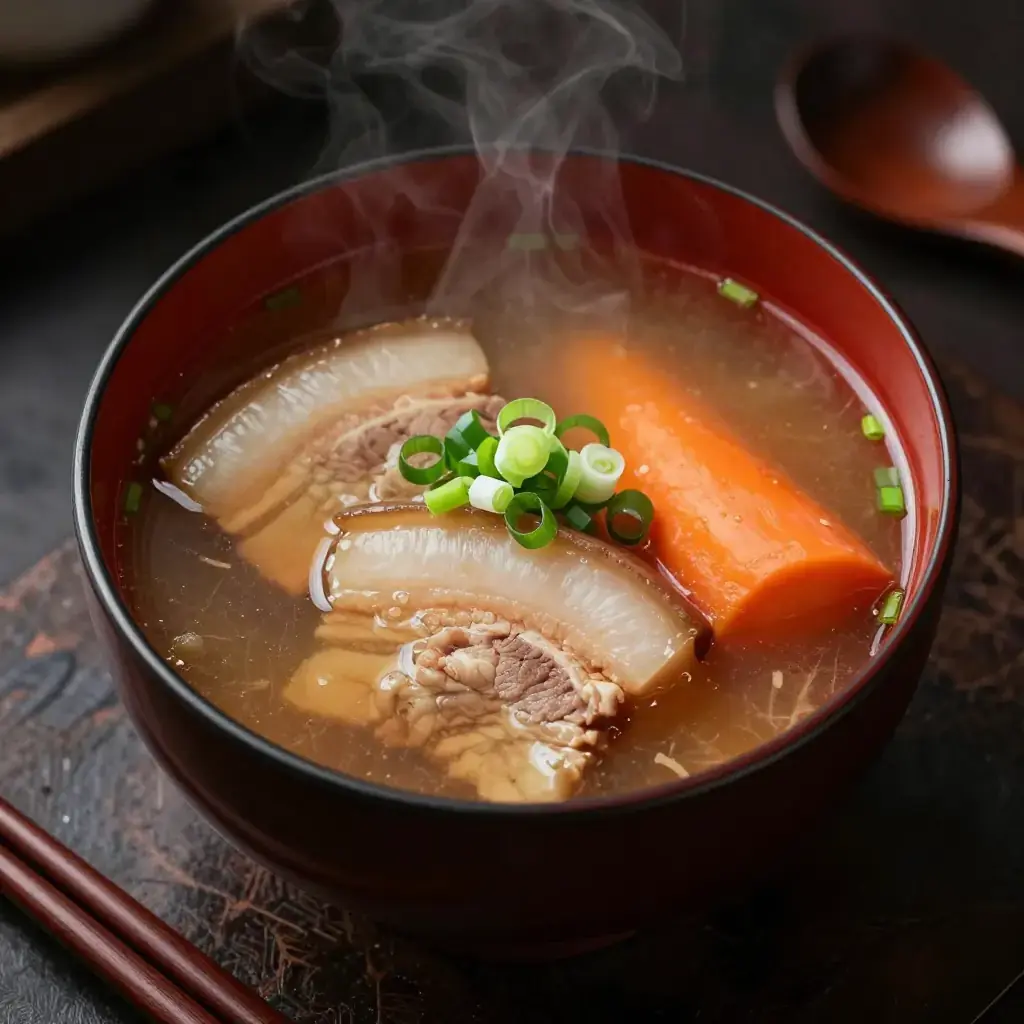
Tonjiru (豚汁)
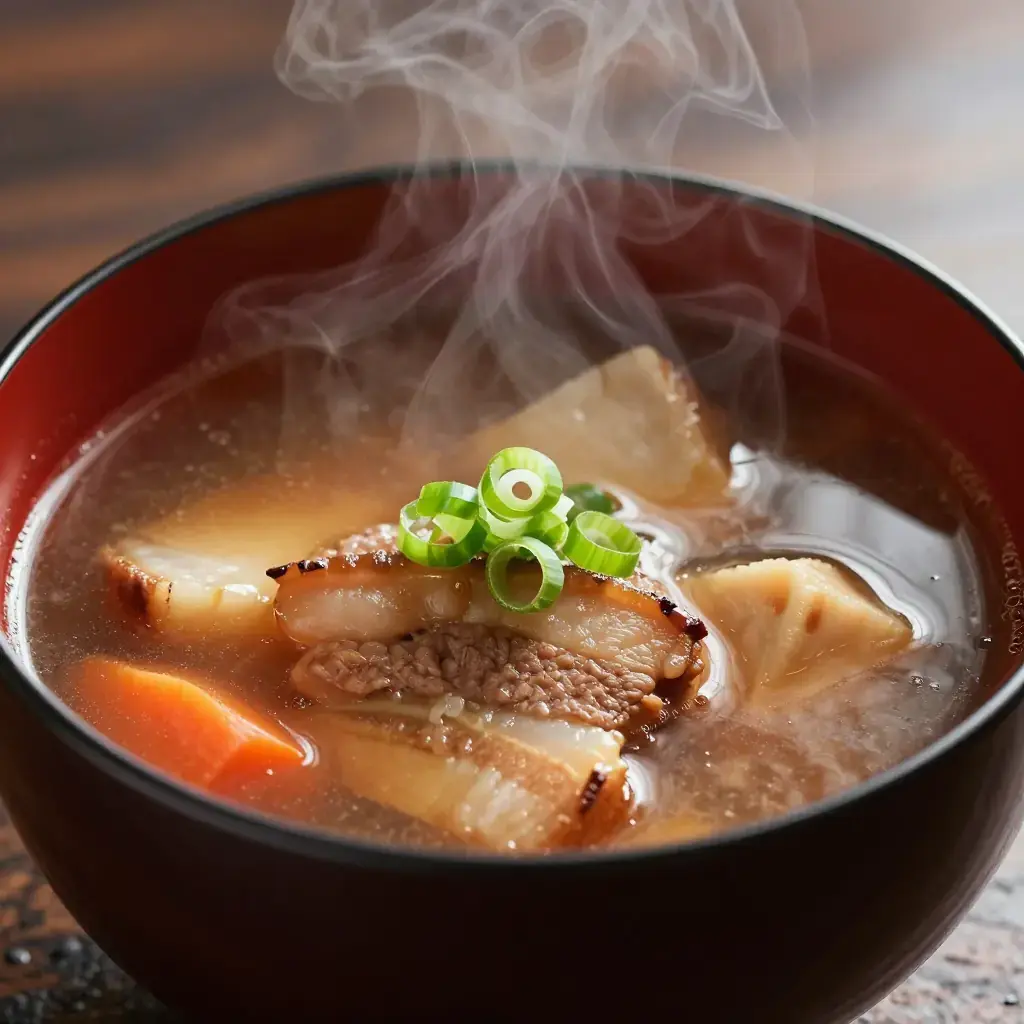
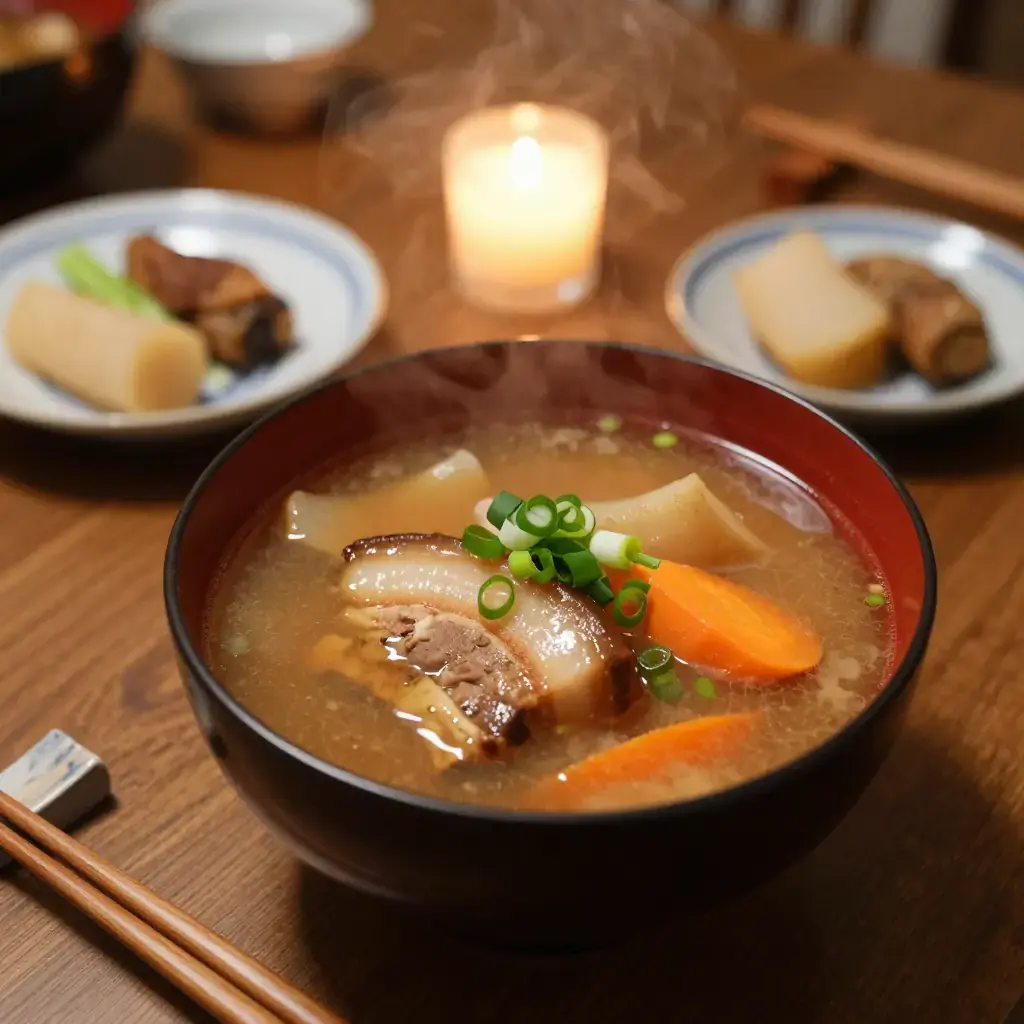
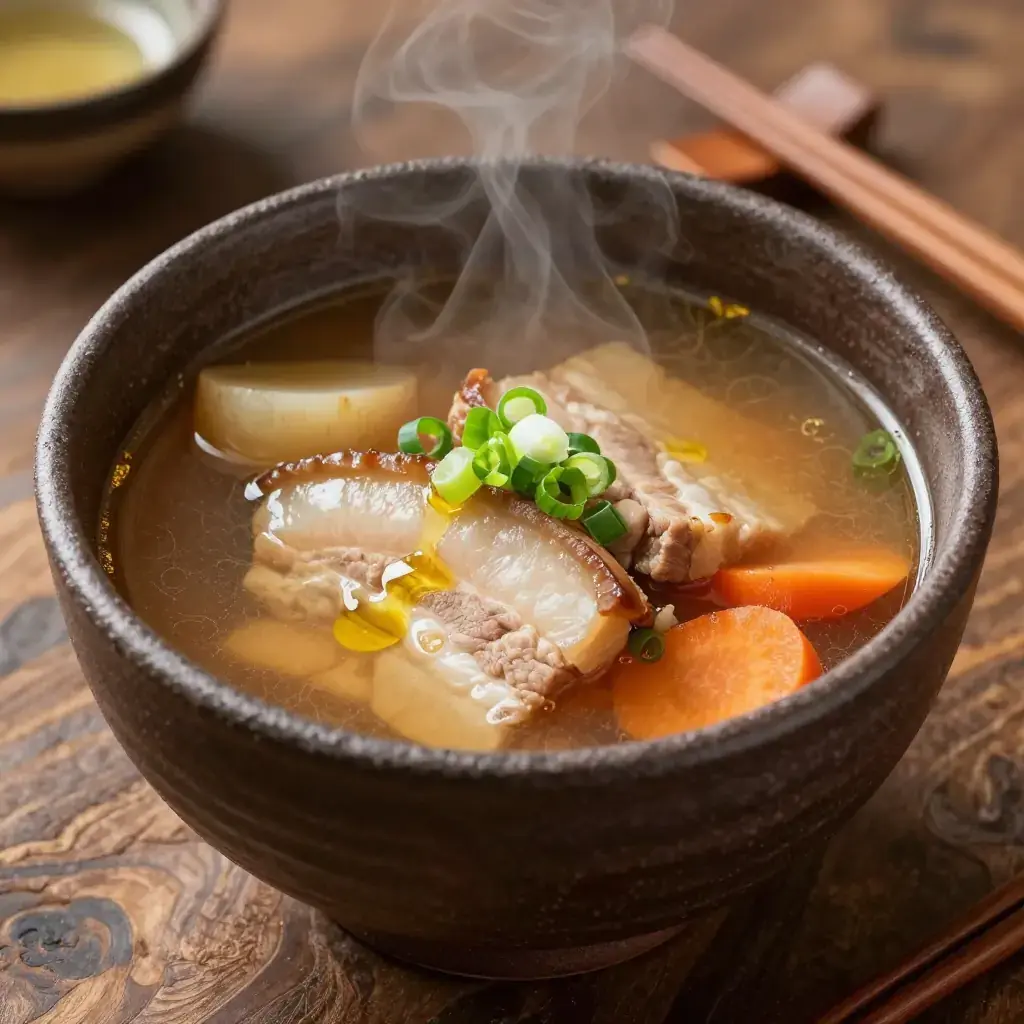
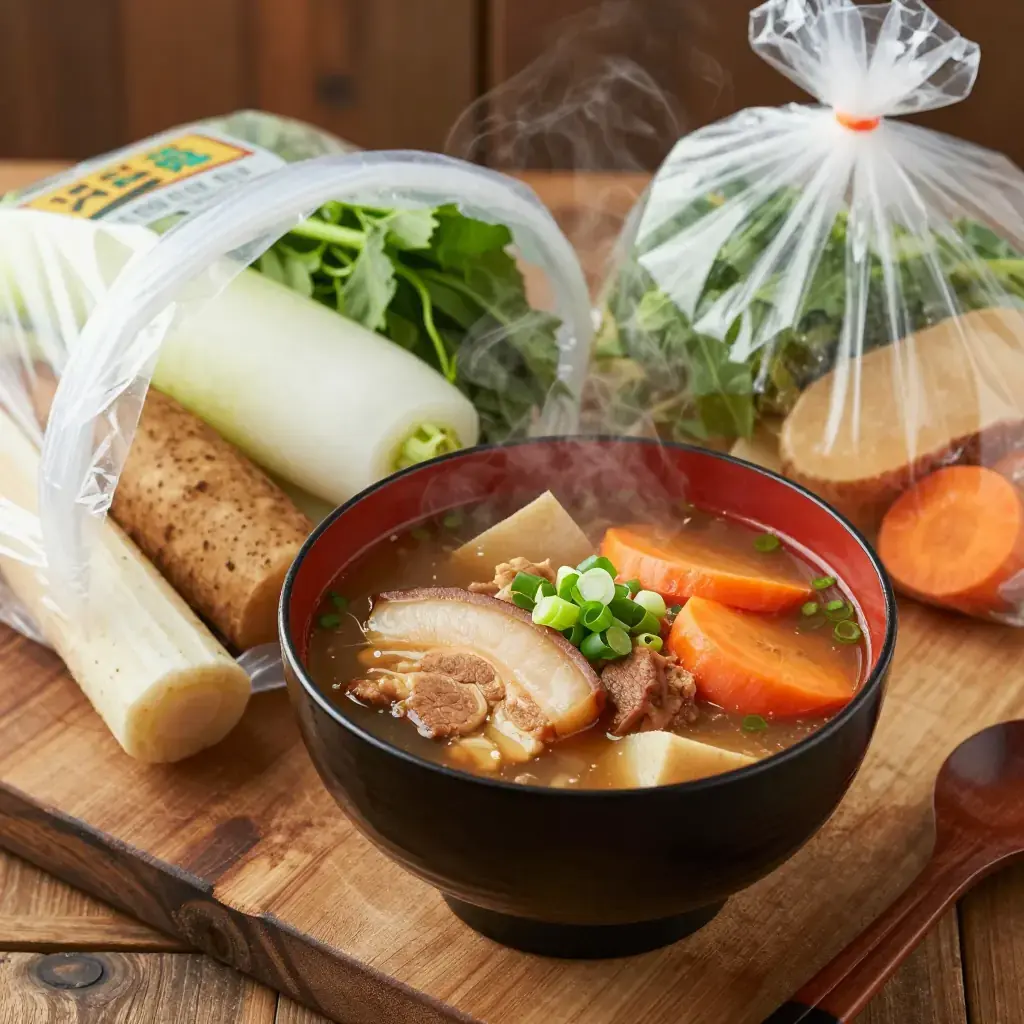
Tonjiru is Japan's most deeply satisfying miso soup — enriched with sliced pork belly and an abundance of root vegetables slow-cooked until their sweetness melds into a rich, warming broth. Every Japanese household has its own version, and it is considered the ultimate cold-weather one-pot meal.
Serves: 4
Ingredients
- 200g (7 oz) pork belly or shoulder, thinly sliced
- 200g (7 oz) daikon, peeled, cut into half-moons
- 1 medium carrot, cut into half-moons
- 1 medium burdock root (gobo), scrubbed, shaved into thin diagonals, soaked in cold water
- 150g (5 oz) taro root (satoimo) or potato, peeled, cut into bite-sized pieces
- 1 block konnyaku (konjac), torn into bite-sized pieces by hand
- 1 litre (4 cups) dashi stock
- 4 tbsp (70g) red or mixed miso paste
- 1 tbsp (15ml) soy sauce
- 1 tsp sesame oil
- 2 spring onions (scallions), finely sliced
- Shichimi togarashi, to serve
Instructions
- Heat a large pot over medium-high heat without oil. Add pork slices and stir-fry 3-4 minutes until lightly browned. Remove excess fat if necessary.
- Add daikon, carrot, drained burdock, taro, and konnyaku. Stir-fry with the pork for 3 minutes.
- Pour in dashi stock. Bring to a boil, then reduce to a steady simmer. Skim any foam from the surface.
- Simmer partially covered for 20-25 minutes until all vegetables are tender.
- Reduce heat to low. Dissolve miso paste into the broth by placing it in a ladle and stirring with a chopstick directly in the ladle before releasing — this prevents lumps. Do not boil after adding miso.
- Add soy sauce. Taste and adjust. Finish with a drizzle of sesame oil.
- Ladle into bowls and top with sliced spring onions. Serve with shichimi togarashi on the side.
Cook's Notes: Tearing konnyaku by hand rather than cutting creates a rougher surface that absorbs broth better. Burdock root adds a distinctive earthy sweetness — worth seeking out at Asian grocers. Tonjiru reheats beautifully but never boil again after miso has been added.
All Revisions
generated
# Tonjiru (豚汁) Tonjiru is Japan's most deeply satisfying miso soup — enriched with sliced pork belly and an abundance of root vegetables slow-cooked until their sweetness melds into a rich, warming broth. Every Japanese household has its own version, and it is considered the ultimate cold-weather one-pot meal. Serves: 4 ## Ingredients - 200g (7 oz) pork belly or shoulder, thinly sliced - 200g (7 oz) daikon, peeled, cut into half-moons - 1 medium carrot, cut into half-moons - 1 medium burdock root (gobo), scrubbed, shaved into thin diagonals, soaked in cold water - 150g (5 oz) taro root (satoimo) or potato, peeled, cut into bite-sized pieces - 1 block konnyaku (konjac), torn into bite-sized pieces by hand - 1 litre (4 cups) dashi stock - 4 tbsp (70g) red or mixed miso paste - 1 tbsp (15ml) soy sauce - 1 tsp sesame oil - 2 spring onions (scallions), finely sliced - Shichimi togarashi, to serve ## Instructions 1. Heat a large pot over medium-high heat without oil. Add pork slices and stir-fry 3-4 minutes until lightly browned. Remove excess fat if necessary. 2. Add daikon, carrot, drained burdock, taro, and konnyaku. Stir-fry with the pork for 3 minutes. 3. Pour in dashi stock. Bring to a boil, then reduce to a steady simmer. Skim any foam from the surface. 4. Simmer partially covered for 20-25 minutes until all vegetables are tender. 5. Reduce heat to low. Dissolve miso paste into the broth by placing it in a ladle and stirring with a chopstick directly in the ladle before releasing — this prevents lumps. Do not boil after adding miso. 6. Add soy sauce. Taste and adjust. Finish with a drizzle of sesame oil. 7. Ladle into bowls and top with sliced spring onions. Serve with shichimi togarashi on the side. **Cook's Notes:** Tearing konnyaku by hand rather than cutting creates a rougher surface that absorbs broth better. Burdock root adds a distinctive earthy sweetness — worth seeking out at Asian grocers. Tonjiru reheats beautifully but never boil again after miso has been added.Images
Tags
- authentic
- comfort-food
- dinner
- hot-soup
- japanese
- one-pot
- root-vegetables