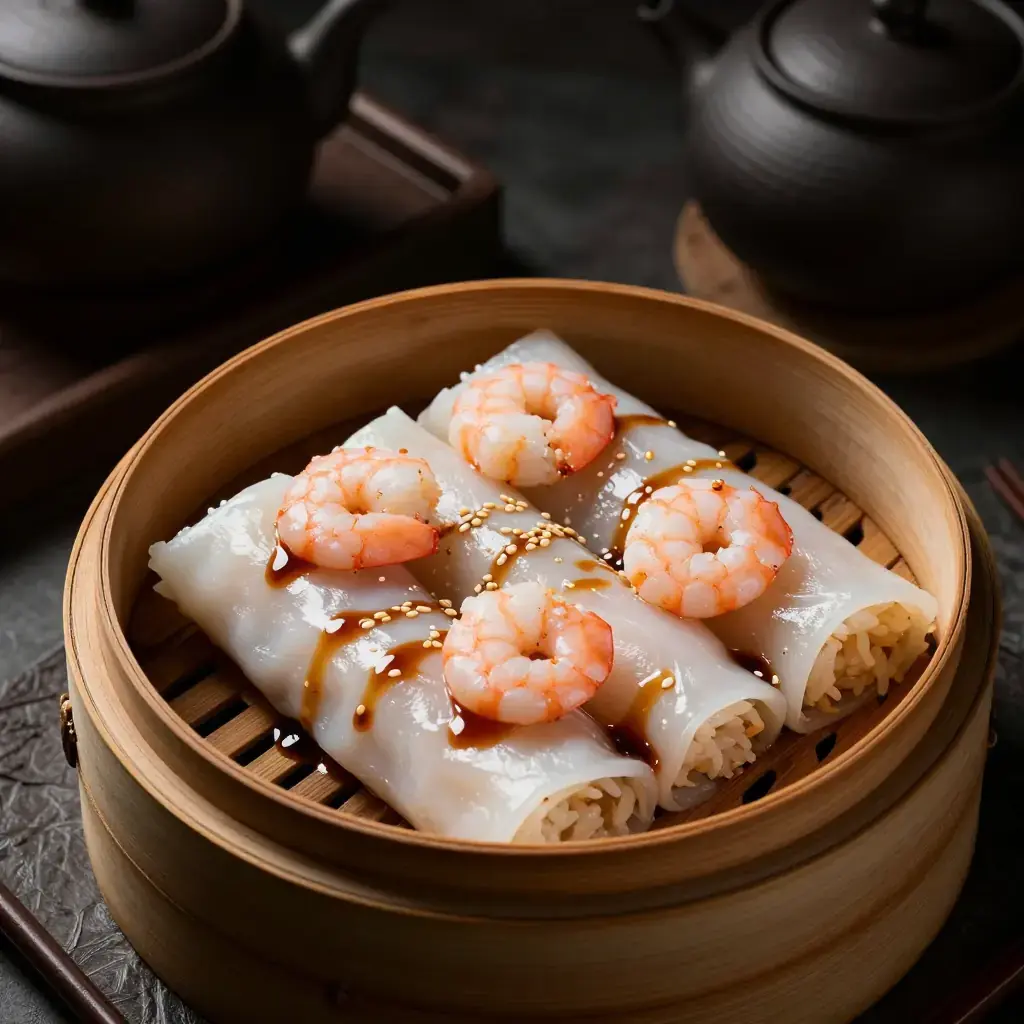
Cheung Fun
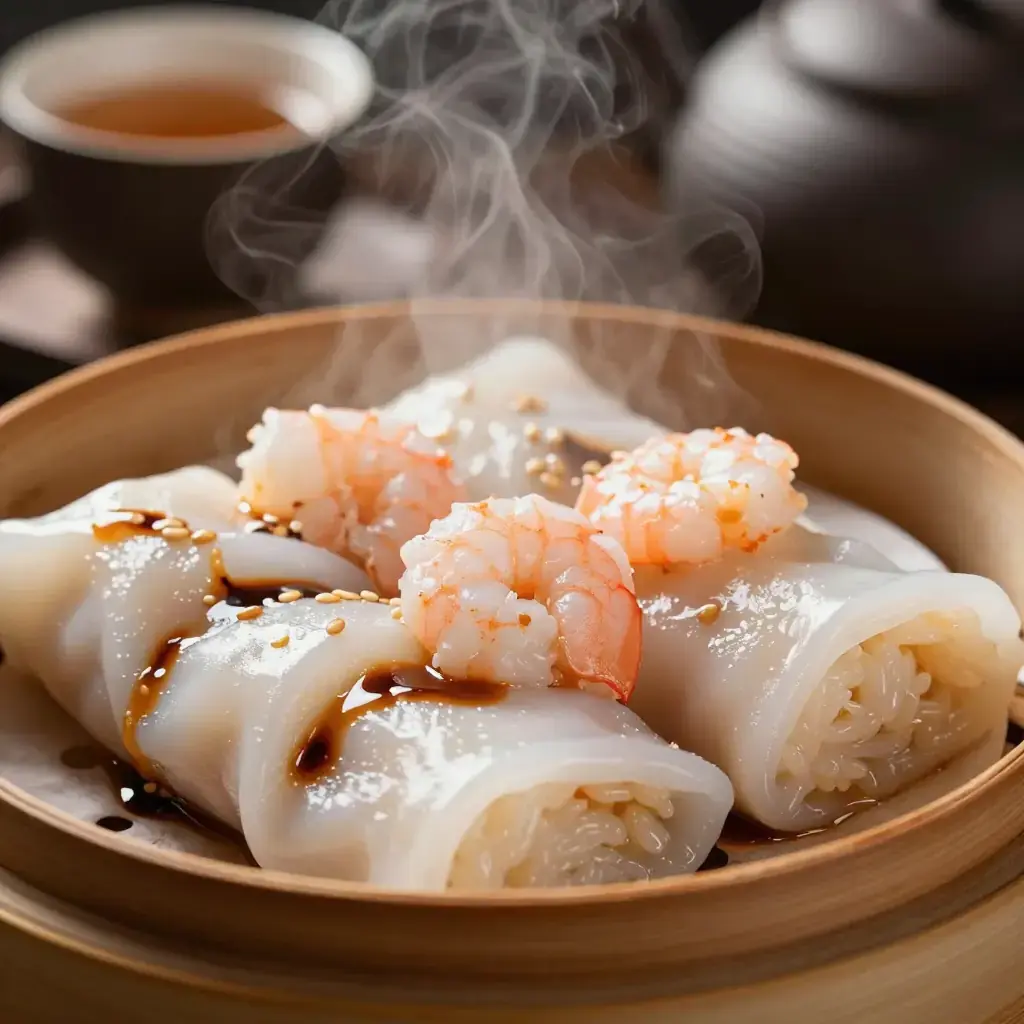
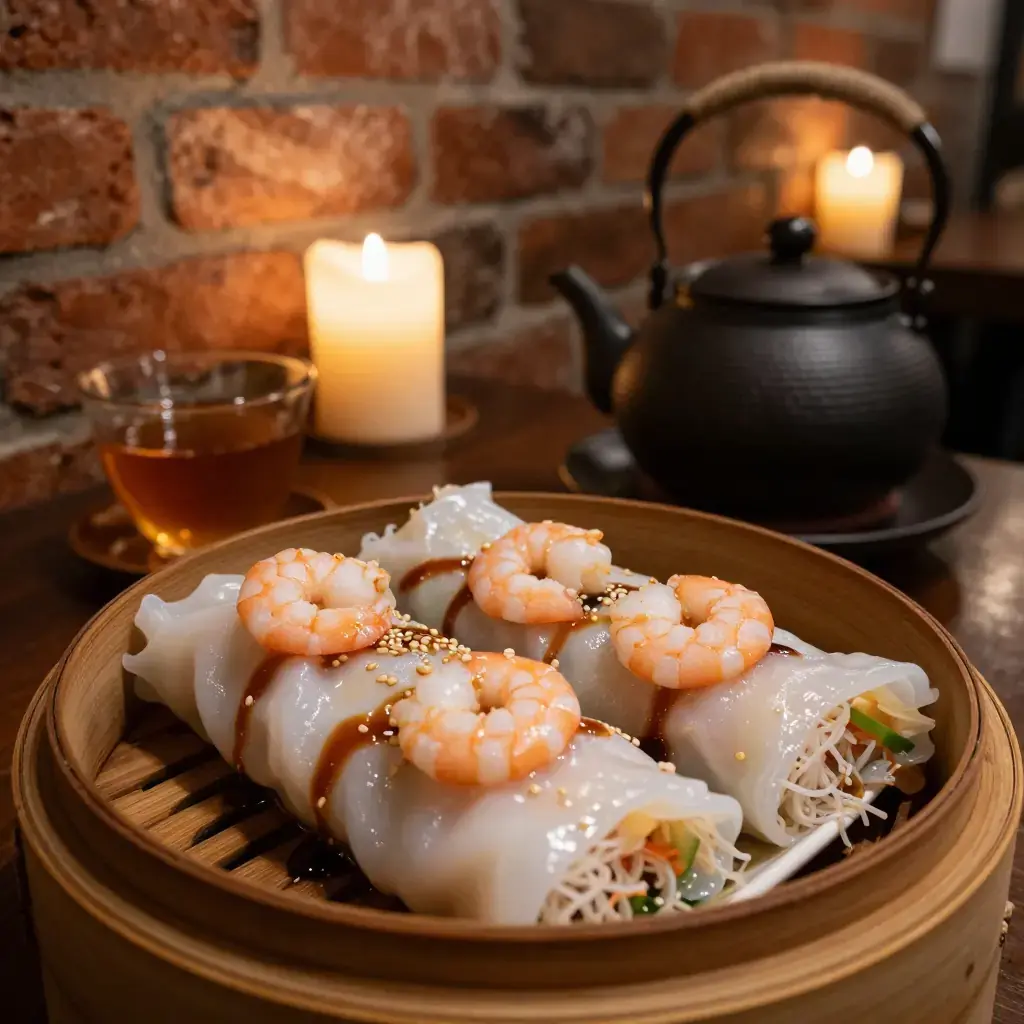
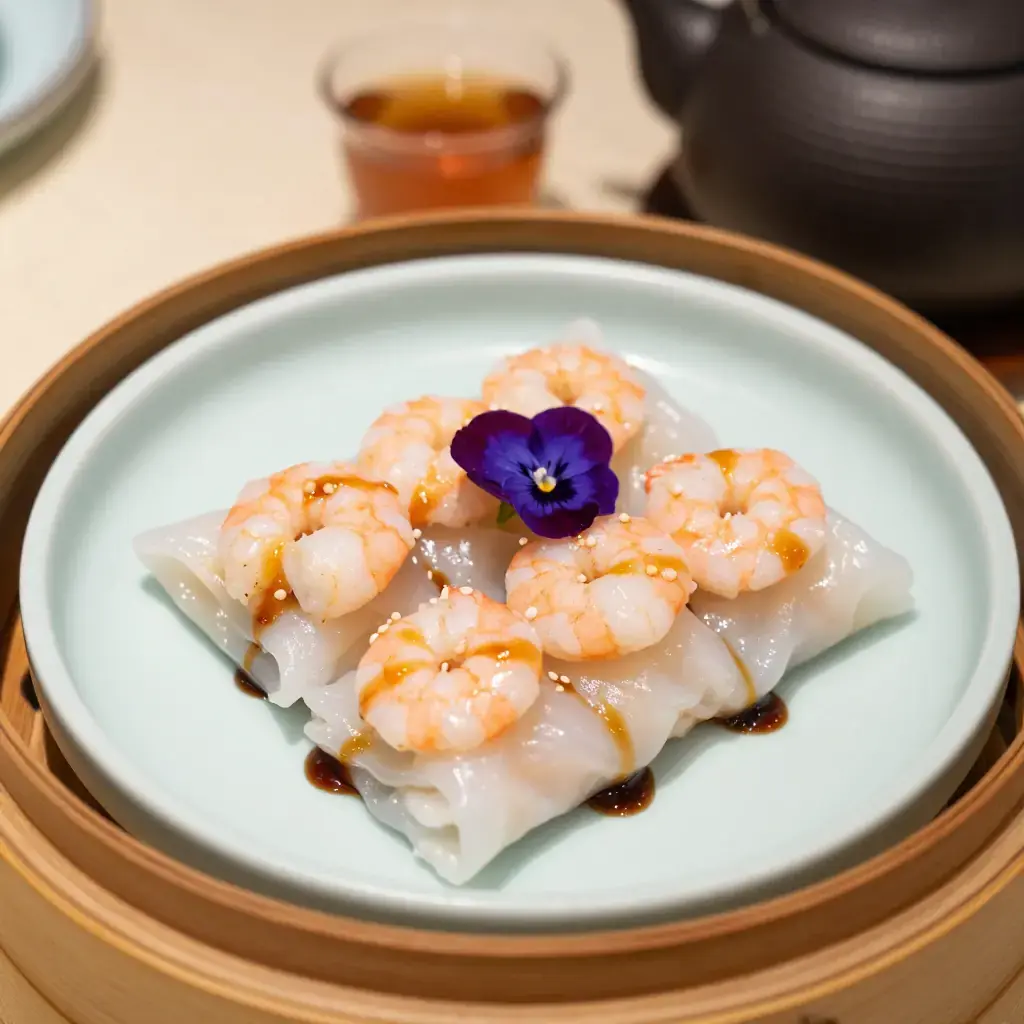
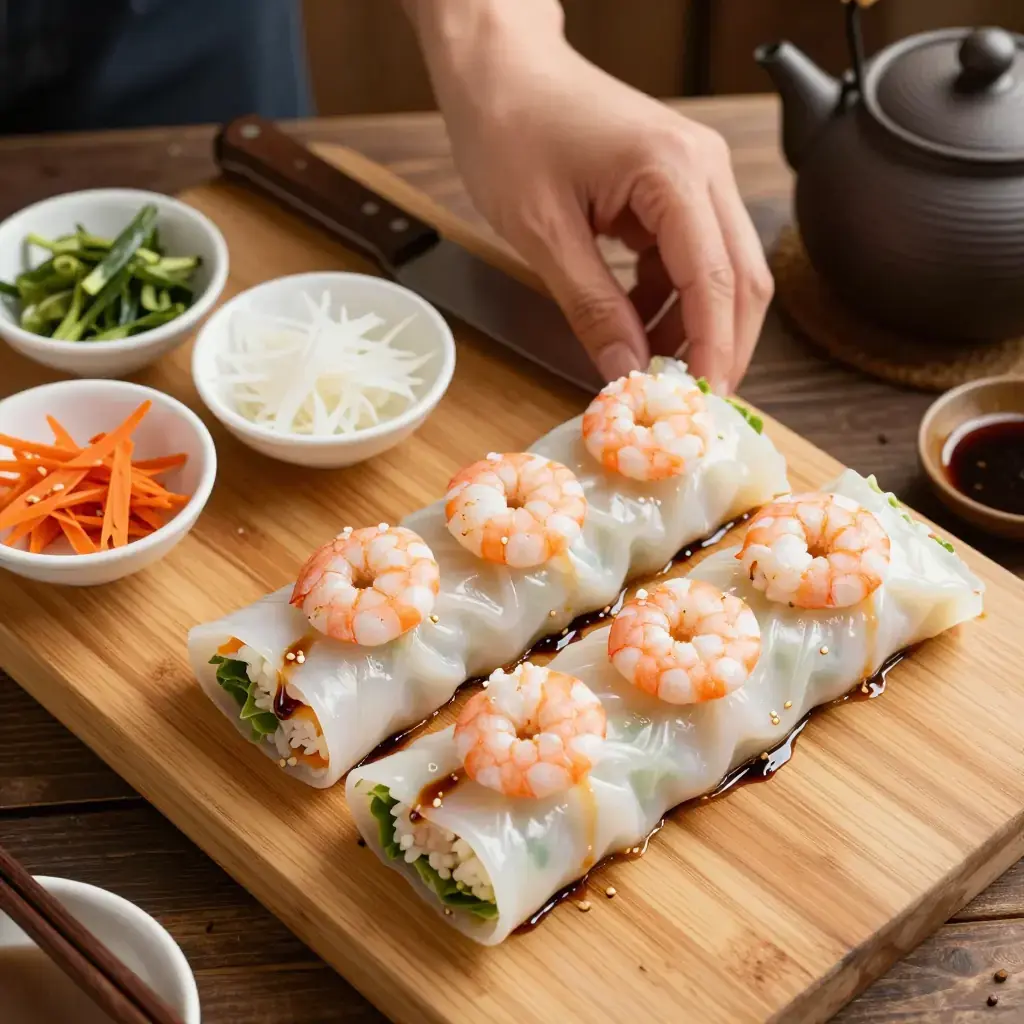
Cheung fun — silky steamed rice noodle sheets rolled around various fillings — are one of the most recognisable dishes of the Cantonese dim sum tradition. Served from early morning at teahouses across Guangdong province and Hong Kong, they are the benchmark of a kitchen's technical skill: the thinner and silkier the sheet, the better the cook. The name literally means "intestine noodle", referencing the rolls' resemblance to a section of intestine.
Serves: 4
Ingredients
For the rice noodle sheets:
- 200g (1.5 cups) rice flour
- 40g (1/3 cup) tapioca starch
- 20g (3 tbsp) cornstarch
- 600ml (2.5 cups) cold water
- 1 tbsp (15ml) neutral oil
- 1/2 tsp salt
For the prawn filling:
- 300g (10 oz) raw prawns, peeled and deveined
- 1 tsp (5ml) sesame oil
- 1/2 tsp white pepper
- 1 tsp (5g) cornstarch
- Pinch of salt
For the sauce:
- 4 tbsp (60ml) light soy sauce
- 2 tbsp (30ml) hoisin sauce
- 1 tbsp (15ml) sesame oil
- 1 tbsp (15g) sugar, dissolved in 2 tbsp hot water
- 1 tbsp (15ml) oyster sauce
Instructions
- Whisk rice flour, tapioca starch, cornstarch, salt, and cold water together until completely smooth. Add oil. Rest 30 minutes.
- Marinate prawns with sesame oil, white pepper, cornstarch, and salt for 15 minutes.
- Combine all sauce ingredients and set aside.
- Lightly oil a flat, shallow rimmed tray or baking sheet that fits inside a large steamer. Set steamer over vigorously boiling water.
- Pour a thin layer of batter (about 80-100ml) onto the oiled tray — just enough to coat thinly. Steam 2-3 minutes until set and slightly translucent.
- Arrange 4-5 prawns in a line across the lower third of the sheet. Using a wide spatula, roll the sheet around the filling from the bottom up, pressing gently to seal.
- Slide onto a serving plate. Repeat with remaining batter and prawns. Drizzle sauce generously over the rolls before serving.
Cook's Notes: The batter must be well-rested and the steamer at a full boil before each sheet goes in. Oil the tray lightly before each pour. The thinner the batter layer, the more delicate the result — err on the side of too thin rather than too thick.
All Revisions
generated
# Cheung Fun Cheung fun — silky steamed rice noodle sheets rolled around various fillings — are one of the most recognisable dishes of the Cantonese dim sum tradition. Served from early morning at teahouses across Guangdong province and Hong Kong, they are the benchmark of a kitchen's technical skill: the thinner and silkier the sheet, the better the cook. The name literally means "intestine noodle", referencing the rolls' resemblance to a section of intestine. Serves: 4 ## Ingredients **For the rice noodle sheets:** - 200g (1.5 cups) rice flour - 40g (1/3 cup) tapioca starch - 20g (3 tbsp) cornstarch - 600ml (2.5 cups) cold water - 1 tbsp (15ml) neutral oil - 1/2 tsp salt **For the prawn filling:** - 300g (10 oz) raw prawns, peeled and deveined - 1 tsp (5ml) sesame oil - 1/2 tsp white pepper - 1 tsp (5g) cornstarch - Pinch of salt **For the sauce:** - 4 tbsp (60ml) light soy sauce - 2 tbsp (30ml) hoisin sauce - 1 tbsp (15ml) sesame oil - 1 tbsp (15g) sugar, dissolved in 2 tbsp hot water - 1 tbsp (15ml) oyster sauce ## Instructions 1. Whisk rice flour, tapioca starch, cornstarch, salt, and cold water together until completely smooth. Add oil. Rest 30 minutes. 2. Marinate prawns with sesame oil, white pepper, cornstarch, and salt for 15 minutes. 3. Combine all sauce ingredients and set aside. 4. Lightly oil a flat, shallow rimmed tray or baking sheet that fits inside a large steamer. Set steamer over vigorously boiling water. 5. Pour a thin layer of batter (about 80-100ml) onto the oiled tray — just enough to coat thinly. Steam 2-3 minutes until set and slightly translucent. 6. Arrange 4-5 prawns in a line across the lower third of the sheet. Using a wide spatula, roll the sheet around the filling from the bottom up, pressing gently to seal. 7. Slide onto a serving plate. Repeat with remaining batter and prawns. Drizzle sauce generously over the rolls before serving. **Cook's Notes:** The batter must be well-rested and the steamer at a full boil before each sheet goes in. Oil the tray lightly before each pour. The thinner the batter layer, the more delicate the result — err on the side of too thin rather than too thick.Images
Tags
- authentic
- breakfast
- cantonese
- rice
- seafood
- steamed