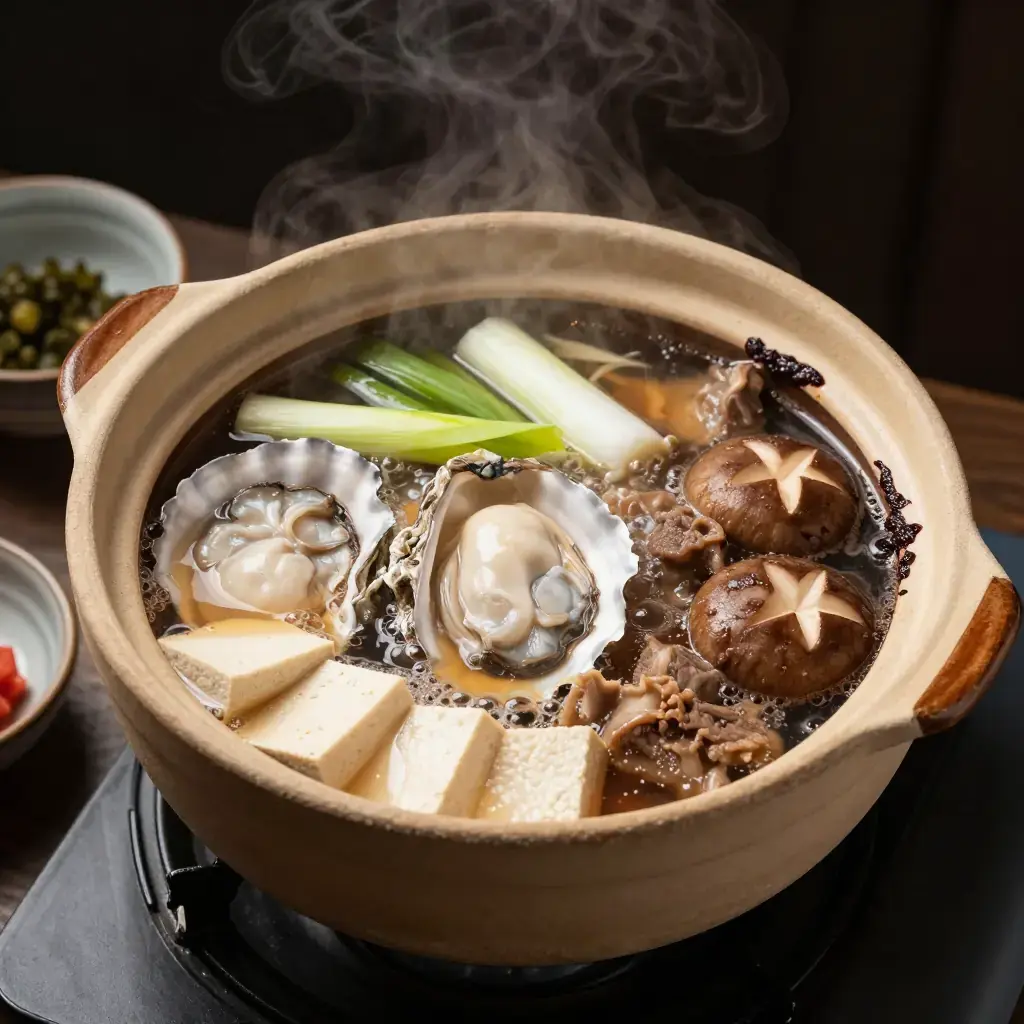
Dote-Nabe
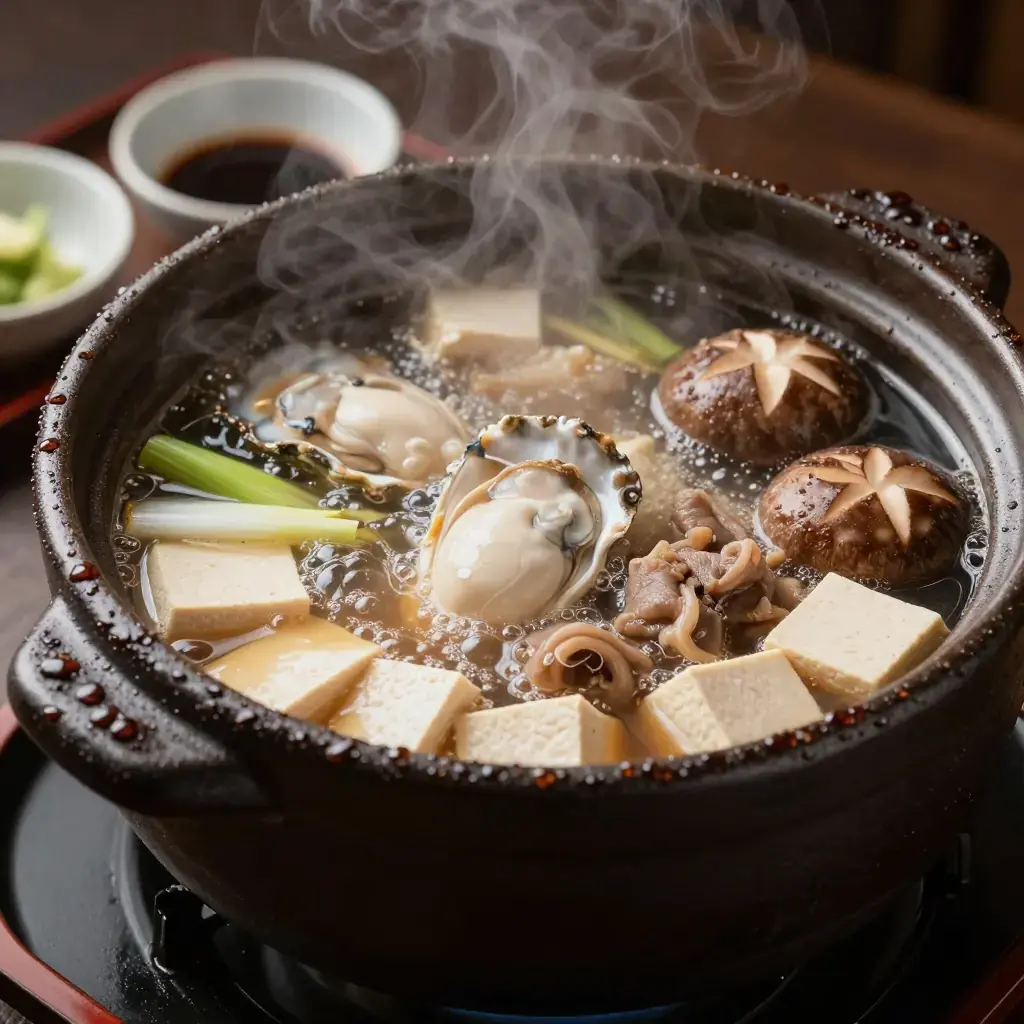
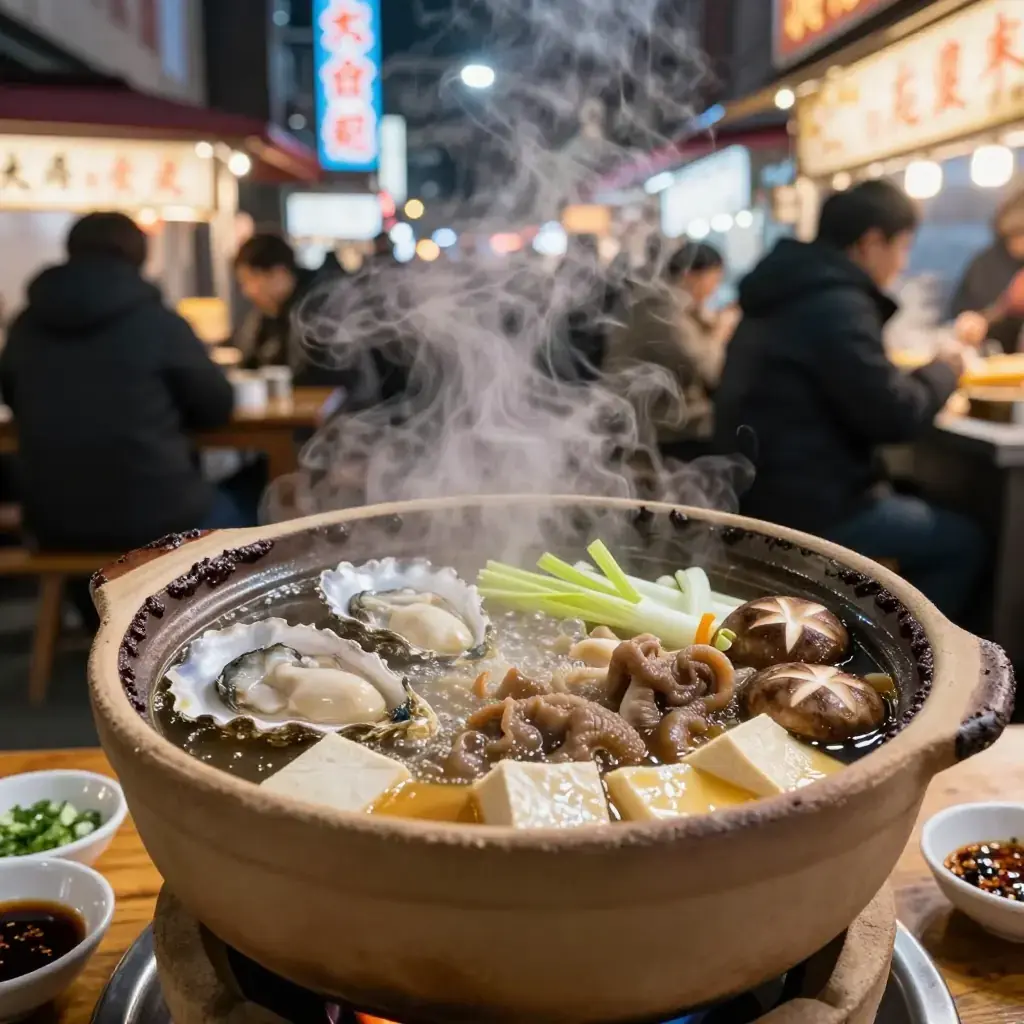
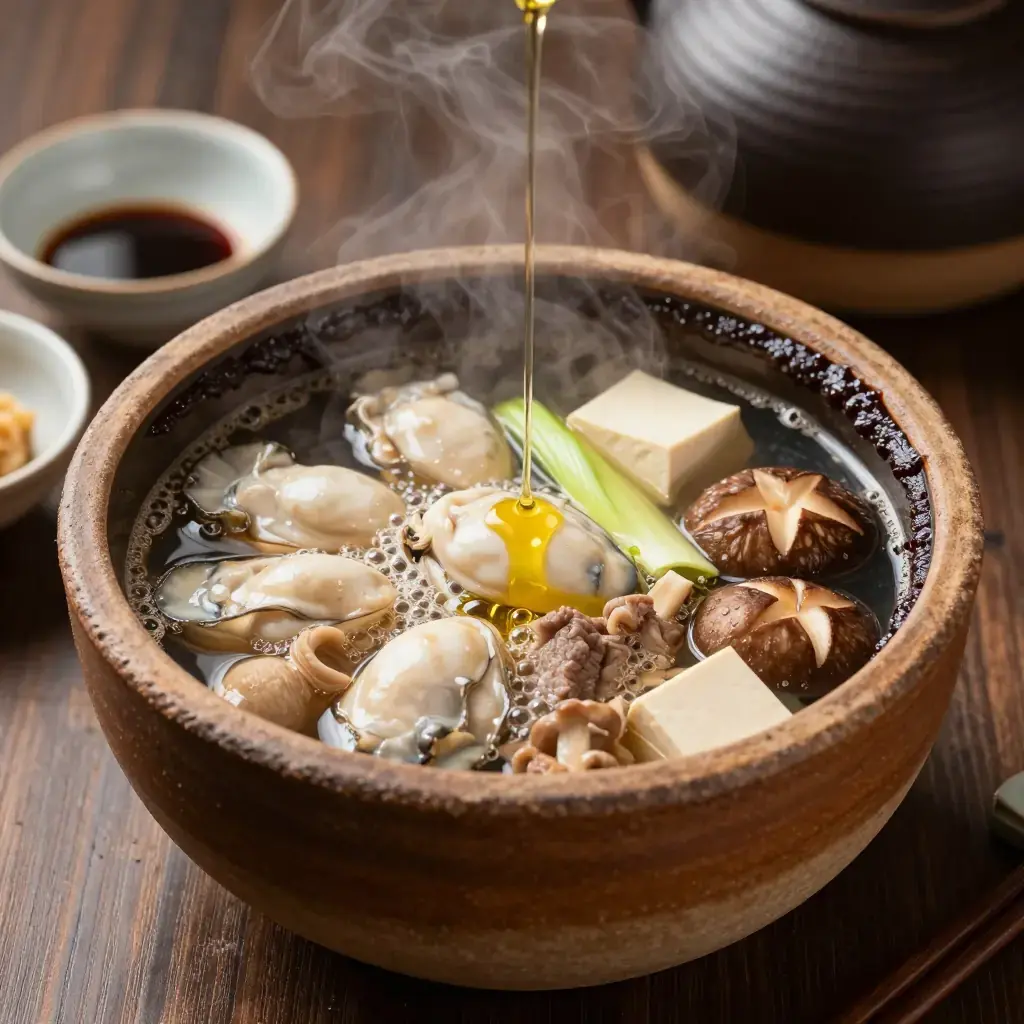
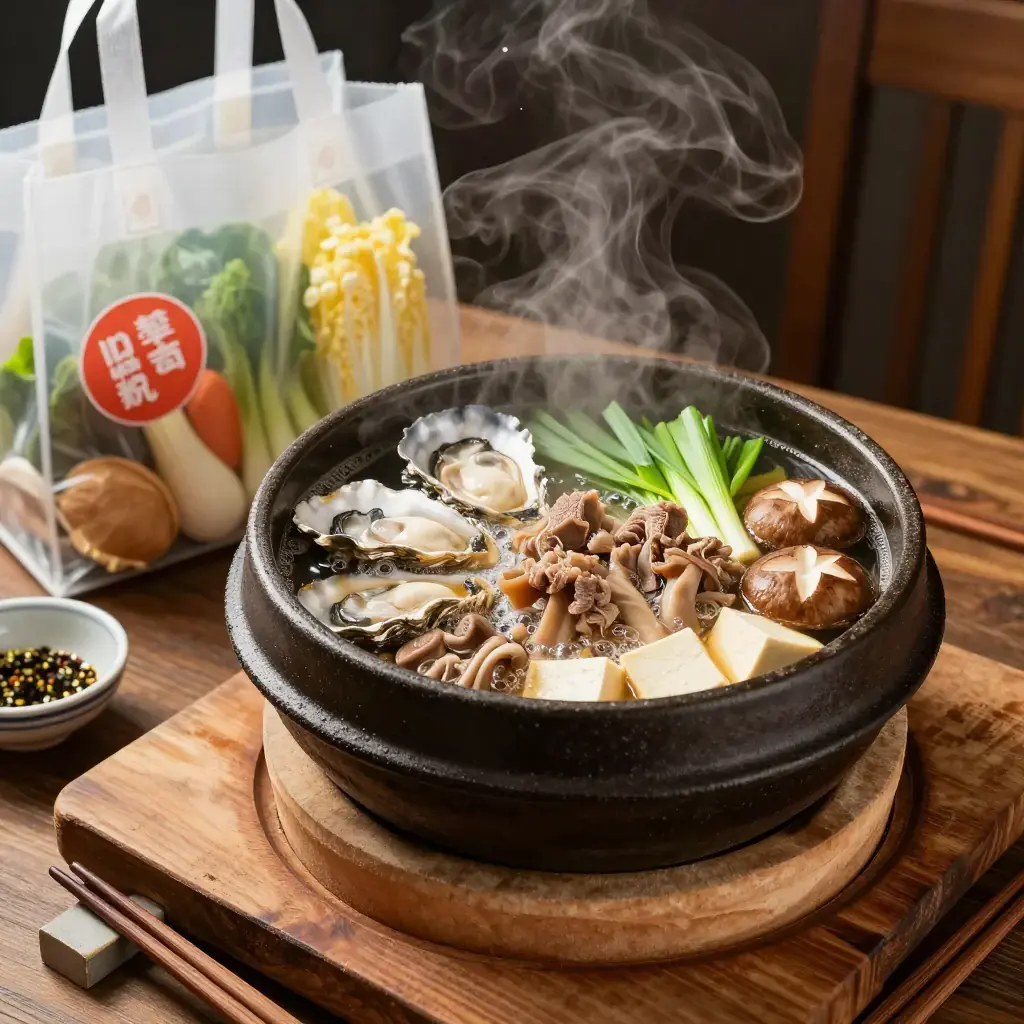
Dote-nabe is a winter hot pot unique to Osaka, where a thick wall ("dote") of red miso paste is built around the edge of the clay pot and slowly dissolved into the simmering broth as you eat. Dating to the Edo period, it is most closely associated with the oyster harvest in Hiroshima, and the addition of beef tendon or other offal makes it one of the most historically rooted and satisfying dishes in the Kansai culinary tradition.
Serves: 4
Ingredients
- 300g (10 oz) shucked fresh oysters
- 250g (9 oz) beef tendon (gyusuji), pre-boiled and cut into 3cm pieces
- 200g (7 oz) firm tofu, cubed
- 100g (3.5 oz) shiitake mushrooms, stems removed and halved
- 1 block (200g / 7 oz) konnyaku, cut into pieces
- 2 medium leeks, cut into 4cm sections
- 1/2 head napa cabbage, roughly chopped
- 600ml (2.5 cups) dashi
- 4 tbsp (60ml) sake
- 2 tbsp (30ml) mirin
For the miso wall:
- 150g (5 oz) Hatcho red miso or dark miso
- 2 tbsp (30ml) mirin
- 1 tbsp (15g) sugar
Instructions
- Pre-boil beef tendon in plenty of water for 2 hours until just tender. Drain and cut into 3cm pieces.
- Mix miso, mirin, and sugar into a thick paste. Use a spatula to press this paste thickly around the inner walls of a clay pot (donabe) or heavy casserole like a dam.
- Pour dashi, sake, and mirin into the centre of the pot. Add beef tendon, konnyaku, shiitake, and leeks. Bring to a gentle simmer over medium heat.
- As the broth simmers, the miso wall will gradually dissolve — use chopsticks to break pieces into the broth, adjusting the miso intensity to your preference throughout the meal.
- After 10 minutes, add napa cabbage and tofu. After 15 minutes, add the oysters. Simmer oysters gently for only 2-3 minutes until just set and plump.
- Serve directly from the pot at the table. Finish with a bowl of rice or udon noodles added to the remaining broth.
Cook's Notes: The genius of dote-nabe is that diners control how miso-rich the broth becomes by dissolving the wall gradually. Hatcho miso (aged minimum 3 years) gives the deepest, most complex flavour. Fresh Hiroshima oysters are traditional, but any plump fresh oysters work well.
All Revisions
generated
# Dote-Nabe Dote-nabe is a winter hot pot unique to Osaka, where a thick wall ("dote") of red miso paste is built around the edge of the clay pot and slowly dissolved into the simmering broth as you eat. Dating to the Edo period, it is most closely associated with the oyster harvest in Hiroshima, and the addition of beef tendon or other offal makes it one of the most historically rooted and satisfying dishes in the Kansai culinary tradition. Serves: 4 ## Ingredients - 300g (10 oz) shucked fresh oysters - 250g (9 oz) beef tendon (gyusuji), pre-boiled and cut into 3cm pieces - 200g (7 oz) firm tofu, cubed - 100g (3.5 oz) shiitake mushrooms, stems removed and halved - 1 block (200g / 7 oz) konnyaku, cut into pieces - 2 medium leeks, cut into 4cm sections - 1/2 head napa cabbage, roughly chopped - 600ml (2.5 cups) dashi - 4 tbsp (60ml) sake - 2 tbsp (30ml) mirin **For the miso wall:** - 150g (5 oz) Hatcho red miso or dark miso - 2 tbsp (30ml) mirin - 1 tbsp (15g) sugar ## Instructions 1. Pre-boil beef tendon in plenty of water for 2 hours until just tender. Drain and cut into 3cm pieces. 2. Mix miso, mirin, and sugar into a thick paste. Use a spatula to press this paste thickly around the inner walls of a clay pot (donabe) or heavy casserole like a dam. 3. Pour dashi, sake, and mirin into the centre of the pot. Add beef tendon, konnyaku, shiitake, and leeks. Bring to a gentle simmer over medium heat. 4. As the broth simmers, the miso wall will gradually dissolve — use chopsticks to break pieces into the broth, adjusting the miso intensity to your preference throughout the meal. 5. After 10 minutes, add napa cabbage and tofu. After 15 minutes, add the oysters. Simmer oysters gently for only 2-3 minutes until just set and plump. 6. Serve directly from the pot at the table. Finish with a bowl of rice or udon noodles added to the remaining broth. **Cook's Notes:** The genius of dote-nabe is that diners control how miso-rich the broth becomes by dissolving the wall gradually. Hatcho miso (aged minimum 3 years) gives the deepest, most complex flavour. Fresh Hiroshima oysters are traditional, but any plump fresh oysters work well.Images
Tags
- authentic
- historical
- hot-soup
- japanese
- offal
- one-pot
- seafood