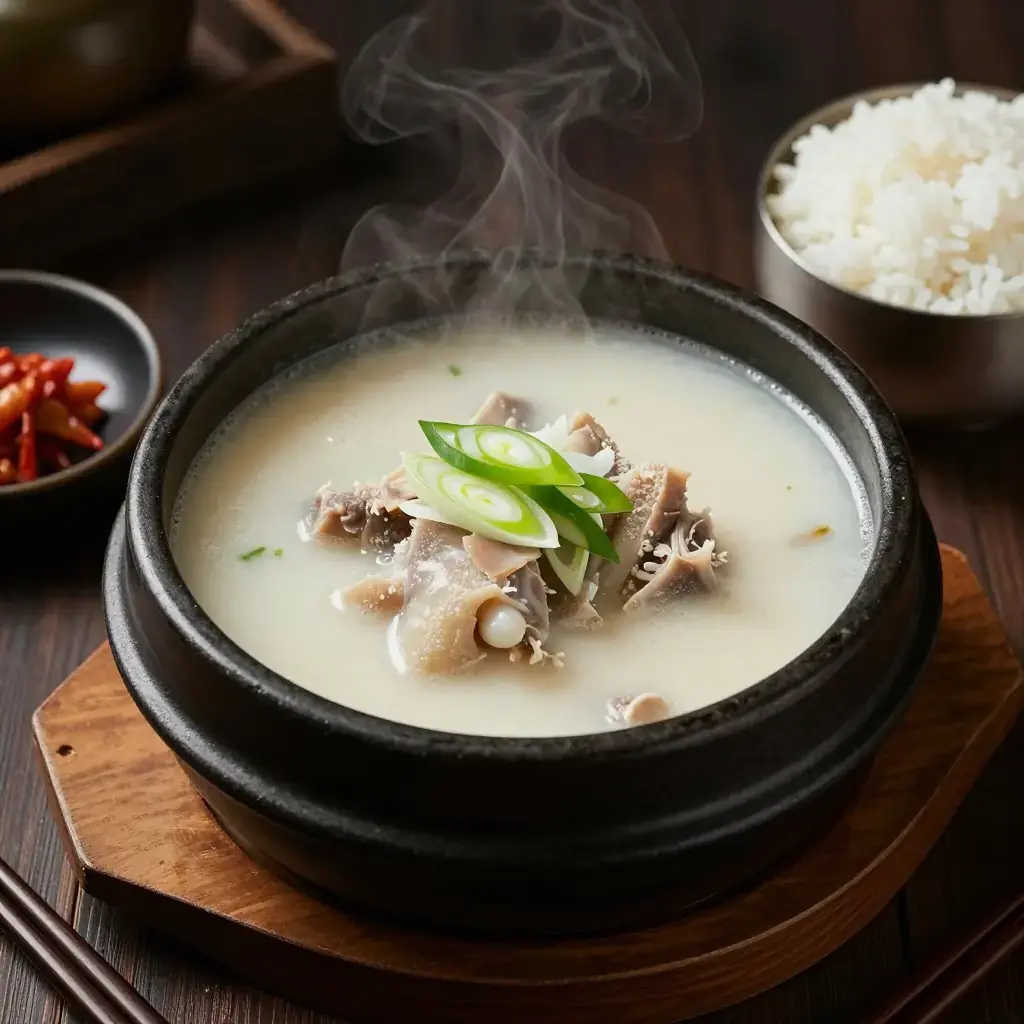
Doganitang
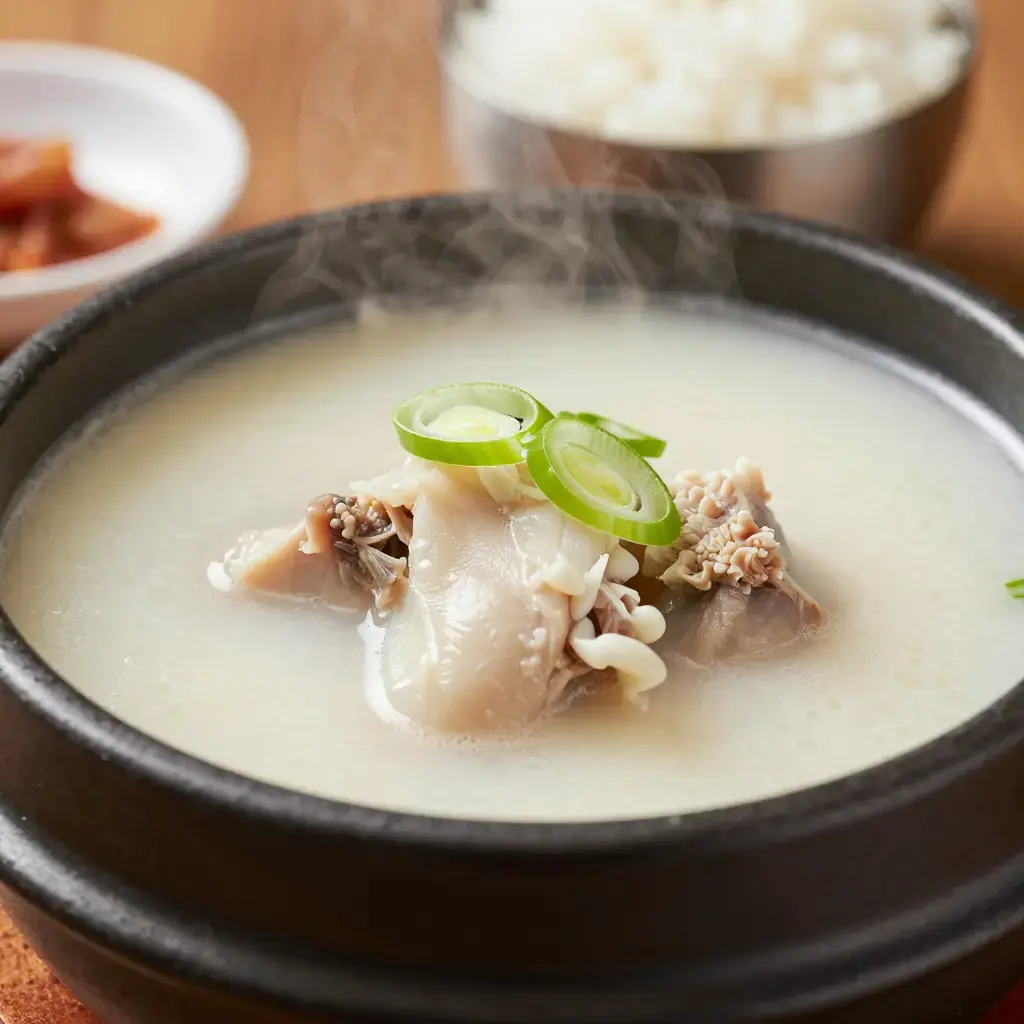
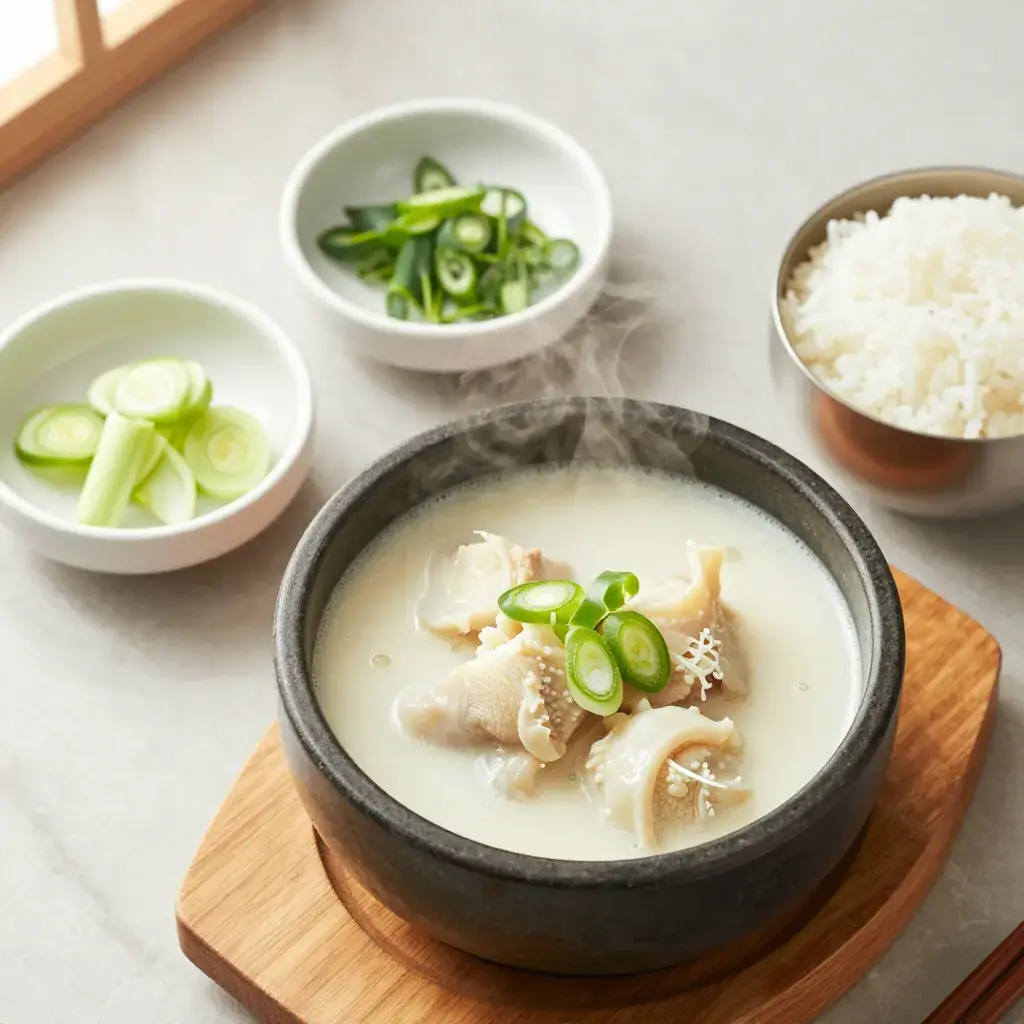
Doganitang — ox knee soup — is one of Korea's oldest medicinal broths, documented in royal court records from the Joseon dynasty. The long-simmered collagen-rich knee joints produce a deeply gelatinous, almost silky broth prized for joint health and warming properties. It is a dish eaten across generations, particularly in colder months.
Serves: 4
Ingredients
- 1.5kg (3.3 lb) ox knee joints (dogani), cut by butcher
- 2 litres (8 cups) cold water, plus more for blanching
- 1 large white radish (daikon), 300g (10 oz), roughly chopped
- 6 garlic cloves, smashed
- 3 spring onions, whole
- 1 tbsp (15g) sea salt
- 1 tsp (3g) freshly ground black pepper
- 2 tbsp (30ml) soy sauce, to season
- Extra spring onions, thinly sliced, to garnish
- Doenjang (soybean paste), optional, to serve alongside
Instructions
- Submerge ox knee joints in cold water and soak for 2 hours to draw out blood. Drain and rinse well.
- Place joints in a large pot, cover with cold water, and bring to a vigorous boil. Cook 10 minutes, then drain completely and rinse the joints and pot.
- Return blanched joints to the clean pot. Add 2 litres (8 cups) fresh cold water, radish, garlic, and whole spring onions.
- Bring to a boil, skim any foam, then reduce to a gentle simmer. Cook partially covered for 3–4 hours, adding more hot water as needed to keep the joints submerged.
- When the broth is milky-white and the cartilage is very soft and gelatinous, remove the joints. Pull off the softened cartilage and meat pieces and return them to the strained broth. Discard bones.
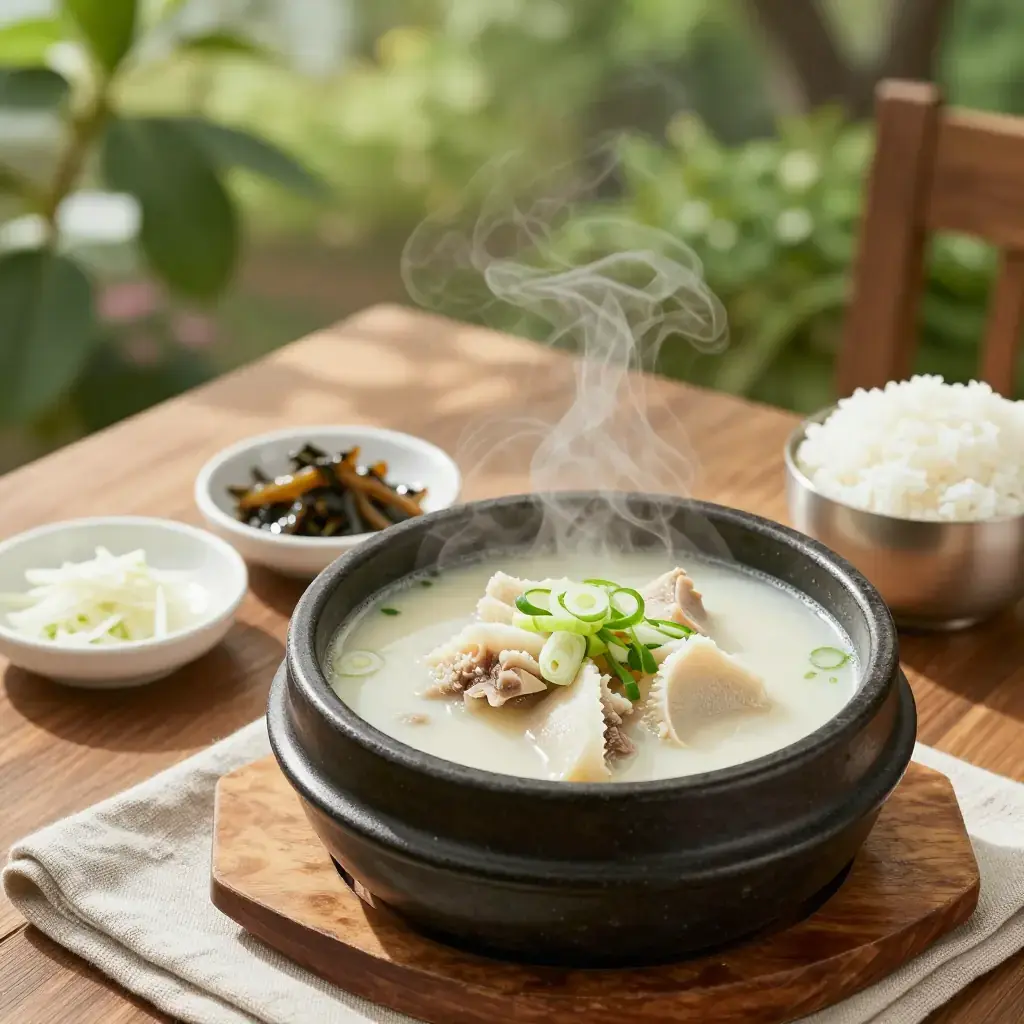
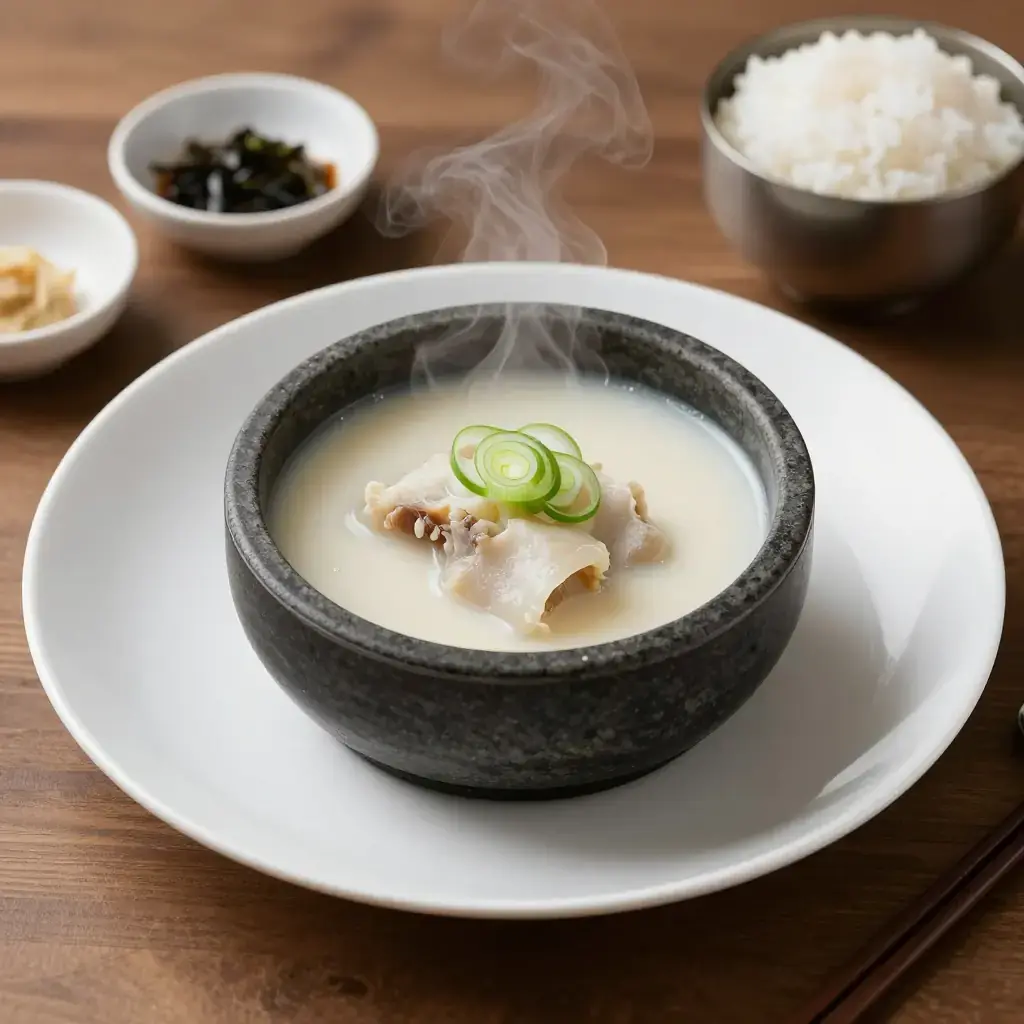
- Season with soy sauce, salt, and black pepper. Serve piping hot garnished with spring onions and a bowl of rice on the side.
Cook's Notes: The gelatinous cartilage is the prized part of this dish — do not discard it. Pressure-cooking for 90 minutes achieves similar results in less time.
All Revisions
generated
# Doganitang Doganitang — ox knee soup — is one of Korea's oldest medicinal broths, documented in royal court records from the Joseon dynasty. The long-simmered collagen-rich knee joints produce a deeply gelatinous, almost silky broth prized for joint health and warming properties. It is a dish eaten across generations, particularly in colder months. Serves: 4 ## Ingredients - 1.5kg (3.3 lb) ox knee joints (dogani), cut by butcher - 2 litres (8 cups) cold water, plus more for blanching - 1 large white radish (daikon), 300g (10 oz), roughly chopped - 6 garlic cloves, smashed - 3 spring onions, whole - 1 tbsp (15g) sea salt - 1 tsp (3g) freshly ground black pepper - 2 tbsp (30ml) soy sauce, to season - Extra spring onions, thinly sliced, to garnish - Doenjang (soybean paste), optional, to serve alongside ## Instructions 1. Submerge ox knee joints in cold water and soak for 2 hours to draw out blood. Drain and rinse well. 2. Place joints in a large pot, cover with cold water, and bring to a vigorous boil. Cook 10 minutes, then drain completely and rinse the joints and pot. 3. Return blanched joints to the clean pot. Add 2 litres (8 cups) fresh cold water, radish, garlic, and whole spring onions. 4. Bring to a boil, skim any foam, then reduce to a gentle simmer. Cook partially covered for 3–4 hours, adding more hot water as needed to keep the joints submerged. 5. When the broth is milky-white and the cartilage is very soft and gelatinous, remove the joints. Pull off the softened cartilage and meat pieces and return them to the strained broth. Discard bones. 6. Season with soy sauce, salt, and black pepper. Serve piping hot garnished with spring onions and a bowl of rice on the side. **Cook's Notes:** The gelatinous cartilage is the prized part of this dish — do not discard it. Pressure-cooking for 90 minutes achieves similar results in less time.Images
Tags
- dinner
- healthy
- historical
- hot-soup
- korean
- one-pot
- weekend-project