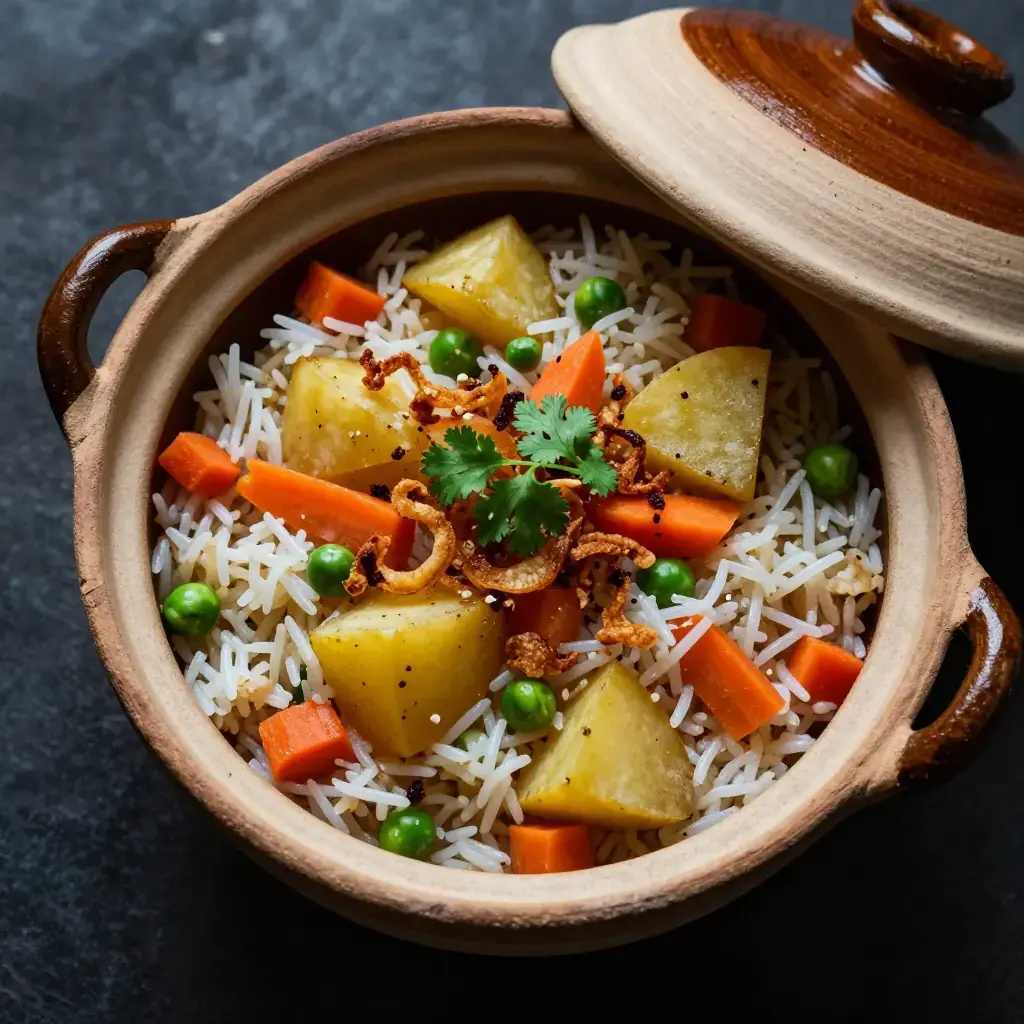
Tehri
Tehri is the vegetarian counterpart to the famed Lucknowi biryani, cooked by Muslim households of Uttar Pradesh as an economical yet deeply flavoured one-pot meal using the same dum (sealed steam) technique. Unlike biryani, where rice and meat are layered, tehri incorporates the vegetables directly into the rice during cooking, making it simpler and entirely suited to everyday family meals.
Serves: 4
Ingredients
- 350g (1¾ cups) basmati rice, washed and soaked for 30 minutes
- 3 tbsp (45ml) ghee or neutral oil
- 2 medium onions, thinly sliced
- 3 cloves garlic, minced
- 2cm (¾ inch) fresh ginger, grated
- 2 medium potatoes (300g / 10½ oz), peeled and cubed
- 150g (5 oz) fresh or frozen green peas
- 2 medium carrots, cut into batons
- 1 tsp (3g) cumin seeds
- 2 bay leaves
- 3 green cardamom pods, bruised
- 1 black cardamom pod
- 4cm (1½ inch) cinnamon stick
- 2 cloves
- 1 tsp (3g) turmeric powder
- 1 tsp (3g) coriander powder
- ½ tsp Kashmiri chilli powder
- 1½ tsp fine salt
- 550ml (2¼ cups) water
- Fresh coriander leaves and fried onion crisps (birista), to serve
Instructions
- Heat the ghee in a heavy-bottomed pot over medium-high heat. Fry the sliced onions, stirring frequently, for 12-15 minutes until deep golden brown. Remove half and set aside for garnishing.
- Add the cumin seeds, bay leaves, cardamom pods, cinnamon, and cloves to the remaining onions. Fry for 1 minute until fragrant.
- Add the garlic and ginger and fry for 2 minutes. Add the turmeric, coriander powder, and Kashmiri chilli — fry for 30 seconds.
- Add the potatoes, carrots, and peas. Stir to coat in the spices and fry for 3-4 minutes.
- Drain the soaked rice and add it to the pot. Stir gently for 2 minutes to toast the grains.
- Add the water and salt. Bring to a full boil, then reduce to the lowest possible heat. Cover tightly (seal the lid with a damp cloth or foil for authentic dum cooking). Cook for 18-20 minutes.
- Remove from heat and rest, still sealed, for 10 minutes. Fluff gently with a fork.
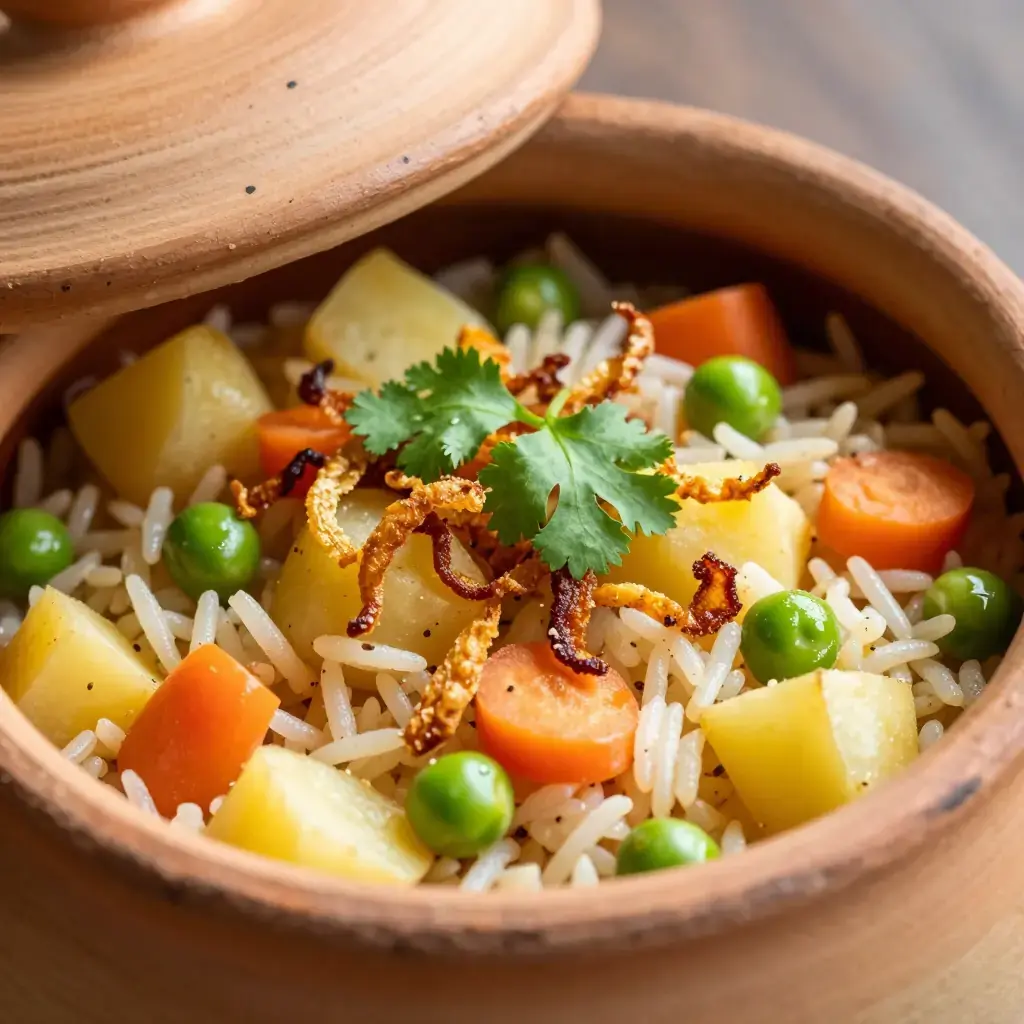
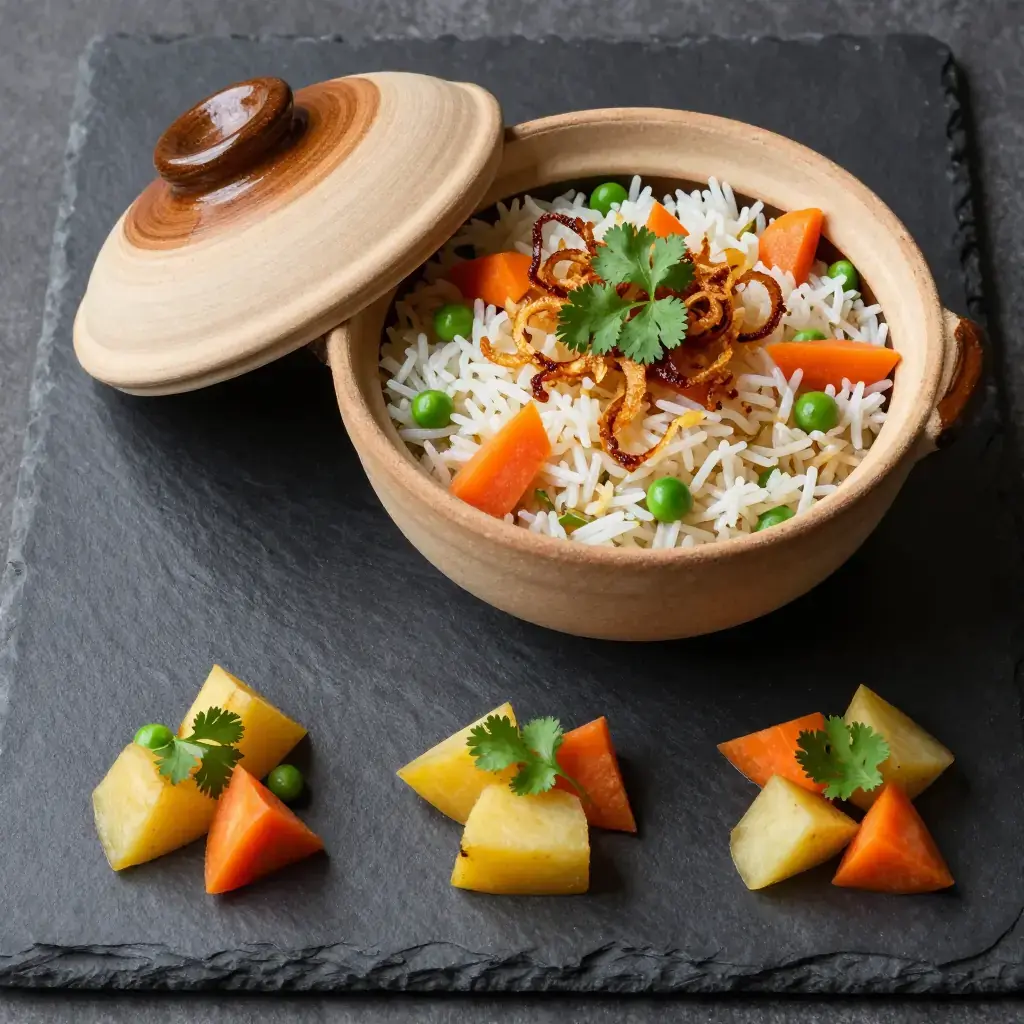
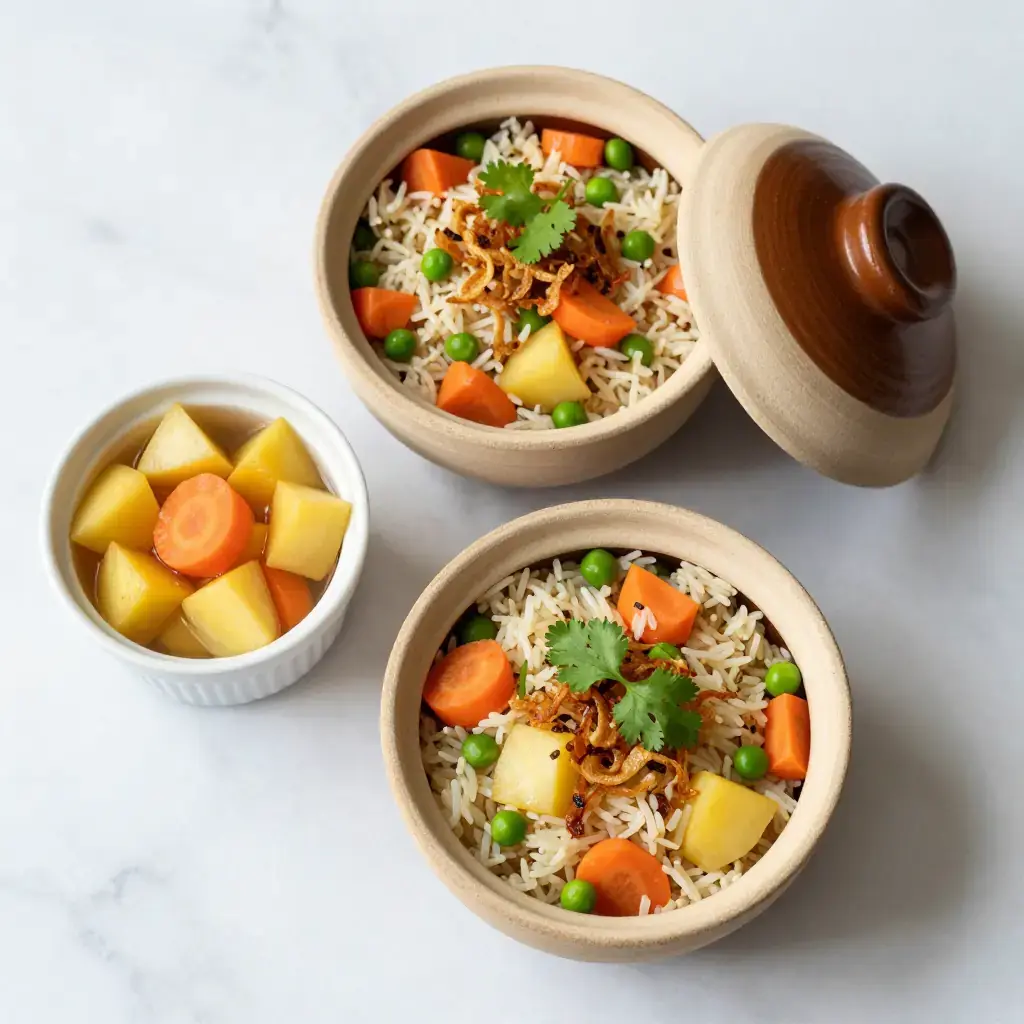
- Serve topped with fried onion crisps and fresh coriander, alongside yoghurt raita.
Cook's Notes: The dum technique — cooking in its own steam — is essential for the fluffy texture and fragrance. If the pot lid is not tight, place a layer of foil between the lid and pot before sealing.
All Revisions
generated
# Tehri Tehri is the vegetarian counterpart to the famed Lucknowi biryani, cooked by Muslim households of Uttar Pradesh as an economical yet deeply flavoured one-pot meal using the same dum (sealed steam) technique. Unlike biryani, where rice and meat are layered, tehri incorporates the vegetables directly into the rice during cooking, making it simpler and entirely suited to everyday family meals. Serves: 4 ## Ingredients - 350g (1¾ cups) basmati rice, washed and soaked for 30 minutes - 3 tbsp (45ml) ghee or neutral oil - 2 medium onions, thinly sliced - 3 cloves garlic, minced - 2cm (¾ inch) fresh ginger, grated - 2 medium potatoes (300g / 10½ oz), peeled and cubed - 150g (5 oz) fresh or frozen green peas - 2 medium carrots, cut into batons - 1 tsp (3g) cumin seeds - 2 bay leaves - 3 green cardamom pods, bruised - 1 black cardamom pod - 4cm (1½ inch) cinnamon stick - 2 cloves - 1 tsp (3g) turmeric powder - 1 tsp (3g) coriander powder - ½ tsp Kashmiri chilli powder - 1½ tsp fine salt - 550ml (2¼ cups) water - Fresh coriander leaves and fried onion crisps (birista), to serve ## Instructions 1. Heat the ghee in a heavy-bottomed pot over medium-high heat. Fry the sliced onions, stirring frequently, for 12-15 minutes until deep golden brown. Remove half and set aside for garnishing. 2. Add the cumin seeds, bay leaves, cardamom pods, cinnamon, and cloves to the remaining onions. Fry for 1 minute until fragrant. 3. Add the garlic and ginger and fry for 2 minutes. Add the turmeric, coriander powder, and Kashmiri chilli — fry for 30 seconds. 4. Add the potatoes, carrots, and peas. Stir to coat in the spices and fry for 3-4 minutes. 5. Drain the soaked rice and add it to the pot. Stir gently for 2 minutes to toast the grains. 6. Add the water and salt. Bring to a full boil, then reduce to the lowest possible heat. Cover tightly (seal the lid with a damp cloth or foil for authentic dum cooking). Cook for 18-20 minutes. 7. Remove from heat and rest, still sealed, for 10 minutes. Fluff gently with a fork. 8. Serve topped with fried onion crisps and fresh coriander, alongside yoghurt raita. **Cook's Notes:** The dum technique — cooking in its own steam — is essential for the fluffy texture and fragrance. If the pot lid is not tight, place a layer of foil between the lid and pot before sealing.Images

Tags
- authentic
- comfort-food
- dinner
- indian-north
- one-pot
- rice
- vegetarian