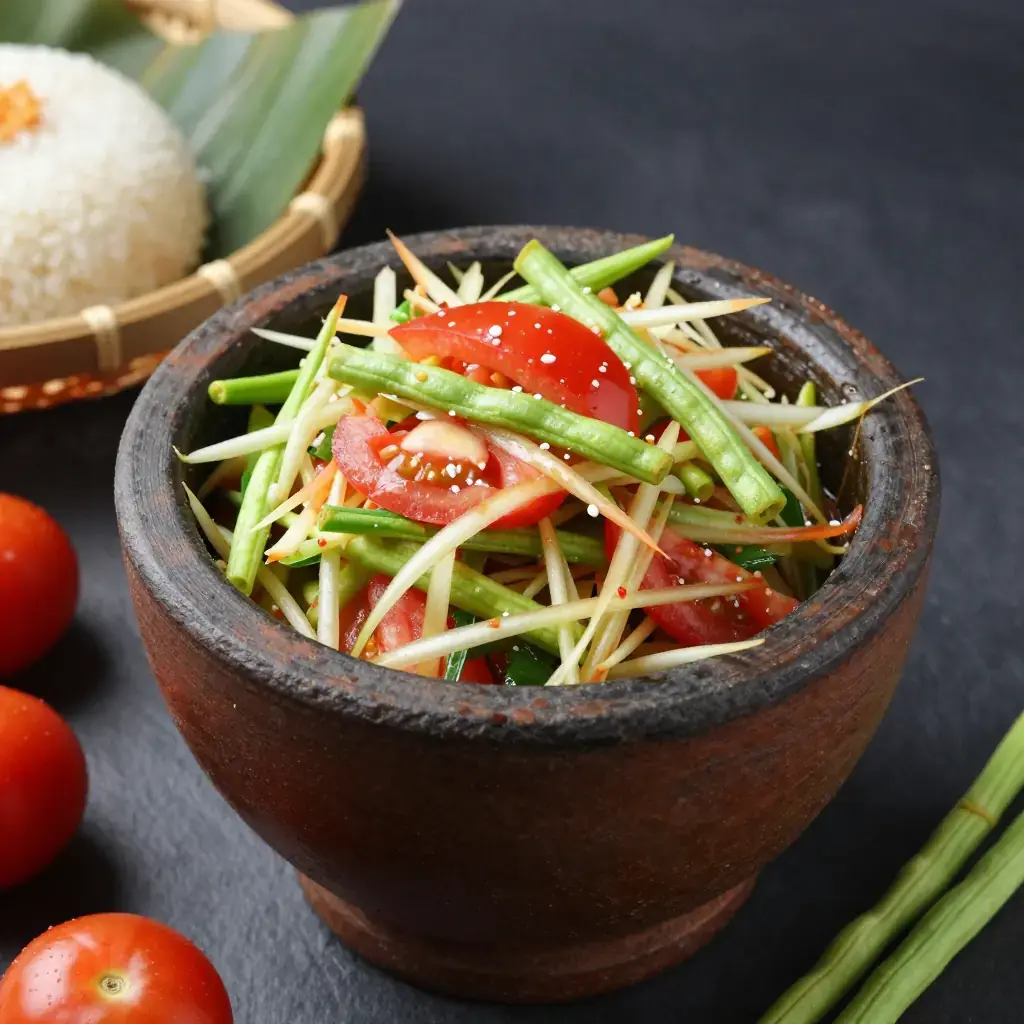
Tham Mak Houng kap Pū Dōng
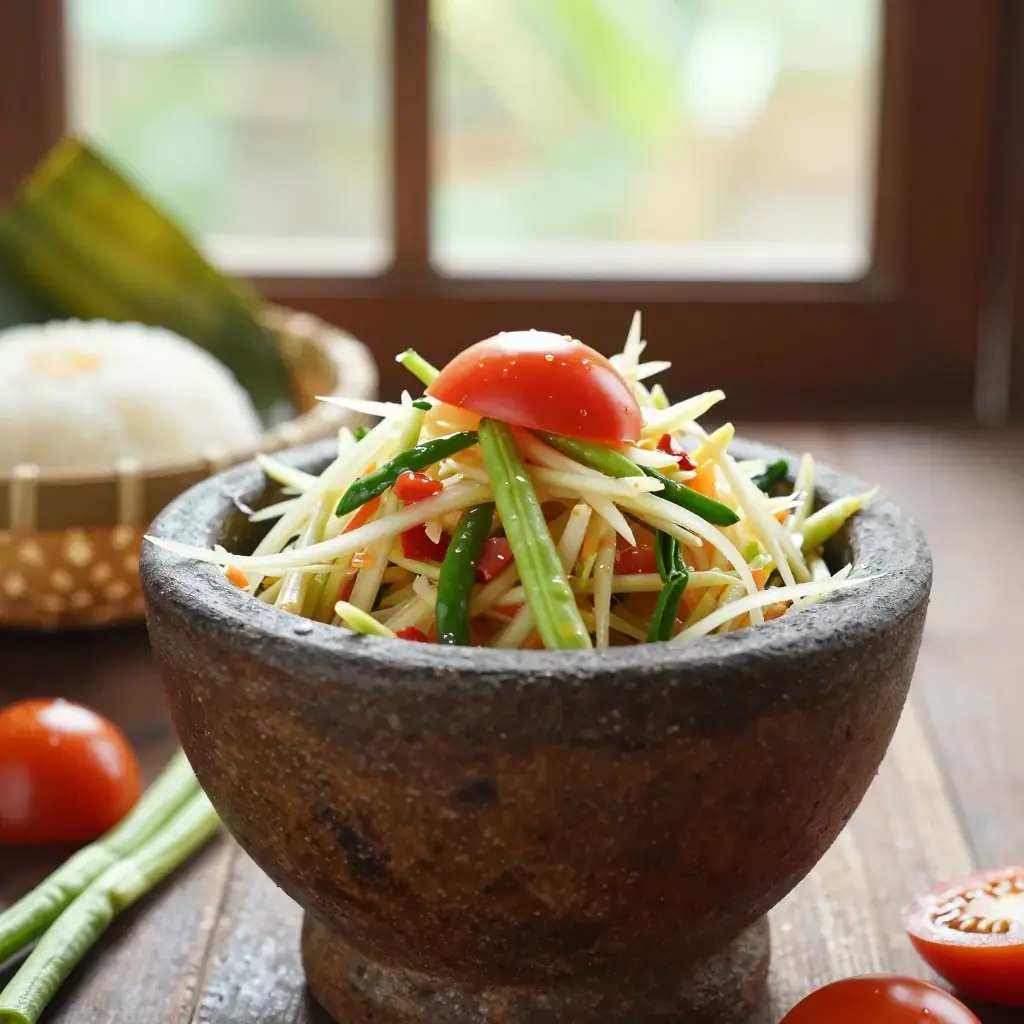
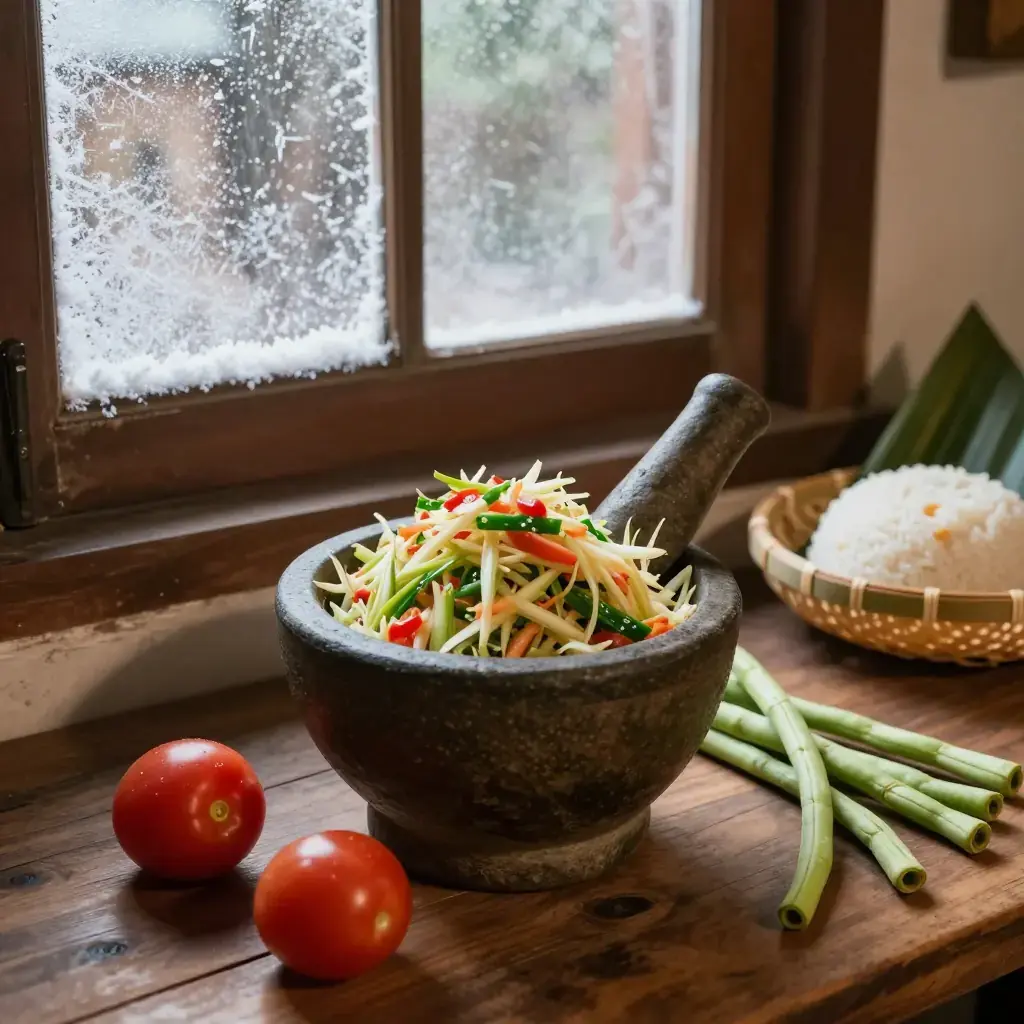
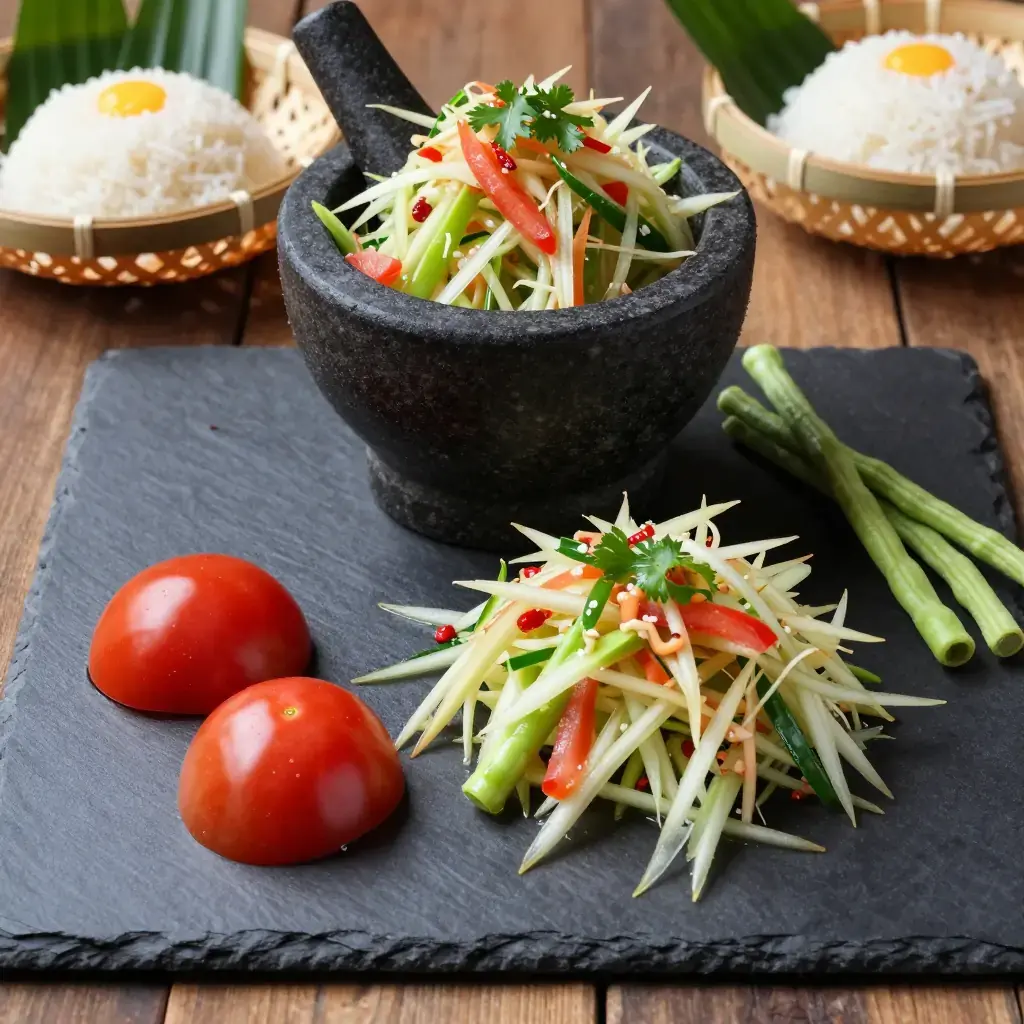
Tham mak houng is the ancient ancestor of the now-famous som tum, originating in the Lao and northeastern Thai (Isan) cultural sphere thousands of years ago. The use of fermented mud crab (pū dōng) in place of fish sauce is the most traditional preparation — its pungent, briny depth marks this dish as unmistakably historical. It remains central to Isan food culture today.
Serves: 4
Ingredients
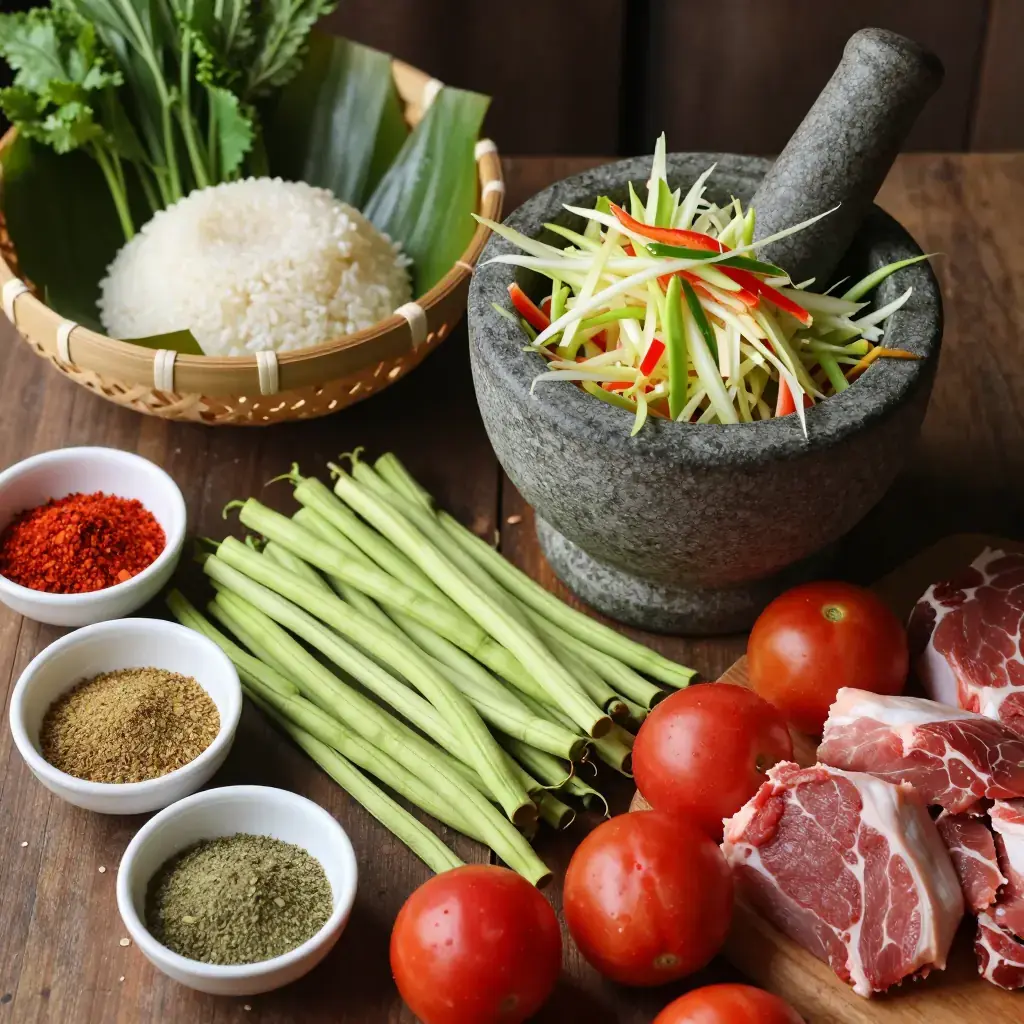
- 400g (14 oz) green (unripe) papaya, peeled and shredded
- 2 whole fermented mud crabs (pū dōng), available from Asian grocers
- 4 cloves garlic
- 3-6 fresh bird's eye chillies (adjust to heat tolerance)
- 2 tbsp (30ml) fish sauce
- 1 tbsp (15ml) lime juice (about 1 lime)
- 1 tsp (4g) palm sugar or light brown sugar
- 8 cherry tomatoes, halved
- 50g (1¾ oz) long beans (snake beans), cut into 4cm (1½ inch) lengths
- Sticky rice (khao niao), to serve
Instructions
- If the fermented crabs are whole, break them open and extract the crab paste and any roe, discarding the shell. This pungent paste forms the heart of the dressing.
- In a large mortar, pound the garlic and chillies to a rough paste, about 1-2 minutes.
- Add the crab paste and pound briefly to combine — the mixture will be very aromatic.
- Add the fish sauce, lime juice, and palm sugar. Stir with a spoon to dissolve the sugar.
- Add the long beans and pound lightly — just enough to bruise them, not break them down.
- Add the shredded papaya and cherry tomatoes. Using both the pestle and a large spoon, toss vigorously while pounding to bruise the papaya and infuse it with the dressing, about 2-3 minutes.
- Taste — it should be fiercely spiced, sour, salty, and faintly sweet. Adjust seasoning. Serve immediately with sticky rice.
Cook's Notes: Pū dōng (fermented crab) has a very pungent smell that mellows once dressed with lime juice. If unavailable, substitute 2 additional tablespoons of fish sauce and 1 tablespoon of shrimp paste. Eat the dish the day it is made.
All Revisions
generated
# Tham Mak Houng kap Pū Dōng Tham mak houng is the ancient ancestor of the now-famous som tum, originating in the Lao and northeastern Thai (Isan) cultural sphere thousands of years ago. The use of fermented mud crab (pū dōng) in place of fish sauce is the most traditional preparation — its pungent, briny depth marks this dish as unmistakably historical. It remains central to Isan food culture today. Serves: 4 ## Ingredients - 400g (14 oz) green (unripe) papaya, peeled and shredded - 2 whole fermented mud crabs (pū dōng), available from Asian grocers - 4 cloves garlic - 3-6 fresh bird's eye chillies (adjust to heat tolerance) - 2 tbsp (30ml) fish sauce - 1 tbsp (15ml) lime juice (about 1 lime) - 1 tsp (4g) palm sugar or light brown sugar - 8 cherry tomatoes, halved - 50g (1¾ oz) long beans (snake beans), cut into 4cm (1½ inch) lengths - Sticky rice (khao niao), to serve ## Instructions 1. If the fermented crabs are whole, break them open and extract the crab paste and any roe, discarding the shell. This pungent paste forms the heart of the dressing. 2. In a large mortar, pound the garlic and chillies to a rough paste, about 1-2 minutes. 3. Add the crab paste and pound briefly to combine — the mixture will be very aromatic. 4. Add the fish sauce, lime juice, and palm sugar. Stir with a spoon to dissolve the sugar. 5. Add the long beans and pound lightly — just enough to bruise them, not break them down. 6. Add the shredded papaya and cherry tomatoes. Using both the pestle and a large spoon, toss vigorously while pounding to bruise the papaya and infuse it with the dressing, about 2-3 minutes. 7. Taste — it should be fiercely spiced, sour, salty, and faintly sweet. Adjust seasoning. Serve immediately with sticky rice. **Cook's Notes:** Pū dōng (fermented crab) has a very pungent smell that mellows once dressed with lime juice. If unavailable, substitute 2 additional tablespoons of fish sauce and 1 tablespoon of shrimp paste. Eat the dish the day it is made.Images
Tags
- authentic
- cold-dish
- fermented
- historical
- no-cook
- raw
- seafood
- thai