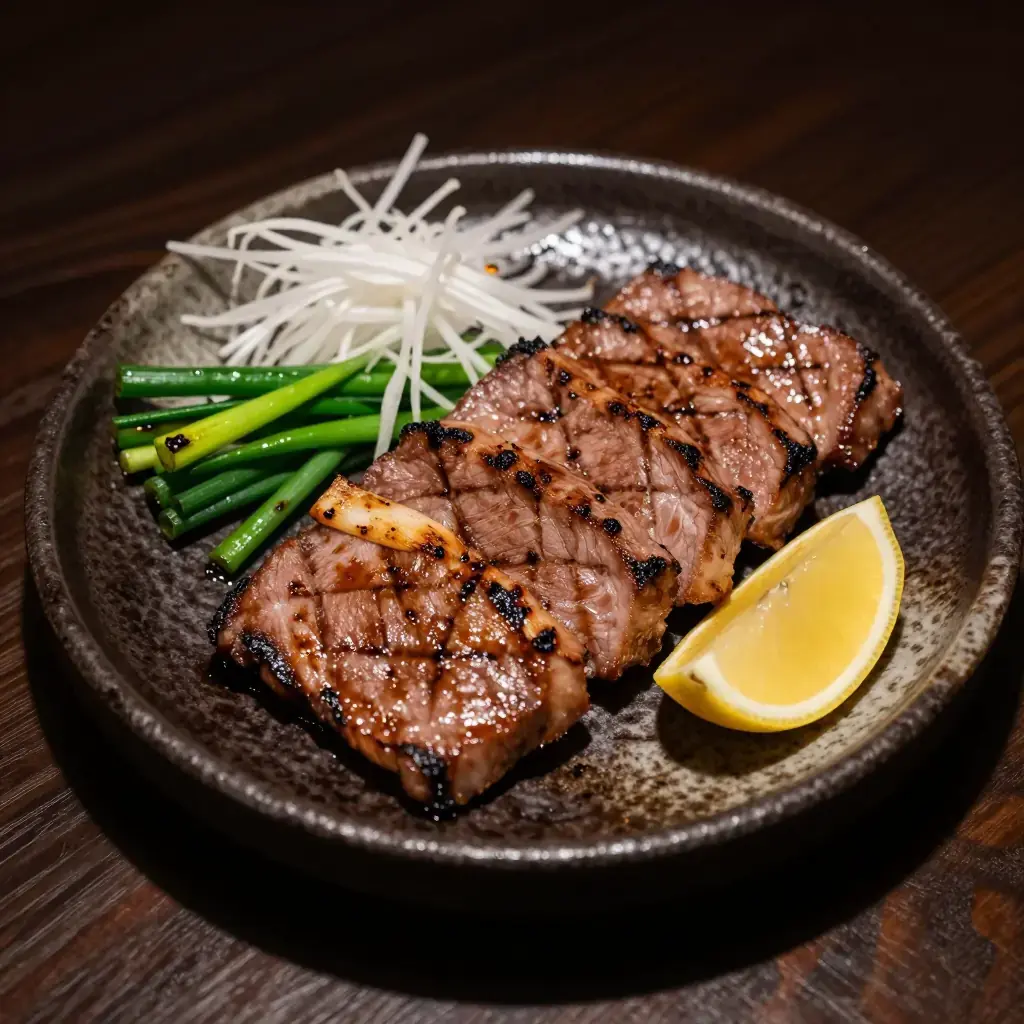
Gyutan Shio Yaki (牛タン塩焼き)
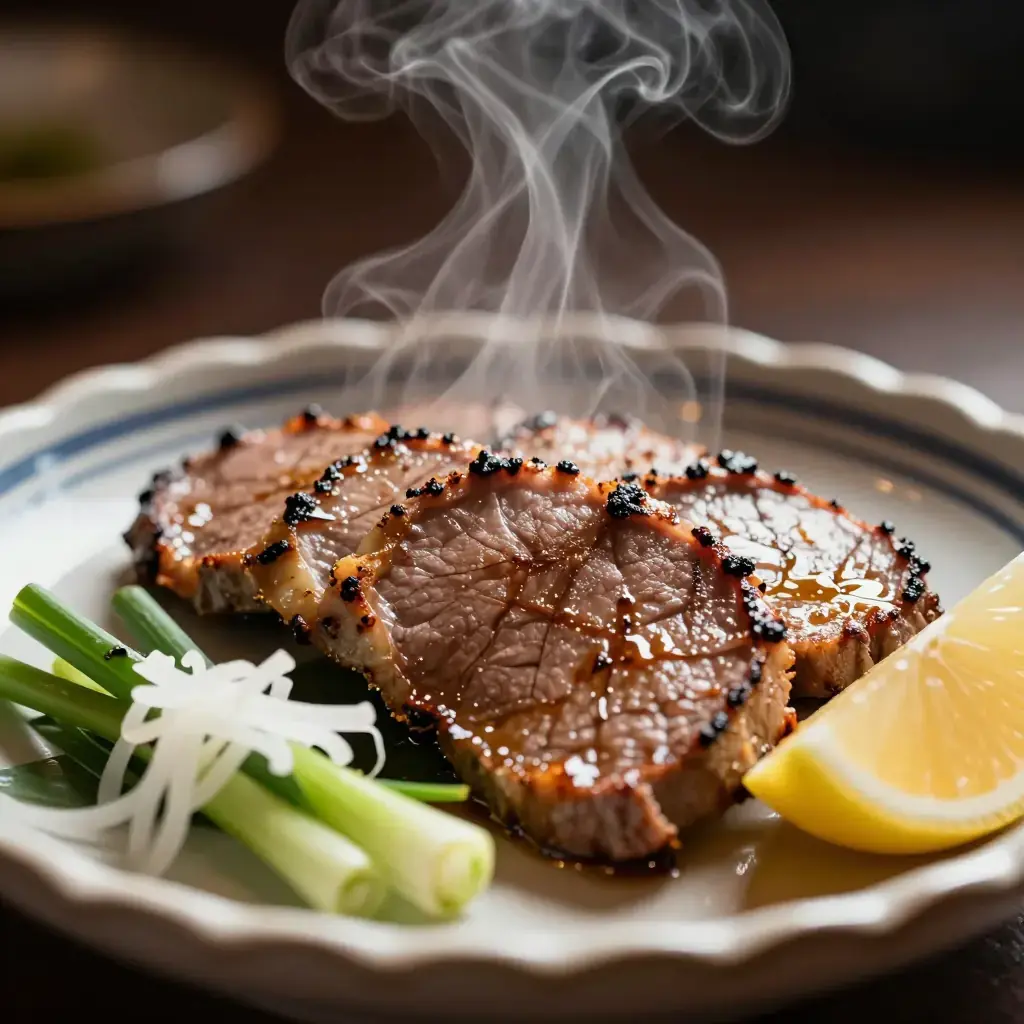
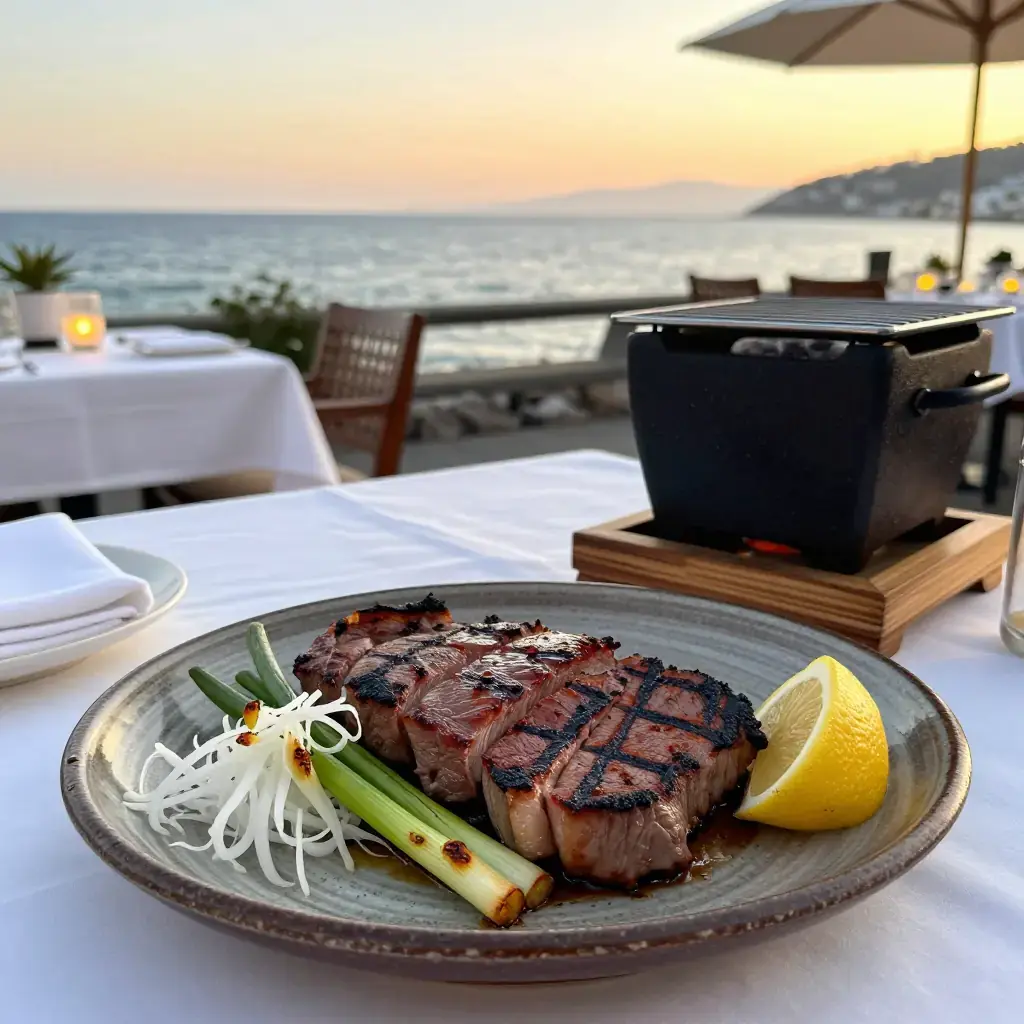
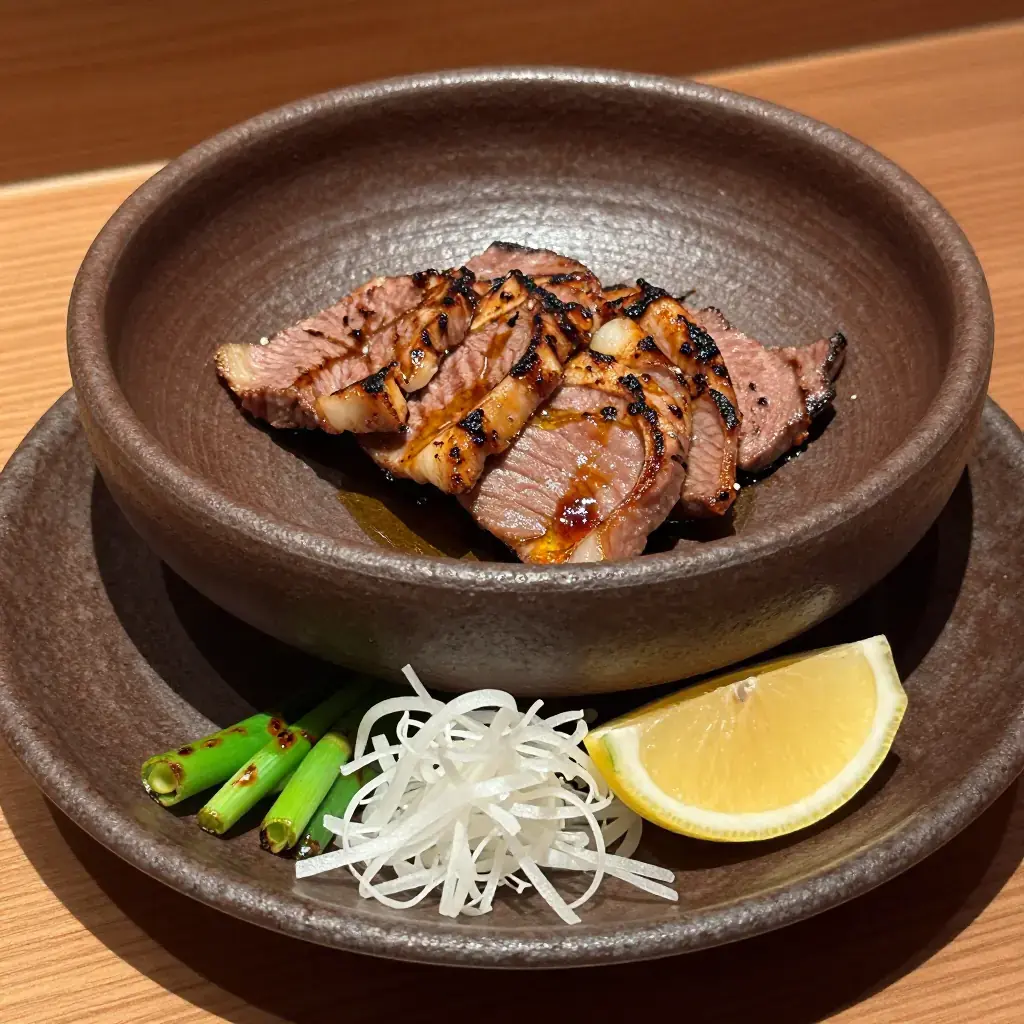
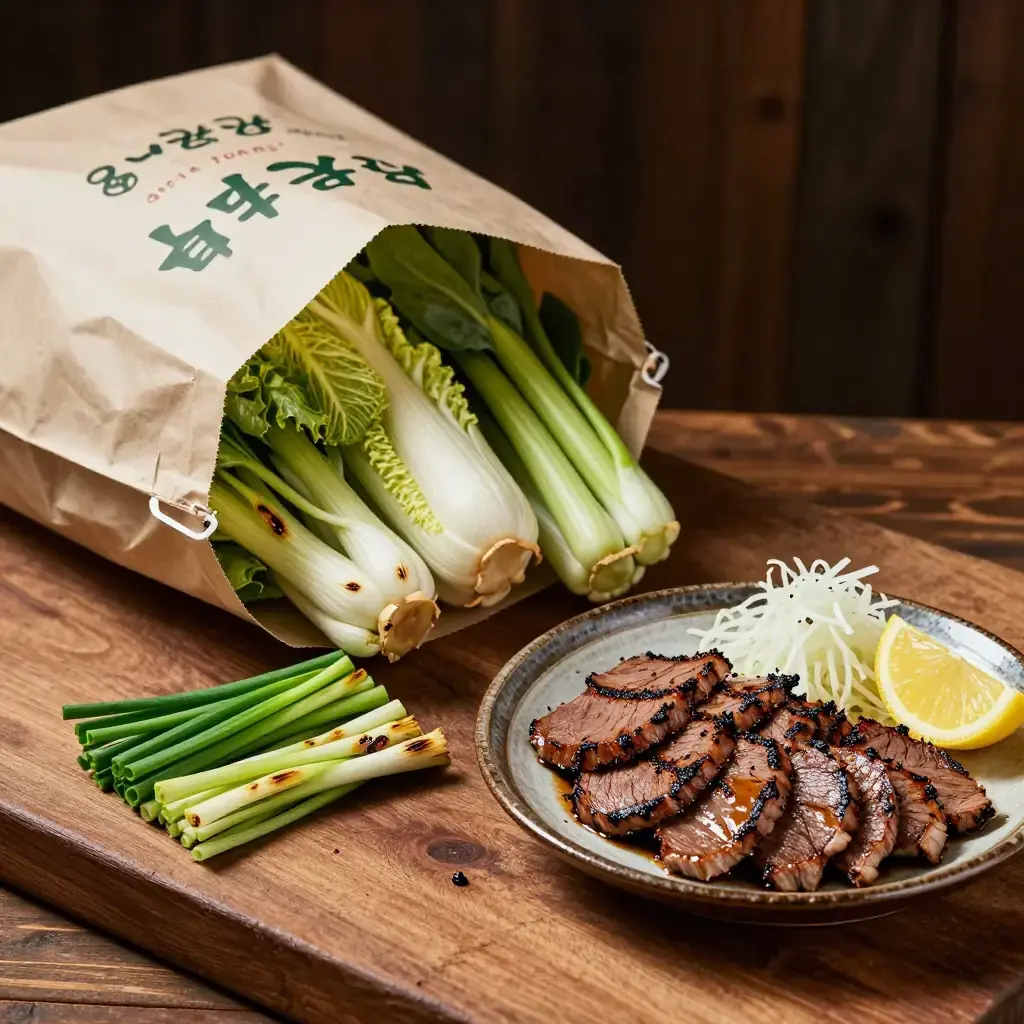
Gyutan — grilled beef tongue seasoned simply with salt and lemon — is the signature dish of Sendai, Miyagi Prefecture, where it became popular after World War II. Chargrilled at high heat over binchotan charcoal, it is celebratory, deeply savoury, and prized for its unique chewy-tender texture.
Serves: 4
Ingredients
- 600g (1.3 lb) beef tongue, thinly sliced (3mm/⅛ inch), preferably pre-cut by your butcher
- 1½ tsp (7g) fine sea salt
- ½ tsp (2g) freshly ground black pepper
- 1 tsp (5ml) sesame oil
- Lemon wedges, to serve
- 4 spring onions (scallions), to grill alongside
- 100g (3.5 oz) daikon, grated, to serve (optional)
- Toasted barley rice (mugimeshi), to serve
Instructions
- If tongue slices are not pre-cut, freeze the whole tongue for 1 hour then slice against the grain, 3mm thick. Score lightly with a crosshatch pattern — this prevents curling and aids charring.
- Season slices generously on both sides with salt and pepper. Drizzle with sesame oil and toss to coat. Rest at room temperature for 10 minutes.
- Prepare a very hot grill — binchotan charcoal is traditional, but a gas grill or cast-iron griddle works well. The surface must be searing hot.
- Grill tongue slices for 60–90 seconds per side, moving frequently with tongs. Look for deep caramelisation and slight char at the edges. Do not overcrowd the grill.
- Grill spring onions for 2–3 minutes, turning once, until softened and marked.
- Plate tongue slices immediately with grilled spring onions, grated daikon, and lemon wedges on the side. Squeeze lemon over just before eating. Serve with mugimeshi rice.
Cook's Notes: Pre-sliced gyutan is sold in Japanese supermarkets vacuum-packed and is the easiest option. The lemon squeeze at the table is not optional — the acidity cuts the fat perfectly. For indoor cooking, use the hottest flame on a cast-iron pan with the fan running.
All Revisions
generated
# Gyutan Shio Yaki (牛タン塩焼き) Gyutan — grilled beef tongue seasoned simply with salt and lemon — is the signature dish of Sendai, Miyagi Prefecture, where it became popular after World War II. Chargrilled at high heat over binchotan charcoal, it is celebratory, deeply savoury, and prized for its unique chewy-tender texture. Serves: 4 ## Ingredients - 600g (1.3 lb) beef tongue, thinly sliced (3mm/⅛ inch), preferably pre-cut by your butcher - 1½ tsp (7g) fine sea salt - ½ tsp (2g) freshly ground black pepper - 1 tsp (5ml) sesame oil - Lemon wedges, to serve - 4 spring onions (scallions), to grill alongside - 100g (3.5 oz) daikon, grated, to serve (optional) - Toasted barley rice (mugimeshi), to serve ## Instructions 1. If tongue slices are not pre-cut, freeze the whole tongue for 1 hour then slice against the grain, 3mm thick. Score lightly with a crosshatch pattern — this prevents curling and aids charring. 2. Season slices generously on both sides with salt and pepper. Drizzle with sesame oil and toss to coat. Rest at room temperature for 10 minutes. 3. Prepare a very hot grill — binchotan charcoal is traditional, but a gas grill or cast-iron griddle works well. The surface must be searing hot. 4. Grill tongue slices for 60–90 seconds per side, moving frequently with tongs. Look for deep caramelisation and slight char at the edges. Do not overcrowd the grill. 5. Grill spring onions for 2–3 minutes, turning once, until softened and marked. 6. Plate tongue slices immediately with grilled spring onions, grated daikon, and lemon wedges on the side. Squeeze lemon over just before eating. Serve with mugimeshi rice. **Cook's Notes:** Pre-sliced gyutan is sold in Japanese supermarkets vacuum-packed and is the easiest option. The lemon squeeze at the table is not optional — the acidity cuts the fat perfectly. For indoor cooking, use the hottest flame on a cast-iron pan with the fan running.Images
Tags
- authentic
- dinner-party
- grilled
- indulgent
- japanese
- offal