
Canjiquinha com Costelinha
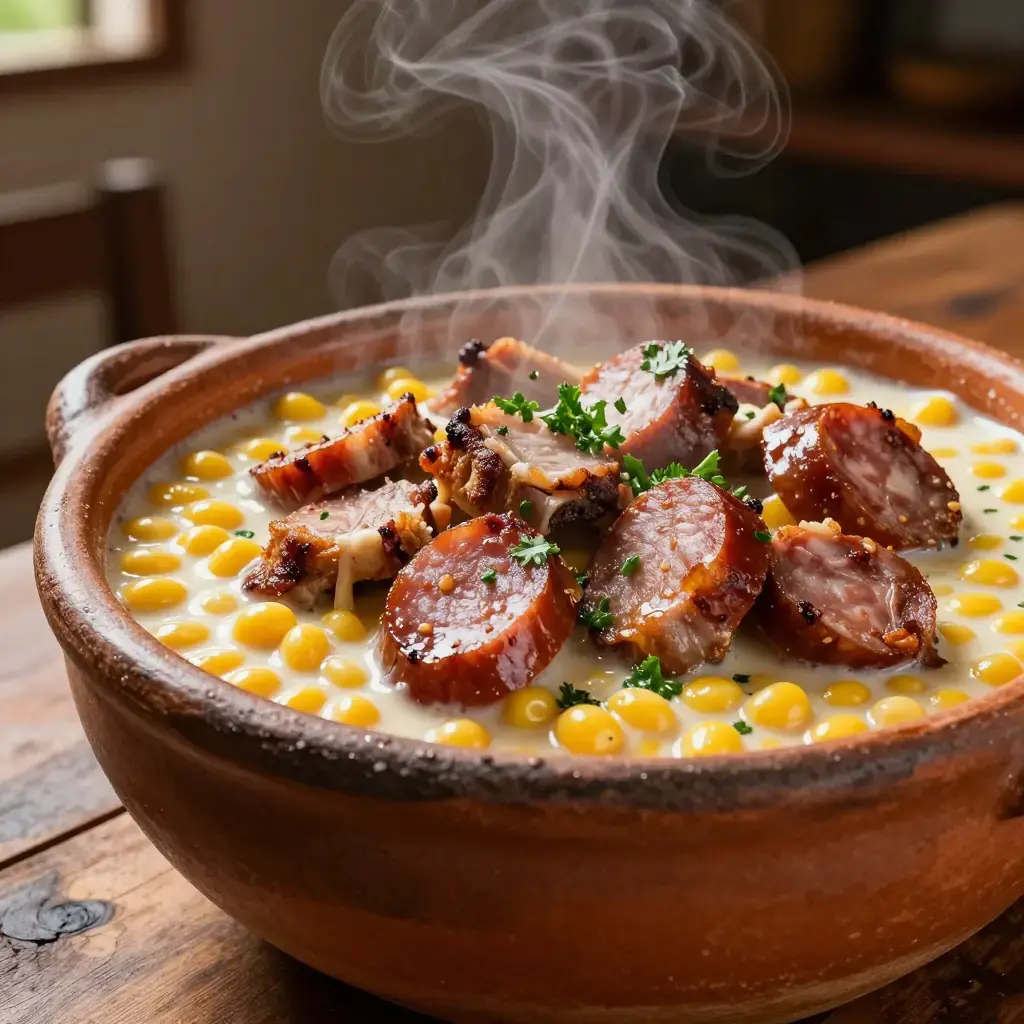
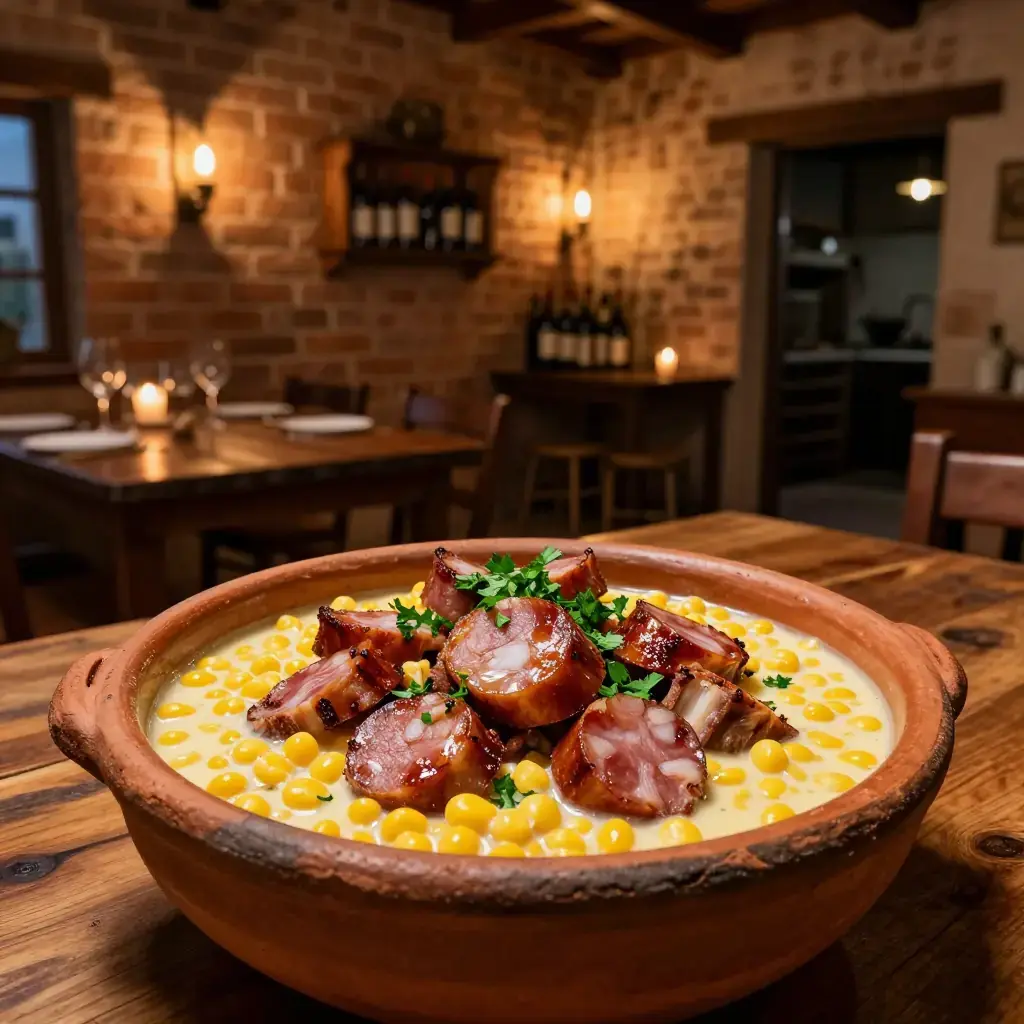
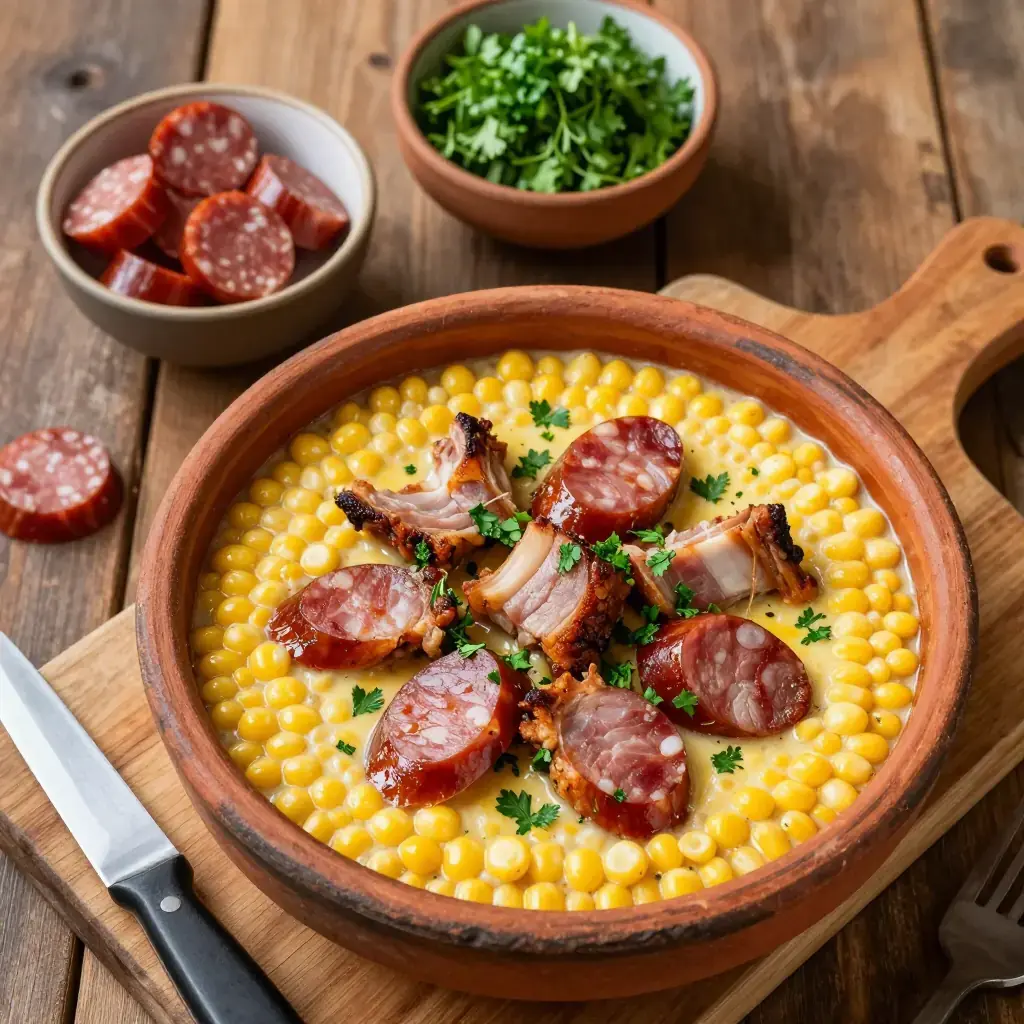
Canjiquinha com Costelinha is the soul food of Minas Gerais, Brazil's heartland state known for its rich and rustic cuisine. Canjiquinha — cracked hominy corn — absorbs pork-rib juices during a long, slow cook to become silky and porridge-like, not unlike polenta but starchier and more mineral. This is the dish every Mineira grandmother prepares on cold winter Sundays.
Serves: 6
Ingredients
- 400g (14 oz) canjiquinha (cracked white hominy corn), soaked overnight
- 700g (1.5 lb) pork spare ribs, cut into individual bones
- 200g (7 oz) smoked pork sausage (linguiça defumada), sliced
- 1 large onion, finely diced
- 6 garlic cloves, minced
- 2 bay leaves
- 1 tsp ground cumin
- 1 tsp sweet paprika
- 0.5 tsp turmeric
- 2 tbsp (30ml) neutral oil
- 1.5 litres (6 cups) water or light pork stock
- Fresh parsley, to finish
- Salt and black pepper
Instructions
- Season pork ribs with salt, pepper, cumin, and paprika. Marinate for at least 1 hour or overnight in the refrigerator.
- Heat oil in a large heavy pot or slow cooker insert over high heat. Brown ribs in batches, 3-4 minutes per side, until deeply caramelised. Remove and set aside.
- In the same pot, fry onion over medium heat until softened, 5 minutes. Add garlic and sliced sausage and cook 3 minutes until fragrant and lightly browned.
- Drain the soaked canjiquinha and add to the pot along with browned ribs, bay leaves, turmeric, and stock.
- Slow cooker: cook on low 7-8 hours, stirring occasionally in the last 2 hours. Stovetop: bring to a simmer, cover, and cook gently 2.5-3 hours, stirring regularly and adding water as needed to keep the canjiquinha submerged and creamy.
- The canjiquinha is ready when it is tender and has absorbed most of the liquid to a thick, porridge-like consistency. Season with salt and pepper.
- Scatter with parsley and serve directly from the pot.
Cook's Notes: Canjiquinha is available in Brazilian grocery stores and online. It can be substituted with coarse polenta or cracked hominy grits for a similar result. The dish should be thick and spoonable like a loose risotto — add water if it becomes too stiff during cooking. Leftovers firm up in the fridge; reheat with a splash of water.
All Revisions
generated
# Canjiquinha com Costelinha Canjiquinha com Costelinha is the soul food of Minas Gerais, Brazil's heartland state known for its rich and rustic cuisine. Canjiquinha — cracked hominy corn — absorbs pork-rib juices during a long, slow cook to become silky and porridge-like, not unlike polenta but starchier and more mineral. This is the dish every Mineira grandmother prepares on cold winter Sundays. Serves: 6 ## Ingredients - 400g (14 oz) canjiquinha (cracked white hominy corn), soaked overnight - 700g (1.5 lb) pork spare ribs, cut into individual bones - 200g (7 oz) smoked pork sausage (linguiça defumada), sliced - 1 large onion, finely diced - 6 garlic cloves, minced - 2 bay leaves - 1 tsp ground cumin - 1 tsp sweet paprika - 0.5 tsp turmeric - 2 tbsp (30ml) neutral oil - 1.5 litres (6 cups) water or light pork stock - Fresh parsley, to finish - Salt and black pepper ## Instructions 1. Season pork ribs with salt, pepper, cumin, and paprika. Marinate for at least 1 hour or overnight in the refrigerator. 2. Heat oil in a large heavy pot or slow cooker insert over high heat. Brown ribs in batches, 3-4 minutes per side, until deeply caramelised. Remove and set aside. 3. In the same pot, fry onion over medium heat until softened, 5 minutes. Add garlic and sliced sausage and cook 3 minutes until fragrant and lightly browned. 4. Drain the soaked canjiquinha and add to the pot along with browned ribs, bay leaves, turmeric, and stock. 5. Slow cooker: cook on low 7-8 hours, stirring occasionally in the last 2 hours. Stovetop: bring to a simmer, cover, and cook gently 2.5-3 hours, stirring regularly and adding water as needed to keep the canjiquinha submerged and creamy. 6. The canjiquinha is ready when it is tender and has absorbed most of the liquid to a thick, porridge-like consistency. Season with salt and pepper. 7. Scatter with parsley and serve directly from the pot. **Cook's Notes:** Canjiquinha is available in Brazilian grocery stores and online. It can be substituted with coarse polenta or cracked hominy grits for a similar result. The dish should be thick and spoonable like a loose risotto — add water if it becomes too stiff during cooking. Leftovers firm up in the fridge; reheat with a splash of water.Images

Tags
- authentic
- brazilian
- comfort-food
- dinner
- one-pot
- slow-cooker
- smoked
- winter