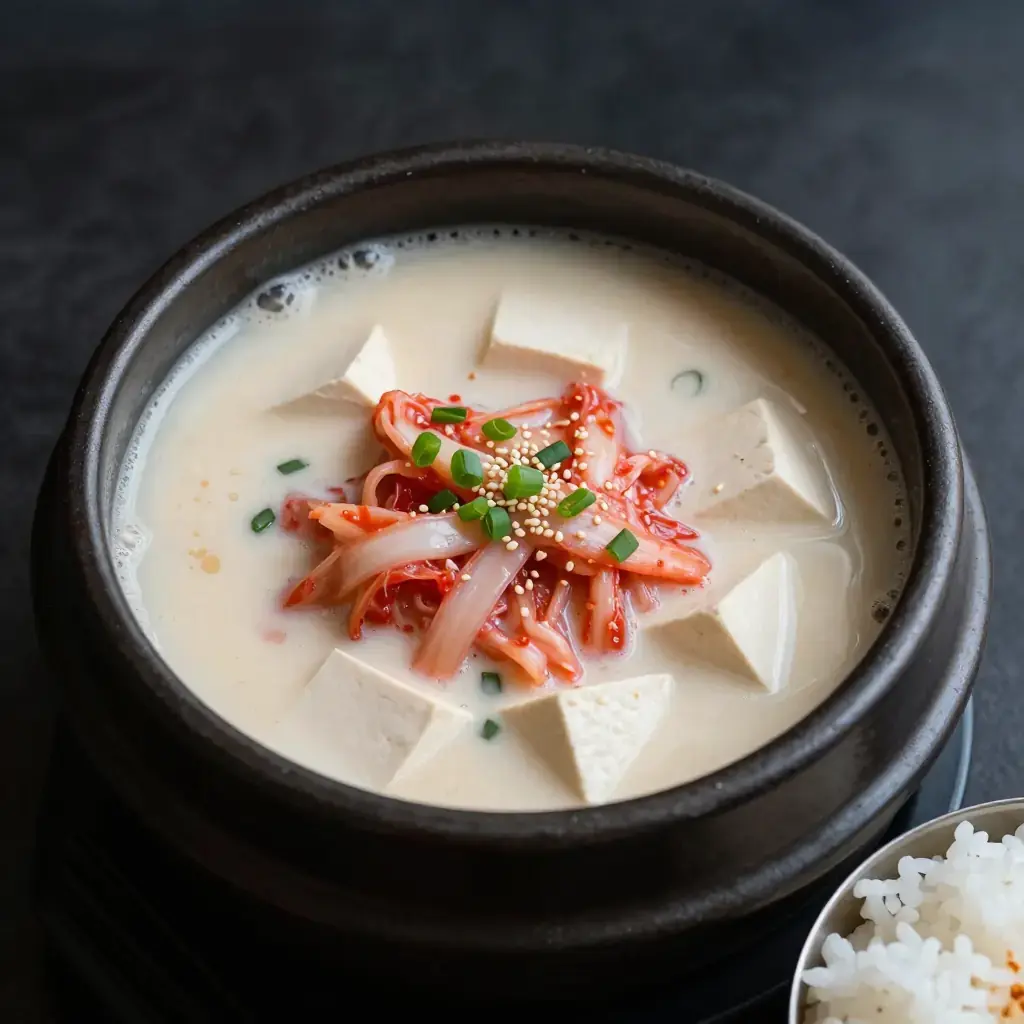
Kongbiji Jjigae
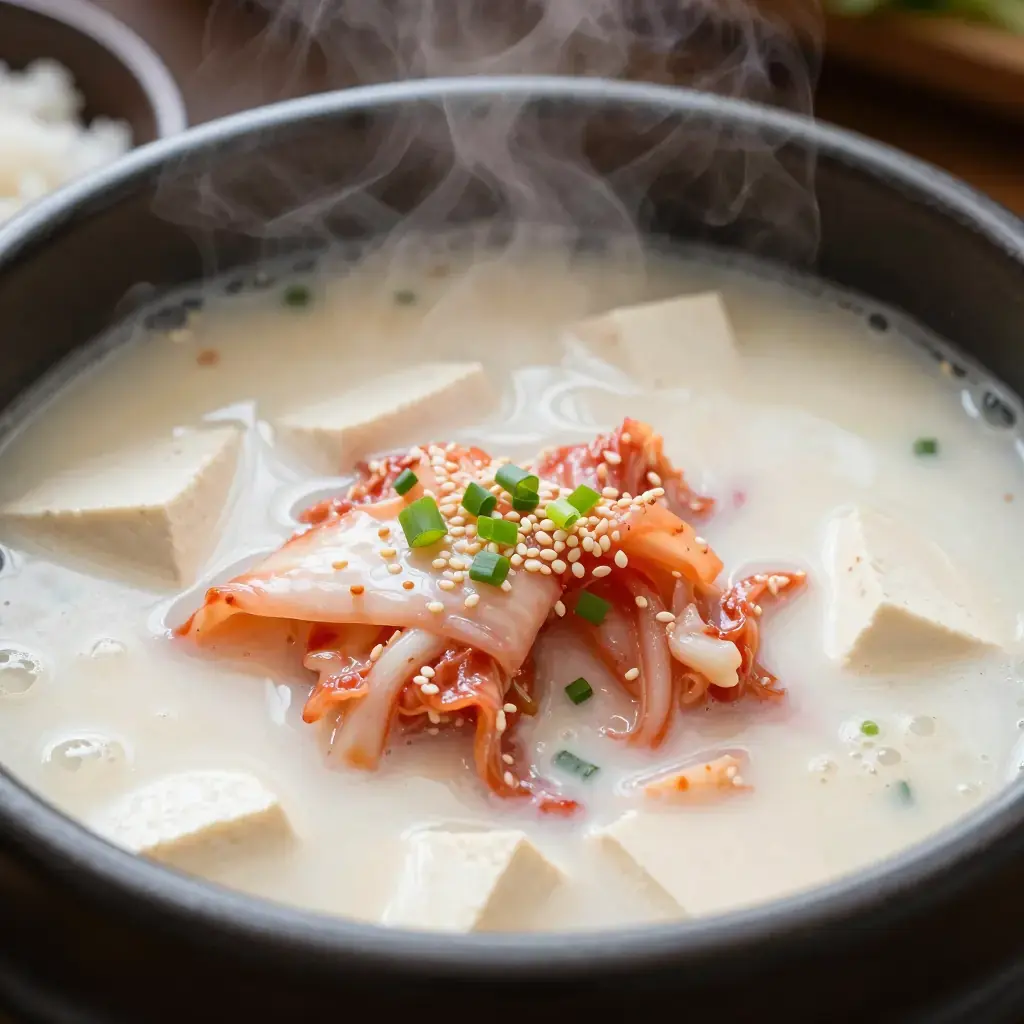
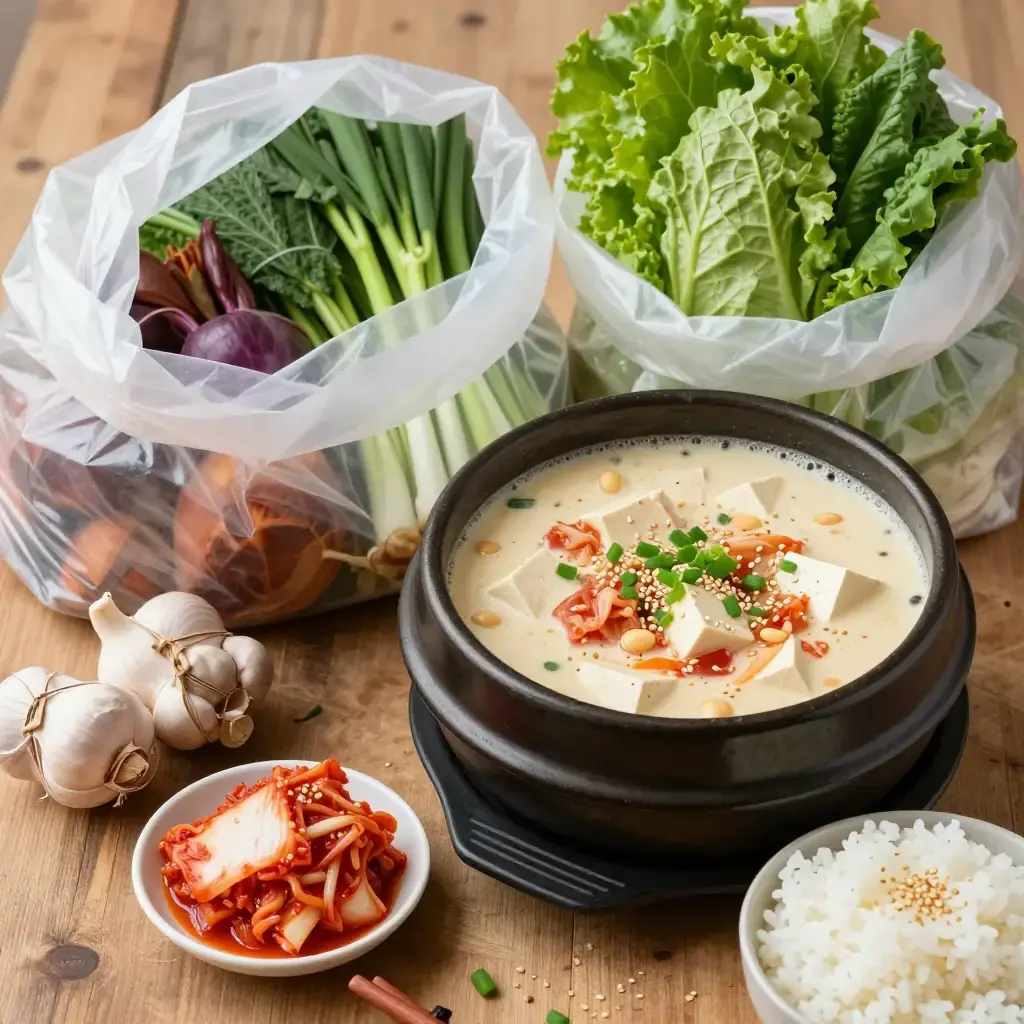
Kongbiji Jjigae is a deeply nourishing Korean stew made from the ground soybean pulp left over after making tofu — a frugal, heirloom dish that transforms a by-product into something extraordinarily comforting. The thick, milky stew is enriched with kimchi and pork, simmered in an earthenware pot until the soybean base thickens to a porridge-like consistency. It is a cold-weather staple across Korea.
Serves: 4
Ingredients
- 400g (14 oz) fresh soybean pulp (kongbiji — available frozen at Korean grocery stores)
- 150g (5 oz) pork belly or shoulder, thinly sliced
- 150g (5 oz) well-fermented kimchi, roughly chopped, plus 2 tbsp kimchi liquid
- 200g (7 oz) soft tofu, broken into chunks
- 3 spring onions, sliced
- 2 cloves garlic, minced
- 500 ml (2 cups) water or anchovy stock
- 1 tbsp (15 ml) sesame oil
- 1 tsp gochugaru (Korean red pepper flakes)
- 1/2 tsp salt
- 1 tsp toasted sesame seeds, to finish
Instructions
- Heat sesame oil in a dolsot (stone pot) or heavy saucepan over medium heat. Add pork and stir-fry 3–4 minutes until lightly browned.
- Add garlic, kimchi, and kimchi liquid. Stir-fry for 2 minutes.
- Add the kongbiji (soybean pulp) and water or stock. Stir well, breaking up any lumps.
- Add gochugaru and salt. Bring to a boil stirring constantly — kongbiji scorches easily, so keep stirring.
- Reduce heat to low. Add soft tofu chunks. Simmer gently, stirring frequently, for 15–20 minutes until the stew thickens to a creamy, porridge-like consistency.
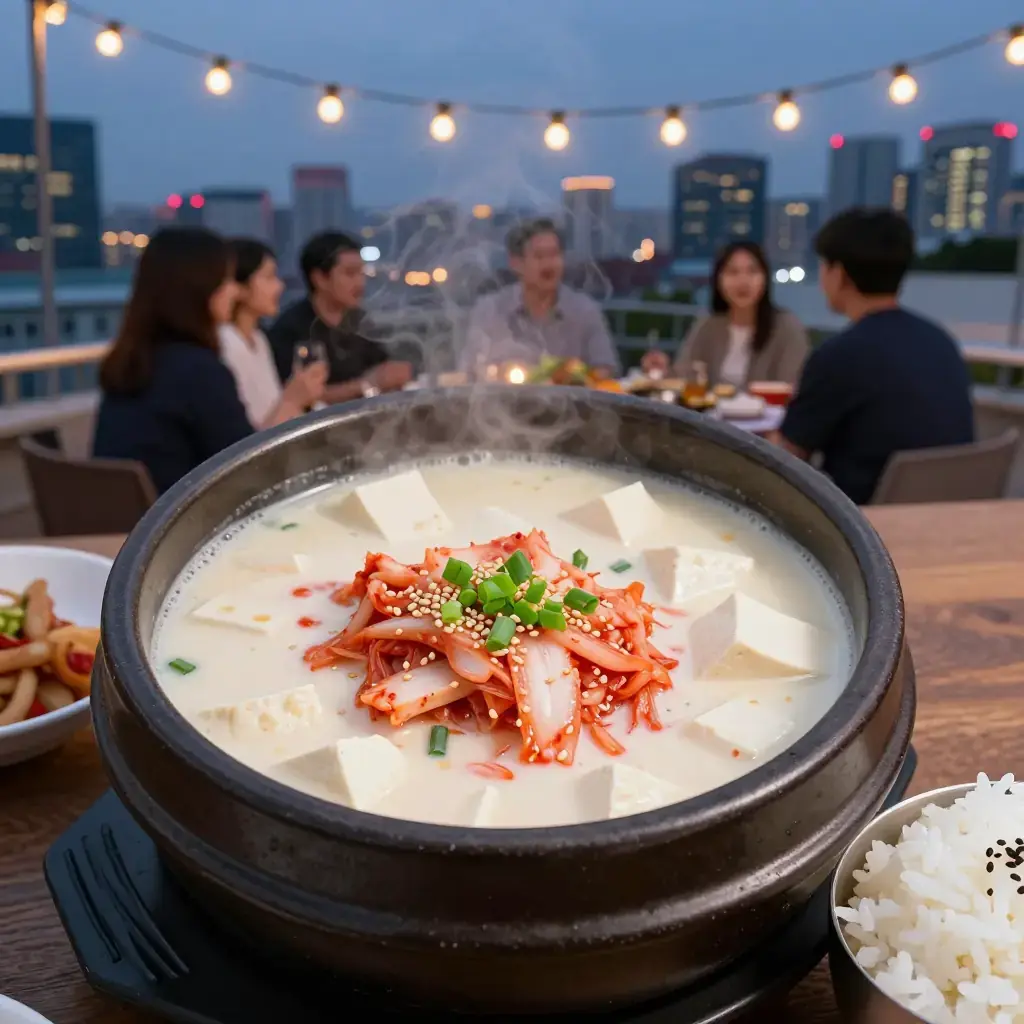
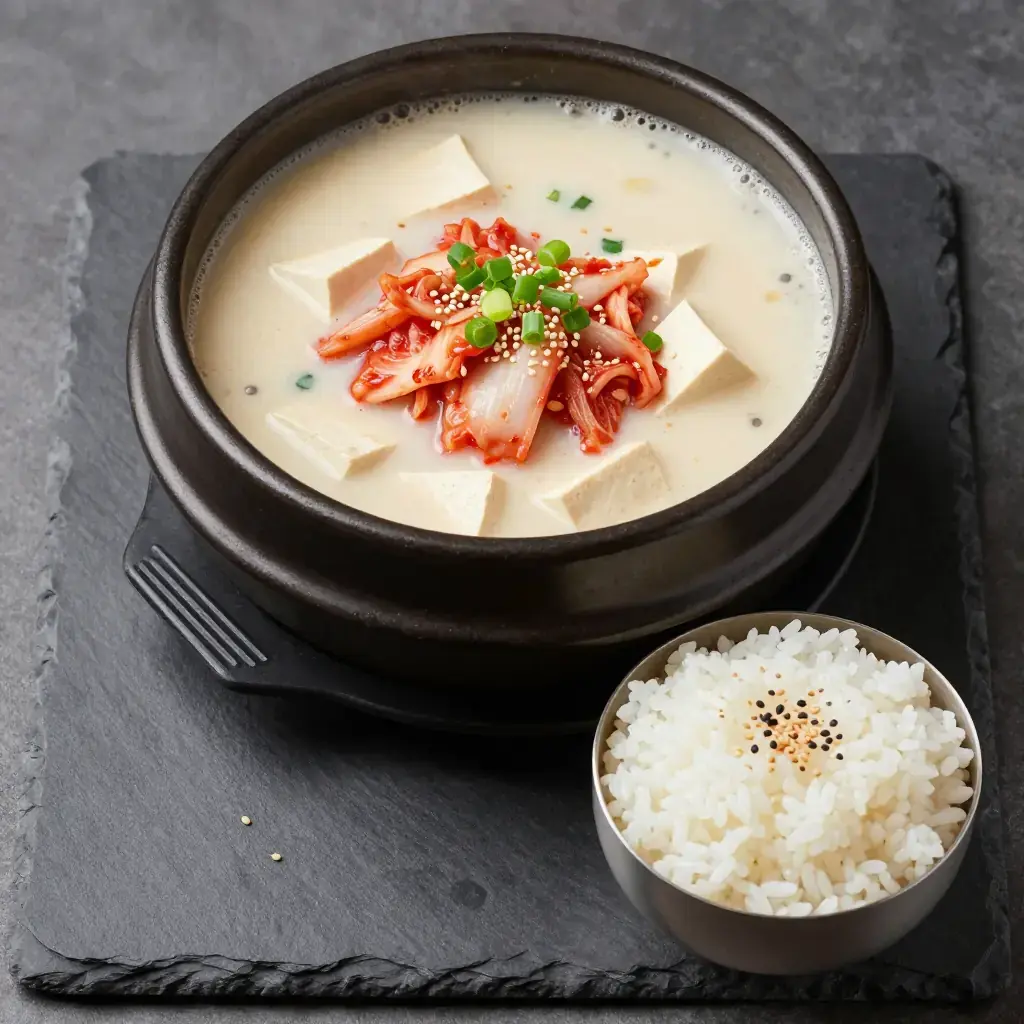
- Taste and adjust salt. Scatter with spring onion and sesame seeds. Serve immediately in the cooking pot with steamed rice.
Cook's Notes: Kongbiji must be stirred constantly during cooking — the soybean solids sink and stick to the bottom of the pot rapidly. Fresh or thawed frozen kongbiji gives a much better texture than canned. Aged, deeply sour kimchi gives the best flavour here.
All Revisions
generated
# Kongbiji Jjigae Kongbiji Jjigae is a deeply nourishing Korean stew made from the ground soybean pulp left over after making tofu — a frugal, heirloom dish that transforms a by-product into something extraordinarily comforting. The thick, milky stew is enriched with kimchi and pork, simmered in an earthenware pot until the soybean base thickens to a porridge-like consistency. It is a cold-weather staple across Korea. Serves: 4 ## Ingredients - 400g (14 oz) fresh soybean pulp (kongbiji — available frozen at Korean grocery stores) - 150g (5 oz) pork belly or shoulder, thinly sliced - 150g (5 oz) well-fermented kimchi, roughly chopped, plus 2 tbsp kimchi liquid - 200g (7 oz) soft tofu, broken into chunks - 3 spring onions, sliced - 2 cloves garlic, minced - 500 ml (2 cups) water or anchovy stock - 1 tbsp (15 ml) sesame oil - 1 tsp gochugaru (Korean red pepper flakes) - 1/2 tsp salt - 1 tsp toasted sesame seeds, to finish ## Instructions 1. Heat sesame oil in a dolsot (stone pot) or heavy saucepan over medium heat. Add pork and stir-fry 3–4 minutes until lightly browned. 2. Add garlic, kimchi, and kimchi liquid. Stir-fry for 2 minutes. 3. Add the kongbiji (soybean pulp) and water or stock. Stir well, breaking up any lumps. 4. Add gochugaru and salt. Bring to a boil stirring constantly — kongbiji scorches easily, so keep stirring. 5. Reduce heat to low. Add soft tofu chunks. Simmer gently, stirring frequently, for 15–20 minutes until the stew thickens to a creamy, porridge-like consistency. 6. Taste and adjust salt. Scatter with spring onion and sesame seeds. Serve immediately in the cooking pot with steamed rice. **Cook's Notes:** Kongbiji must be stirred constantly during cooking — the soybean solids sink and stick to the bottom of the pot rapidly. Fresh or thawed frozen kongbiji gives a much better texture than canned. Aged, deeply sour kimchi gives the best flavour here.Images
Tags
- authentic
- comfort-food
- dinner
- hot-soup
- korean
- one-pot
- tofu