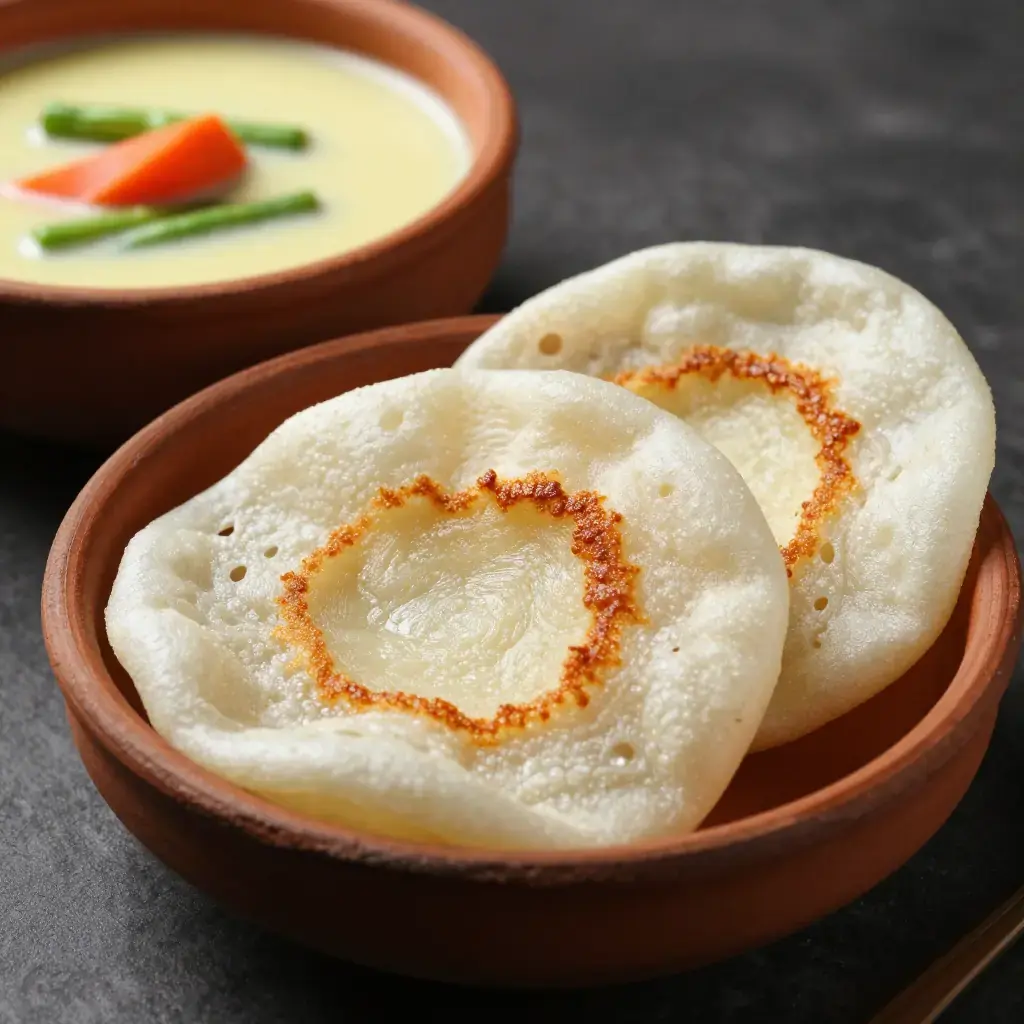
Appam with Vegetable Stew
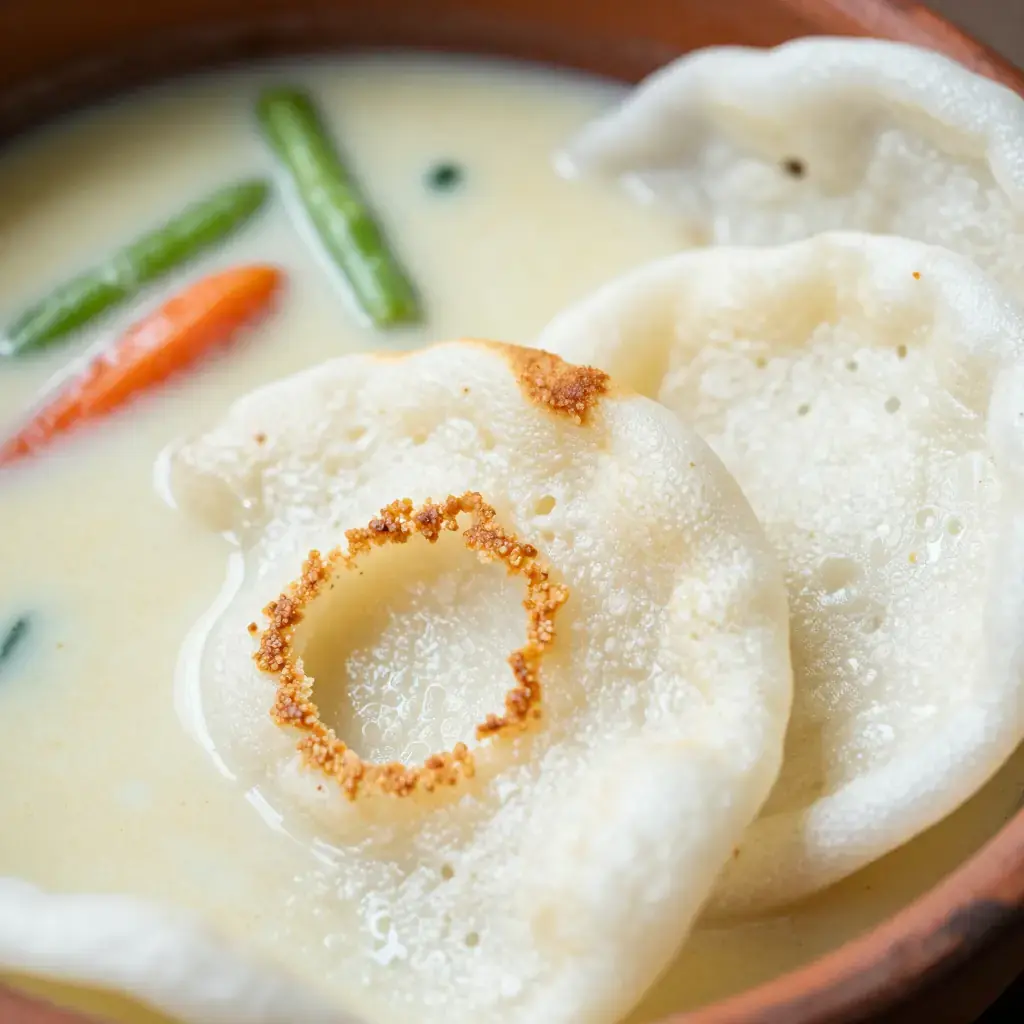
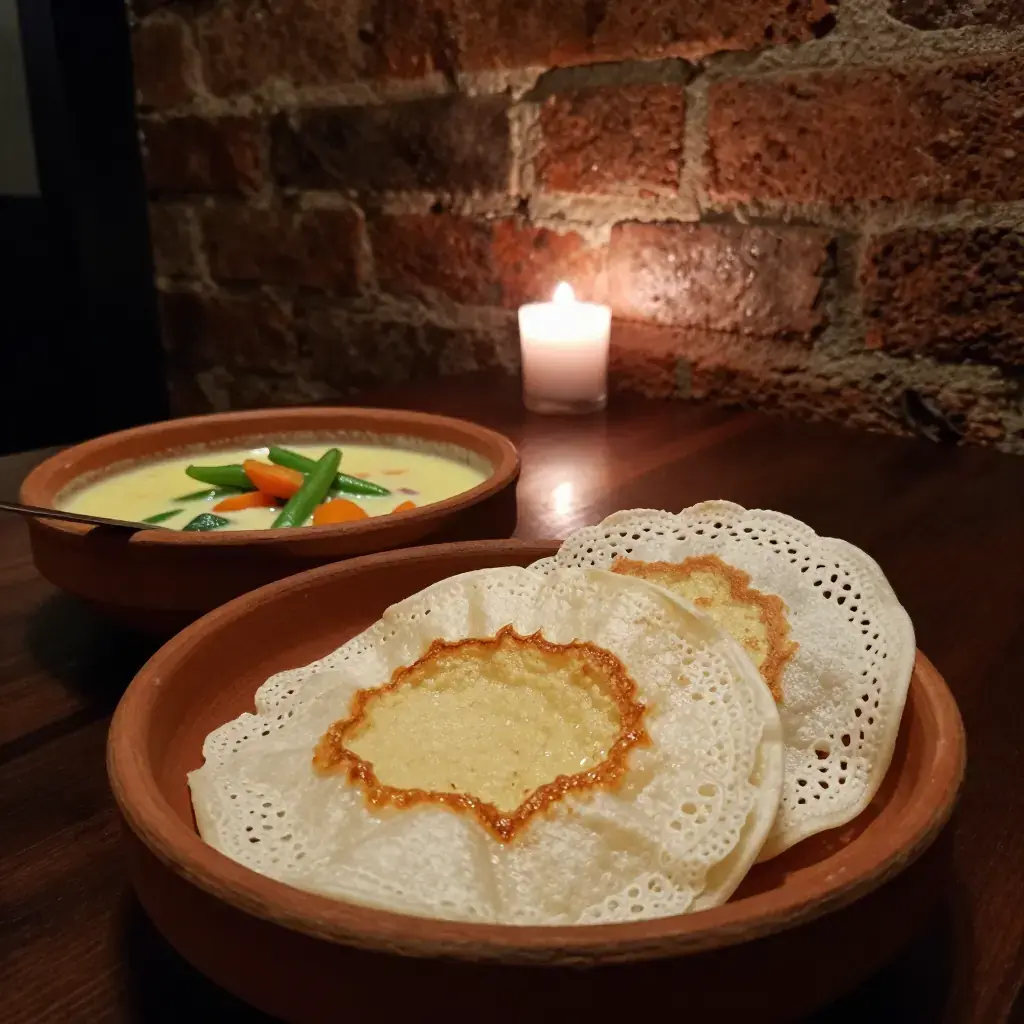
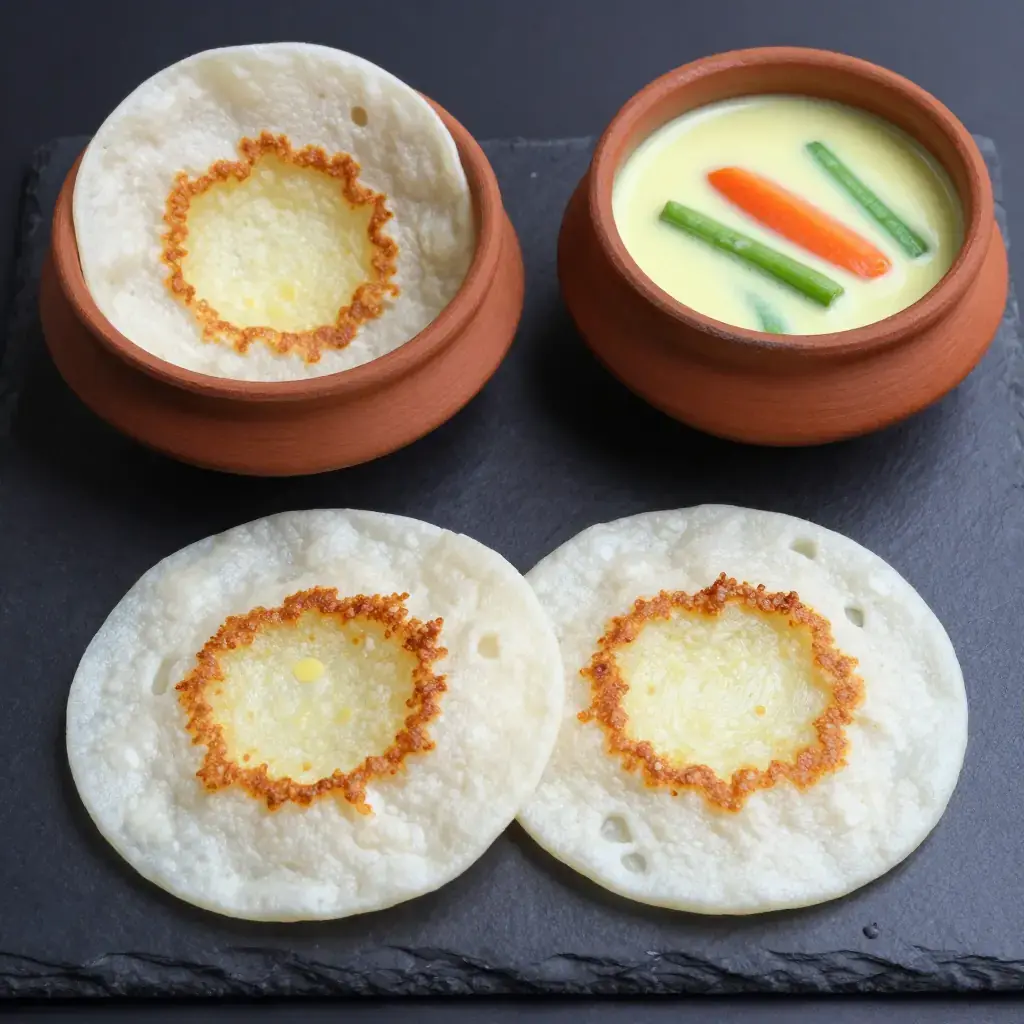
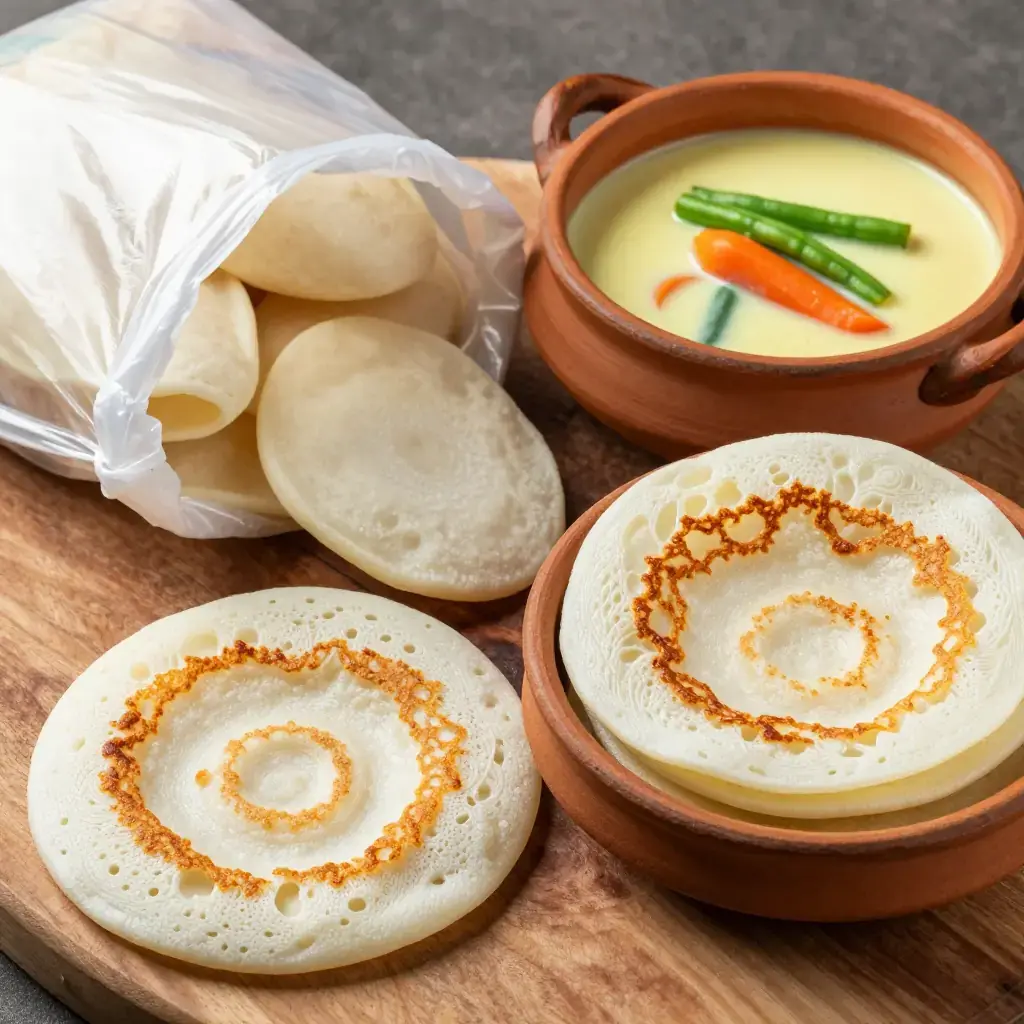
Appam are lacy, bowl-shaped rice and coconut pancakes from Kerala, fermented overnight to develop a gentle tang. Their thin, crispy edges and soft, spongy centres make them the perfect vessel for a fragrant coconut milk vegetable stew — one of South India's most celebrated morning meals.
Serves: 4
Ingredients
Appam batter (begin the night before)
- 300g (1½ cups) raw rice, soaked 6 hours
- 80g (⅓ cup) cooked rice
- 100ml (7 tbsp) thin coconut milk
- 1 tsp (5g) sugar
- ¼ tsp (1g) instant yeast
- ½ tsp (3g) salt
Vegetable stew
- 2 medium potatoes, peeled and cubed 2cm
- 2 medium carrots, sliced
- 100g (3½ oz) green beans, cut into 3cm pieces
- 1 medium onion, sliced
- 2 green chillies, slit
- 3 cloves garlic, crushed
- 2cm (1 inch) piece fresh ginger, julienned
- 400ml (1⅔ cups) coconut milk
- 200ml (¾ cup) water
- 1 tbsp (15ml) coconut oil
- 1 sprig curry leaves
- ½ tsp (2g) whole black pepper
- 2 cloves
- 1 small cinnamon stick
- Salt to taste
- Fresh coriander to garnish
Instructions
- Batter: Blend soaked raw rice and cooked rice with coconut milk until very smooth. Mix in sugar and yeast, thin with a little water to a pourable consistency. Cover and ferment in a warm spot 8–12 hours until bubbly and slightly sour. Stir in salt before cooking.
- Stew: Heat coconut oil in a heavy pot. Add whole spices (pepper, cloves, cinnamon) and curry leaves; sizzle 30 seconds. Add onion, garlic, ginger and green chillies; cook 5 minutes until soft but not coloured.
- Add potatoes, carrots and beans along with water. Bring to a simmer, cover and cook 10–12 minutes until vegetables are just tender.
- Pour in coconut milk, reduce heat to very low, and simmer 5 minutes uncovered. Do not boil or the coconut milk will split. Season with salt and garnish with coriander.
- Appam: Heat a small non-stick wok or appam pan over medium-high. Add a ladleful of batter, quickly swirl the pan so the batter coats the sides thinly and pools in the centre. Cover with a lid and steam 2–3 minutes until the edges are golden and crispy and the centre is set and spongy. Serve immediately.
Cook's Notes: The fermentation is essential — it creates both the light texture and the characteristic tang. In cool climates, let the batter ferment in the oven with just the pilot light on. A carbon steel appam pan gives the best bowl shape, but any small wok works well.
All Revisions
generated
# Appam with Vegetable Stew Appam are lacy, bowl-shaped rice and coconut pancakes from Kerala, fermented overnight to develop a gentle tang. Their thin, crispy edges and soft, spongy centres make them the perfect vessel for a fragrant coconut milk vegetable stew — one of South India's most celebrated morning meals. Serves: 4 ## Ingredients **Appam batter (begin the night before)** - 300g (1½ cups) raw rice, soaked 6 hours - 80g (⅓ cup) cooked rice - 100ml (7 tbsp) thin coconut milk - 1 tsp (5g) sugar - ¼ tsp (1g) instant yeast - ½ tsp (3g) salt **Vegetable stew** - 2 medium potatoes, peeled and cubed 2cm - 2 medium carrots, sliced - 100g (3½ oz) green beans, cut into 3cm pieces - 1 medium onion, sliced - 2 green chillies, slit - 3 cloves garlic, crushed - 2cm (1 inch) piece fresh ginger, julienned - 400ml (1⅔ cups) coconut milk - 200ml (¾ cup) water - 1 tbsp (15ml) coconut oil - 1 sprig curry leaves - ½ tsp (2g) whole black pepper - 2 cloves - 1 small cinnamon stick - Salt to taste - Fresh coriander to garnish ## Instructions 1. **Batter:** Blend soaked raw rice and cooked rice with coconut milk until very smooth. Mix in sugar and yeast, thin with a little water to a pourable consistency. Cover and ferment in a warm spot 8–12 hours until bubbly and slightly sour. Stir in salt before cooking. 2. **Stew:** Heat coconut oil in a heavy pot. Add whole spices (pepper, cloves, cinnamon) and curry leaves; sizzle 30 seconds. Add onion, garlic, ginger and green chillies; cook 5 minutes until soft but not coloured. 3. Add potatoes, carrots and beans along with water. Bring to a simmer, cover and cook 10–12 minutes until vegetables are just tender. 4. Pour in coconut milk, reduce heat to very low, and simmer 5 minutes uncovered. Do not boil or the coconut milk will split. Season with salt and garnish with coriander. 5. **Appam:** Heat a small non-stick wok or appam pan over medium-high. Add a ladleful of batter, quickly swirl the pan so the batter coats the sides thinly and pools in the centre. Cover with a lid and steam 2–3 minutes until the edges are golden and crispy and the centre is set and spongy. Serve immediately. **Cook's Notes:** The fermentation is essential — it creates both the light texture and the characteristic tang. In cool climates, let the batter ferment in the oven with just the pilot light on. A carbon steel appam pan gives the best bowl shape, but any small wok works well.Images
Tags
- authentic
- breakfast
- fermented
- gluten-free
- indian-south
- rice
- vegan
- vegetarian