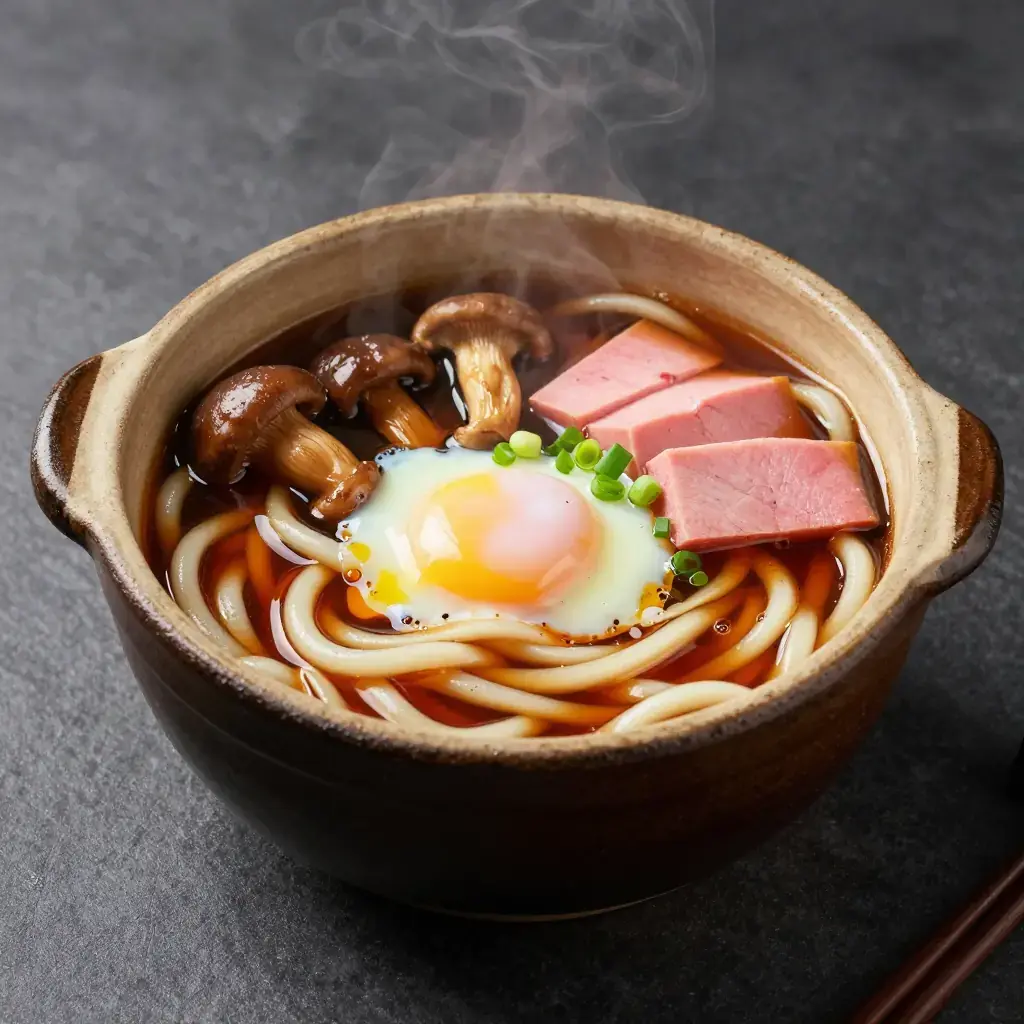
Nikomi Udon
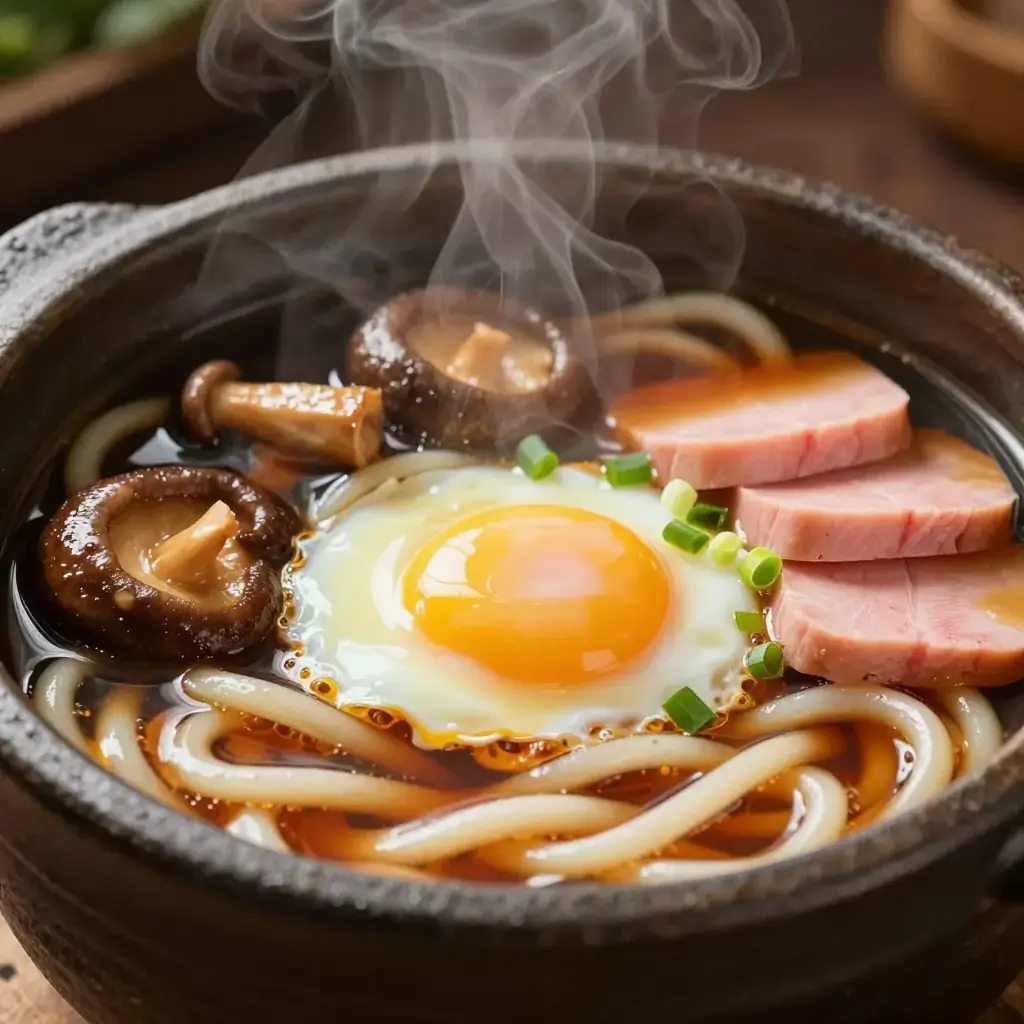
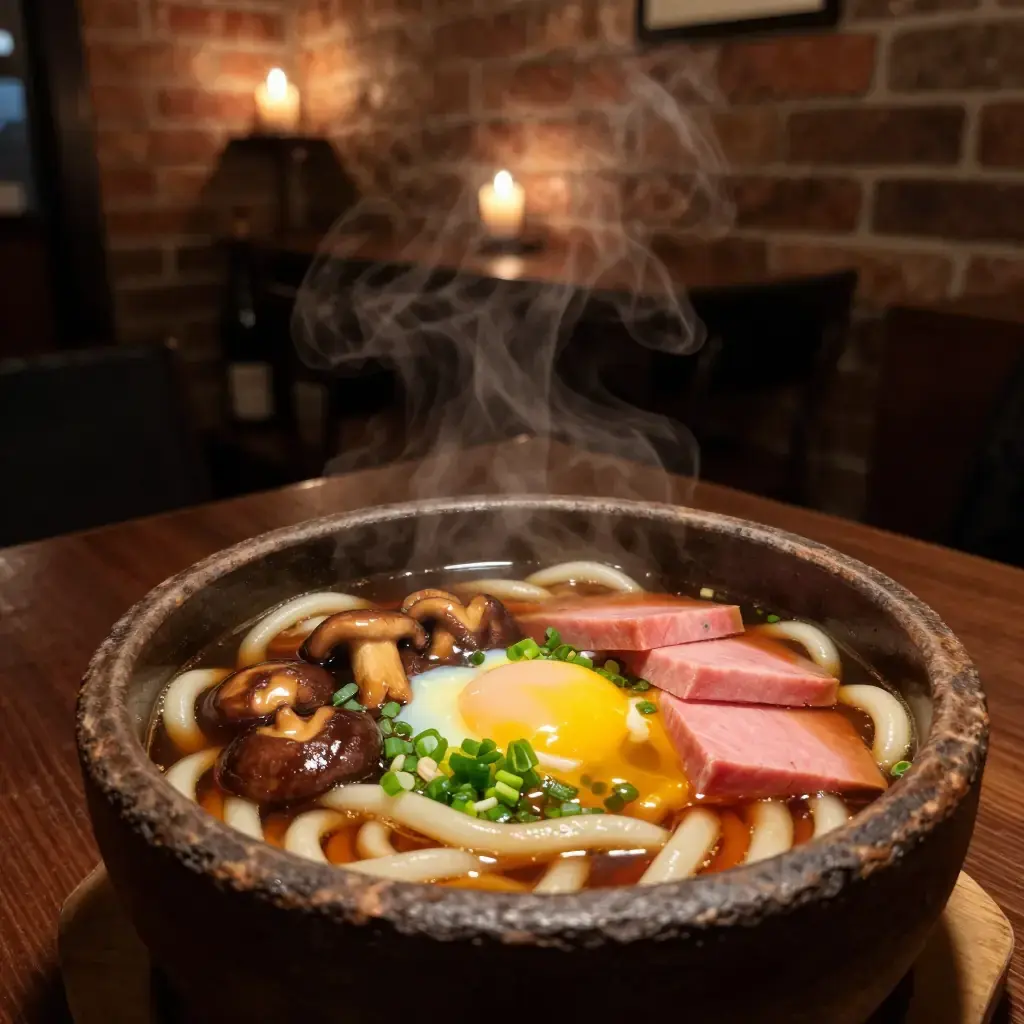
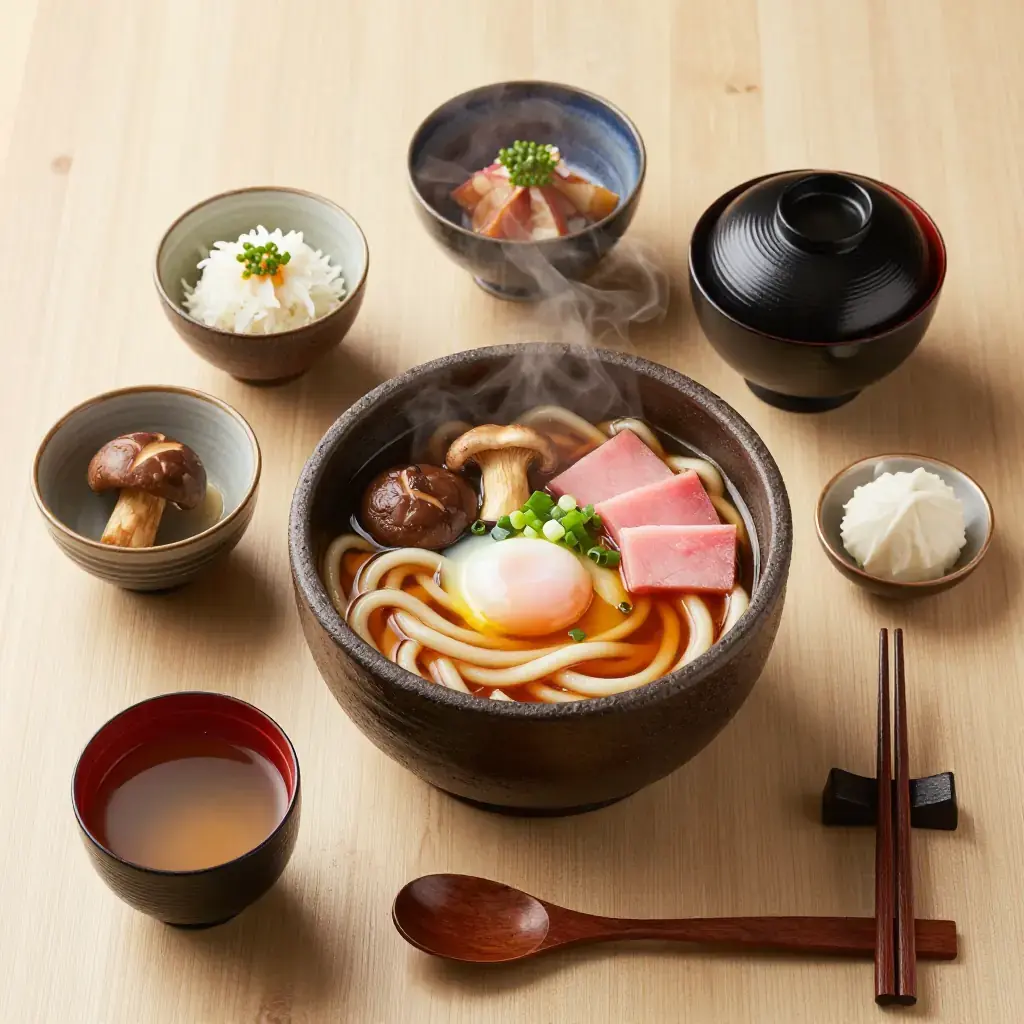
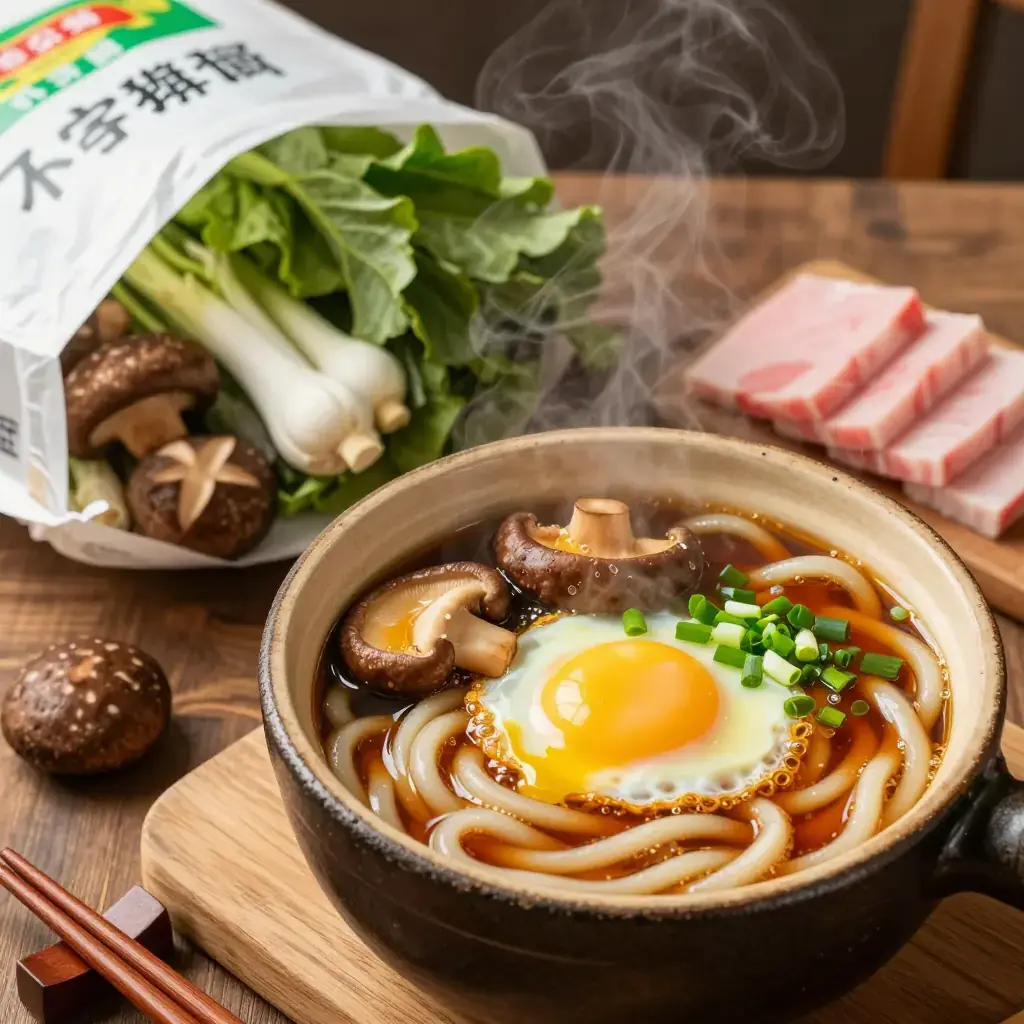
Nikomi Udon — "simmered udon" — is Nagoya's signature cold-weather comfort food. Unlike the light Kansai broths of kitsune udon, Nagoya's nikomi style uses a rich, intensely savoury hatcho miso broth in which thick udon noodles are cooked directly in an earthenware pot (donabe) until they absorb the surrounding flavour. The result is a deeply warming, almost stew-like noodle dish that Nagoya residents eat year-round but particularly in winter.
Serves: 4
Ingredients
- 400g (14 oz) thick fresh or frozen udon noodles
- 1.2 litres (5 cups) dashi (kombu and katsuobushi, prepared as above)
- 3 tbsp (60g) hatcho miso or red miso
- 1 tbsp (15ml) mirin
- 1 tbsp soy sauce
- 1 tsp sugar
- 200g (7 oz) chicken thigh, skin on, cut into bite-size pieces
- 4 large shiitake mushrooms, stems removed, caps scored
- 4 pieces narutomaki (fish cake), optional
- 100g (3½ oz) kamaboko, sliced
- 2 spring onions, cut into 5cm (2 inch) pieces
- 1 egg per person (added raw at the end)
- Shichimi togarashi, to serve
Instructions
- Whisk miso, mirin, soy sauce, and sugar into the prepared dashi until the miso dissolves completely. Do not boil after the miso is added.
- If using frozen udon, briefly blanch in boiling water 1–2 minutes until just pliable but still firm. Drain.
- Arrange chicken pieces in a donabe or heavy saucepan. Pour in the miso broth and bring to a gentle simmer over medium heat. Cook chicken 8–10 minutes until almost cooked through.
- Nestle the udon noodles into the pot around the chicken. Add shiitake mushrooms, kamaboko, and narutomaki if using. Simmer uncovered 5–7 minutes, stirring occasionally, until the noodles are fully cooked and beginning to absorb the broth.
- Add spring onion pieces and crack one egg per serving directly into the pot (or into individual portions). Cover and cook 1–2 minutes until the egg white is just set but the yolk remains runny.
- Bring the pot to the table and serve directly from the donabe. Sprinkle generously with shichimi togarashi.
Cook's Notes: Hatcho miso from Aichi Prefecture is the authentic choice — its deep, slightly bitter richness defines the Nagoya style. The noodles will continue absorbing broth as the meal progresses, so keep extra hot broth on hand to top up. Do not use thin udon — only thick sanuki-style noodles can stand up to this bold broth.
All Revisions
generated
# Nikomi Udon Nikomi Udon — "simmered udon" — is Nagoya's signature cold-weather comfort food. Unlike the light Kansai broths of kitsune udon, Nagoya's nikomi style uses a rich, intensely savoury hatcho miso broth in which thick udon noodles are cooked directly in an earthenware pot (donabe) until they absorb the surrounding flavour. The result is a deeply warming, almost stew-like noodle dish that Nagoya residents eat year-round but particularly in winter. Serves: 4 ## Ingredients - 400g (14 oz) thick fresh or frozen udon noodles - 1.2 litres (5 cups) dashi (kombu and katsuobushi, prepared as above) - 3 tbsp (60g) hatcho miso or red miso - 1 tbsp (15ml) mirin - 1 tbsp soy sauce - 1 tsp sugar - 200g (7 oz) chicken thigh, skin on, cut into bite-size pieces - 4 large shiitake mushrooms, stems removed, caps scored - 4 pieces narutomaki (fish cake), optional - 100g (3½ oz) kamaboko, sliced - 2 spring onions, cut into 5cm (2 inch) pieces - 1 egg per person (added raw at the end) - Shichimi togarashi, to serve ## Instructions 1. Whisk miso, mirin, soy sauce, and sugar into the prepared dashi until the miso dissolves completely. Do not boil after the miso is added. 2. If using frozen udon, briefly blanch in boiling water 1–2 minutes until just pliable but still firm. Drain. 3. Arrange chicken pieces in a donabe or heavy saucepan. Pour in the miso broth and bring to a gentle simmer over medium heat. Cook chicken 8–10 minutes until almost cooked through. 4. Nestle the udon noodles into the pot around the chicken. Add shiitake mushrooms, kamaboko, and narutomaki if using. Simmer uncovered 5–7 minutes, stirring occasionally, until the noodles are fully cooked and beginning to absorb the broth. 5. Add spring onion pieces and crack one egg per serving directly into the pot (or into individual portions). Cover and cook 1–2 minutes until the egg white is just set but the yolk remains runny. 6. Bring the pot to the table and serve directly from the donabe. Sprinkle generously with shichimi togarashi. **Cook's Notes:** Hatcho miso from Aichi Prefecture is the authentic choice — its deep, slightly bitter richness defines the Nagoya style. The noodles will continue absorbing broth as the meal progresses, so keep extra hot broth on hand to top up. Do not use thin udon — only thick sanuki-style noodles can stand up to this bold broth.Images
Tags
- authentic
- comfort-food
- dinner
- hot-soup
- japanese
- noodles
- one-pot