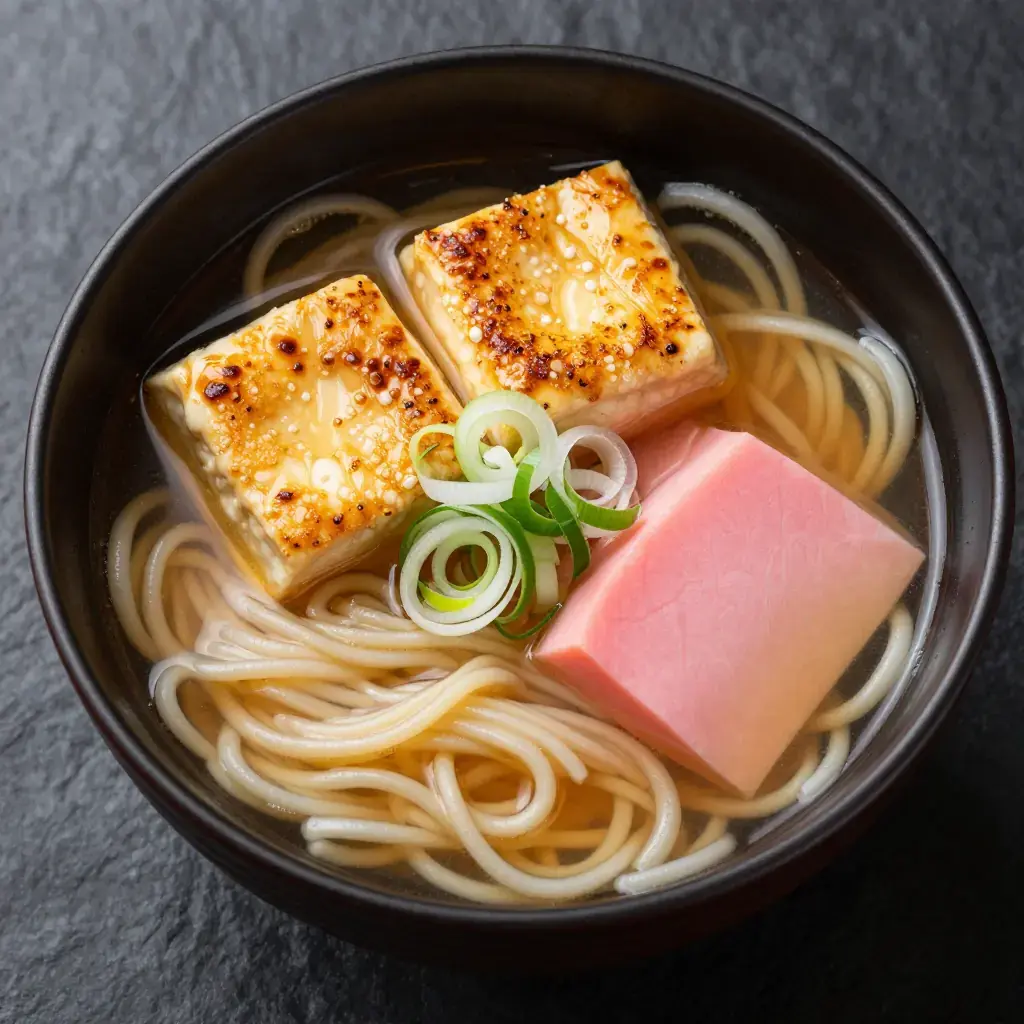
Kitsune Udon
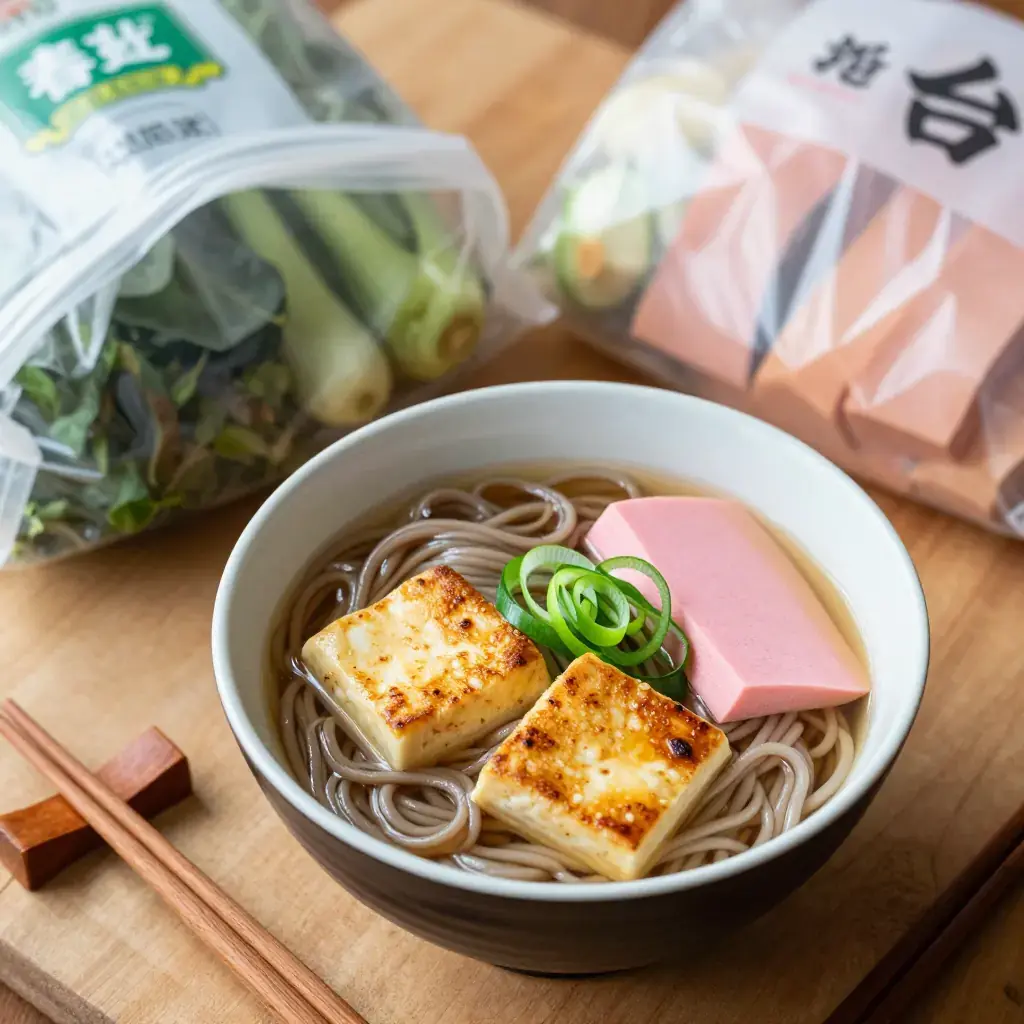
Kitsune Udon — "fox noodles" — takes its whimsical name from Japanese folklore: the fox (kitsune) is said to have a particular fondness for fried tofu (aburaage), which tops this bowl. Born in Osaka during the Edo period at the legendary noodle shop Matsuba, kitsune udon became one of the pillars of Kansai food culture. The broth is lighter and sweeter than Tokyo's darker broths, relying on delicate kombu and katsuobushi dashi.
Serves: 4
Ingredients
Dashi broth:
- 1.5 litres (6 cups) water
- 20g (¾ oz) dried kombu
- 30g (1 oz) katsuobushi (bonito flakes)
- 3 tbsp (45ml) soy sauce
- 2 tbsp (30ml) mirin
- 1 tsp sugar
- 1 tsp salt
Inari (seasoned tofu pouches):
- 4 aburaage (fried tofu pouches), cut in half
- 200ml (¾ cup) dashi
- 3 tbsp soy sauce
- 2 tbsp mirin
- 1 tbsp sugar
To assemble:
- 400g (14 oz) fresh or frozen udon noodles (4 portions)
- 4 spring onions, thinly sliced on the diagonal
- Shichimi togarashi (seven-spice), to serve
- Kamaboko (fish cake slices), optional
Instructions
- Make the dashi: combine water and kombu in a medium saucepan. Bring slowly to 60°C (140°F) over 30 minutes — do not boil. Remove kombu. Raise heat until just below boiling, add katsuobushi, and steep off heat 5 minutes. Strain.
- Return dashi to the pot. Add soy sauce, mirin, sugar, and salt. Simmer gently 2 minutes to blend. Taste and adjust seasoning.
- Prepare the inari: place aburaage in a saucepan with the additional dashi, soy sauce, mirin, and sugar. Simmer over medium heat 10–12 minutes until the pouches are glazed and have absorbed the sweet-savoury liquid. Set aside.
- Cook udon noodles according to packet instructions (fresh: 1–2 minutes; frozen: 3–4 minutes in boiling water). Drain and divide among four deep bowls.
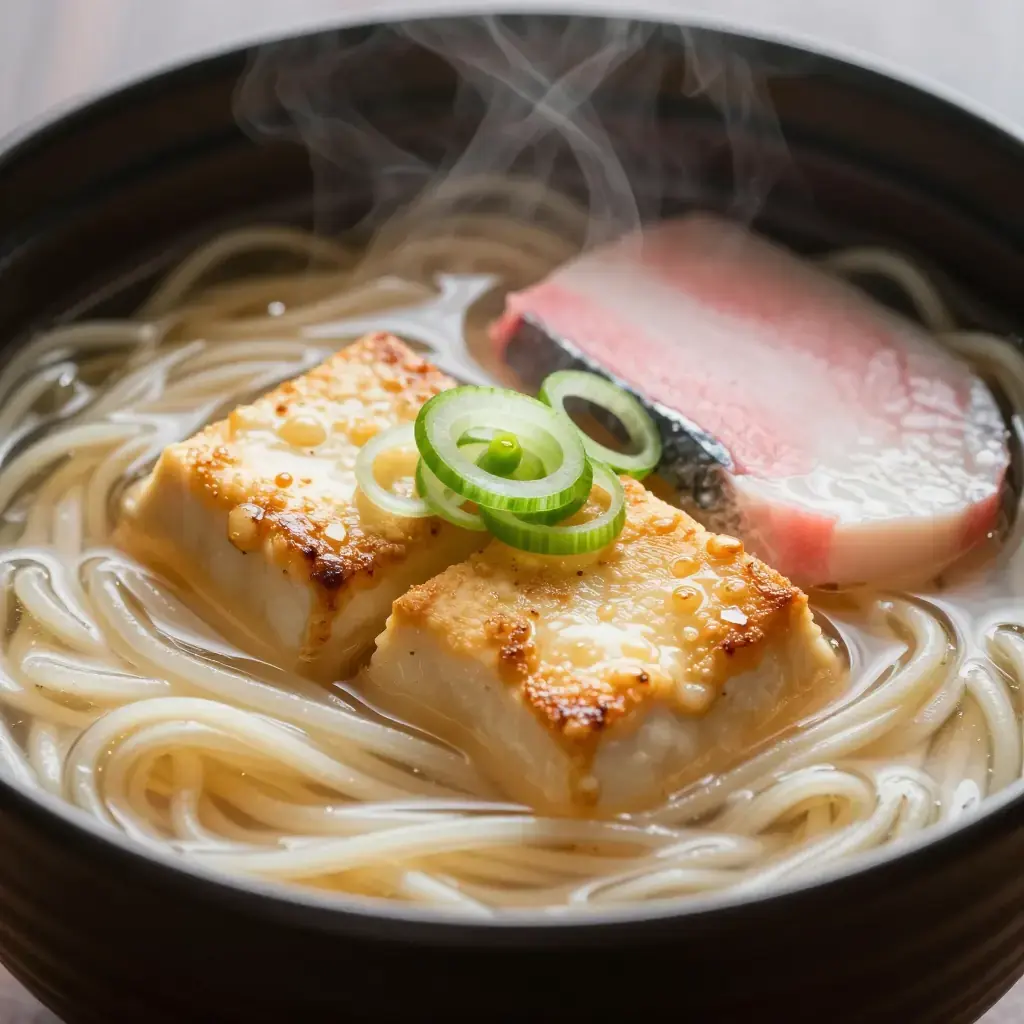
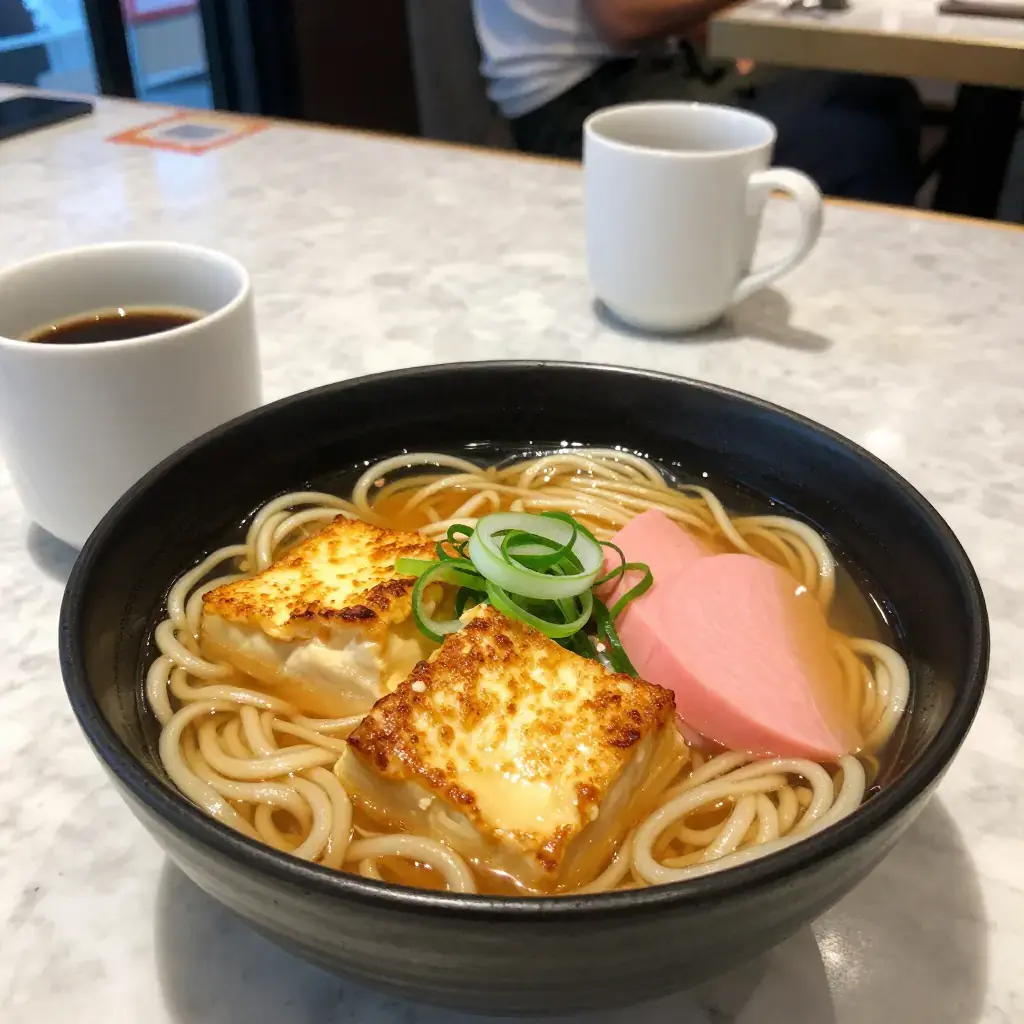
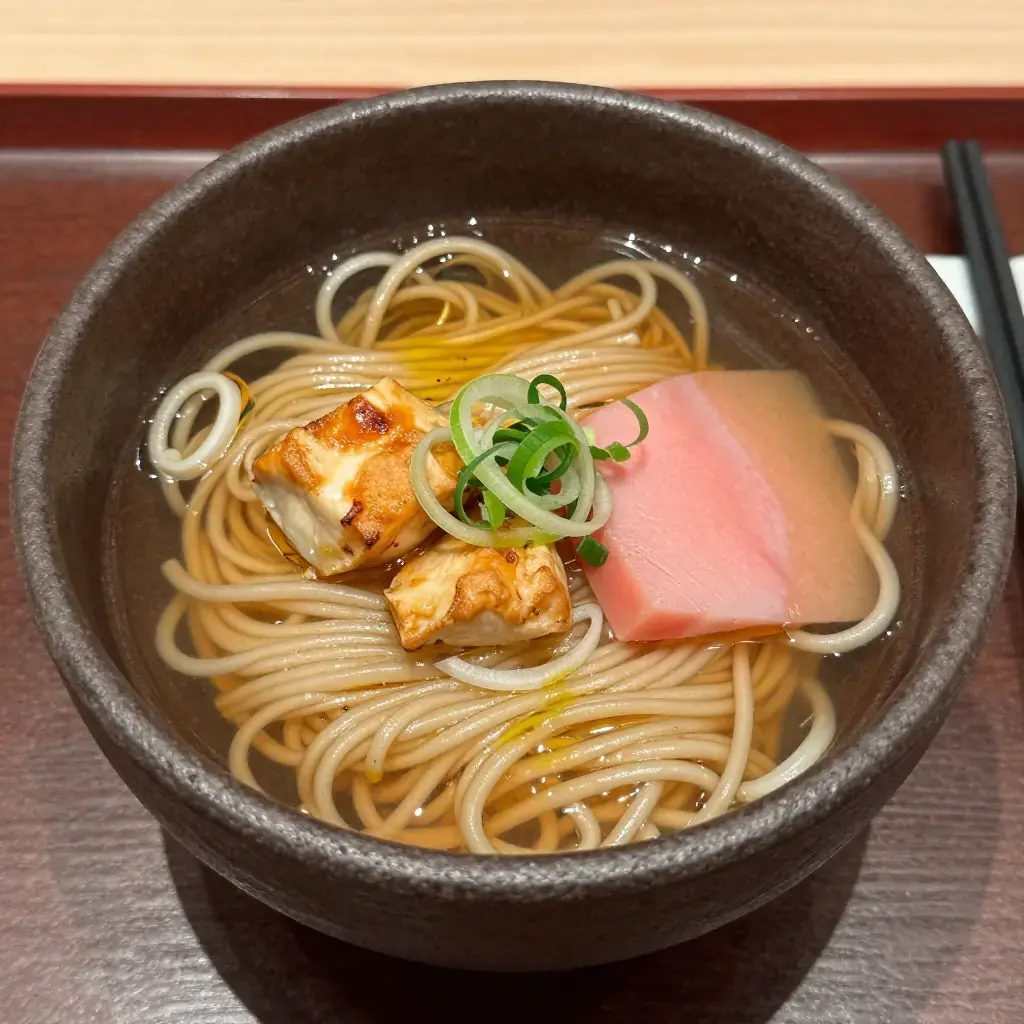
- Ladle hot broth over the noodles. Top each bowl with 2 seasoned inari halves, sliced spring onion, and optionally kamaboko fish cake slices.
- Serve immediately with shichimi on the side.
Cook's Notes: Never boil the kombu — it releases bitter compounds. The inari can be prepared a day ahead and refrigerated; reheat gently in broth before serving. Pre-made seasoned inari pouches (sold tinned in Japanese supermarkets) make a quick weeknight shortcut.
All Revisions
generated
# Kitsune Udon Kitsune Udon — "fox noodles" — takes its whimsical name from Japanese folklore: the fox (kitsune) is said to have a particular fondness for fried tofu (aburaage), which tops this bowl. Born in Osaka during the Edo period at the legendary noodle shop Matsuba, kitsune udon became one of the pillars of Kansai food culture. The broth is lighter and sweeter than Tokyo's darker broths, relying on delicate kombu and katsuobushi dashi. Serves: 4 ## Ingredients **Dashi broth:** - 1.5 litres (6 cups) water - 20g (¾ oz) dried kombu - 30g (1 oz) katsuobushi (bonito flakes) - 3 tbsp (45ml) soy sauce - 2 tbsp (30ml) mirin - 1 tsp sugar - 1 tsp salt **Inari (seasoned tofu pouches):** - 4 aburaage (fried tofu pouches), cut in half - 200ml (¾ cup) dashi - 3 tbsp soy sauce - 2 tbsp mirin - 1 tbsp sugar **To assemble:** - 400g (14 oz) fresh or frozen udon noodles (4 portions) - 4 spring onions, thinly sliced on the diagonal - Shichimi togarashi (seven-spice), to serve - Kamaboko (fish cake slices), optional ## Instructions 1. Make the dashi: combine water and kombu in a medium saucepan. Bring slowly to 60°C (140°F) over 30 minutes — do not boil. Remove kombu. Raise heat until just below boiling, add katsuobushi, and steep off heat 5 minutes. Strain. 2. Return dashi to the pot. Add soy sauce, mirin, sugar, and salt. Simmer gently 2 minutes to blend. Taste and adjust seasoning. 3. Prepare the inari: place aburaage in a saucepan with the additional dashi, soy sauce, mirin, and sugar. Simmer over medium heat 10–12 minutes until the pouches are glazed and have absorbed the sweet-savoury liquid. Set aside. 4. Cook udon noodles according to packet instructions (fresh: 1–2 minutes; frozen: 3–4 minutes in boiling water). Drain and divide among four deep bowls. 5. Ladle hot broth over the noodles. Top each bowl with 2 seasoned inari halves, sliced spring onion, and optionally kamaboko fish cake slices. 6. Serve immediately with shichimi on the side. **Cook's Notes:** Never boil the kombu — it releases bitter compounds. The inari can be prepared a day ahead and refrigerated; reheat gently in broth before serving. Pre-made seasoned inari pouches (sold tinned in Japanese supermarkets) make a quick weeknight shortcut.Images
Tags
- authentic
- comfort-food
- dinner
- hot-soup
- japanese
- noodles
- pescatarian