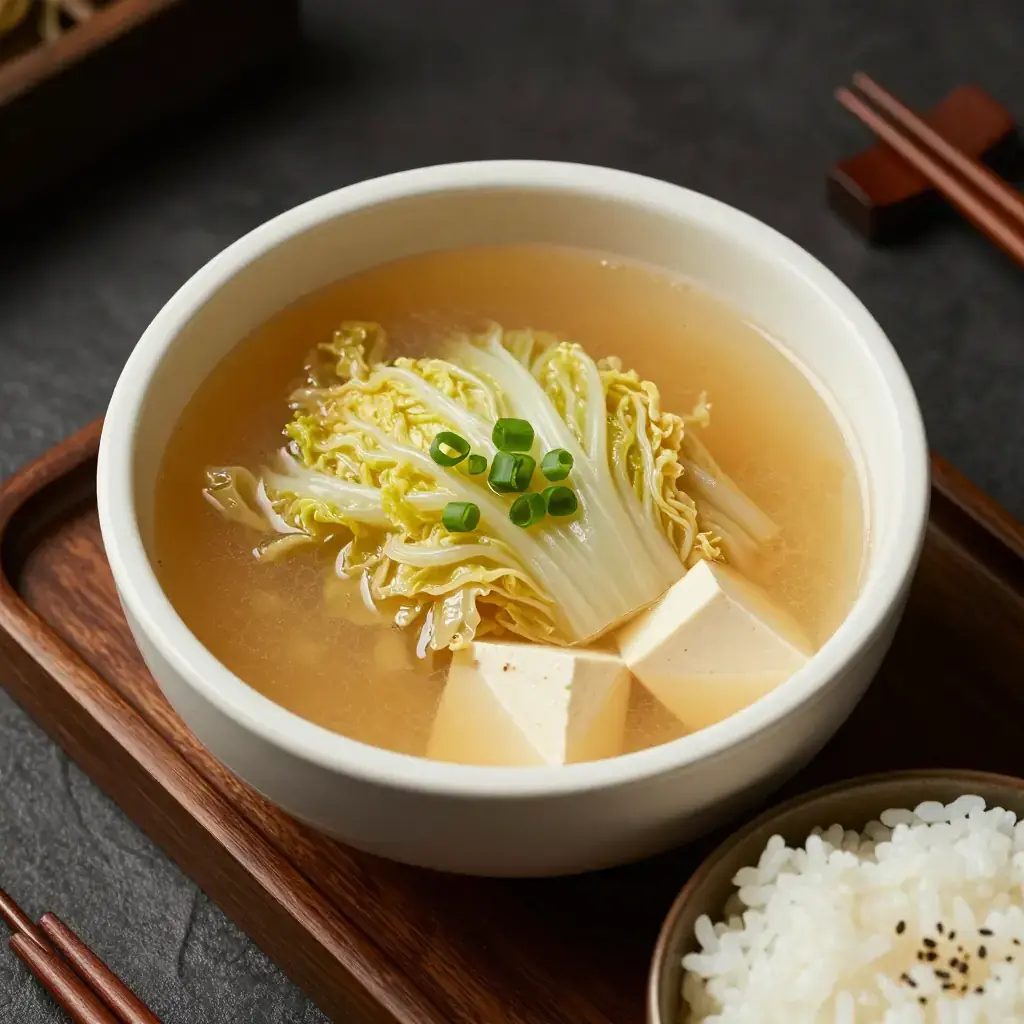
Baechu Doenjang Guk
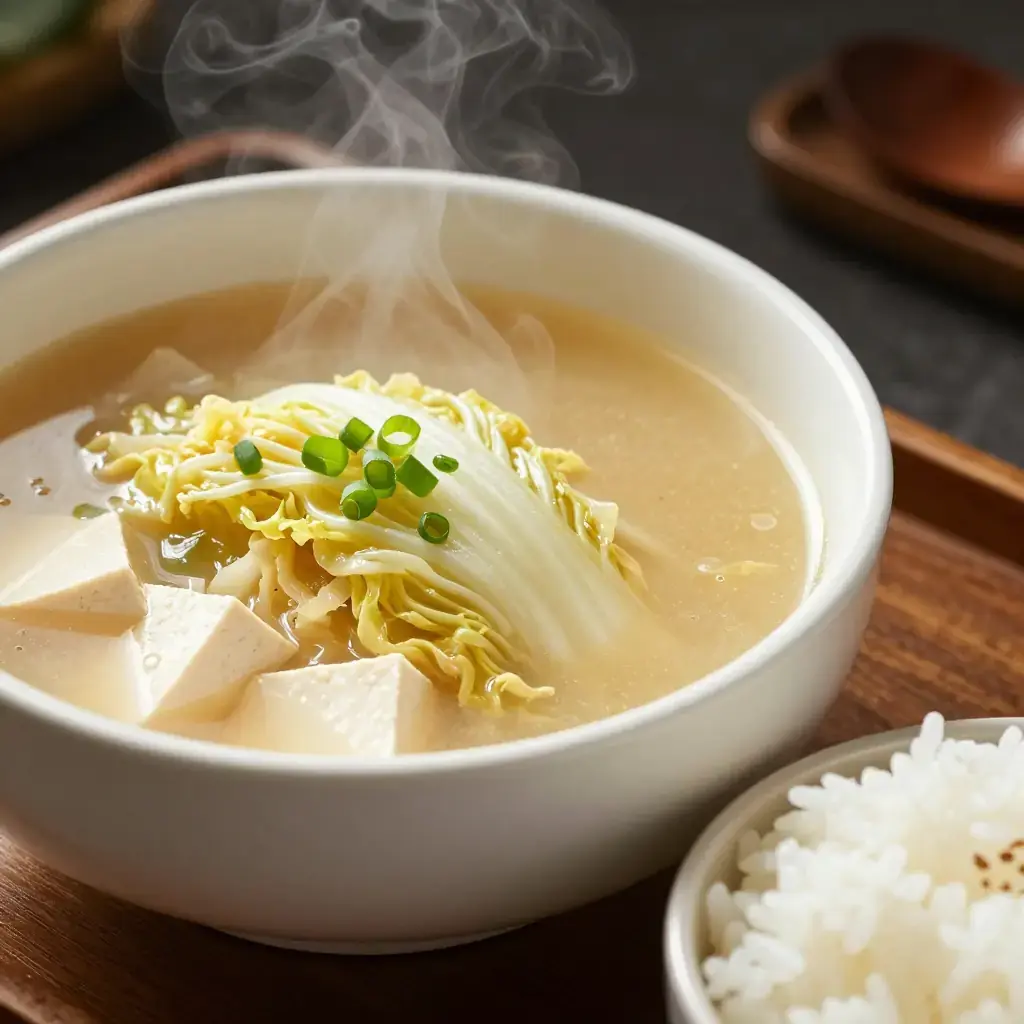
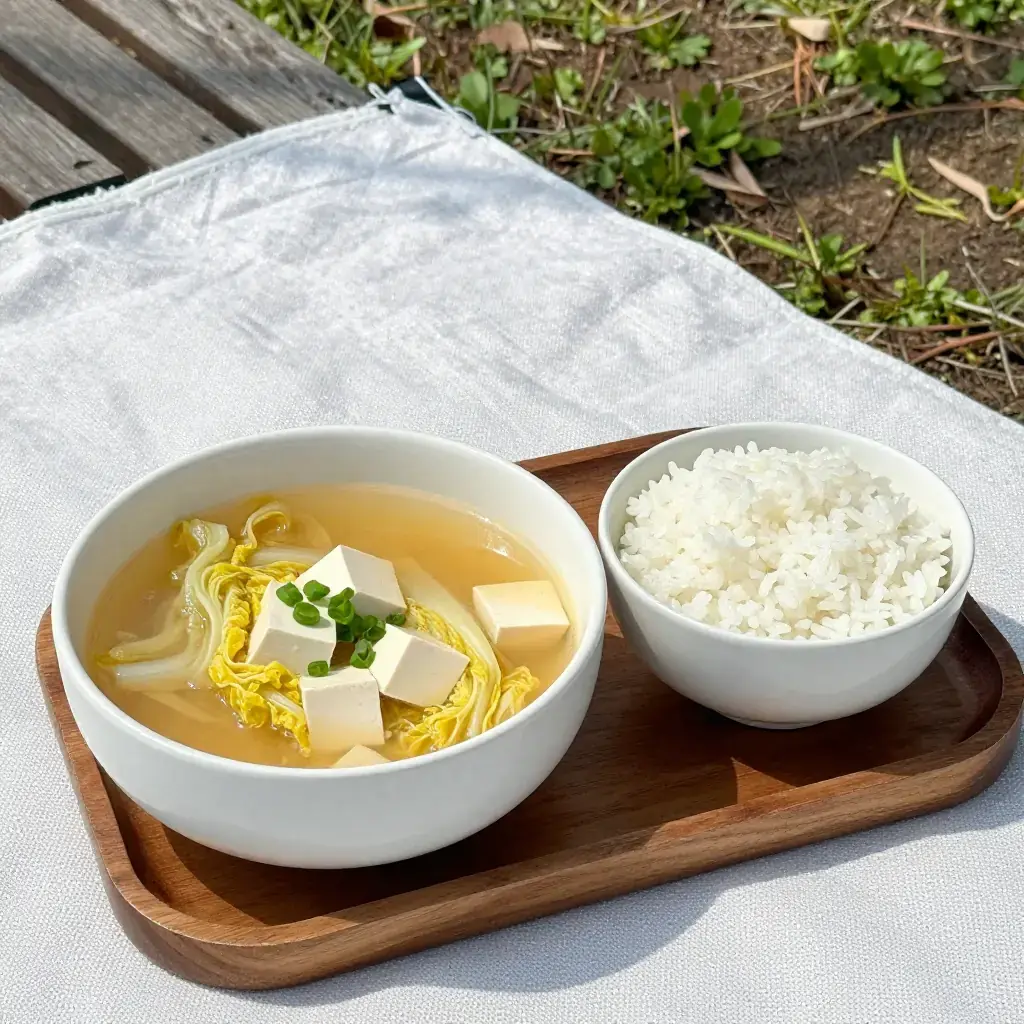
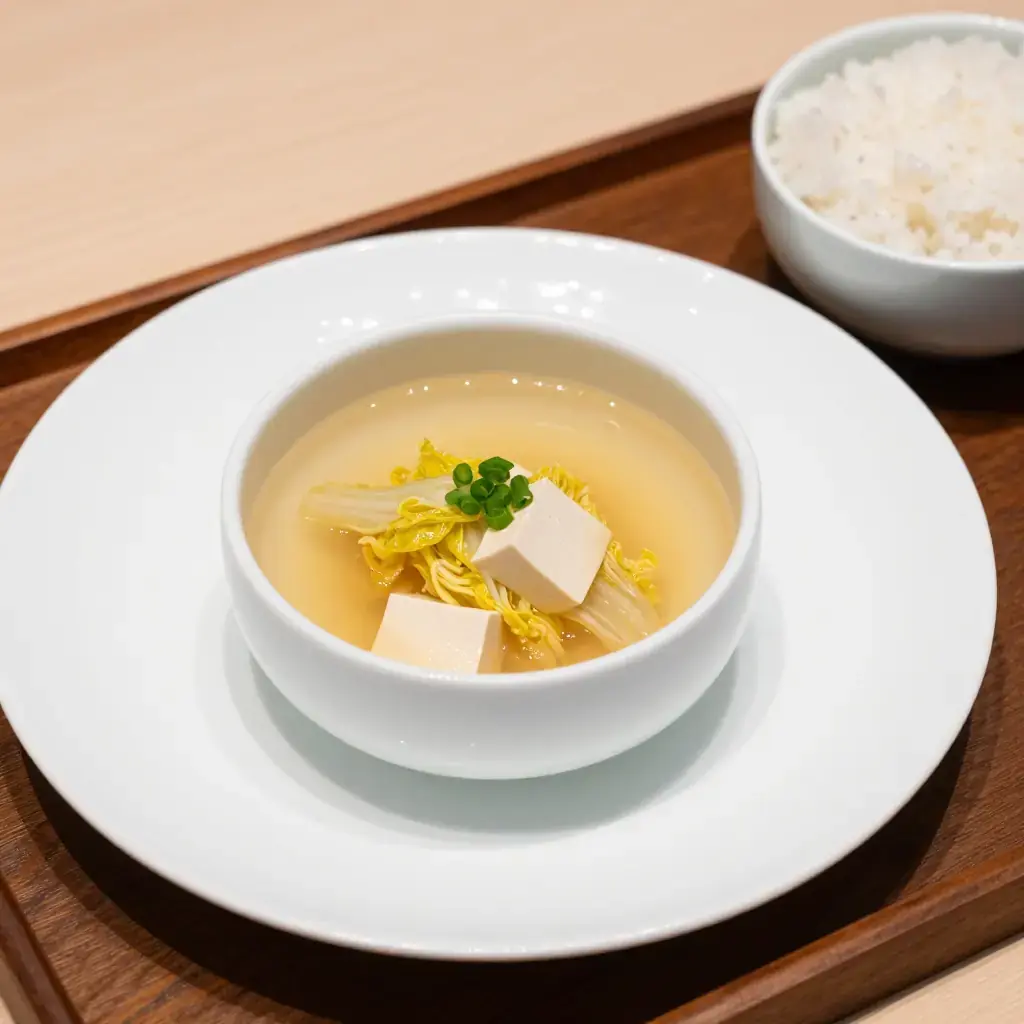
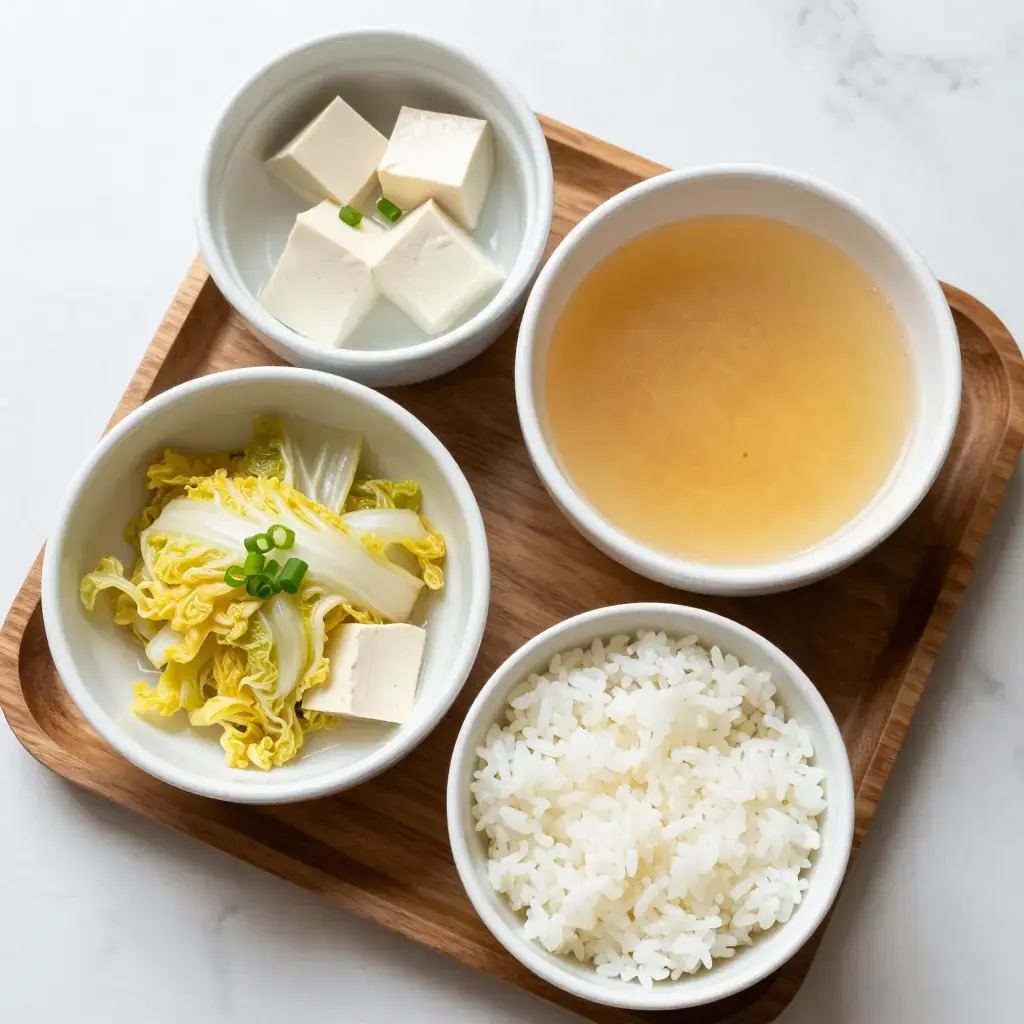
Baechu Doenjang Guk is the everyday soup of Korean home cooking — silky napa cabbage leaves simmered in a deeply savoury broth made from doenjang (fermented soybean paste) and anchovy-kombu stock, finished with firm tofu and a scattering of spring onion. Where doenjang jjigae is thick and hearty, this soup is lighter and more delicate, ladled beside rice at breakfast, lunch, and dinner alike. It is the dish that defines Korean culinary restraint: minimal ingredients, maximal depth.
Serves: 4
Ingredients
Anchovy-Kombu Stock
- 10 dried large anchovies (mareun myeolchi), heads removed
- 10 cm (4 inch) piece dried kombu (dasima)
- 1.5 litres (6 cups) cold water
Soup
- 300 g (10.5 oz) napa cabbage, cut into 4 cm (1.5 inch) pieces
- 150 g (5 oz) firm tofu, cut into 2 cm (¾ inch) cubes
- 3 tbsp doenjang (fermented soybean paste), or to taste
- 1 tsp gochugaru (Korean red pepper flakes), optional
- 3 garlic cloves, minced
- 1 tsp sesame oil
- 3 spring onions, sliced
- Steamed short-grain rice, to serve
Instructions
- Prepare the stock: combine cold water, dried anchovies, and kombu in a pot. Bring to a gentle simmer over medium-low heat and cook 15 minutes — do not boil vigorously or the stock will become bitter. Strain and discard solids.
- Return stock to medium heat. Add napa cabbage pieces and cook 5 minutes until beginning to wilt and soften.
- In a small bowl, dissolve doenjang in a ladleful of hot stock, whisking to break up lumps. Pour dissolved paste into the soup.
- Add garlic and tofu. Simmer gently 5 minutes more — do not stir vigorously or tofu will crumble. Add gochugaru if using.
- Taste and adjust doenjang — the soup should be savoury and deeply umami without being overly salty.
- Remove from heat and add sesame oil and spring onions. Serve immediately in bowls alongside steamed rice and banchan (side dishes).
Cook's Notes: The quality of doenjang matters greatly — aged Korean doenjang has far more complexity than supermarket varieties. Napa cabbage should retain some texture; overcooking produces a flat, grey soup. This soup improves overnight as the doenjang flavour deepens.
All Revisions
generated
# Baechu Doenjang Guk Baechu Doenjang Guk is the everyday soup of Korean home cooking — silky napa cabbage leaves simmered in a deeply savoury broth made from doenjang (fermented soybean paste) and anchovy-kombu stock, finished with firm tofu and a scattering of spring onion. Where doenjang jjigae is thick and hearty, this soup is lighter and more delicate, ladled beside rice at breakfast, lunch, and dinner alike. It is the dish that defines Korean culinary restraint: minimal ingredients, maximal depth. Serves: 4 ## Ingredients **Anchovy-Kombu Stock** - 10 dried large anchovies (mareun myeolchi), heads removed - 10 cm (4 inch) piece dried kombu (dasima) - 1.5 litres (6 cups) cold water **Soup** - 300 g (10.5 oz) napa cabbage, cut into 4 cm (1.5 inch) pieces - 150 g (5 oz) firm tofu, cut into 2 cm (¾ inch) cubes - 3 tbsp doenjang (fermented soybean paste), or to taste - 1 tsp gochugaru (Korean red pepper flakes), optional - 3 garlic cloves, minced - 1 tsp sesame oil - 3 spring onions, sliced - Steamed short-grain rice, to serve ## Instructions 1. Prepare the stock: combine cold water, dried anchovies, and kombu in a pot. Bring to a gentle simmer over medium-low heat and cook 15 minutes — do not boil vigorously or the stock will become bitter. Strain and discard solids. 2. Return stock to medium heat. Add napa cabbage pieces and cook 5 minutes until beginning to wilt and soften. 3. In a small bowl, dissolve doenjang in a ladleful of hot stock, whisking to break up lumps. Pour dissolved paste into the soup. 4. Add garlic and tofu. Simmer gently 5 minutes more — do not stir vigorously or tofu will crumble. Add gochugaru if using. 5. Taste and adjust doenjang — the soup should be savoury and deeply umami without being overly salty. 6. Remove from heat and add sesame oil and spring onions. Serve immediately in bowls alongside steamed rice and banchan (side dishes). **Cook's Notes:** The quality of doenjang matters greatly — aged Korean doenjang has far more complexity than supermarket varieties. Napa cabbage should retain some texture; overcooking produces a flat, grey soup. This soup improves overnight as the doenjang flavour deepens.Images
Tags
- authentic
- comfort-food
- dinner
- healthy
- hot-soup
- korean
- tofu