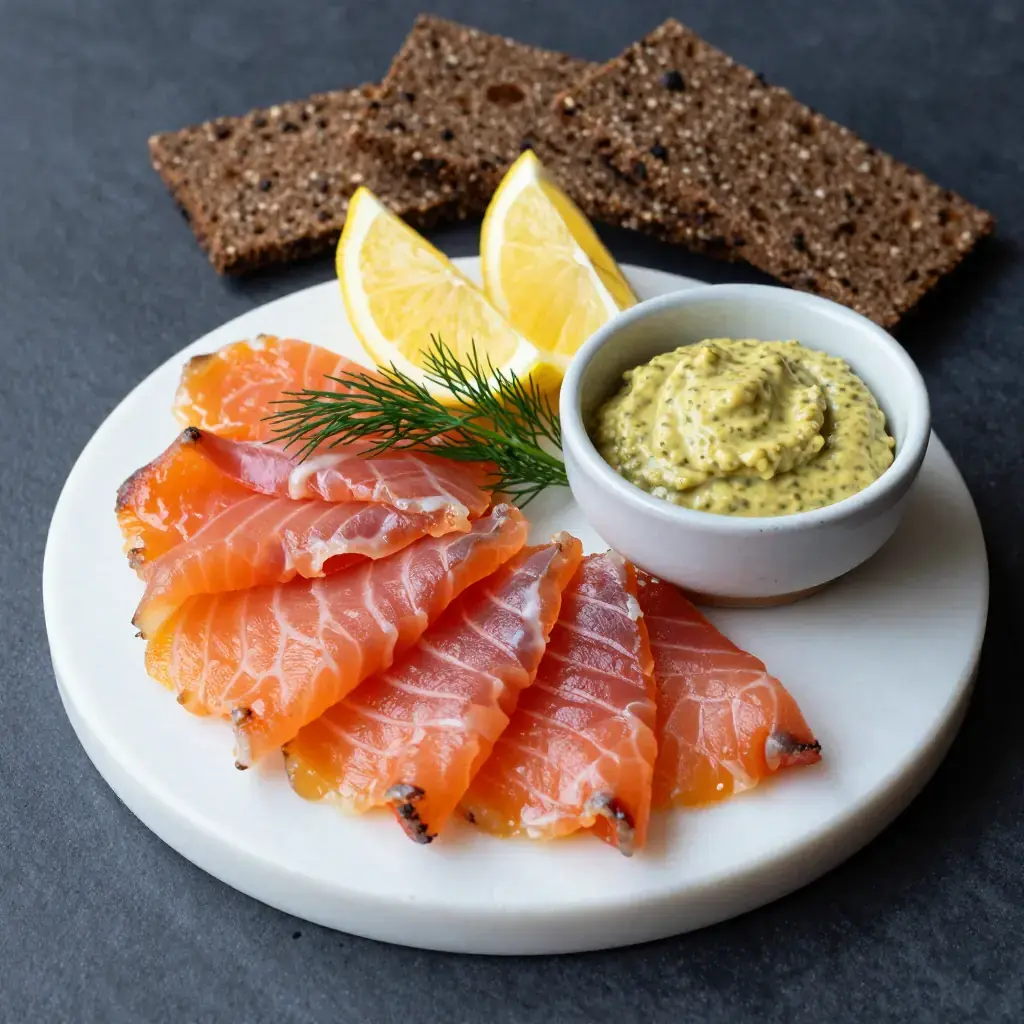
Gravlax med Hovmästarsås
Gravlax — from the Old Norse meaning "buried salmon" — is Sweden's most elegant cold preparation, born from a medieval practice of fermenting fish underground. Today the salt-sugar-dill cure produces a silky, translucent fillet that is one of Scandinavia's great contributions to cold table traditions.
Serves: 8 as a starter
Ingredients
Cured salmon:
- 800g (1 lb 12 oz) skin-on salmon fillet, pin bones removed
- 3 tbsp (45g) flaky sea salt
- 2 tbsp (24g) caster sugar
- 1 tbsp (6g) coarsely cracked white pepper
- Large bunch of fresh dill (about 60g / 2 oz), roughly torn
- 1 tbsp (15ml) aquavit or vodka (optional)
Hovmästarsås (mustard dill sauce):
- 3 tbsp (45g) Swedish sharp mustard (or Dijon)
- 1 tbsp (15ml) white wine vinegar
- 1 tbsp (12g) caster sugar
- 125ml (½ cup) neutral oil
- Large handful of fresh dill, finely chopped
- Salt and white pepper to taste
To serve:
- Thinly sliced dark rye bread or crispbread
- Lemon wedges
Instructions
- Mix salt, sugar, and white pepper together. If using aquavit, rub it over the flesh side of the salmon.
- Lay half the dill on a piece of cling film large enough to wrap the fish. Place salmon skin-side down on the dill. Spread salt-sugar mixture evenly over the flesh. Pile remaining dill on top.
- Wrap tightly in cling film, then wrap again. Place in a dish and weigh down with a heavy pan. Refrigerate for 48–72 hours, turning every 12 hours. The brine released is normal — do not drain it.
- For the sauce: whisk mustard, vinegar, and sugar together. Drizzle in oil in a thin stream while whisking constantly until emulsified and thick. Fold in dill. Season with salt and white pepper. Refrigerate.
- When cured, unwrap the salmon. Scrape away the dill and blot the surface with kitchen paper. Do not rinse.
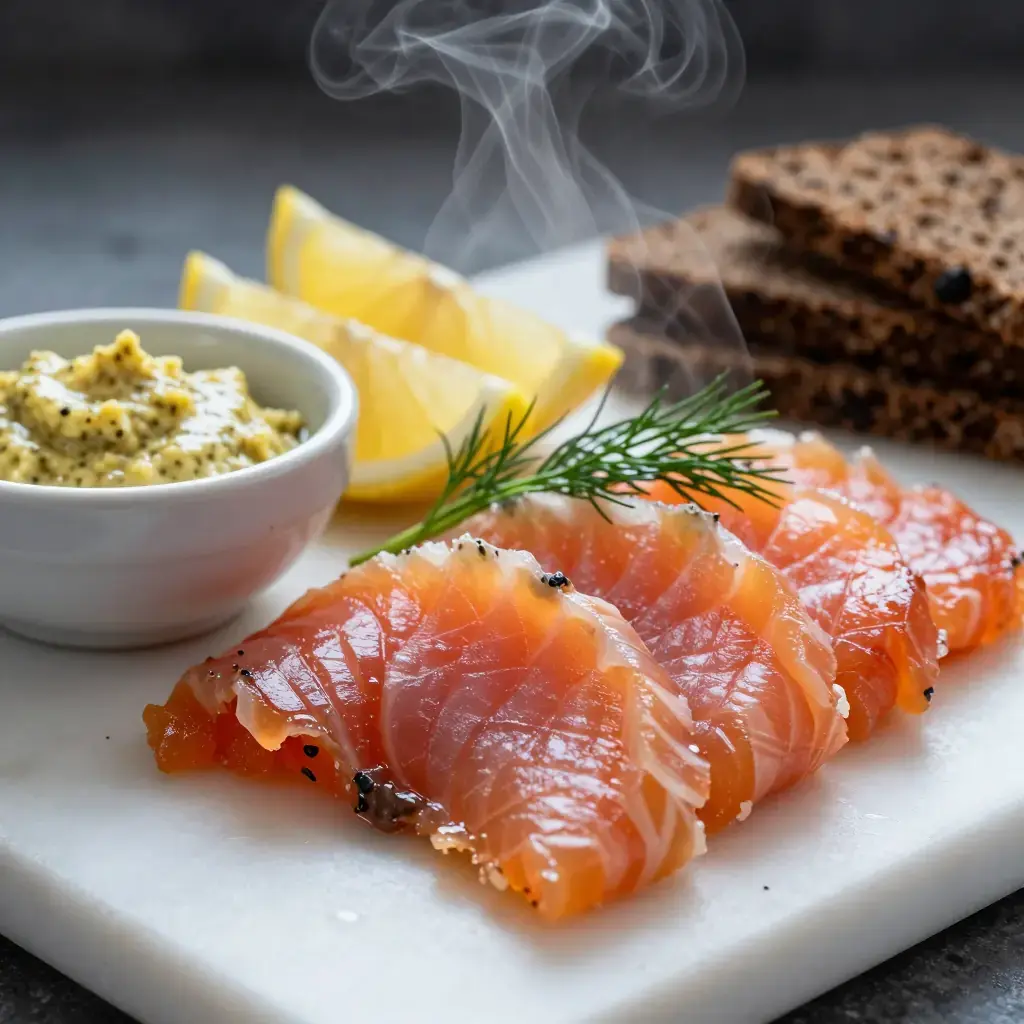
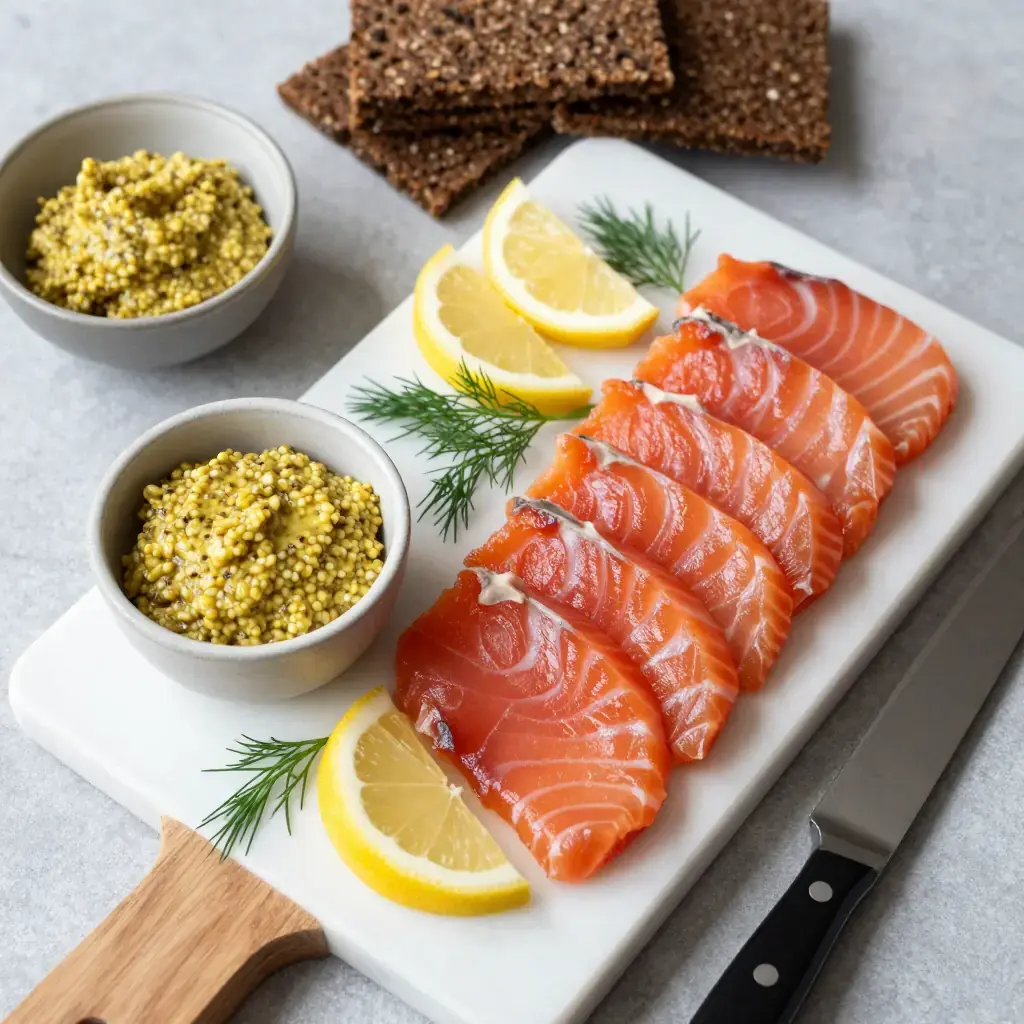
- Slice very thinly on a diagonal, starting from the tail end, leaving the skin behind.
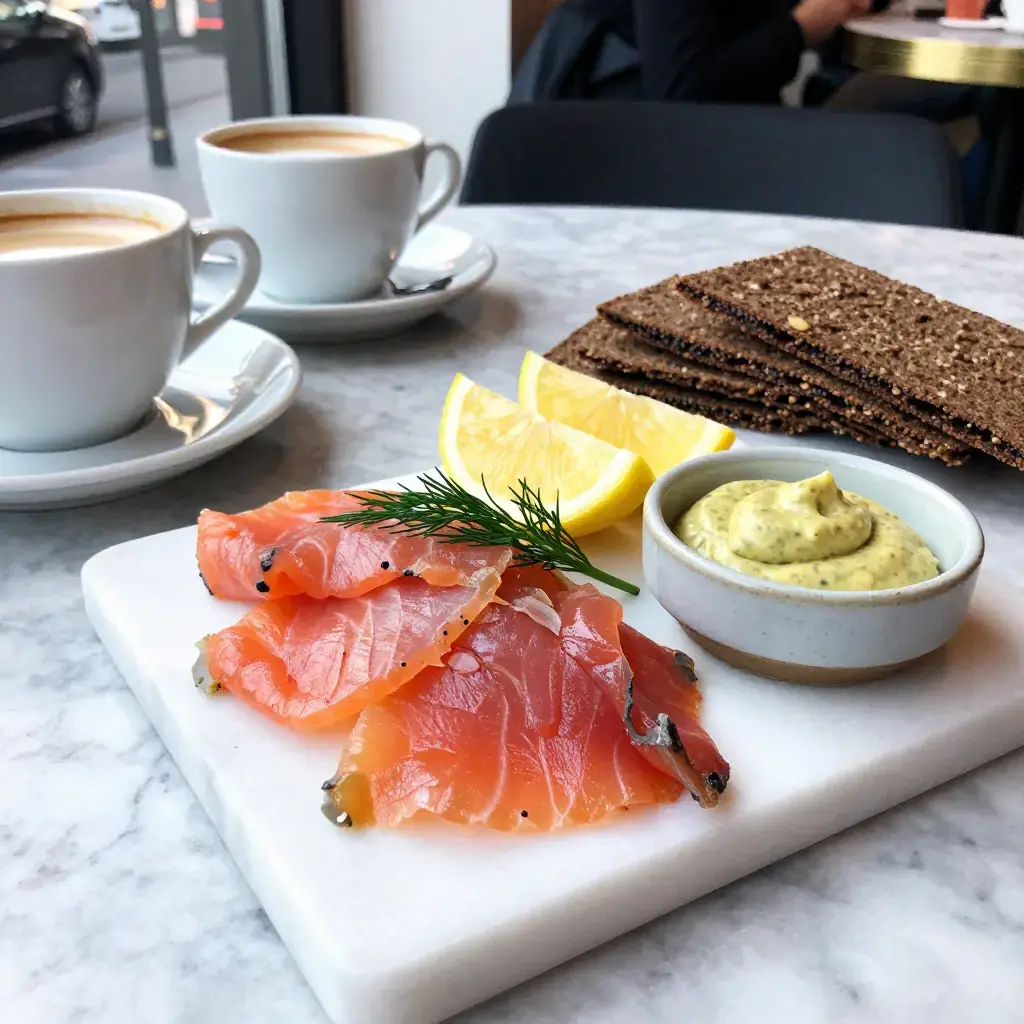
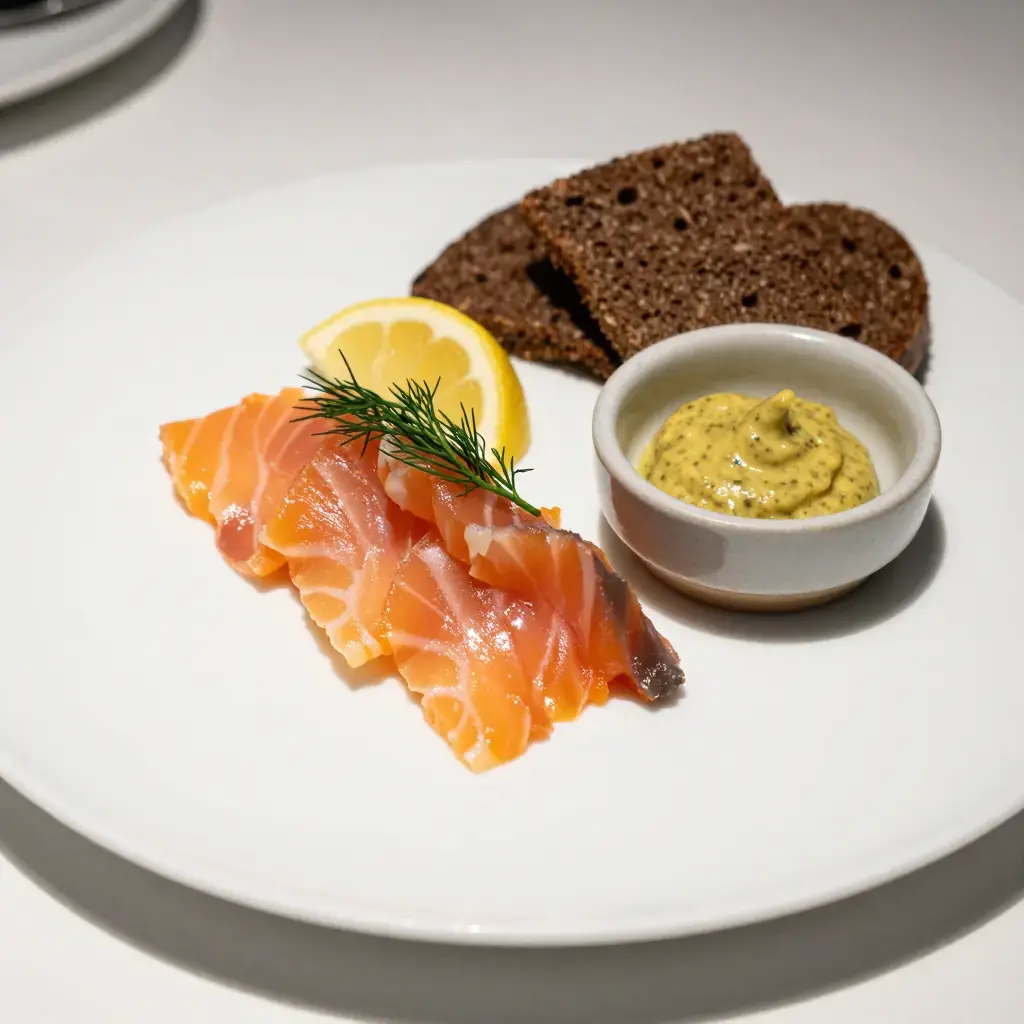
- Arrange on a platter with rye bread, lemon wedges, and hovmästarsås alongside.
Cook's Notes: The fish must be very fresh and ideally from a trusted source as it is not cooked. 48 hours gives a milder cure; 72 hours produces a firmer, saltier result. Leftover gravlax keeps refrigerated for up to 4 days.
All Revisions
generated
# Gravlax med Hovmästarsås Gravlax — from the Old Norse meaning "buried salmon" — is Sweden's most elegant cold preparation, born from a medieval practice of fermenting fish underground. Today the salt-sugar-dill cure produces a silky, translucent fillet that is one of Scandinavia's great contributions to cold table traditions. Serves: 8 as a starter ## Ingredients **Cured salmon:** - 800g (1 lb 12 oz) skin-on salmon fillet, pin bones removed - 3 tbsp (45g) flaky sea salt - 2 tbsp (24g) caster sugar - 1 tbsp (6g) coarsely cracked white pepper - Large bunch of fresh dill (about 60g / 2 oz), roughly torn - 1 tbsp (15ml) aquavit or vodka (optional) **Hovmästarsås (mustard dill sauce):** - 3 tbsp (45g) Swedish sharp mustard (or Dijon) - 1 tbsp (15ml) white wine vinegar - 1 tbsp (12g) caster sugar - 125ml (½ cup) neutral oil - Large handful of fresh dill, finely chopped - Salt and white pepper to taste **To serve:** - Thinly sliced dark rye bread or crispbread - Lemon wedges ## Instructions 1. Mix salt, sugar, and white pepper together. If using aquavit, rub it over the flesh side of the salmon. 2. Lay half the dill on a piece of cling film large enough to wrap the fish. Place salmon skin-side down on the dill. Spread salt-sugar mixture evenly over the flesh. Pile remaining dill on top. 3. Wrap tightly in cling film, then wrap again. Place in a dish and weigh down with a heavy pan. Refrigerate for 48–72 hours, turning every 12 hours. The brine released is normal — do not drain it. 4. For the sauce: whisk mustard, vinegar, and sugar together. Drizzle in oil in a thin stream while whisking constantly until emulsified and thick. Fold in dill. Season with salt and white pepper. Refrigerate. 5. When cured, unwrap the salmon. Scrape away the dill and blot the surface with kitchen paper. Do not rinse. 6. Slice very thinly on a diagonal, starting from the tail end, leaving the skin behind. 7. Arrange on a platter with rye bread, lemon wedges, and hovmästarsås alongside. **Cook's Notes:** The fish must be very fresh and ideally from a trusted source as it is not cooked. 48 hours gives a milder cure; 72 hours produces a firmer, saltier result. Leftover gravlax keeps refrigerated for up to 4 days.Images
Tags
- authentic
- cold-dish
- multi-day
- raw
- seafood
- swedish