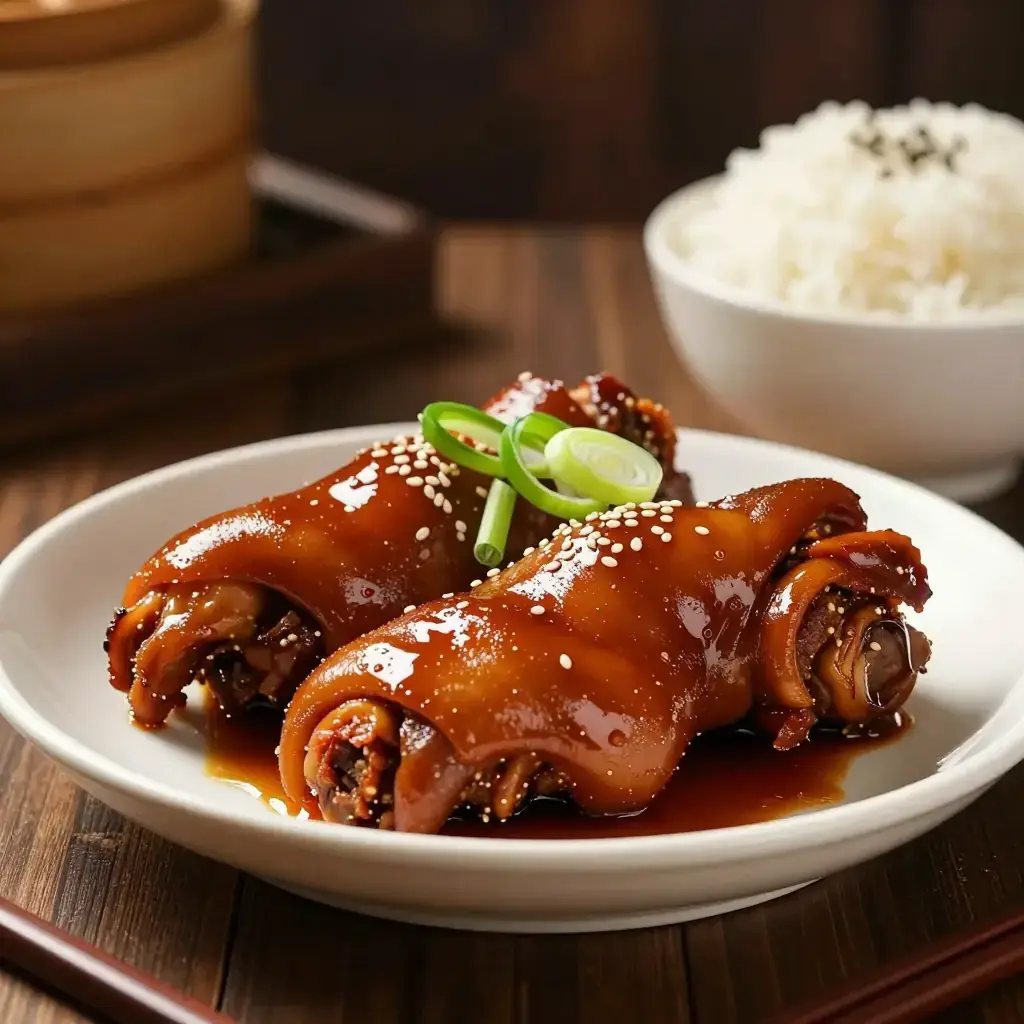
Lu Shui Zhu Shou
Far older than Cantonese roast meats, lu shui — the art of the perpetually replenished master stock — traces back to the Song Dynasty courts. Pork trotters slow-braised in a spiced soy stock until the collagen melts into a lip-coating glaze have been a staple of Cantonese teahouses, roast meat shops, and home kitchens for centuries. The master stock, passed down through generations, grows richer with every use.
Serves: 4
Ingredients
Pork Trotters
- 2 whole pork trotters (about 1.2kg / 2 lb 10 oz total), cut into halves lengthways by the butcher
Master Braising Stock (Lu Shui)
- 1.2 litres (5 cups) water
- 120ml (½ cup) soy sauce
- 60ml (¼ cup) dark soy sauce
- 60ml (¼ cup) Shaoxing rice wine
- 50g (1¾ oz) rock sugar
- 3 whole star anise
- 1 cinnamon stick
- 6 cloves
- 1 tsp Sichuan peppercorns
- 3 bay leaves
- 4 slices fresh ginger
- 3 cloves garlic, smashed
- 2 pieces dried tangerine peel
Finishing
- 1 tbsp (15ml) dark soy sauce for brushing (optional)
- Sliced spring onions and sesame oil
Instructions
- Blanch trotters in rapidly boiling water for 10 minutes. Drain, rinse under cold water, and scrub clean. This removes blood and impurities.
- Combine all master stock ingredients in a pot large enough to hold the trotters snugly. Bring to a boil, stirring until rock sugar dissolves.
- Add trotters. Liquid should come about two-thirds up the meat. Bring back to a boil, skim any foam, then reduce heat to a bare simmer. Cover and braise for 2 hours, turning trotters every 30 minutes.
- Test at 2 hours: the skin should wobble and the meat should be near-falling from the bone but still holding shape. Continue 30 minutes more if needed.
- Remove trotters and rest 10 minutes. Meanwhile, strain the stock and return to a clean pot; simmer over medium heat to reduce by one-third into a glossy sauce, about 15 minutes.
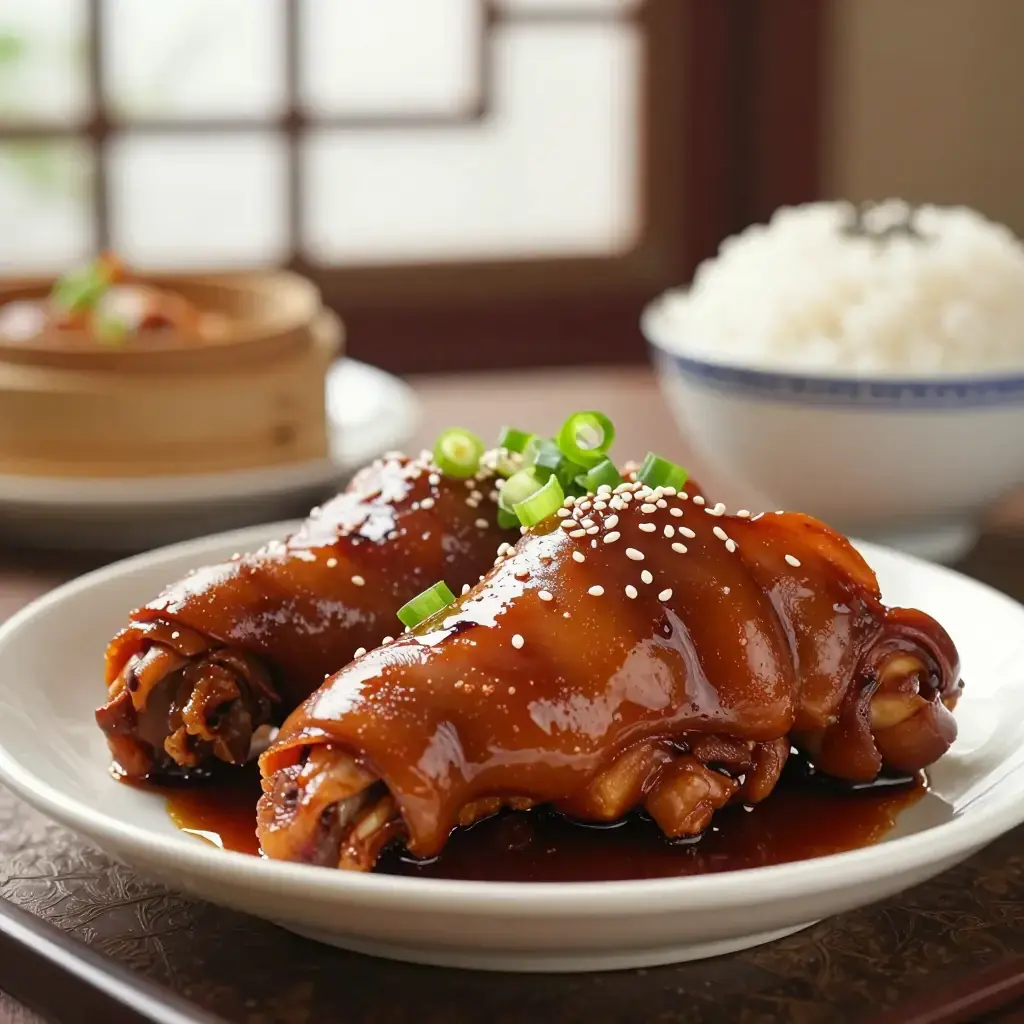
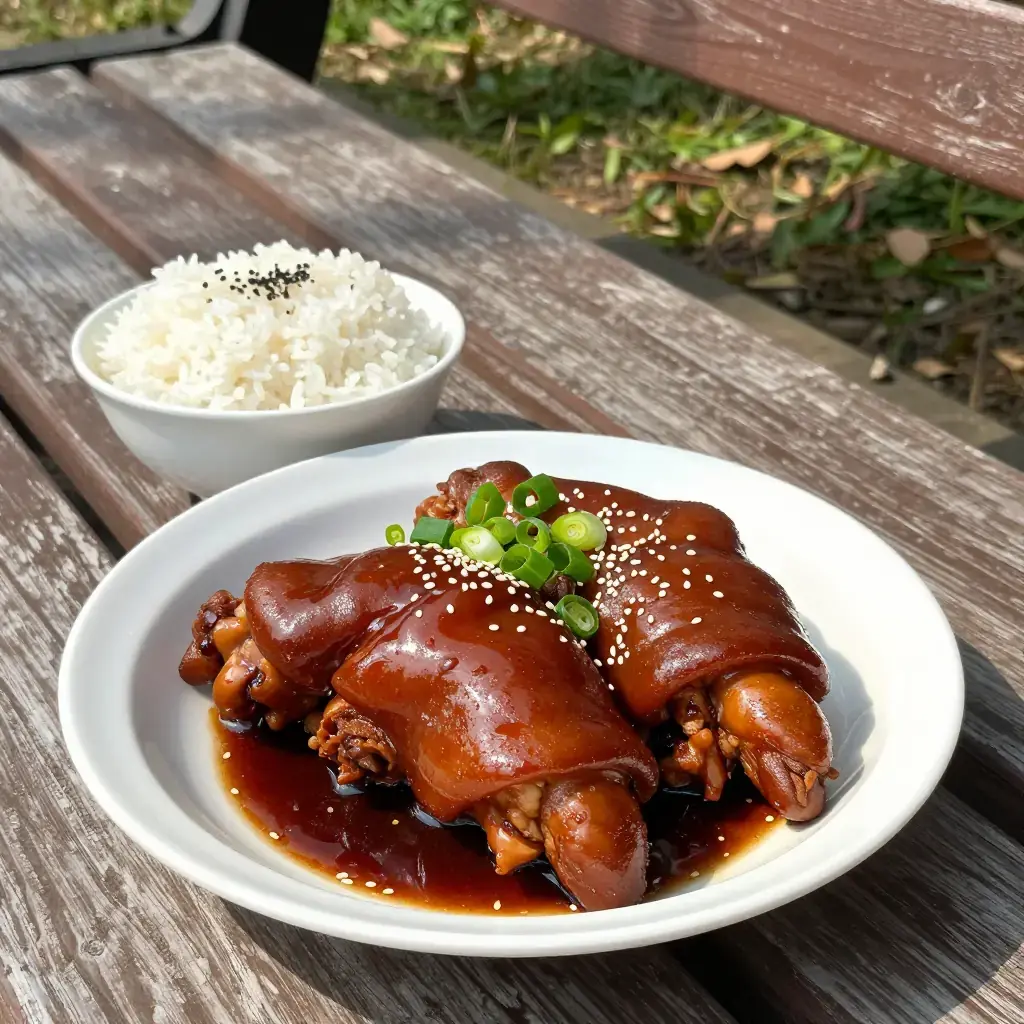
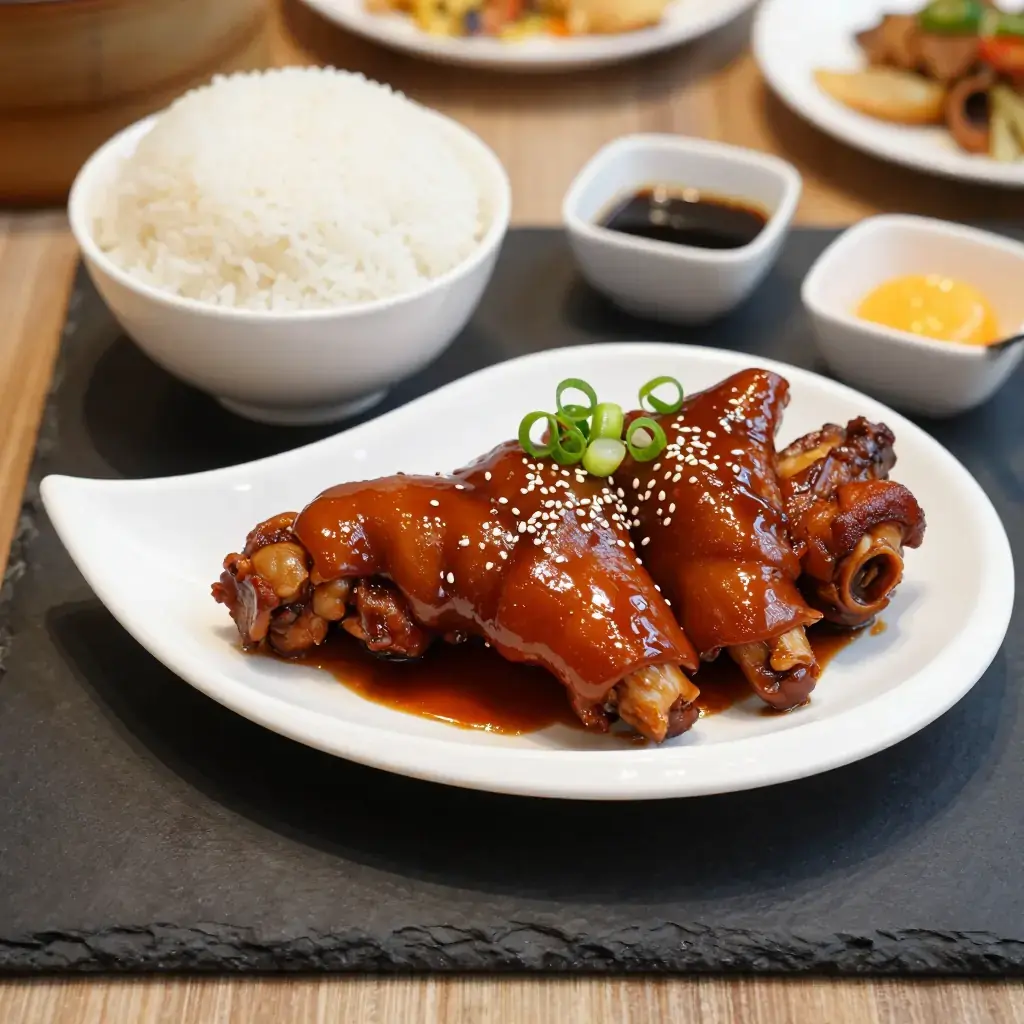
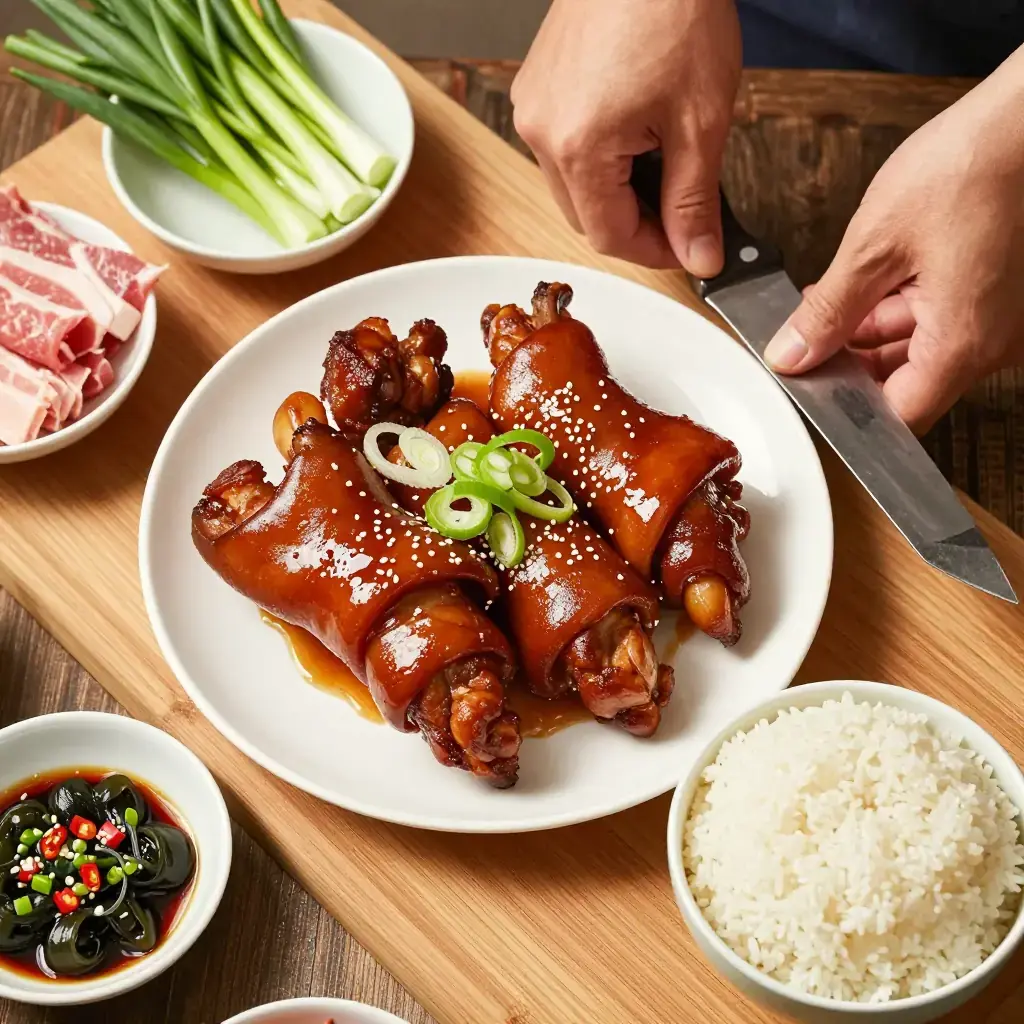
- Brush trotters with a little dark soy sauce for extra colour if desired. Arrange on a platter, spoon over the reduced stock glaze, drizzle with sesame oil, and scatter with spring onions. Serve with steamed jasmine rice.
Cook's Notes: Freeze the leftover stock — this is your master stock. The more times you use it, adding fresh spices and topping up with water each time, the more complex it becomes. Some Cantonese families have stocks decades old.
All Revisions
generated
# Lu Shui Zhu Shou Far older than Cantonese roast meats, lu shui — the art of the perpetually replenished master stock — traces back to the Song Dynasty courts. Pork trotters slow-braised in a spiced soy stock until the collagen melts into a lip-coating glaze have been a staple of Cantonese teahouses, roast meat shops, and home kitchens for centuries. The master stock, passed down through generations, grows richer with every use. Serves: 4 ## Ingredients **Pork Trotters** - 2 whole pork trotters (about 1.2kg / 2 lb 10 oz total), cut into halves lengthways by the butcher **Master Braising Stock (Lu Shui)** - 1.2 litres (5 cups) water - 120ml (½ cup) soy sauce - 60ml (¼ cup) dark soy sauce - 60ml (¼ cup) Shaoxing rice wine - 50g (1¾ oz) rock sugar - 3 whole star anise - 1 cinnamon stick - 6 cloves - 1 tsp Sichuan peppercorns - 3 bay leaves - 4 slices fresh ginger - 3 cloves garlic, smashed - 2 pieces dried tangerine peel **Finishing** - 1 tbsp (15ml) dark soy sauce for brushing (optional) - Sliced spring onions and sesame oil ## Instructions 1. Blanch trotters in rapidly boiling water for 10 minutes. Drain, rinse under cold water, and scrub clean. This removes blood and impurities. 2. Combine all master stock ingredients in a pot large enough to hold the trotters snugly. Bring to a boil, stirring until rock sugar dissolves. 3. Add trotters. Liquid should come about two-thirds up the meat. Bring back to a boil, skim any foam, then reduce heat to a bare simmer. Cover and braise for 2 hours, turning trotters every 30 minutes. 4. Test at 2 hours: the skin should wobble and the meat should be near-falling from the bone but still holding shape. Continue 30 minutes more if needed. 5. Remove trotters and rest 10 minutes. Meanwhile, strain the stock and return to a clean pot; simmer over medium heat to reduce by one-third into a glossy sauce, about 15 minutes. 6. Brush trotters with a little dark soy sauce for extra colour if desired. Arrange on a platter, spoon over the reduced stock glaze, drizzle with sesame oil, and scatter with spring onions. Serve with steamed jasmine rice. **Cook's Notes:** Freeze the leftover stock — this is your master stock. The more times you use it, adding fresh spices and topping up with water each time, the more complex it becomes. Some Cantonese families have stocks decades old.Images
Tags
- braised
- cantonese
- comfort-food
- dinner-party
- historical
- indulgent
- one-pot