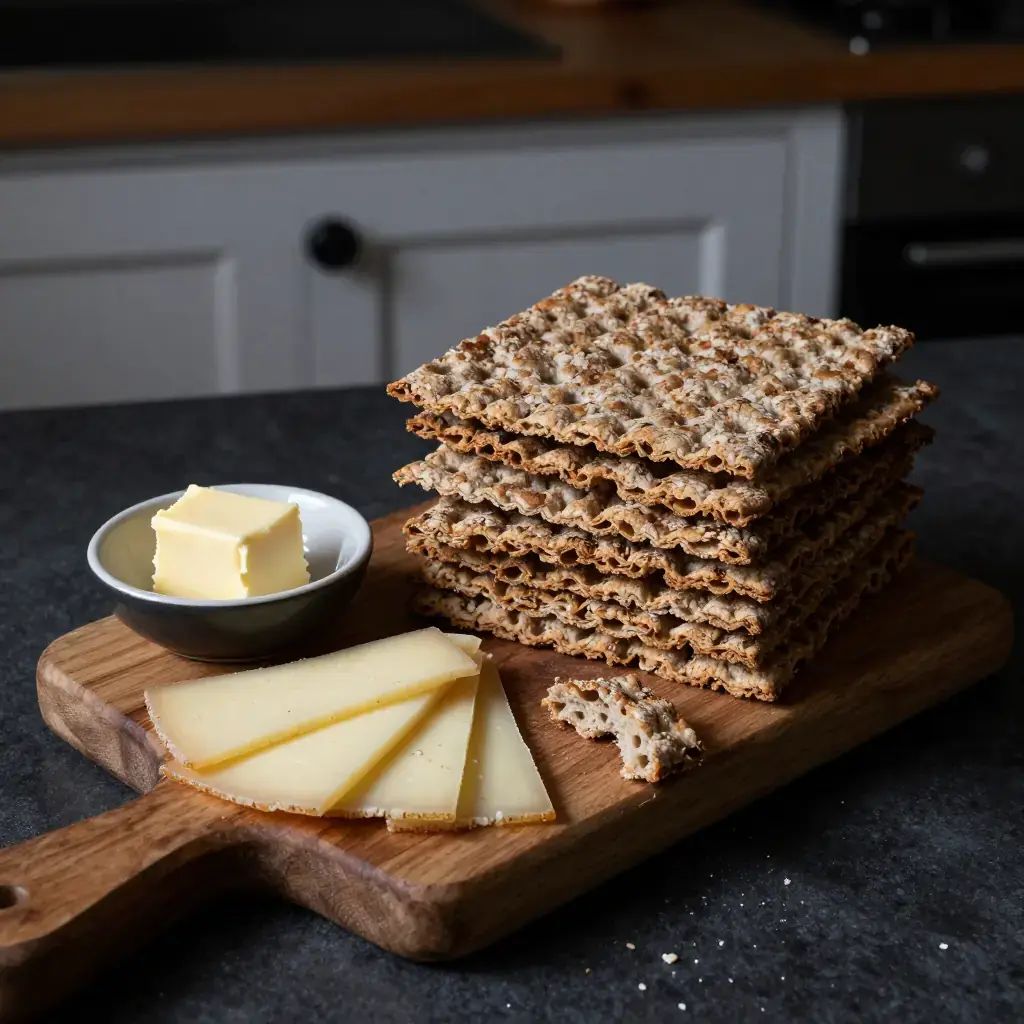
Knäckebröd
Knäckebröd — crispbread — has been the daily bread of Sweden since the fifteenth century, when its extreme durability made it the ideal staple for long northern winters. Baked hard and dry, it stores for months, and it remains on virtually every Swedish breakfast table today. The simplest version uses just rye flour, water, salt, and sometimes caraway, making it a timeless five-ingredient bread.
Serves: 8 (makes 16 crackers)
Ingredients
- 250g (2 cups) coarse dark rye flour (rågsikt or råg), plus extra for dusting
- 100g (0.75 cup) plain wheat flour
- 1 tsp fine sea salt
- 1 tsp caraway seeds (optional but traditional)
- 200ml (0.75 cup + 2 tbsp) cold water
Instructions
- Preheat oven to 230°C (450°F). Place one or two heavy baking sheets inside to heat up.
- Mix rye flour, wheat flour, salt, and caraway seeds together in a bowl. Pour in cold water gradually, mixing with a fork until a rough dough comes together. Do not overwork.
- Divide dough into 16 equal pieces. On a generously floured surface, roll each piece paper-thin — about 2mm (0.08 inch) — into rough oval or round shapes. Prick all over with a fork or a pastry docker to prevent excessive bubbling.
- Optional: use a round cutter to cut a hole in the centre of each one, as traditional knäckebröd has a hole for hanging on the wooden poles above old Swedish stoves.
- Working quickly, slide 4–5 crackers at a time onto the preheated baking sheets. Bake for 6–8 minutes until edges begin to colour and crackers feel dry and rigid. They will crisp further as they cool.
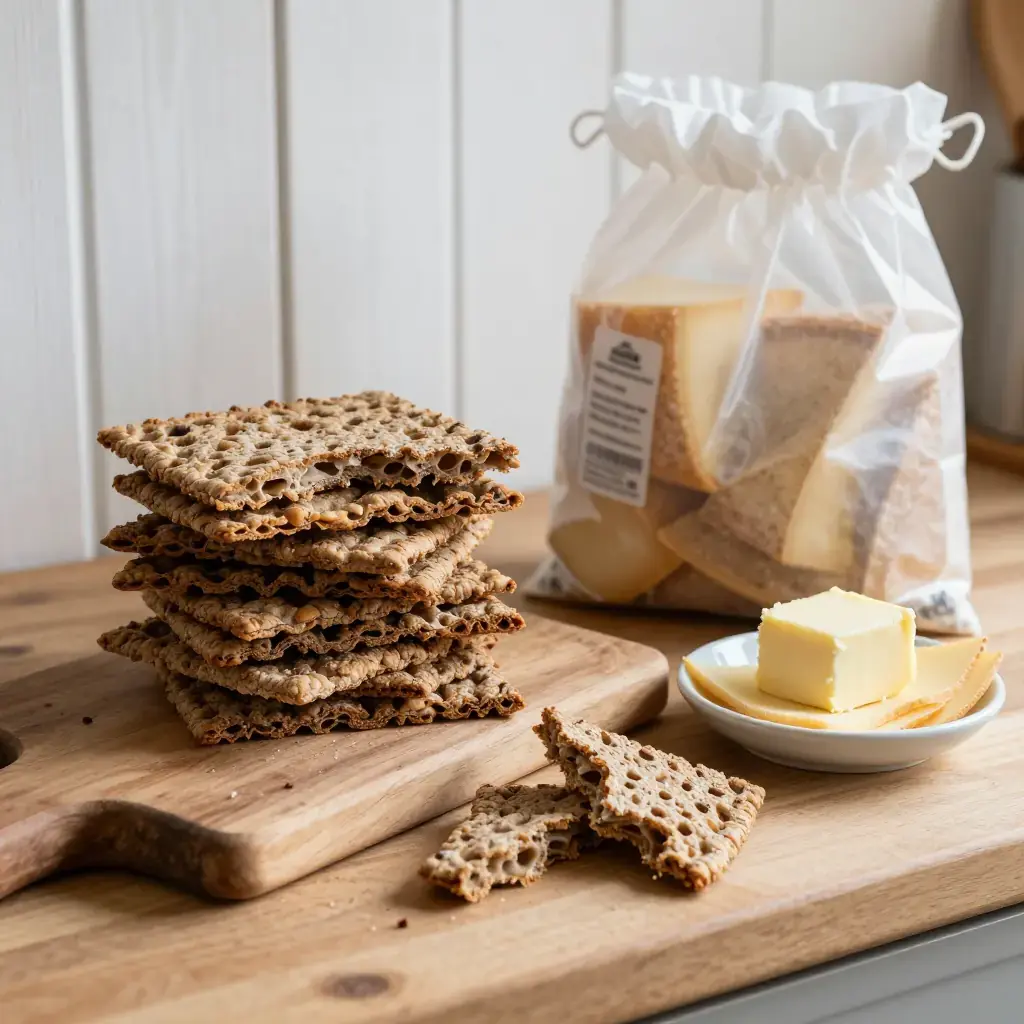
- Cool completely on a wire rack before stacking. Store in an airtight tin.
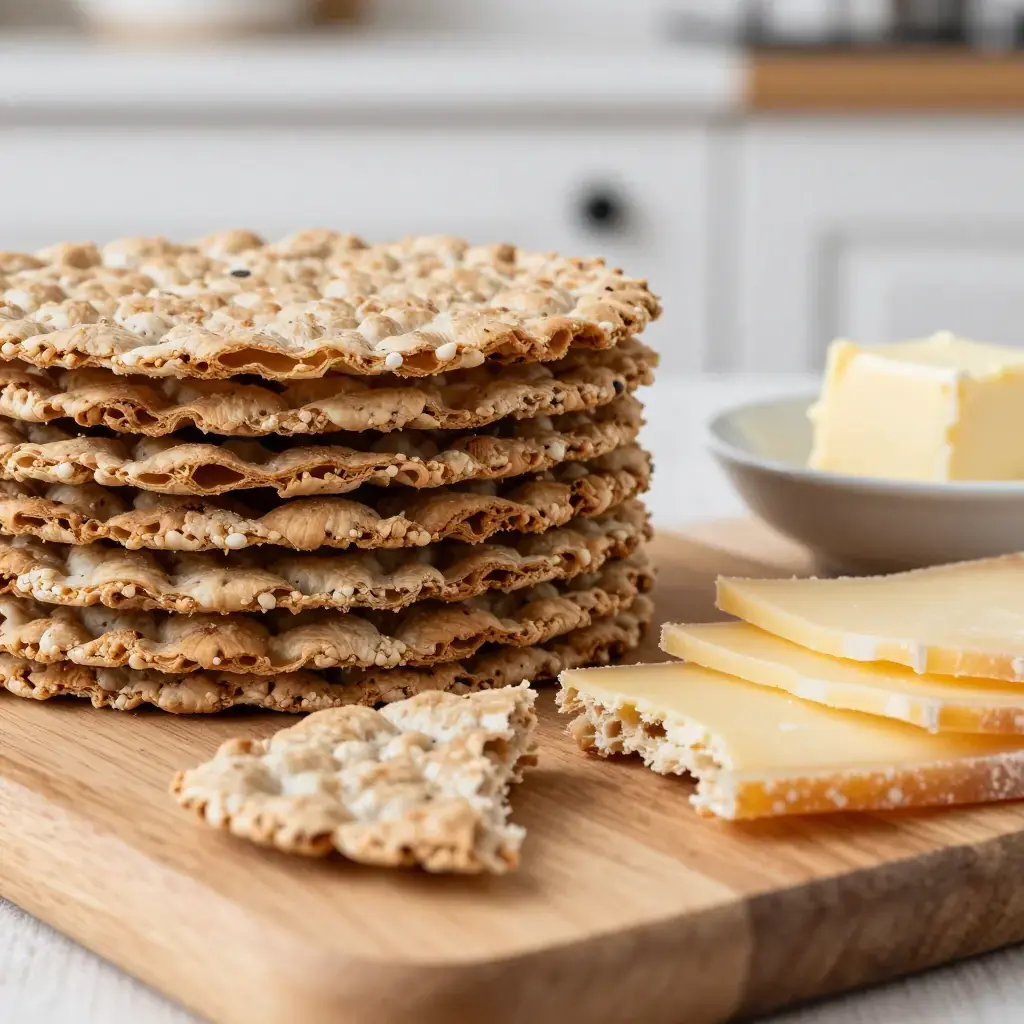
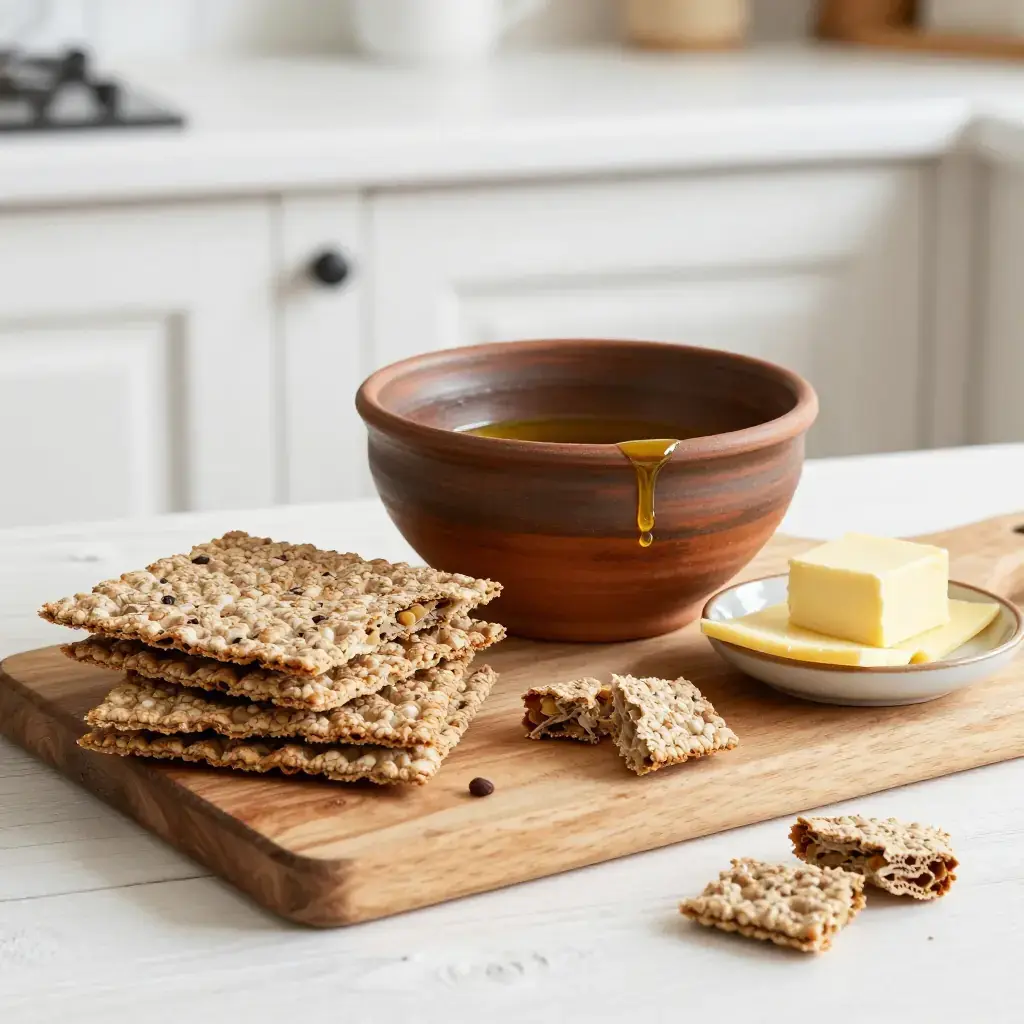
Cook's Notes: Cold water is important — it keeps the gluten from developing too much, giving a more fragile, crispy texture. The crackers must be rolled genuinely thin; thick knäckebröd stays leathery instead of shattering. Serve with butter, hard cheese, pickled herring, or smoked salmon.
All Revisions
generated
# Knäckebröd Knäckebröd — crispbread — has been the daily bread of Sweden since the fifteenth century, when its extreme durability made it the ideal staple for long northern winters. Baked hard and dry, it stores for months, and it remains on virtually every Swedish breakfast table today. The simplest version uses just rye flour, water, salt, and sometimes caraway, making it a timeless five-ingredient bread. Serves: 8 (makes 16 crackers) ## Ingredients - 250g (2 cups) coarse dark rye flour (rågsikt or råg), plus extra for dusting - 100g (0.75 cup) plain wheat flour - 1 tsp fine sea salt - 1 tsp caraway seeds (optional but traditional) - 200ml (0.75 cup + 2 tbsp) cold water ## Instructions 1. Preheat oven to 230°C (450°F). Place one or two heavy baking sheets inside to heat up. 2. Mix rye flour, wheat flour, salt, and caraway seeds together in a bowl. Pour in cold water gradually, mixing with a fork until a rough dough comes together. Do not overwork. 3. Divide dough into 16 equal pieces. On a generously floured surface, roll each piece paper-thin — about 2mm (0.08 inch) — into rough oval or round shapes. Prick all over with a fork or a pastry docker to prevent excessive bubbling. 4. Optional: use a round cutter to cut a hole in the centre of each one, as traditional knäckebröd has a hole for hanging on the wooden poles above old Swedish stoves. 5. Working quickly, slide 4–5 crackers at a time onto the preheated baking sheets. Bake for 6–8 minutes until edges begin to colour and crackers feel dry and rigid. They will crisp further as they cool. 6. Cool completely on a wire rack before stacking. Store in an airtight tin. **Cook's Notes:** Cold water is important — it keeps the gluten from developing too much, giving a more fragile, crispy texture. The crackers must be rolled genuinely thin; thick knäckebröd stays leathery instead of shattering. Serve with butter, hard cheese, pickled herring, or smoked salmon.Images

Tags
- 5-ingredient
- baked
- baking
- breakfast
- historical
- swedish