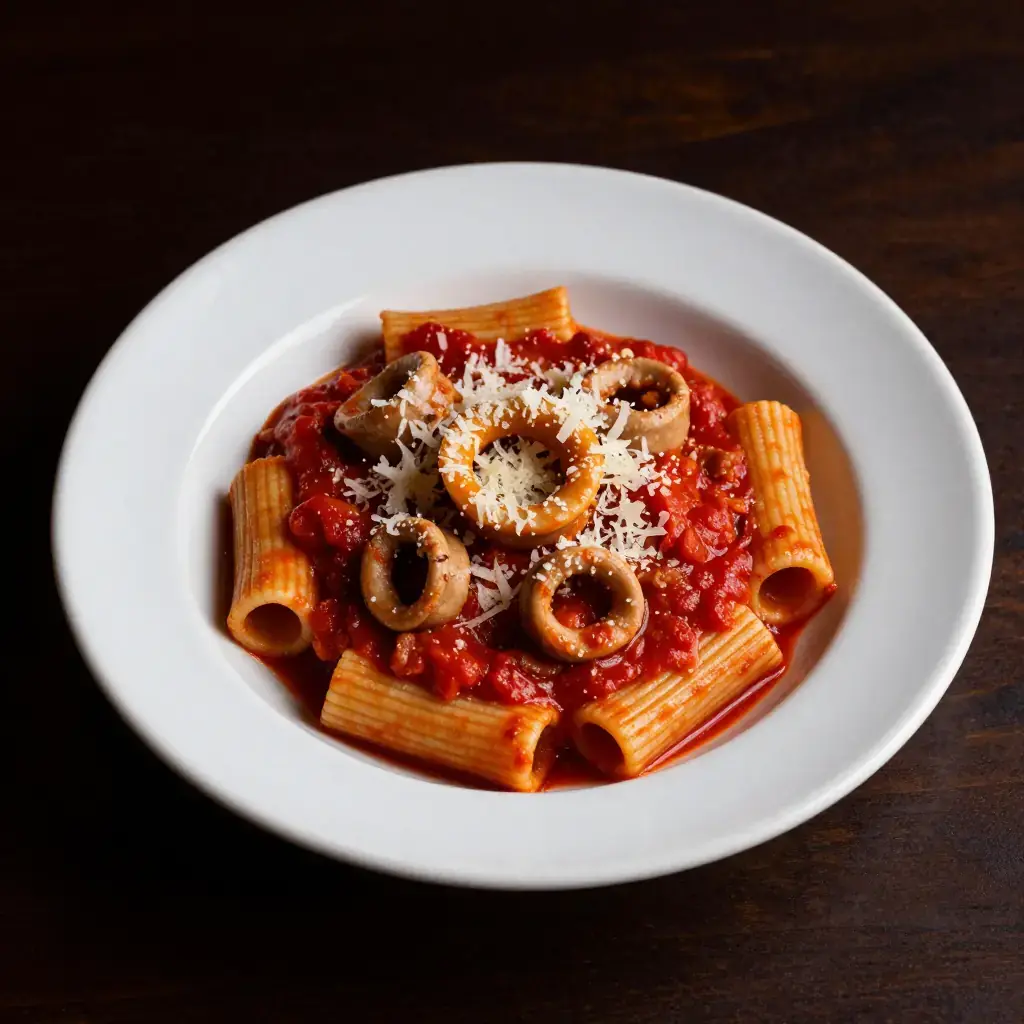
Pajata al Pomodoro
Pajata is Roman offal cooking at its most unapologetically ancient. The dish uses the small intestines of milk-fed veal, still containing the partially digested milk that curdles during slow cooking into a rich, creamy filling. It has fed the working-class of Testaccio — Rome's old slaughterhouse quarter — since at least the eighteenth century, and remains a mark of honour among serious Roman cooks.
Serves: 4
Ingredients
- 800g (1.75 lbs) cleaned pajata (veal milk intestines), cut into 8cm (3-inch) rings tied with kitchen twine
- 400g (14 oz) crushed San Marzano tomatoes
- 1 small white onion, finely diced
- 2 garlic cloves, sliced
- 4 tbsp (60ml) extra-virgin olive oil
- 150ml (0.6 cup) dry white wine
- 1 sprig fresh rosemary
- 1 dried peperoncino (or 0.5 tsp red chilli flakes)
- Salt and black pepper
- 400g (14 oz) rigatoni, to serve
- Pecorino Romano, grated, to finish
Instructions
- Rinse pajata rings under cold water. Pat dry. Tie the open ends of each piece securely so the filling is sealed inside.
- Heat olive oil in a wide, heavy pan over medium heat. Add onion and cook 6–7 minutes until soft and golden. Add garlic and peperoncino and cook 1 minute.
- Increase heat to medium-high, add pajata rings and brown on all sides, about 8–10 minutes total.
- Pour in white wine and let it bubble and reduce for 2 minutes, scraping up any stuck bits.
- Add crushed tomatoes and rosemary. Season with salt and pepper. Reduce heat to low, cover, and cook 50–60 minutes, turning the rings occasionally, until the intestines are tender and the filling has a creamy, curdled texture.
- Meanwhile cook rigatoni in boiling salted water to al dente. Drain, reserving some pasta water.
- Remove rosemary sprig. Toss rigatoni into the sauce, adding a splash of pasta water if needed to coat well.
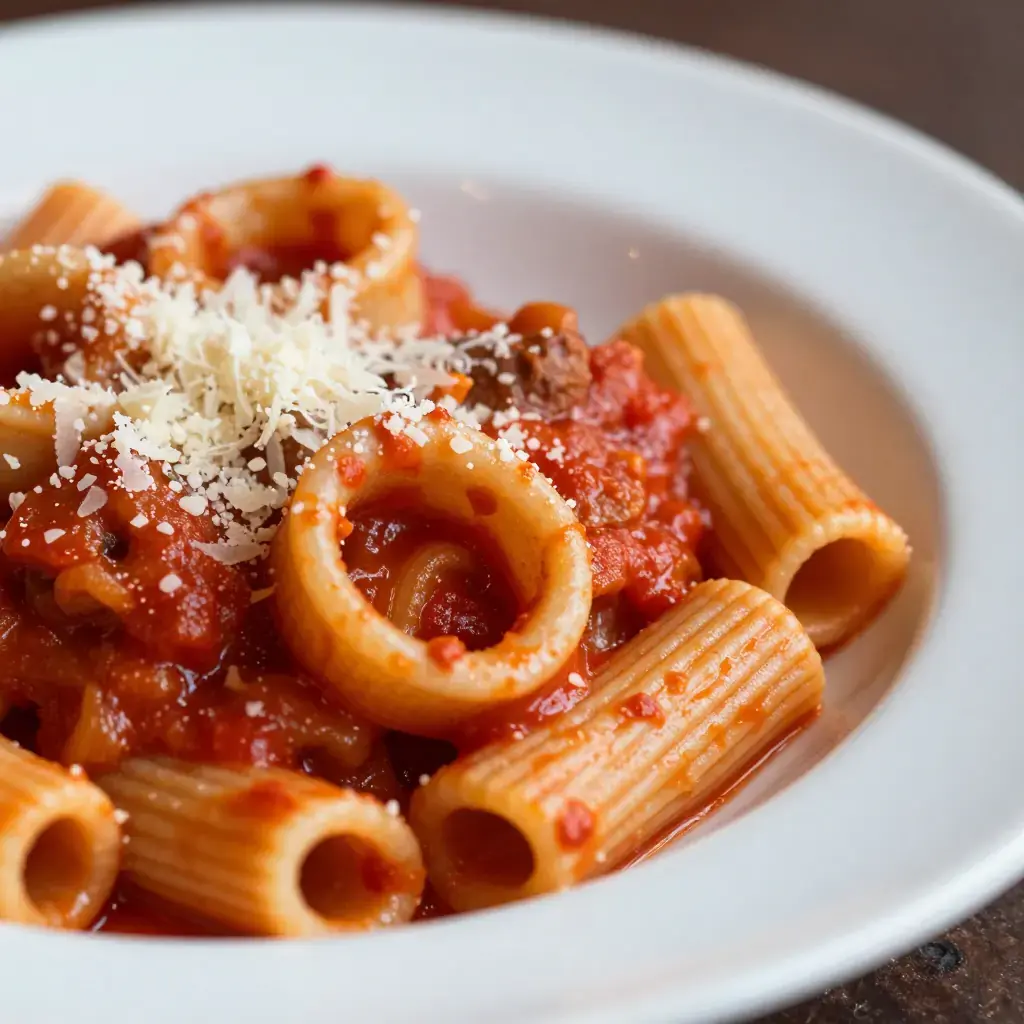
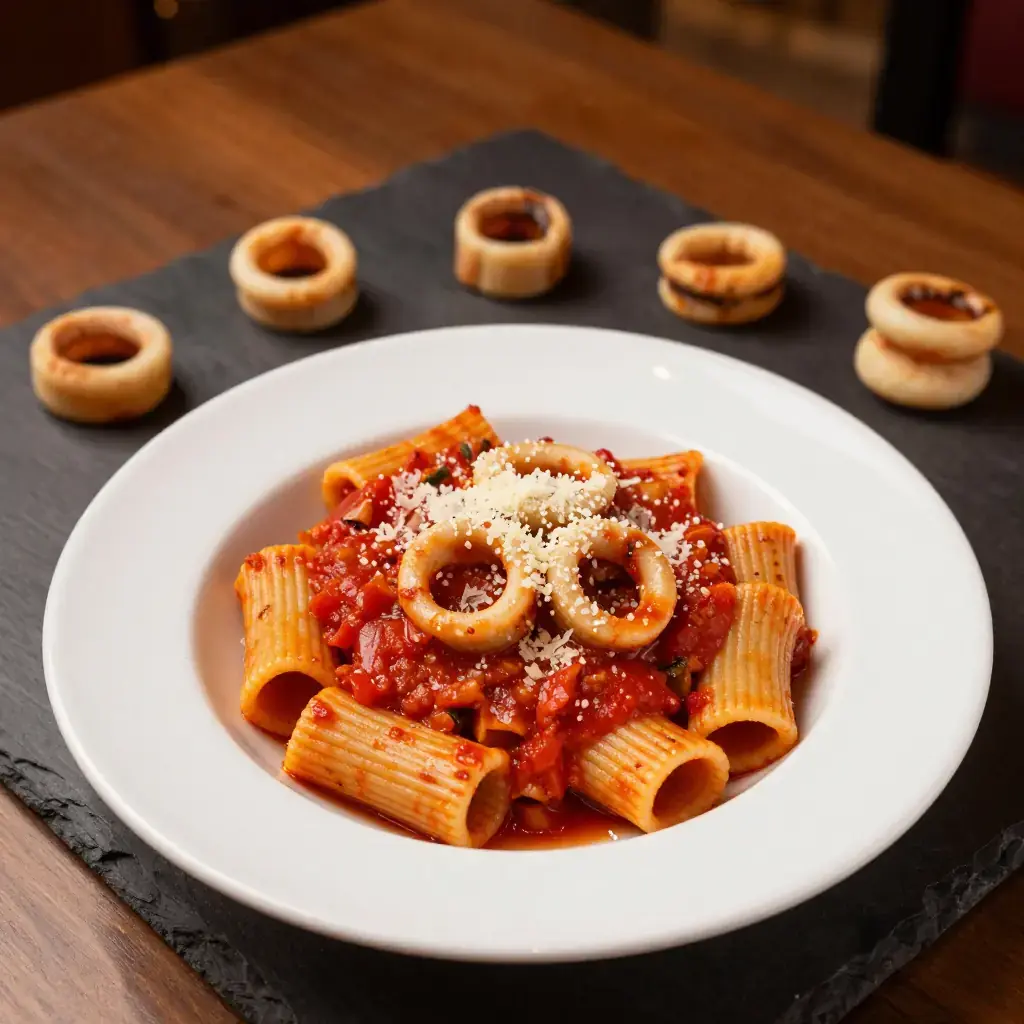
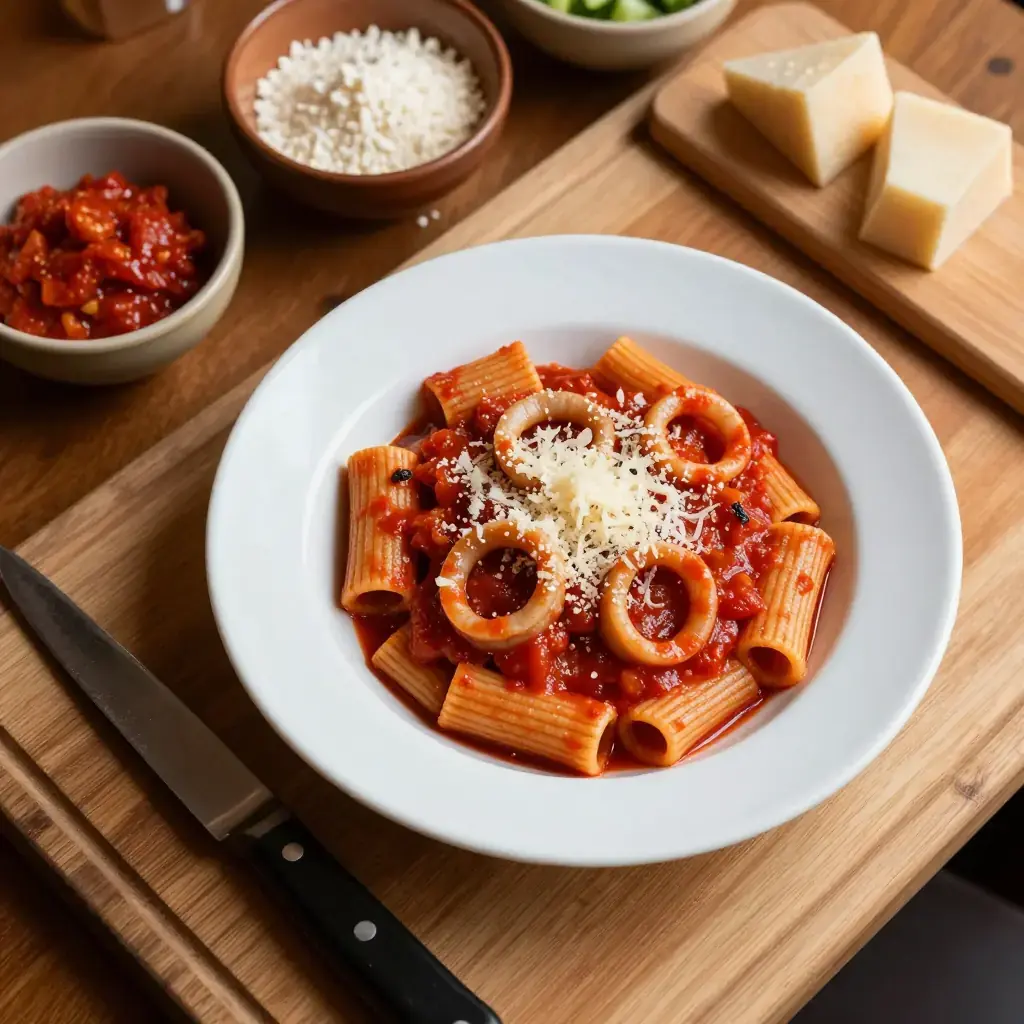
- Divide among bowls, placing pajata rings on top. Finish with grated Pecorino Romano.
Cook's Notes: Source pajata from a specialty butcher who works with whole milk-fed veal — the milk filling is essential to the dish. If unavailable, Roman restaurants will often supply it cleaned and ready. Do not overcook or the filling liquefies and loses its characteristic texture.
All Revisions
generated
# Pajata al Pomodoro Pajata is Roman offal cooking at its most unapologetically ancient. The dish uses the small intestines of milk-fed veal, still containing the partially digested milk that curdles during slow cooking into a rich, creamy filling. It has fed the working-class of Testaccio — Rome's old slaughterhouse quarter — since at least the eighteenth century, and remains a mark of honour among serious Roman cooks. Serves: 4 ## Ingredients - 800g (1.75 lbs) cleaned pajata (veal milk intestines), cut into 8cm (3-inch) rings tied with kitchen twine - 400g (14 oz) crushed San Marzano tomatoes - 1 small white onion, finely diced - 2 garlic cloves, sliced - 4 tbsp (60ml) extra-virgin olive oil - 150ml (0.6 cup) dry white wine - 1 sprig fresh rosemary - 1 dried peperoncino (or 0.5 tsp red chilli flakes) - Salt and black pepper - 400g (14 oz) rigatoni, to serve - Pecorino Romano, grated, to finish ## Instructions 1. Rinse pajata rings under cold water. Pat dry. Tie the open ends of each piece securely so the filling is sealed inside. 2. Heat olive oil in a wide, heavy pan over medium heat. Add onion and cook 6–7 minutes until soft and golden. Add garlic and peperoncino and cook 1 minute. 3. Increase heat to medium-high, add pajata rings and brown on all sides, about 8–10 minutes total. 4. Pour in white wine and let it bubble and reduce for 2 minutes, scraping up any stuck bits. 5. Add crushed tomatoes and rosemary. Season with salt and pepper. Reduce heat to low, cover, and cook 50–60 minutes, turning the rings occasionally, until the intestines are tender and the filling has a creamy, curdled texture. 6. Meanwhile cook rigatoni in boiling salted water to al dente. Drain, reserving some pasta water. 7. Remove rosemary sprig. Toss rigatoni into the sauce, adding a splash of pasta water if needed to coat well. 8. Divide among bowls, placing pajata rings on top. Finish with grated Pecorino Romano. **Cook's Notes:** Source pajata from a specialty butcher who works with whole milk-fed veal — the milk filling is essential to the dish. If unavailable, Roman restaurants will often supply it cleaned and ready. Do not overcook or the filling liquefies and loses its characteristic texture.Images
Tags
- authentic
- braised
- dinner
- historical
- italian
- noodles
- offal