Puttu
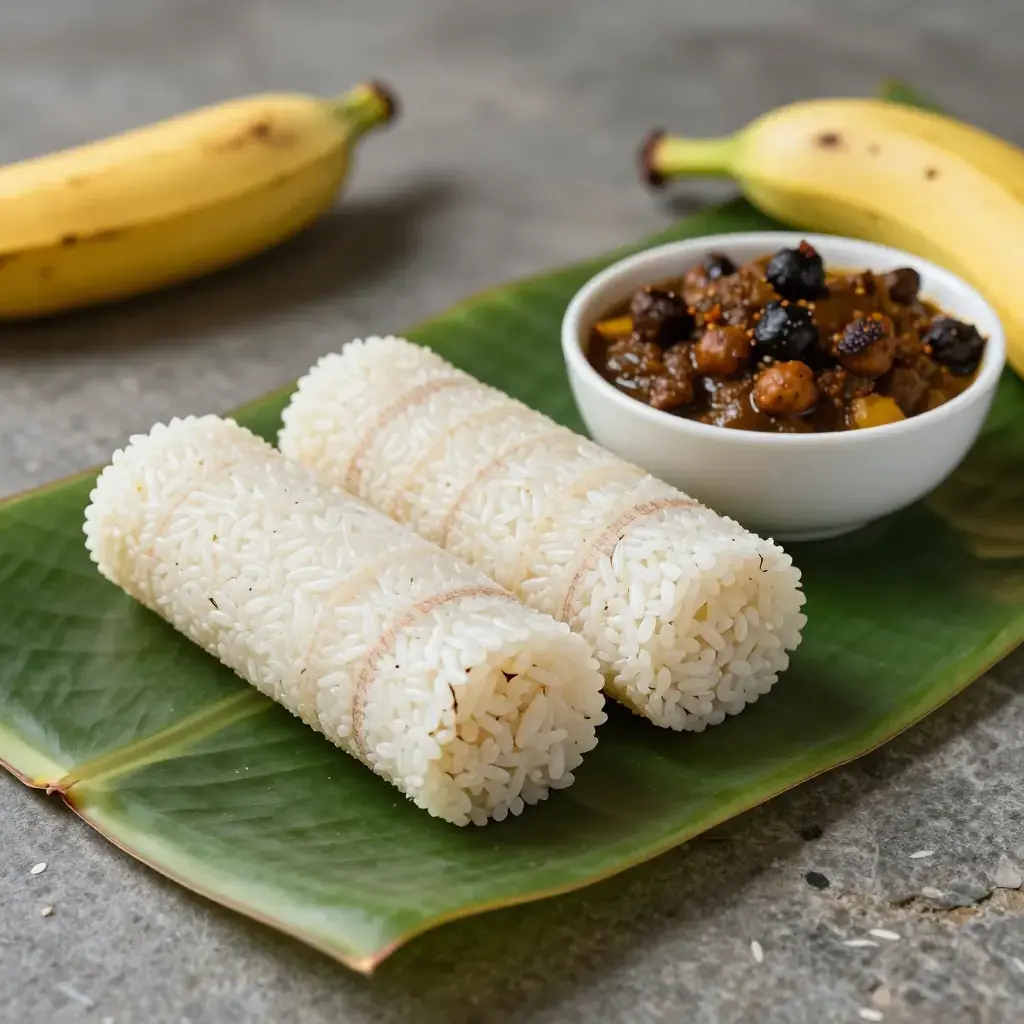
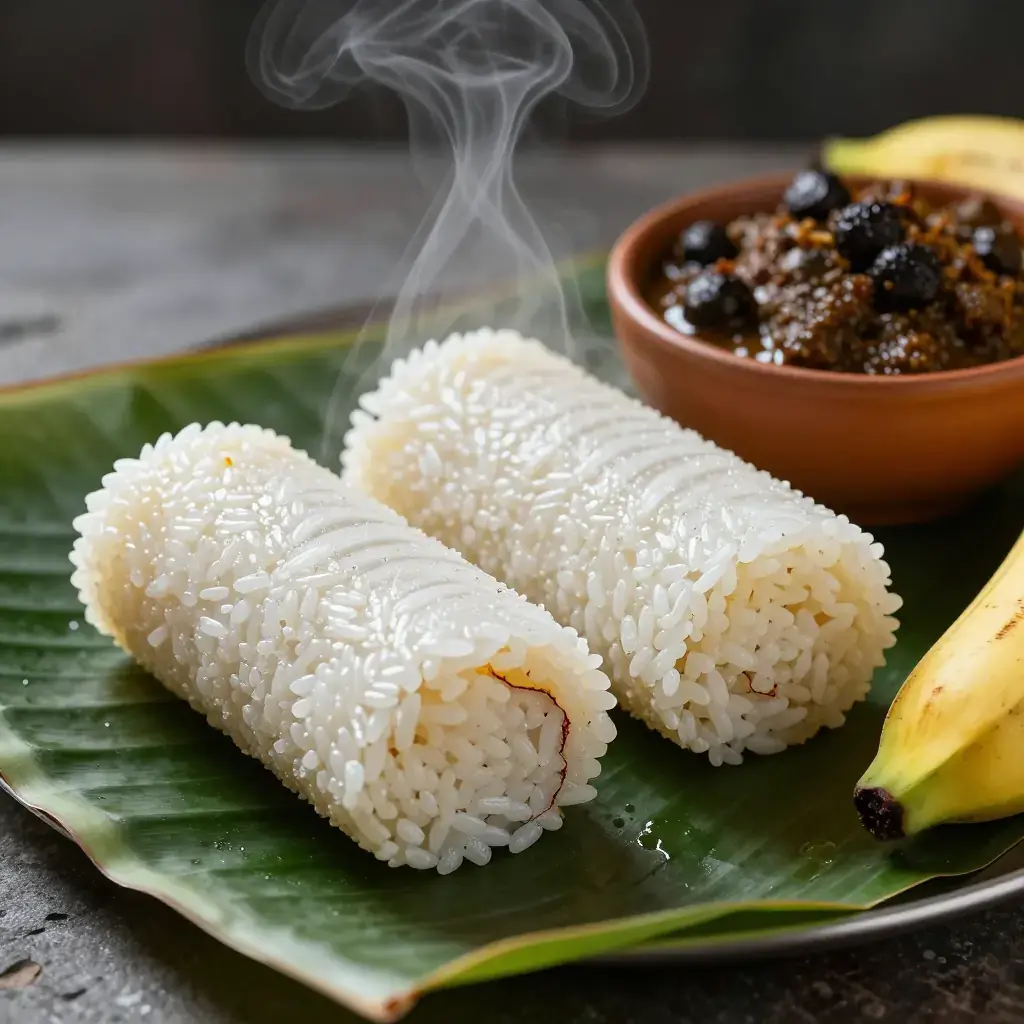
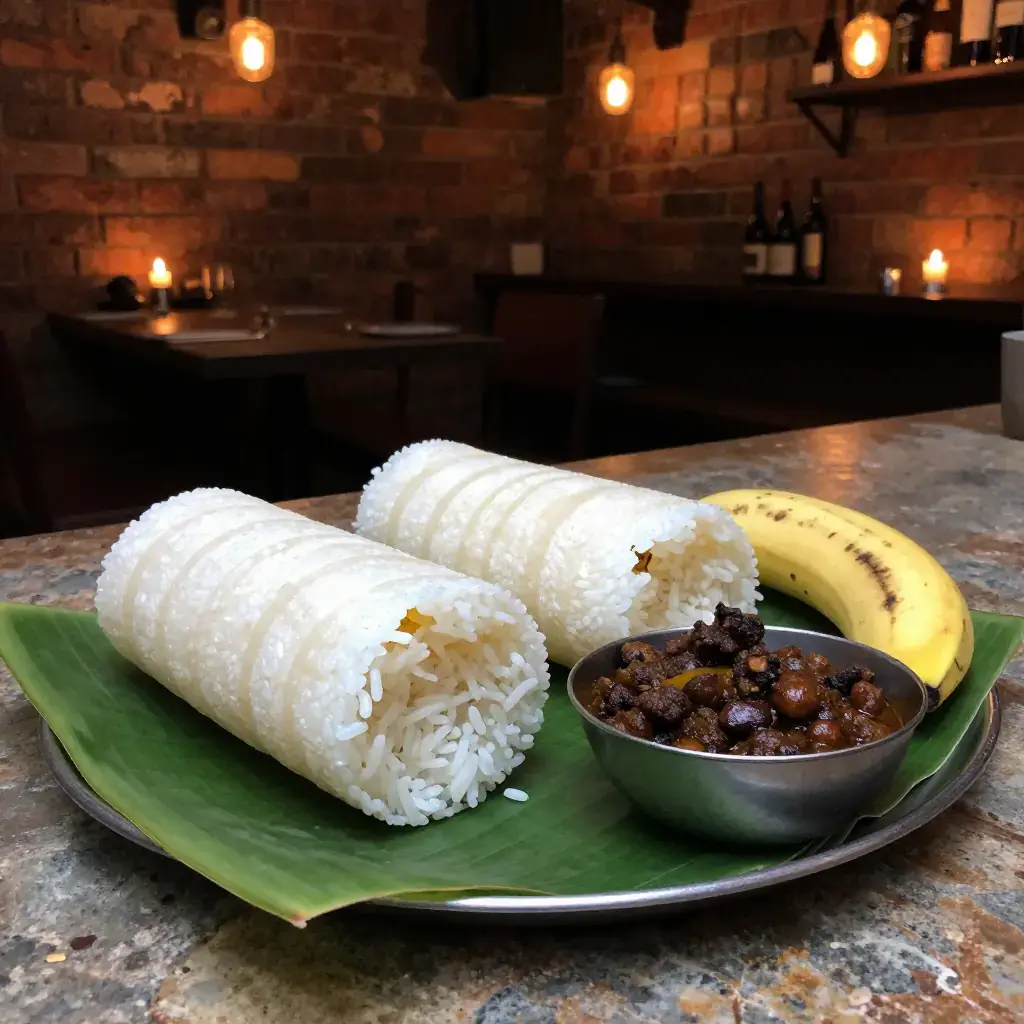
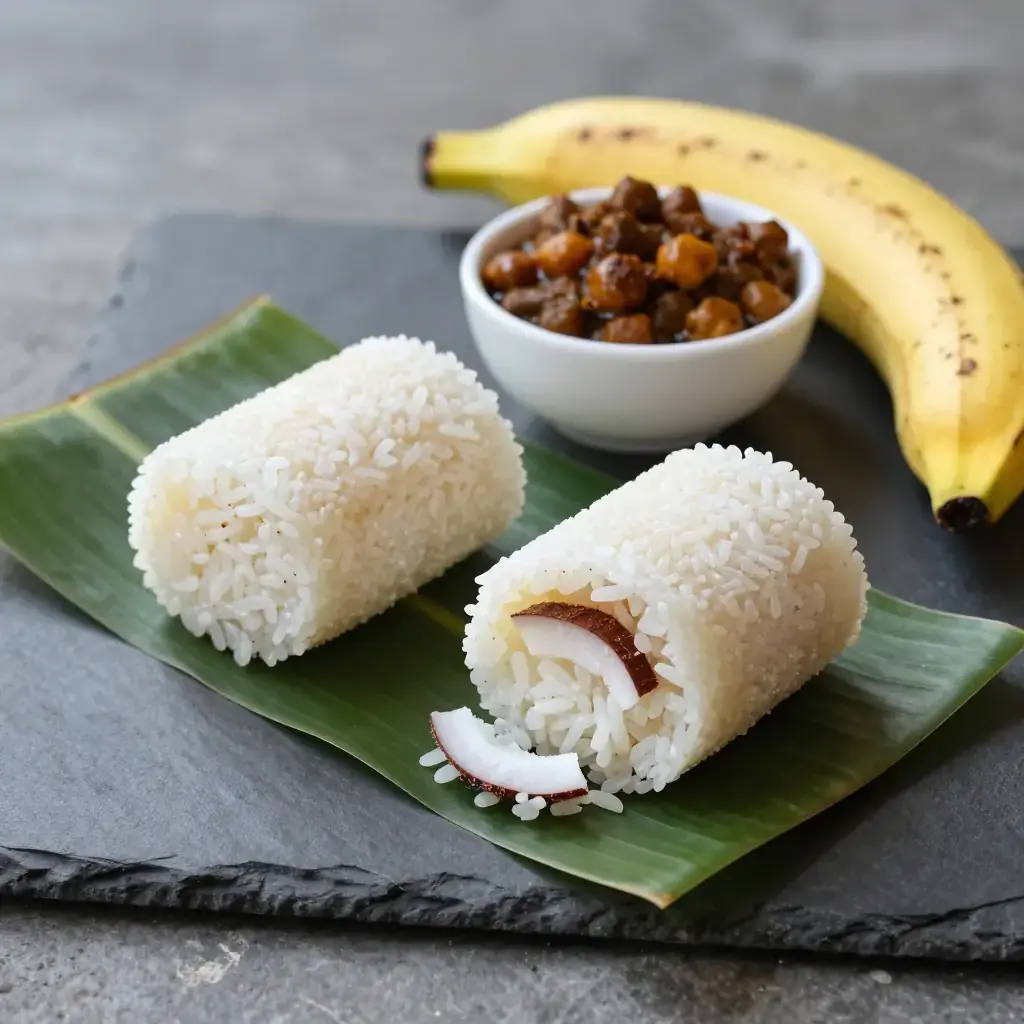
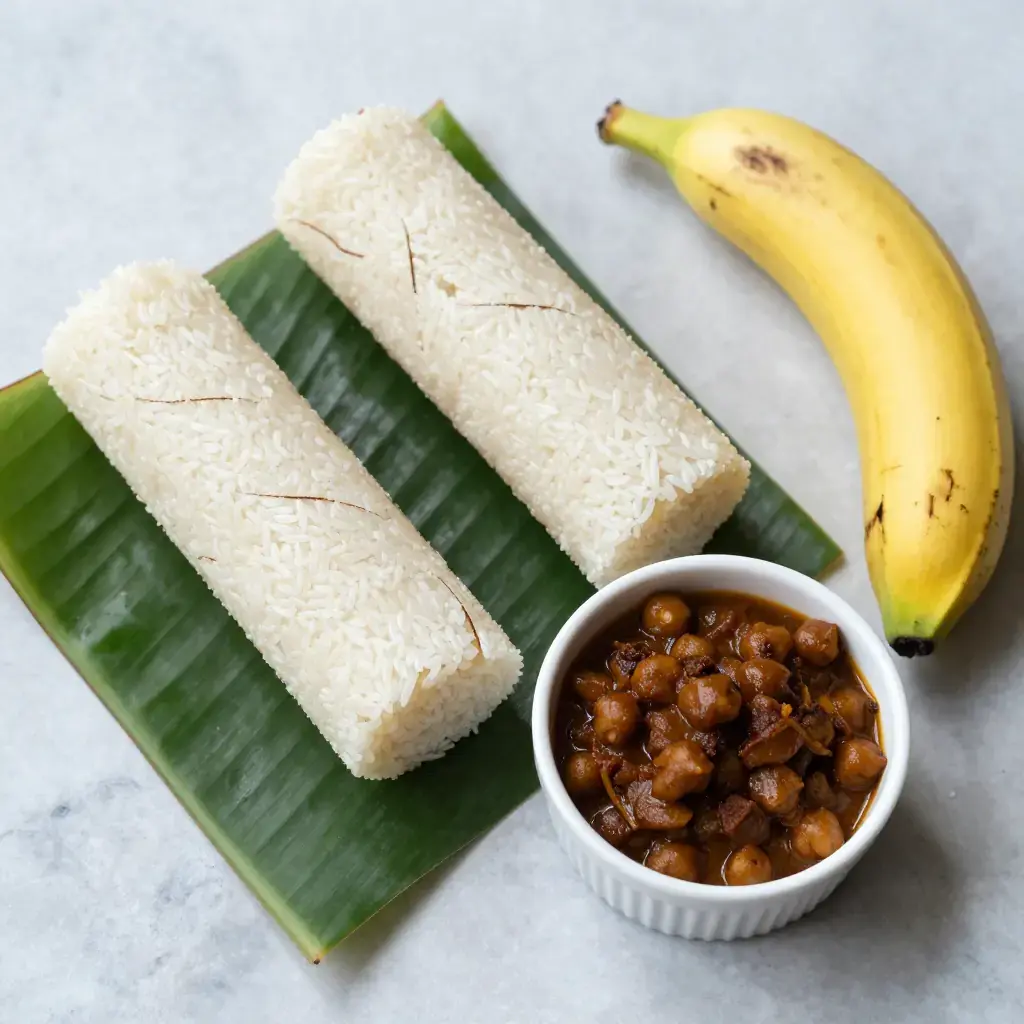
Puttu is the iconic breakfast of Kerala, steamed in a cylindrical bamboo or metal puttu kutti (steamer tube) until the layers of coarsely ground rice flour and freshly grated coconut emerge as a crumbly, fragrant log. The alternating layers of white rice flour and coconut are what give it the distinctive striped appearance when broken open. Puttu is almost always paired with kadala curry (black chickpea curry) or ripe banana with sugar — the contrasting tastes of savoury and sweet defining the Kerala breakfast table.
Serves: 4 (makes 4 cylinders)
Ingredients
- 300g (2 cups) coarsely ground rice flour (puttu podi or coarse rice flour)
- 180g (2 cups loosely packed) fresh grated coconut (or frozen grated coconut, thawed)
- ½ tsp (3g) salt
- 100–120ml (6–8 tbsp) water, added gradually
To serve (traditional):
- 400g (14 oz) tin black chickpeas, drained and rinsed, simmered in spiced coconut gravy (kadala curry)
- Or: 2 ripe bananas, sliced, with 1 tbsp jaggery or sugar
Instructions
- Combine the coarsely ground rice flour and salt in a large bowl. Sprinkle water gradually over the flour, 1–2 tbsp at a time, tossing the flour with your fingertips as you add it. The flour is correctly hydrated when a small handful pressed in your fist holds its shape but crumbles when pressed — it should not be wet, sticky, or form a dough.
- Divide the grated coconut into 8 equal portions. Fill the puttu kutti cylinder (or a steamer lined with muslin) in layers: start with 2 tbsp grated coconut, then loosely pack in a 3–4cm (1½ inch) layer of rice flour, then another layer of coconut, then rice flour, finishing with coconut on top. Do not press tightly — the steam must circulate.
- Fit the cylinder onto the steamer base (or use a standard lidded steamer). Steam over vigorously boiling water for 8–10 minutes. The puttu is ready when steam emerges freely from the perforations at the top of the cylinder.
- Push the cylinder through using the pressing rod, or turn out carefully onto a plate. The puttu will emerge as a white striped cylinder.
- Serve immediately while hot, alongside kadala curry or banana with jaggery.
Cook's Notes: The coarseness of the rice flour is crucial — fine rice flour makes dense, gummy puttu. Coarse puttu podi, sold at Kerala and South Indian grocery shops, gives the characteristic crumbly texture. Never pack the cylinder tightly or the steam will not penetrate evenly.
All Revisions
generated
# Puttu Puttu is the iconic breakfast of Kerala, steamed in a cylindrical bamboo or metal puttu kutti (steamer tube) until the layers of coarsely ground rice flour and freshly grated coconut emerge as a crumbly, fragrant log. The alternating layers of white rice flour and coconut are what give it the distinctive striped appearance when broken open. Puttu is almost always paired with kadala curry (black chickpea curry) or ripe banana with sugar — the contrasting tastes of savoury and sweet defining the Kerala breakfast table. Serves: 4 (makes 4 cylinders) ## Ingredients - 300g (2 cups) coarsely ground rice flour (puttu podi or coarse rice flour) - 180g (2 cups loosely packed) fresh grated coconut (or frozen grated coconut, thawed) - ½ tsp (3g) salt - 100–120ml (6–8 tbsp) water, added gradually **To serve (traditional):** - 400g (14 oz) tin black chickpeas, drained and rinsed, simmered in spiced coconut gravy (kadala curry) - Or: 2 ripe bananas, sliced, with 1 tbsp jaggery or sugar ## Instructions 1. Combine the coarsely ground rice flour and salt in a large bowl. Sprinkle water gradually over the flour, 1–2 tbsp at a time, tossing the flour with your fingertips as you add it. The flour is correctly hydrated when a small handful pressed in your fist holds its shape but crumbles when pressed — it should not be wet, sticky, or form a dough. 2. Divide the grated coconut into 8 equal portions. Fill the puttu kutti cylinder (or a steamer lined with muslin) in layers: start with 2 tbsp grated coconut, then loosely pack in a 3–4cm (1½ inch) layer of rice flour, then another layer of coconut, then rice flour, finishing with coconut on top. Do not press tightly — the steam must circulate. 3. Fit the cylinder onto the steamer base (or use a standard lidded steamer). Steam over vigorously boiling water for 8–10 minutes. The puttu is ready when steam emerges freely from the perforations at the top of the cylinder. 4. Push the cylinder through using the pressing rod, or turn out carefully onto a plate. The puttu will emerge as a white striped cylinder. 5. Serve immediately while hot, alongside kadala curry or banana with jaggery. **Cook's Notes:** The coarseness of the rice flour is crucial — fine rice flour makes dense, gummy puttu. Coarse puttu podi, sold at Kerala and South Indian grocery shops, gives the characteristic crumbly texture. Never pack the cylinder tightly or the steam will not penetrate evenly.Images
Tags
- authentic
- breakfast
- dairy-free
- gluten-free
- indian-south
- rice
- steamed
- vegan