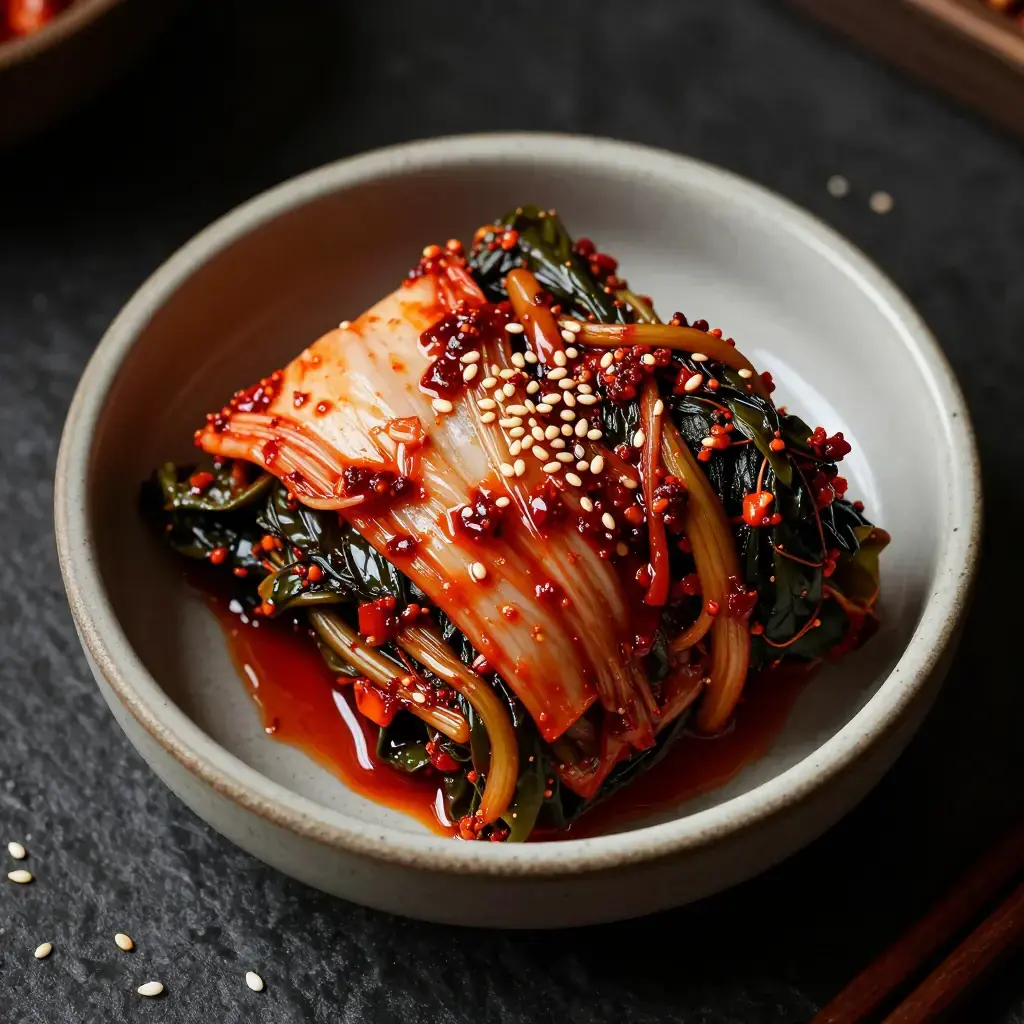
Gat Kimchi
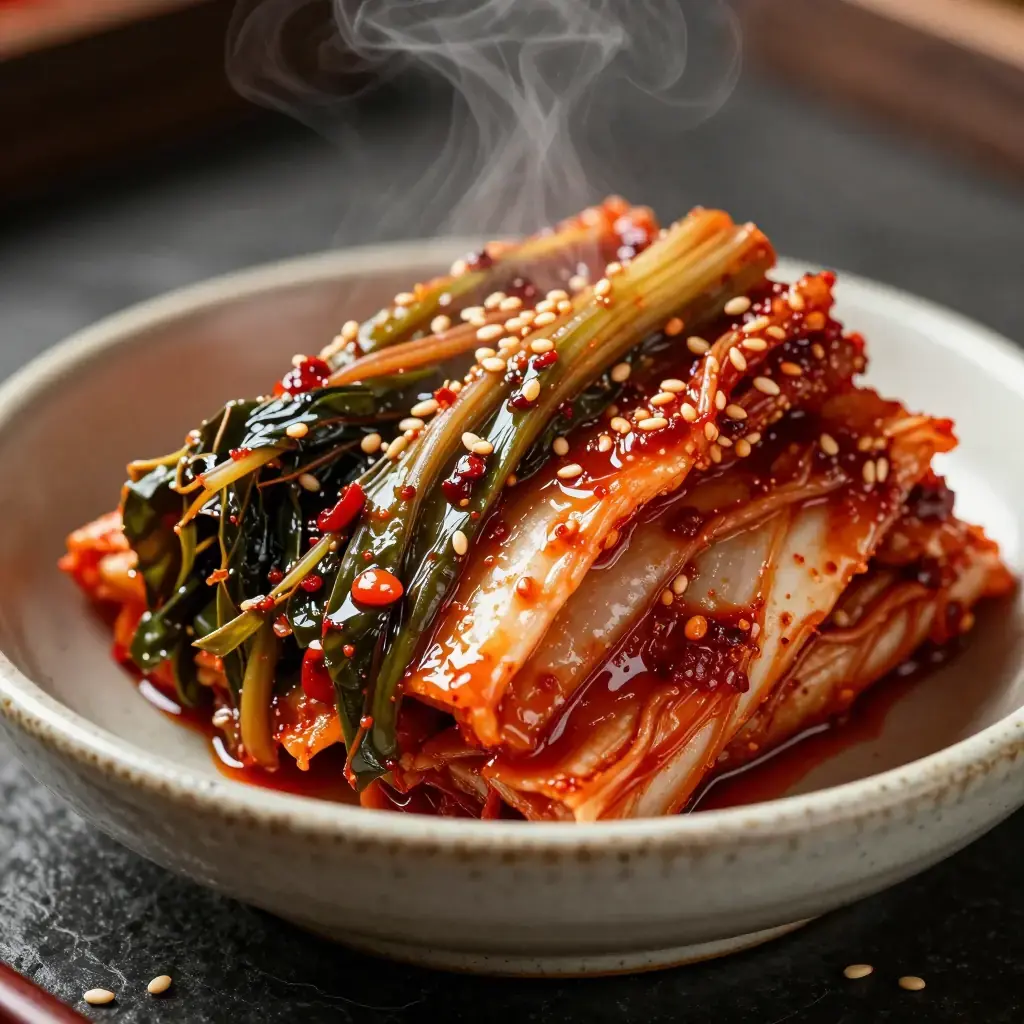
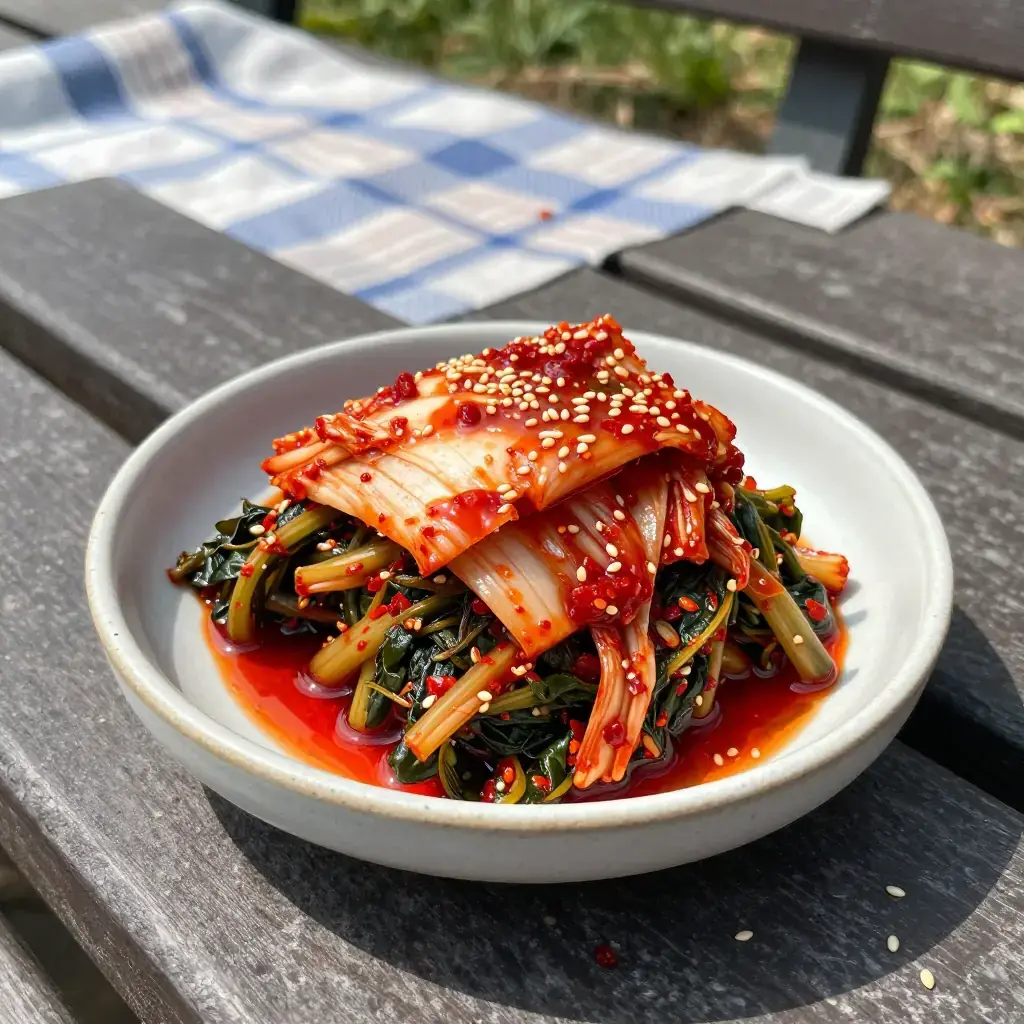
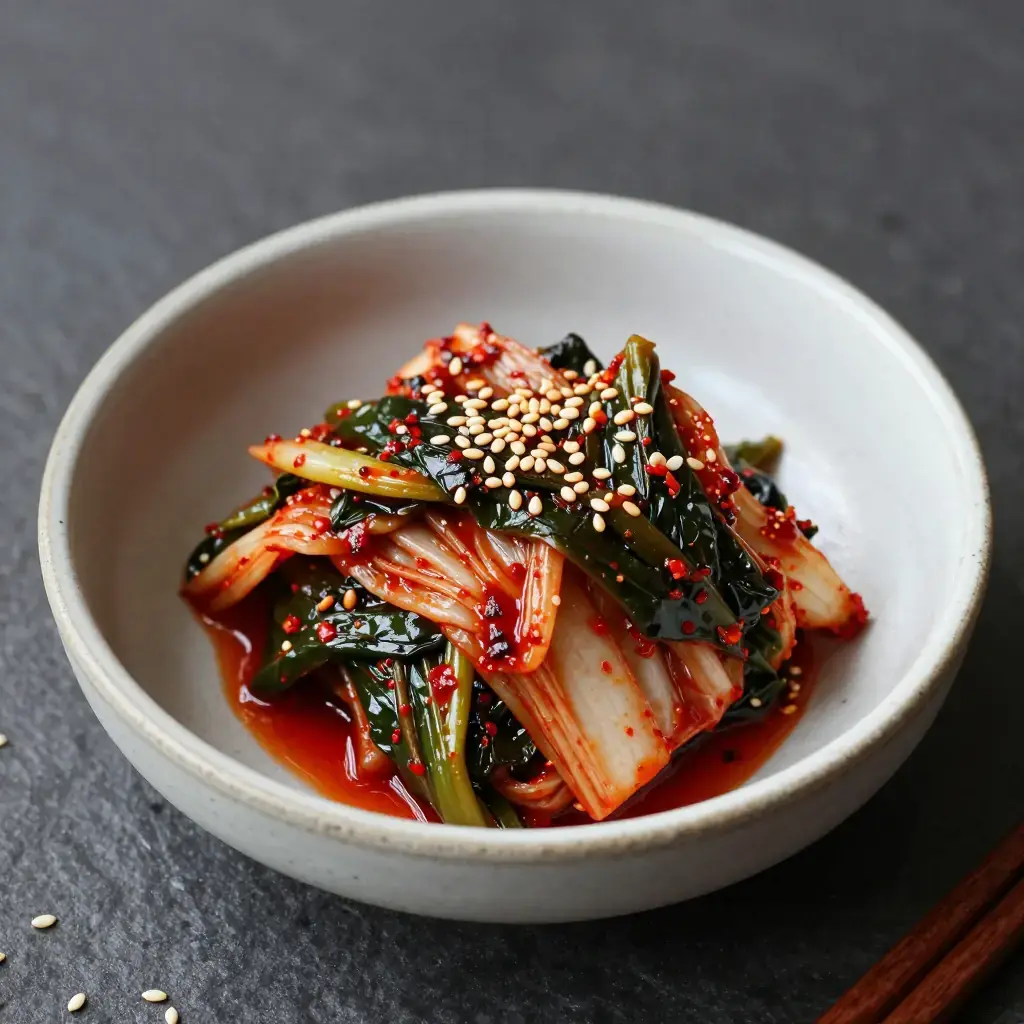
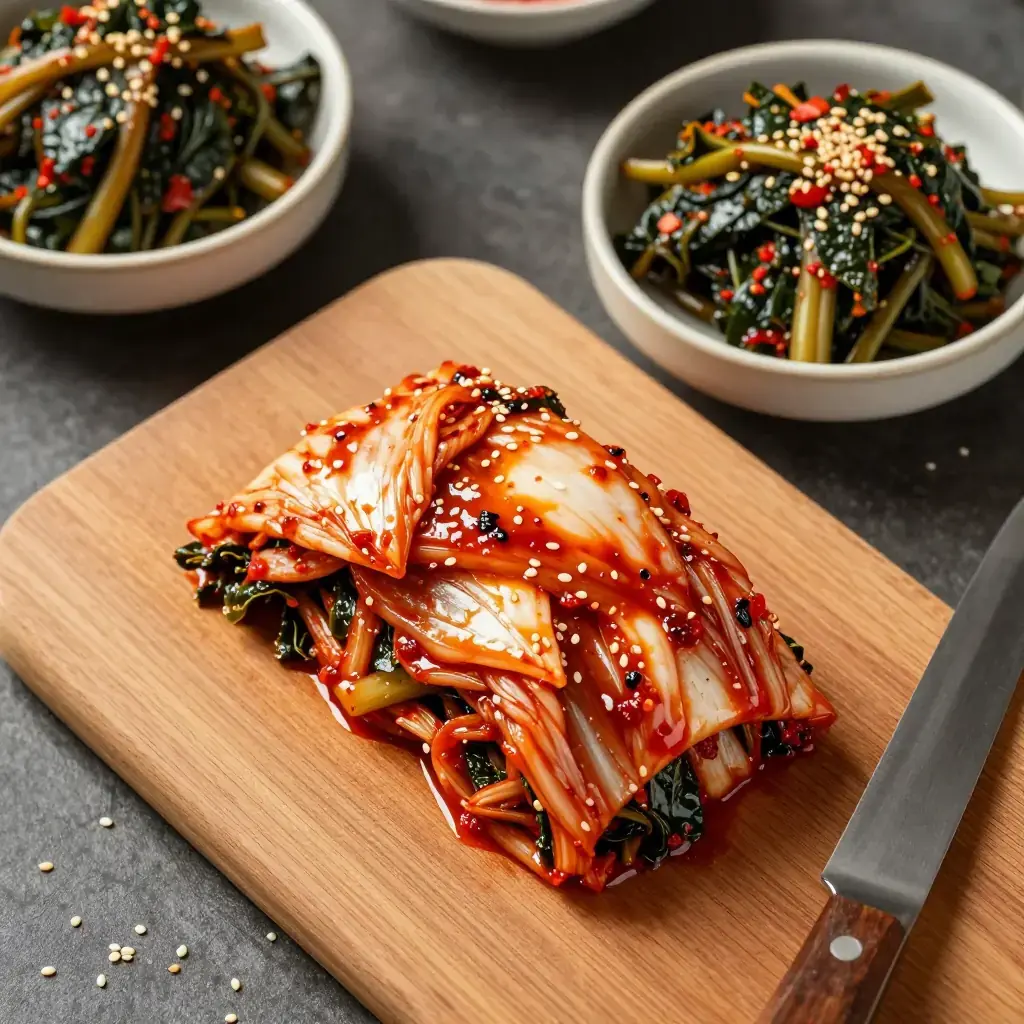
Gat kimchi, made from yeolgat (Korean mustard greens), is the signature kimchi of Yeosu and the South Jeolla province (Jeollanam-do). The mustard greens have a distinctively pungent, slightly bitter flavour that intensifies dramatically on fermentation, developing an almost wasabi-like heat and complex aroma. It is considered one of the most flavourful and complex regional kimchis in Korea, prized by kimchi connoisseurs.
Serves: 8 (as banchan)
Ingredients
- 800g (1¾ lb) Korean mustard greens (gat / yeolgat), or substitute watercress mixed with baby mustard greens
- 2 tbsp (36g) coarse sea salt
- 4 tbsp (60g) gochugaru (Korean red pepper flakes)
- 5 cloves garlic, minced
- 1 tsp (5g) fresh ginger, grated
- 3 tbsp (45ml) fish sauce (or soy sauce for vegetarian)
- 1 tsp (5g) sugar
- 3 spring onions, cut into 2cm (¾ inch) pieces
- 2 tbsp (30g) glutinous rice paste (cook 2 tbsp rice flour in 6 tbsp water until thick)
- 1 tbsp (15ml) fermented salted shrimp (saeujeot), optional
Instructions
- Trim the mustard greens, removing any yellowed or damaged leaves. Cut into 5–6cm (2–2½ inch) lengths, keeping stems and leaves separate.
- Sprinkle with coarse sea salt, toss to coat, and leave 30–40 minutes until wilted. Rinse once and squeeze out excess water — do not over-rinse, as some salt aids fermentation.
- Prepare the rice paste: whisk rice flour with water in a small saucepan over low heat, stirring constantly until thick and glossy, about 3–4 minutes. Cool completely.
- In a large bowl, combine gochugaru, garlic, ginger, fish sauce, saeujeot (if using), sugar, and cooled rice paste. Stir to a uniform red paste.
- Add the wilted mustard greens and spring onions. Wearing gloves, toss and massage gently to coat every leaf without tearing them.
- Pack into a sterilised jar, pressing down firmly. Seal and ferment at room temperature for 1–2 days until small bubbles appear at the surface. Taste — it should be pleasantly sour and powerfully pungent.
- Refrigerate and eat within 6 weeks. The flavour peaks around the 1–2 week mark when the mustard oil compounds ferment and soften.
Cook's Notes: Gat kimchi ferments faster than cabbage kimchi due to the high water content of mustard greens. Watch closely in warm weather — it can over-sour in 24 hours. The characteristic pungency mellows in the fridge over time, making older gat kimchi ideal for kimchi jjigae (stew).
All Revisions
generated
# Gat Kimchi Gat kimchi, made from yeolgat (Korean mustard greens), is the signature kimchi of Yeosu and the South Jeolla province (Jeollanam-do). The mustard greens have a distinctively pungent, slightly bitter flavour that intensifies dramatically on fermentation, developing an almost wasabi-like heat and complex aroma. It is considered one of the most flavourful and complex regional kimchis in Korea, prized by kimchi connoisseurs. Serves: 8 (as banchan) ## Ingredients - 800g (1¾ lb) Korean mustard greens (gat / yeolgat), or substitute watercress mixed with baby mustard greens - 2 tbsp (36g) coarse sea salt - 4 tbsp (60g) gochugaru (Korean red pepper flakes) - 5 cloves garlic, minced - 1 tsp (5g) fresh ginger, grated - 3 tbsp (45ml) fish sauce (or soy sauce for vegetarian) - 1 tsp (5g) sugar - 3 spring onions, cut into 2cm (¾ inch) pieces - 2 tbsp (30g) glutinous rice paste (cook 2 tbsp rice flour in 6 tbsp water until thick) - 1 tbsp (15ml) fermented salted shrimp (saeujeot), optional ## Instructions 1. Trim the mustard greens, removing any yellowed or damaged leaves. Cut into 5–6cm (2–2½ inch) lengths, keeping stems and leaves separate. 2. Sprinkle with coarse sea salt, toss to coat, and leave 30–40 minutes until wilted. Rinse once and squeeze out excess water — do not over-rinse, as some salt aids fermentation. 3. Prepare the rice paste: whisk rice flour with water in a small saucepan over low heat, stirring constantly until thick and glossy, about 3–4 minutes. Cool completely. 4. In a large bowl, combine gochugaru, garlic, ginger, fish sauce, saeujeot (if using), sugar, and cooled rice paste. Stir to a uniform red paste. 5. Add the wilted mustard greens and spring onions. Wearing gloves, toss and massage gently to coat every leaf without tearing them. 6. Pack into a sterilised jar, pressing down firmly. Seal and ferment at room temperature for 1–2 days until small bubbles appear at the surface. Taste — it should be pleasantly sour and powerfully pungent. 7. Refrigerate and eat within 6 weeks. The flavour peaks around the 1–2 week mark when the mustard oil compounds ferment and soften. **Cook's Notes:** Gat kimchi ferments faster than cabbage kimchi due to the high water content of mustard greens. Watch closely in warm weather — it can over-sour in 24 hours. The characteristic pungency mellows in the fridge over time, making older gat kimchi ideal for kimchi jjigae (stew).Images
Tags
- authentic
- fermented
- gluten-free
- heirloom
- korean
- multi-day
- seafood