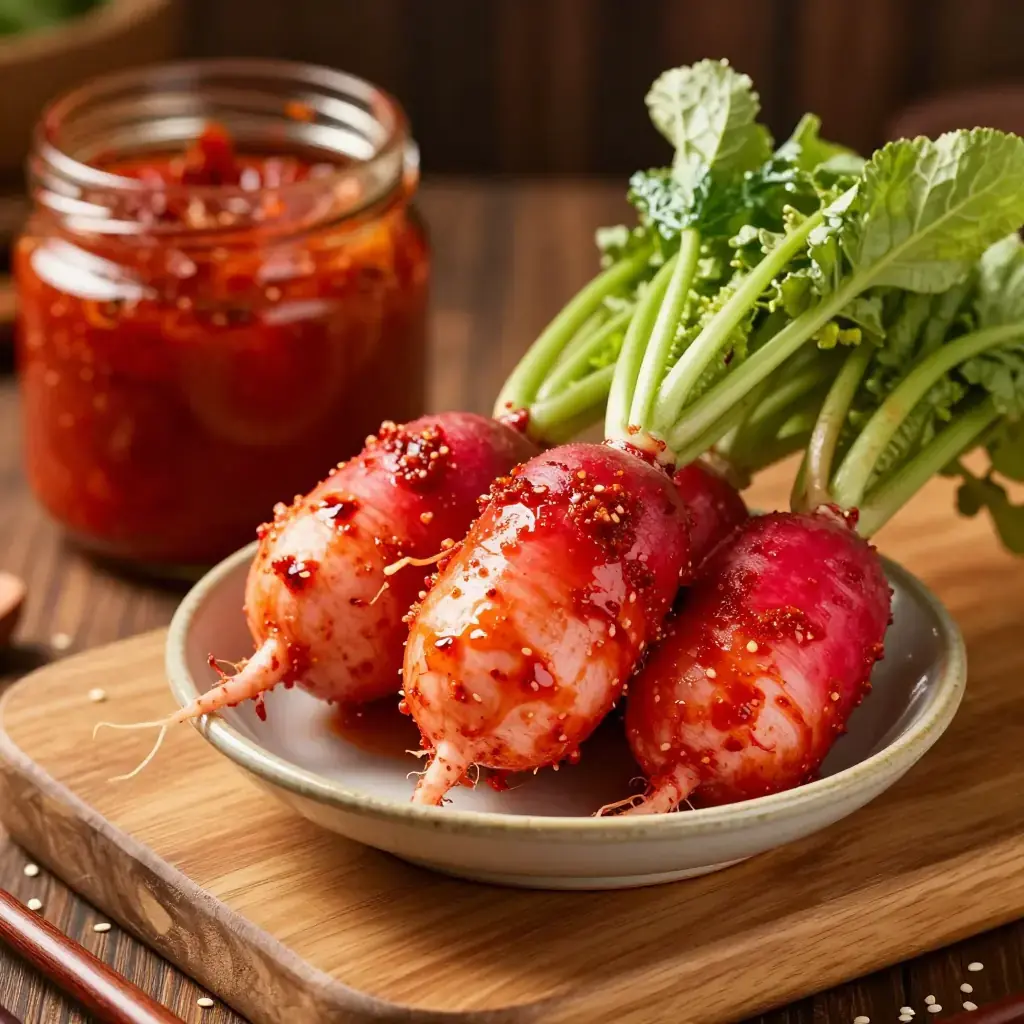
Chonggak Kimchi
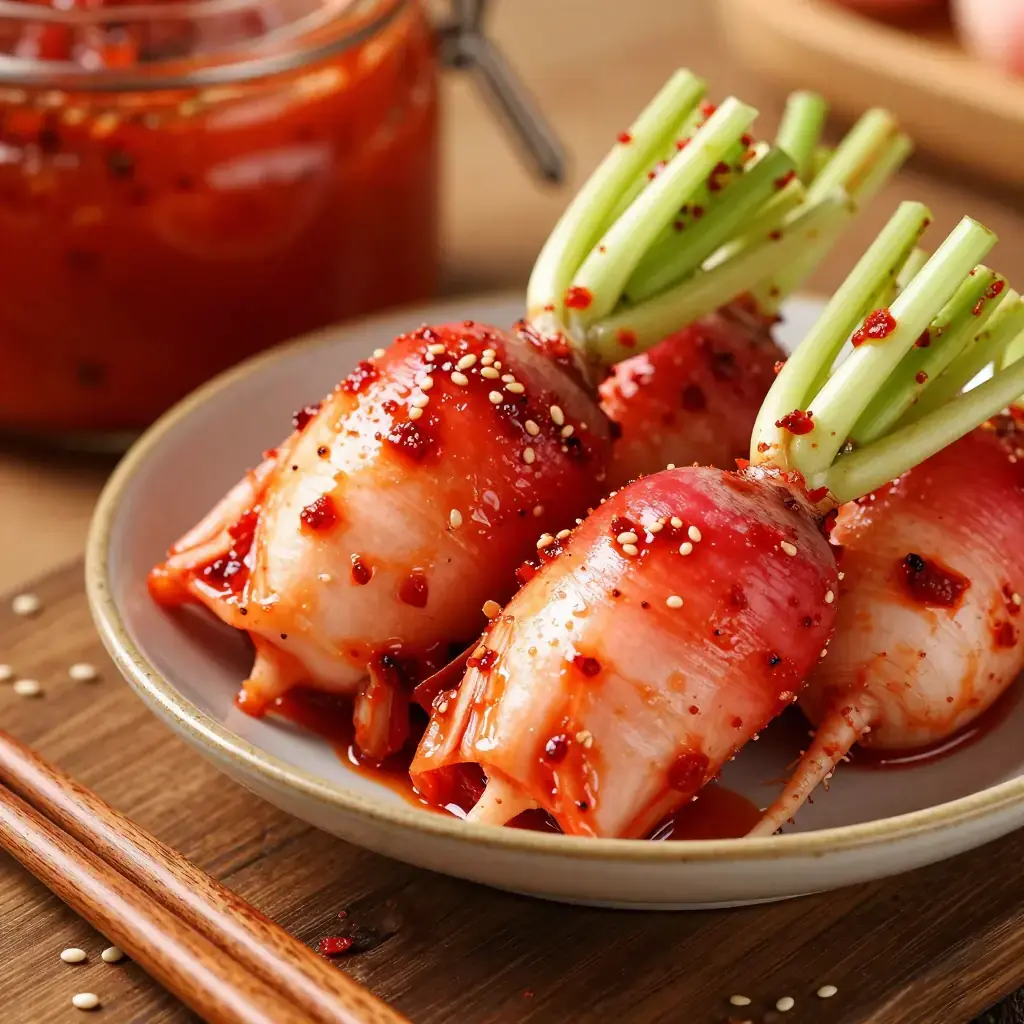
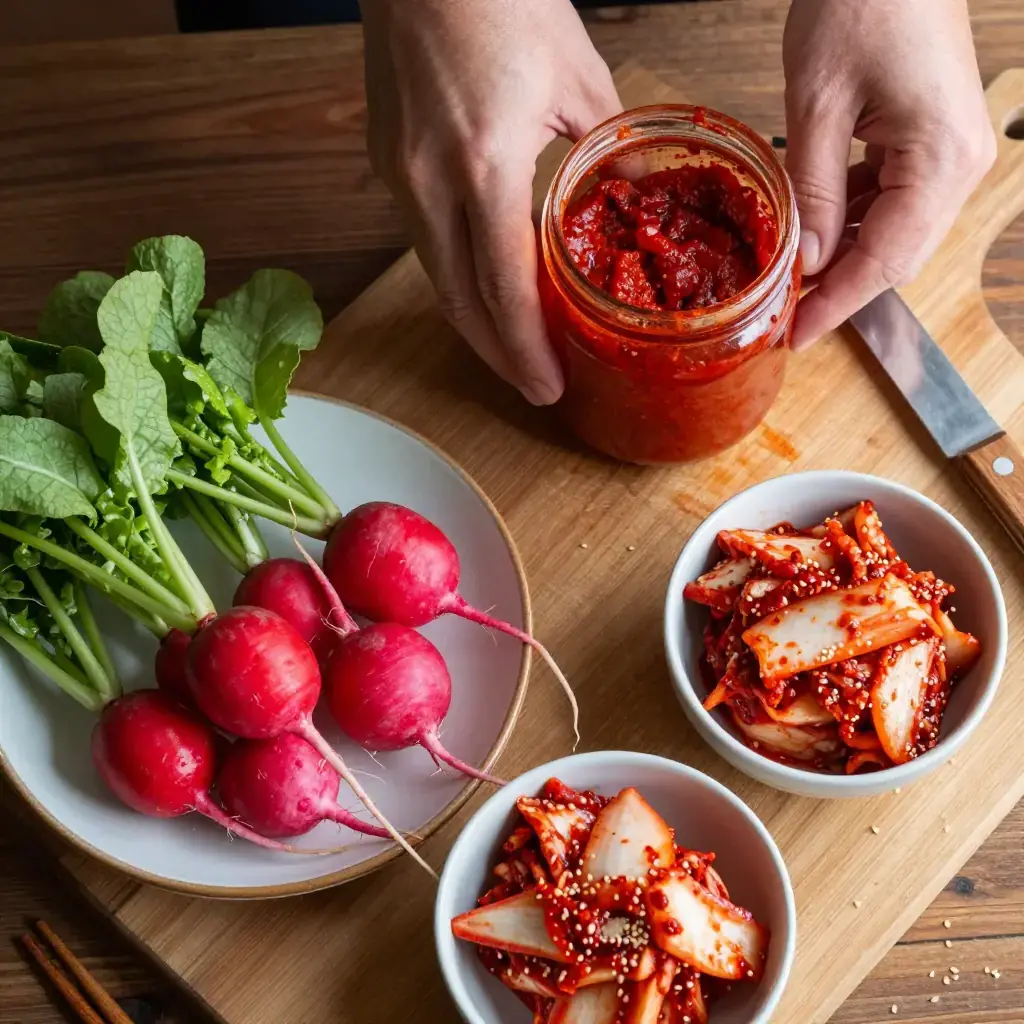
Chonggak kimchi is named for the chonggak — the traditional topknot hairstyle — because the bundles of small whole radishes with their green tops resemble this style when tied together. These young ponytail radishes (chonggak mu) are fermented whole with their greens attached, creating a kimchi with dual textures: crisp, peppery radish and tender, slightly slimy fermented greens. It is one of the most beloved banchan in Korea and a staple of autumn kimjang (kimchi-making) season.
Serves: 8 (as banchan)
Ingredients
- 1kg (2¼ lb) young radishes with greens attached (chonggak mu or small daikon with tops)
- 3 tbsp (54g) coarse sea salt, for salting
- 5 tbsp (75g) gochugaru (Korean red pepper flakes)
- 4 cloves garlic, minced
- 1 tsp (5g) fresh ginger, grated
- 2 tbsp (30ml) fish sauce (or soy sauce for vegetarian)
- 1 tbsp (15ml) fermented salted shrimp (saeujeot), optional
- 1 tsp (5g) sugar
- 4 spring onions, cut into 3cm (1½ inch) pieces
- 1 tbsp (15g) glutinous rice paste (mix 1 tbsp rice flour with 4 tbsp water, cook briefly until thick)
Instructions
- Trim the radish roots and any damaged leaves. Leave the greens attached — this is what makes chonggak kimchi distinctive. Rinse well.
- Score a shallow cross-cut into the bottom of each radish bulb (do not cut all the way through). Sprinkle with coarse sea salt, toss to coat, and leave for 1–2 hours until the radishes soften slightly and release liquid. Rinse briefly and squeeze out excess water. Pat dry.
- In a bowl, combine gochugaru, garlic, ginger, fish sauce, saeujeot (if using), sugar, and rice paste. Mix into a thick, glossy paste.
- Add the salted radishes, spring onions, and any radish greens to the paste. Wearing gloves, massage the paste thoroughly into the radishes and greens, working it into the score cuts.
- Pack tightly into a sterilised glass jar or fermentation container. Press down firmly to eliminate air pockets. Leave 3–5cm (1–2 inches) headspace as gases will expand.
- Seal and ferment at room temperature 1–2 days (summer) or 2–3 days (winter) until bubbles appear. Taste — it should be sour, spicy, and savoury. Transfer to the refrigerator.
- Best consumed after 1 week of cold fermentation, when flavours fully develop. Keeps refrigerated for 2–3 months.
Cook's Notes: Chonggak mu (young ponytail radishes) are available in Korean grocery stores in autumn and spring. Small daikon or French breakfast radishes with their tops can substitute. The greens contribute an important fermented texture — do not discard them.
All Revisions
generated
# Chonggak Kimchi Chonggak kimchi is named for the chonggak — the traditional topknot hairstyle — because the bundles of small whole radishes with their green tops resemble this style when tied together. These young ponytail radishes (chonggak mu) are fermented whole with their greens attached, creating a kimchi with dual textures: crisp, peppery radish and tender, slightly slimy fermented greens. It is one of the most beloved banchan in Korea and a staple of autumn kimjang (kimchi-making) season. Serves: 8 (as banchan) ## Ingredients - 1kg (2¼ lb) young radishes with greens attached (chonggak mu or small daikon with tops) - 3 tbsp (54g) coarse sea salt, for salting - 5 tbsp (75g) gochugaru (Korean red pepper flakes) - 4 cloves garlic, minced - 1 tsp (5g) fresh ginger, grated - 2 tbsp (30ml) fish sauce (or soy sauce for vegetarian) - 1 tbsp (15ml) fermented salted shrimp (saeujeot), optional - 1 tsp (5g) sugar - 4 spring onions, cut into 3cm (1½ inch) pieces - 1 tbsp (15g) glutinous rice paste (mix 1 tbsp rice flour with 4 tbsp water, cook briefly until thick) ## Instructions 1. Trim the radish roots and any damaged leaves. Leave the greens attached — this is what makes chonggak kimchi distinctive. Rinse well. 2. Score a shallow cross-cut into the bottom of each radish bulb (do not cut all the way through). Sprinkle with coarse sea salt, toss to coat, and leave for 1–2 hours until the radishes soften slightly and release liquid. Rinse briefly and squeeze out excess water. Pat dry. 3. In a bowl, combine gochugaru, garlic, ginger, fish sauce, saeujeot (if using), sugar, and rice paste. Mix into a thick, glossy paste. 4. Add the salted radishes, spring onions, and any radish greens to the paste. Wearing gloves, massage the paste thoroughly into the radishes and greens, working it into the score cuts. 5. Pack tightly into a sterilised glass jar or fermentation container. Press down firmly to eliminate air pockets. Leave 3–5cm (1–2 inches) headspace as gases will expand. 6. Seal and ferment at room temperature 1–2 days (summer) or 2–3 days (winter) until bubbles appear. Taste — it should be sour, spicy, and savoury. Transfer to the refrigerator. 7. Best consumed after 1 week of cold fermentation, when flavours fully develop. Keeps refrigerated for 2–3 months. **Cook's Notes:** Chonggak mu (young ponytail radishes) are available in Korean grocery stores in autumn and spring. Small daikon or French breakfast radishes with their tops can substitute. The greens contribute an important fermented texture — do not discard them.Images
Tags
- authentic
- fall
- fermented
- gluten-free
- heirloom
- korean
- multi-day
- seafood