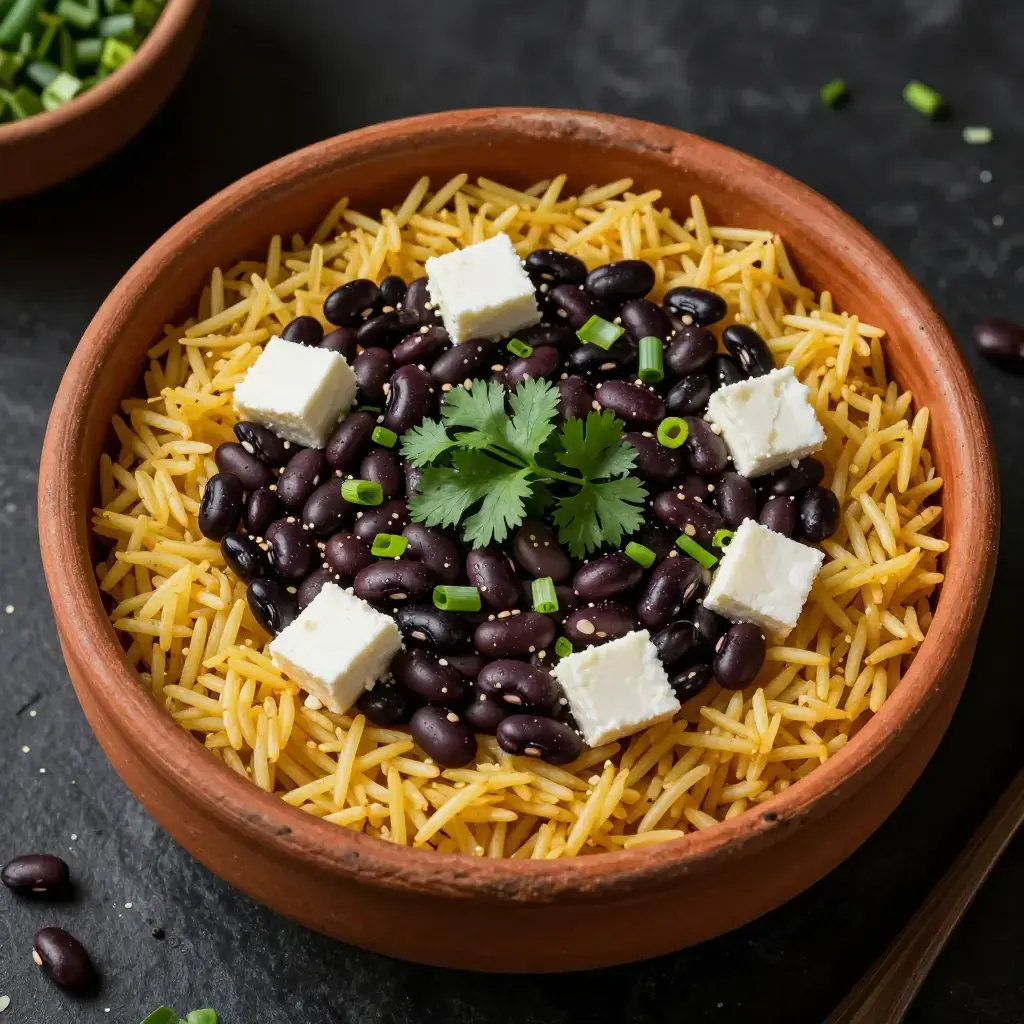
Baião de Dois
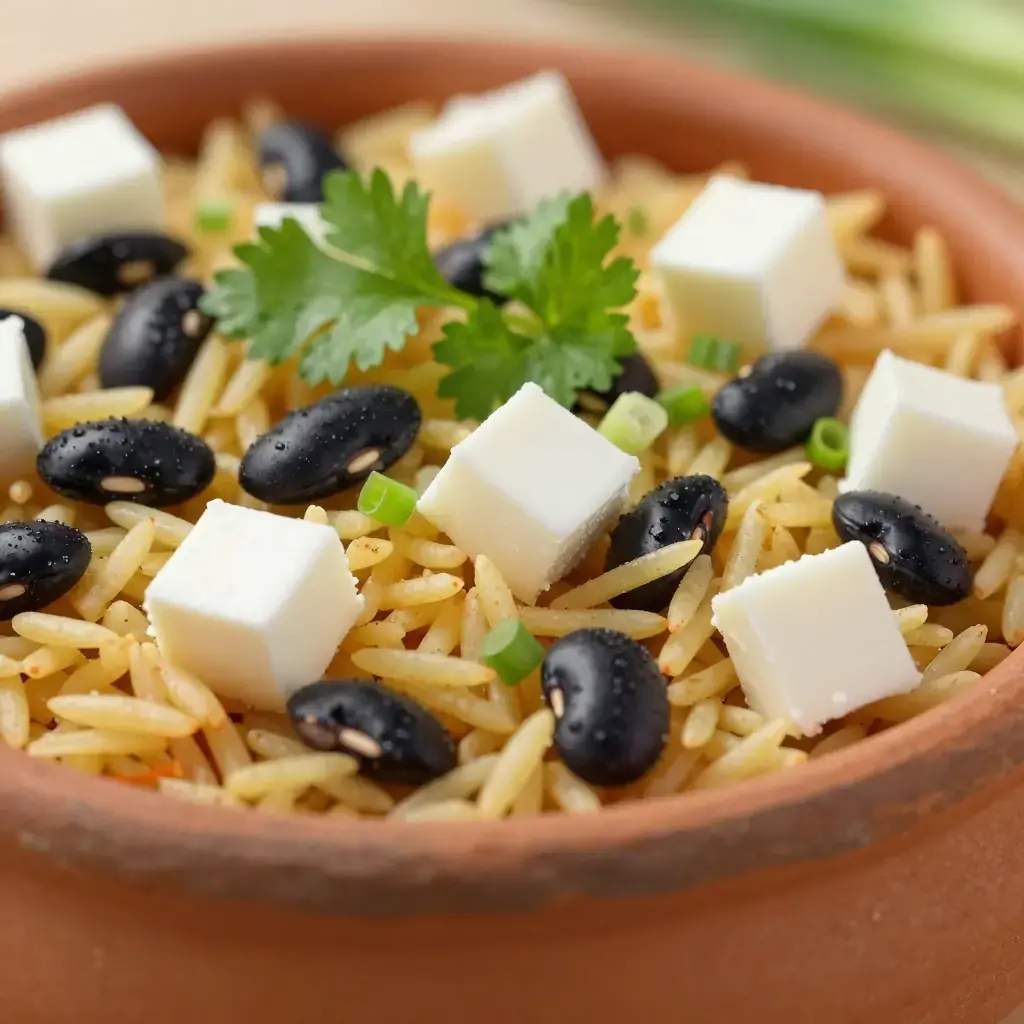
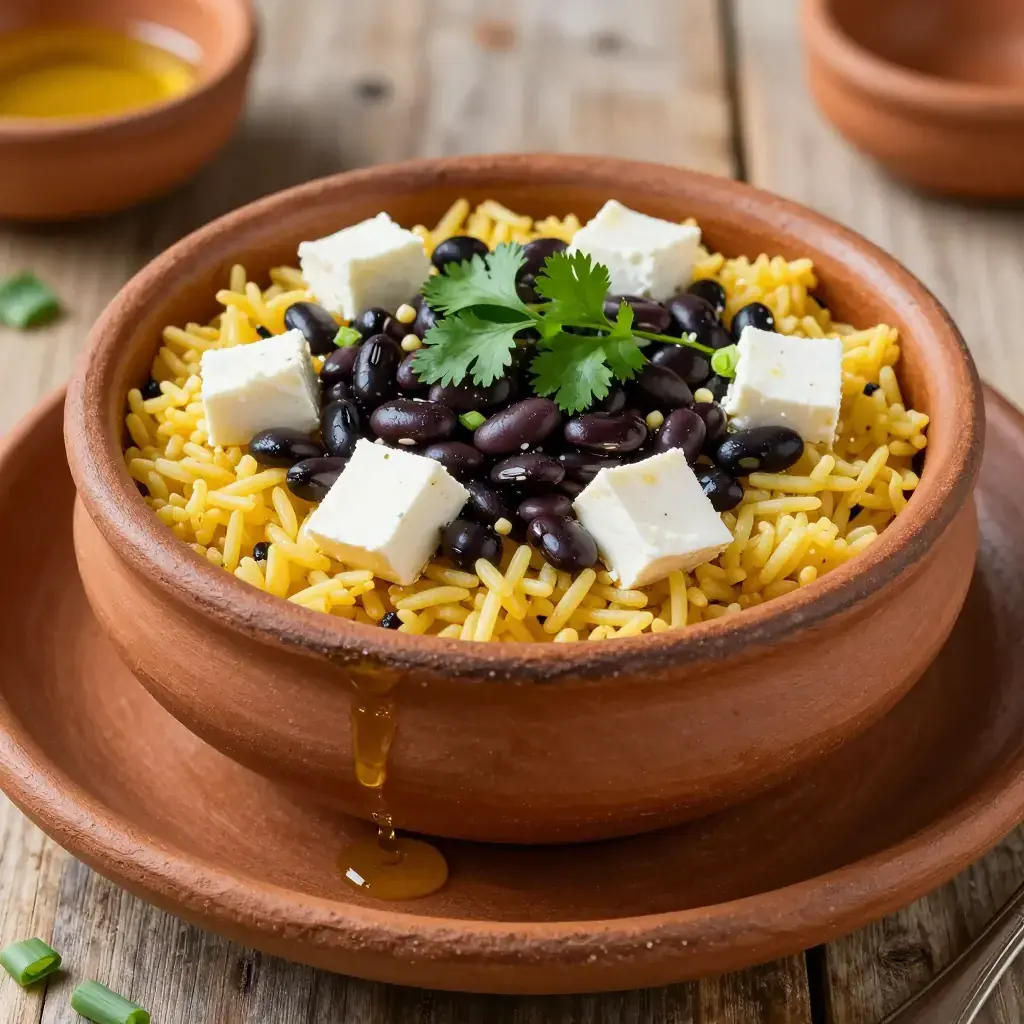
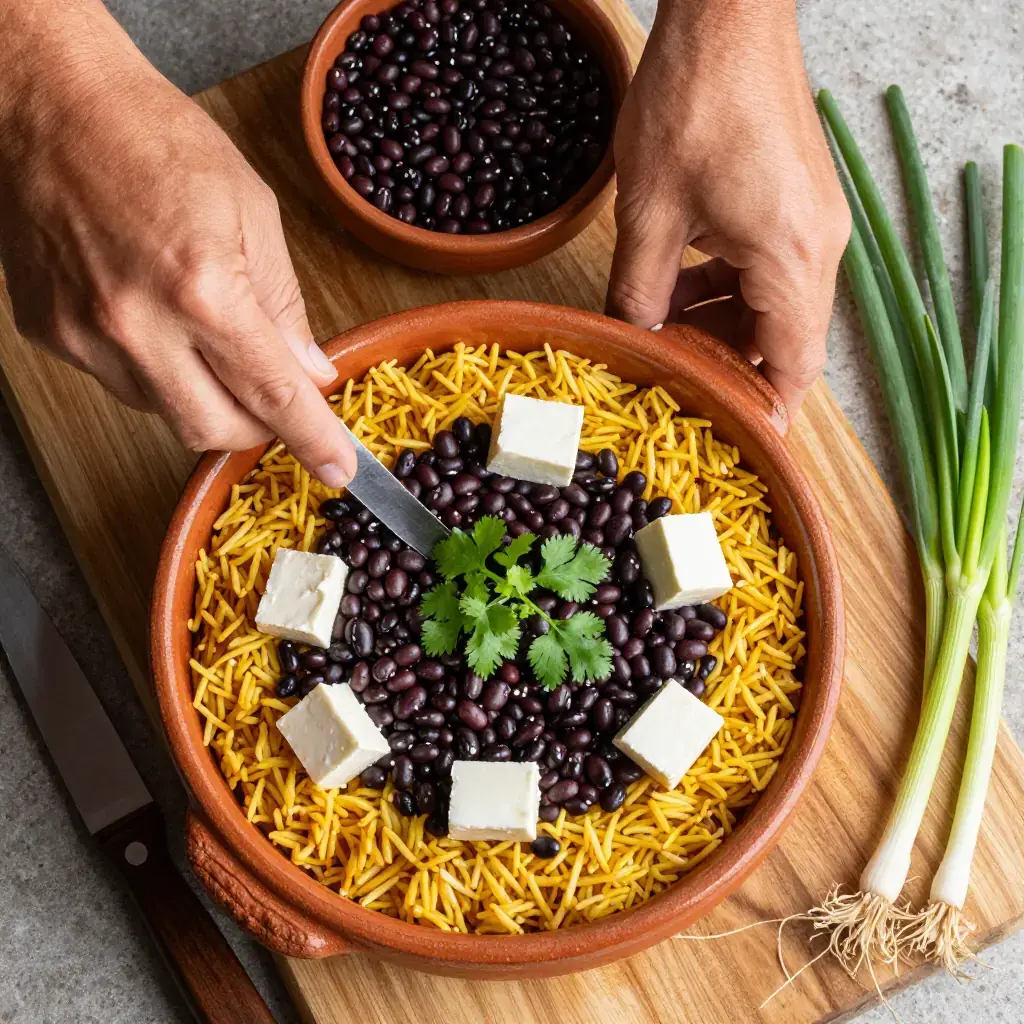
Baião de Dois — literally 'a dance for two' — is the iconic one-pot pairing of rice and feijão verde (fresh cowpeas) from the Brazilian Northeast, particularly Ceará state. Enriched with queijo coalho (fresh curd cheese), bacon, and butter, it is simultaneously simple and deeply satisfying, a dish that sustained generations of sertanejo families through the arid backlands.
Serves: 6
Ingredients
- 300g (10 oz) feijão verde or feijão fradinho (black-eyed peas / cowpeas), soaked overnight
- 300g (10 oz / 1.5 cups) long-grain white rice, rinsed
- 200g (7 oz) thick bacon or charque (dried beef), diced
- 200g (7 oz) queijo coalho or halloumi, cut into small cubes
- 1 large onion, diced
- 4 cloves garlic, minced
- 1 fresh chilli (pimenta de cheiro), seeded and chopped
- 2 tbsp (30ml) butter
- 1 tbsp (15ml) lard or vegetable oil
- 1 litre (4 cups) warm water or light stock
- Large handful fresh coriander (cilantro), chopped
- 3 spring onions, sliced
- Salt to taste
Instructions
- Drain soaked cowpeas, place in a pot, cover with water and simmer 30–40 minutes until just tender but still holding shape. Drain and reserve.
- In a large, heavy-based pot (caldeirão), fry bacon in lard over medium-high heat until browned and fat rendered, about 4–5 minutes.
- Add onion and sauté 5 minutes. Add garlic and chilli and cook 1 more minute.
- Add rinsed rice and stir to coat in the fat, 2 minutes.
- Add the par-cooked cowpeas and 1 litre warm water. Season lightly with salt. Stir once, bring to a boil, then cover tightly and cook on the lowest heat for 18–20 minutes until rice is cooked and liquid absorbed.
- Remove lid. Scatter the cheese cubes over the top, dot with butter, and cover again for 3 minutes until cheese softens.
- Stir gently to fold in the cheese. Fold through fresh coriander and spring onions. Serve directly from the pot.
Cook's Notes: Queijo coalho holds its shape when heated and provides pockets of mild saltiness throughout the dish. Halloumi is an excellent substitute. Do not stir during the steaming stage — the crust (socarrat) that forms on the bottom is considered a delicacy.
All Revisions
generated
# Baião de Dois Baião de Dois — literally 'a dance for two' — is the iconic one-pot pairing of rice and feijão verde (fresh cowpeas) from the Brazilian Northeast, particularly Ceará state. Enriched with queijo coalho (fresh curd cheese), bacon, and butter, it is simultaneously simple and deeply satisfying, a dish that sustained generations of sertanejo families through the arid backlands. Serves: 6 ## Ingredients - 300g (10 oz) feijão verde or feijão fradinho (black-eyed peas / cowpeas), soaked overnight - 300g (10 oz / 1.5 cups) long-grain white rice, rinsed - 200g (7 oz) thick bacon or charque (dried beef), diced - 200g (7 oz) queijo coalho or halloumi, cut into small cubes - 1 large onion, diced - 4 cloves garlic, minced - 1 fresh chilli (pimenta de cheiro), seeded and chopped - 2 tbsp (30ml) butter - 1 tbsp (15ml) lard or vegetable oil - 1 litre (4 cups) warm water or light stock - Large handful fresh coriander (cilantro), chopped - 3 spring onions, sliced - Salt to taste ## Instructions 1. Drain soaked cowpeas, place in a pot, cover with water and simmer 30–40 minutes until just tender but still holding shape. Drain and reserve. 2. In a large, heavy-based pot (caldeirão), fry bacon in lard over medium-high heat until browned and fat rendered, about 4–5 minutes. 3. Add onion and sauté 5 minutes. Add garlic and chilli and cook 1 more minute. 4. Add rinsed rice and stir to coat in the fat, 2 minutes. 5. Add the par-cooked cowpeas and 1 litre warm water. Season lightly with salt. Stir once, bring to a boil, then cover tightly and cook on the lowest heat for 18–20 minutes until rice is cooked and liquid absorbed. 6. Remove lid. Scatter the cheese cubes over the top, dot with butter, and cover again for 3 minutes until cheese softens. 7. Stir gently to fold in the cheese. Fold through fresh coriander and spring onions. Serve directly from the pot. **Cook's Notes:** Queijo coalho holds its shape when heated and provides pockets of mild saltiness throughout the dish. Halloumi is an excellent substitute. Do not stir during the steaming stage — the crust (socarrat) that forms on the bottom is considered a delicacy.Images
Tags
- authentic
- beans
- brazilian
- comfort-food
- one-pot
- rice