
Feijão Tropeiro Mineiro
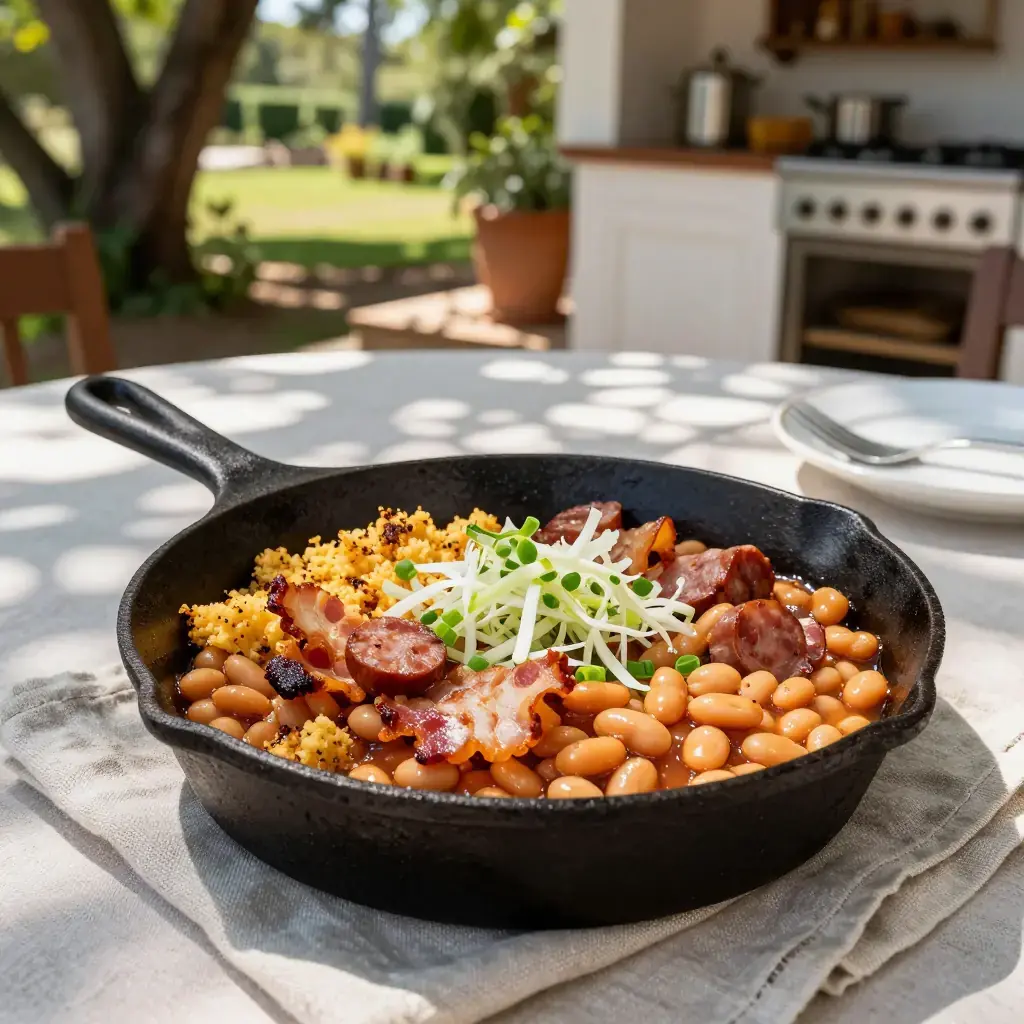
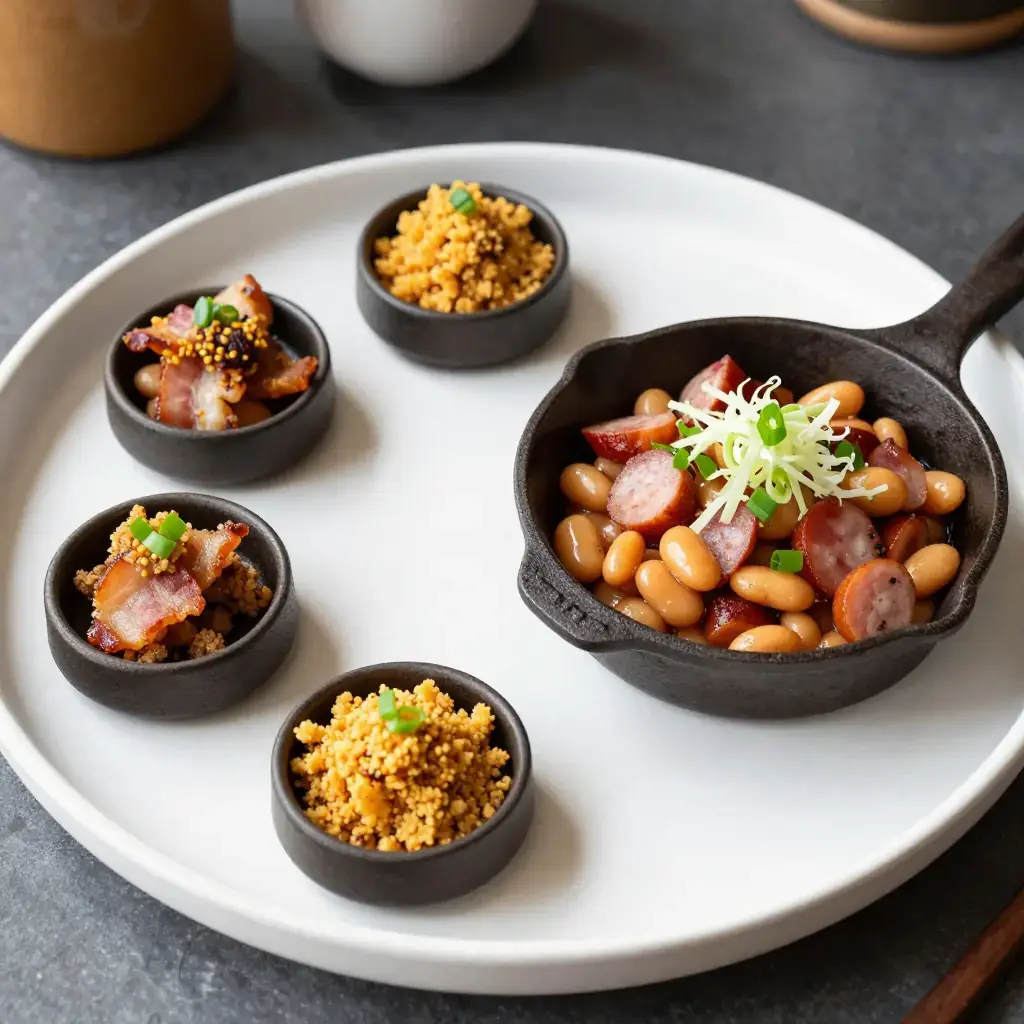
Feijão tropeiro — 'drover's beans' — takes its name from the tropeiros, the muleteers who drove cattle across Brazil's interior in the 18th and 19th centuries. They needed cheap, portable, calorie-dense food; this simple one-pot combination of beans, farofa (toasted cassava flour), bacon, and sausage became an enduring classic of Minas Gerais state cooking.
Serves: 6
Ingredients
- 400g (14 oz) dried feijão carioca (pinto beans) or feijão mulatinho
- 200g (7 oz) thick-cut bacon, diced
- 150g (5 oz) linguiça calabresa (smoked Brazilian pork sausage), sliced
- 1 large onion, diced
- 4 cloves garlic, minced
- 200g (7 oz / 1.5 cups) farinha de mandioca torrada (toasted cassava flour)
- 4 eggs, beaten
- 2 tbsp (30ml) lard or vegetable oil
- Large handful of couve manteiga (collard greens), thinly shredded
- 3 spring onions, sliced
- Large handful fresh parsley, chopped
- Salt and black pepper to taste
Instructions
- Soak beans in cold water overnight. Drain, cover with fresh water in a pot, and cook at a rolling boil for 5 minutes. Reduce heat and simmer for 45–60 minutes until completely tender. Drain and reserve.
- In a large skillet or wok over medium-high heat, fry bacon until crisp and fat is rendered, about 5 minutes. Add linguiça and fry 3–4 minutes more until lightly browned. Remove both with a slotted spoon.
- In the rendered fat, sauté onion over medium heat for 5 minutes. Add garlic and cook 1 minute more.
- Return bacon and sausage. Add the drained cooked beans. Stir well and cook 3 minutes to meld flavours.
- Push the beans to the sides of the pan, add a splash of oil to the centre, and scramble the beaten eggs until just set, about 2 minutes, then fold through the beans.
- Reduce heat to low. Add cassava flour in handfuls, stirring constantly so it absorbs the fat and distributes evenly throughout without clumping, 3–4 minutes.
- Stir through the shredded collard greens, spring onions, and parsley. Season with salt and pepper. Serve immediately.
Cook's Notes: The cassava flour should be slightly toasted and crumbly — not wet or pasty. If it clumps, break it up immediately. Feijão tropeiro is traditionally served warm but also excellent at room temperature for packed lunches.
All Revisions
generated
# Feijão Tropeiro Mineiro Feijão tropeiro — 'drover's beans' — takes its name from the tropeiros, the muleteers who drove cattle across Brazil's interior in the 18th and 19th centuries. They needed cheap, portable, calorie-dense food; this simple one-pot combination of beans, farofa (toasted cassava flour), bacon, and sausage became an enduring classic of Minas Gerais state cooking. Serves: 6 ## Ingredients - 400g (14 oz) dried feijão carioca (pinto beans) or feijão mulatinho - 200g (7 oz) thick-cut bacon, diced - 150g (5 oz) linguiça calabresa (smoked Brazilian pork sausage), sliced - 1 large onion, diced - 4 cloves garlic, minced - 200g (7 oz / 1.5 cups) farinha de mandioca torrada (toasted cassava flour) - 4 eggs, beaten - 2 tbsp (30ml) lard or vegetable oil - Large handful of couve manteiga (collard greens), thinly shredded - 3 spring onions, sliced - Large handful fresh parsley, chopped - Salt and black pepper to taste ## Instructions 1. Soak beans in cold water overnight. Drain, cover with fresh water in a pot, and cook at a rolling boil for 5 minutes. Reduce heat and simmer for 45–60 minutes until completely tender. Drain and reserve. 2. In a large skillet or wok over medium-high heat, fry bacon until crisp and fat is rendered, about 5 minutes. Add linguiça and fry 3–4 minutes more until lightly browned. Remove both with a slotted spoon. 3. In the rendered fat, sauté onion over medium heat for 5 minutes. Add garlic and cook 1 minute more. 4. Return bacon and sausage. Add the drained cooked beans. Stir well and cook 3 minutes to meld flavours. 5. Push the beans to the sides of the pan, add a splash of oil to the centre, and scramble the beaten eggs until just set, about 2 minutes, then fold through the beans. 6. Reduce heat to low. Add cassava flour in handfuls, stirring constantly so it absorbs the fat and distributes evenly throughout without clumping, 3–4 minutes. 7. Stir through the shredded collard greens, spring onions, and parsley. Season with salt and pepper. Serve immediately. **Cook's Notes:** The cassava flour should be slightly toasted and crumbly — not wet or pasty. If it clumps, break it up immediately. Feijão tropeiro is traditionally served warm but also excellent at room temperature for packed lunches.Images


Tags
- authentic
- beans
- brazilian
- comfort-food
- one-pot
- potluck
- smoked