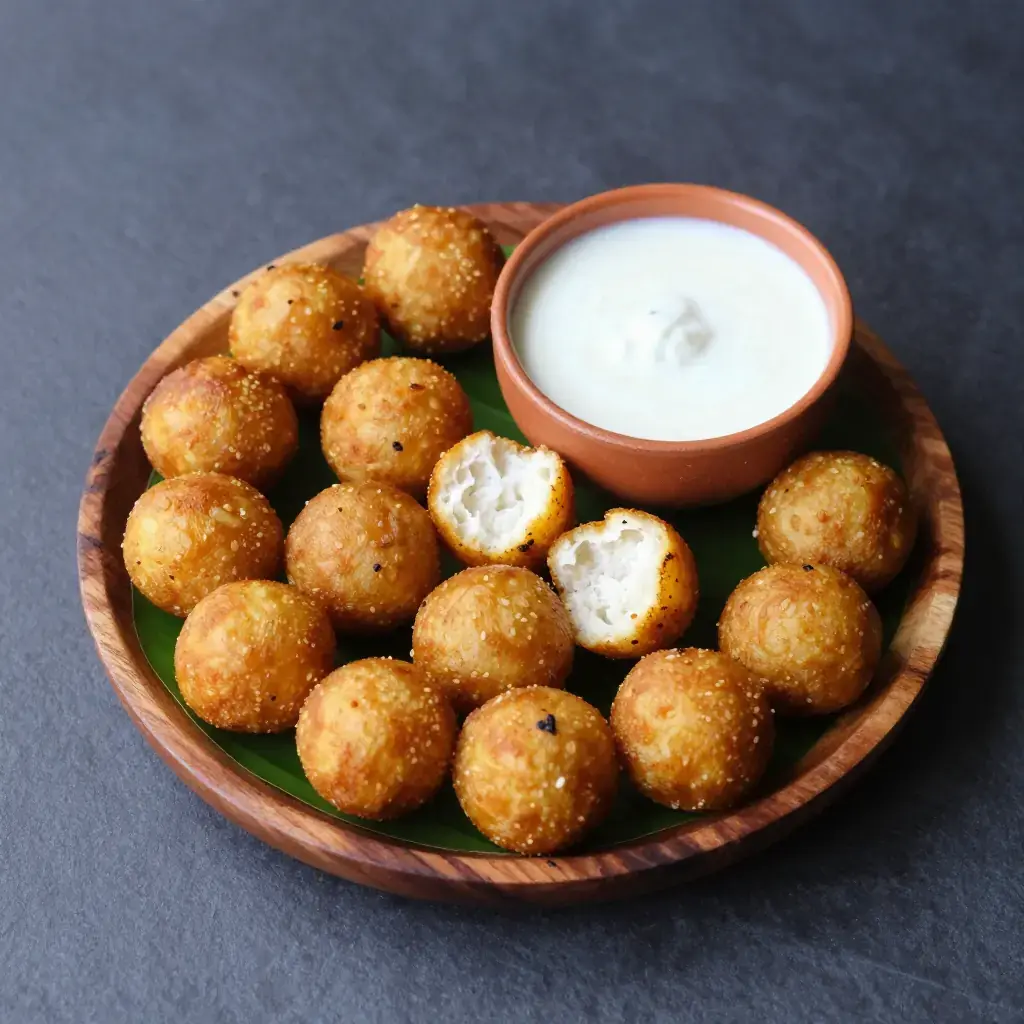
Kuzhi Paniyaram
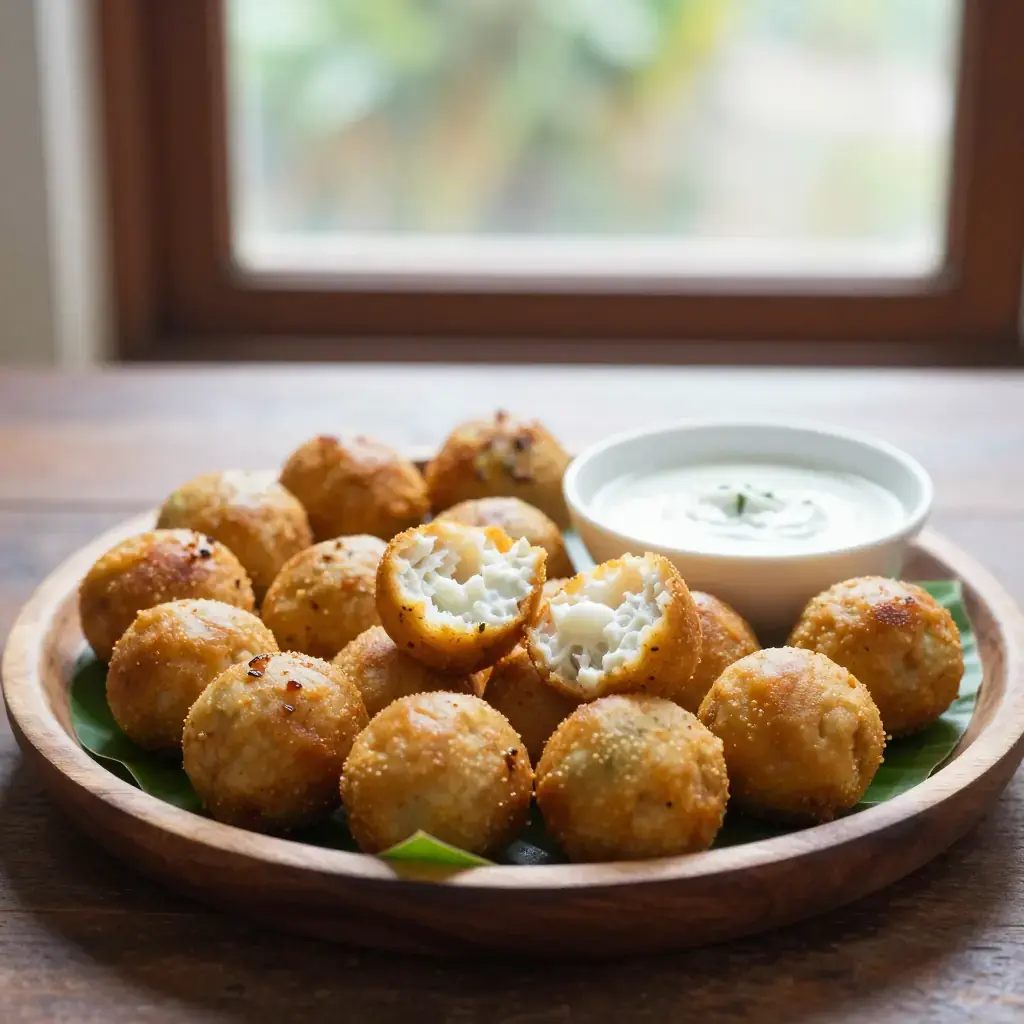
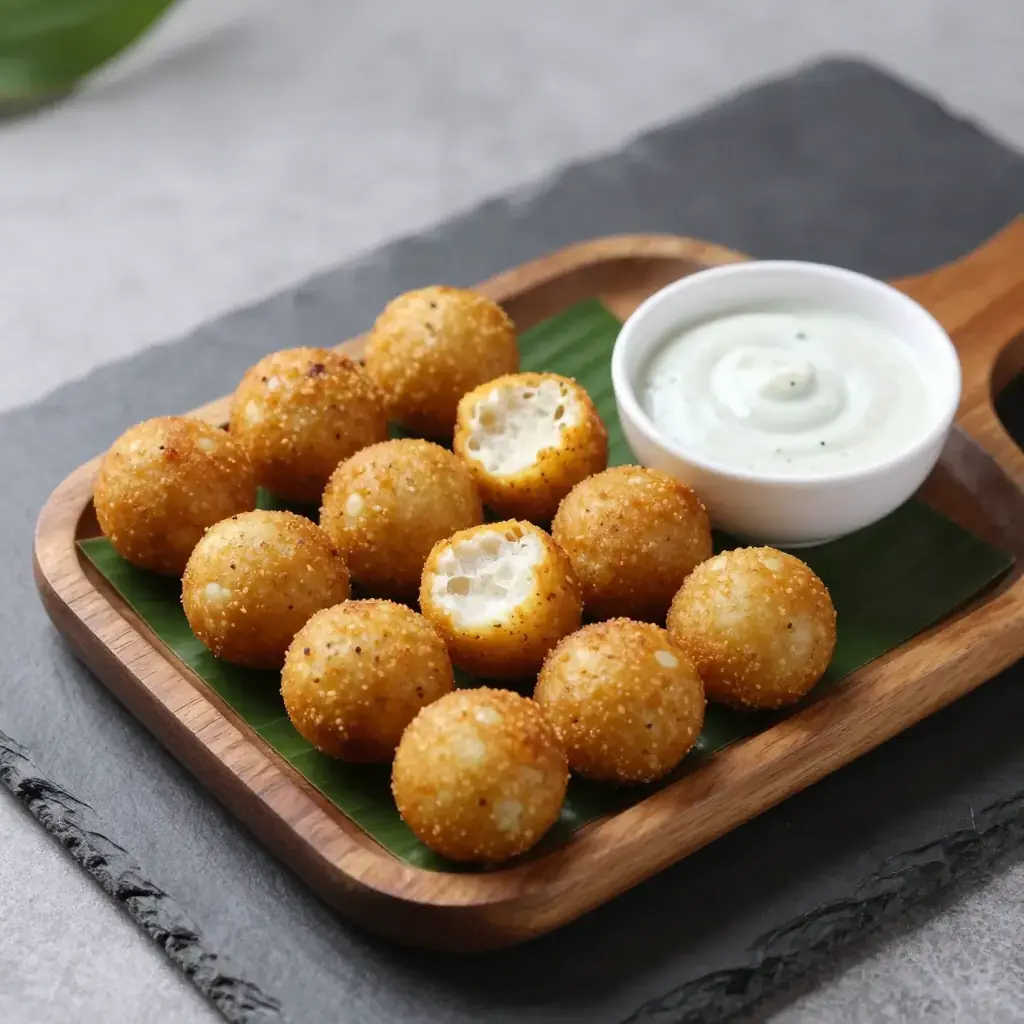
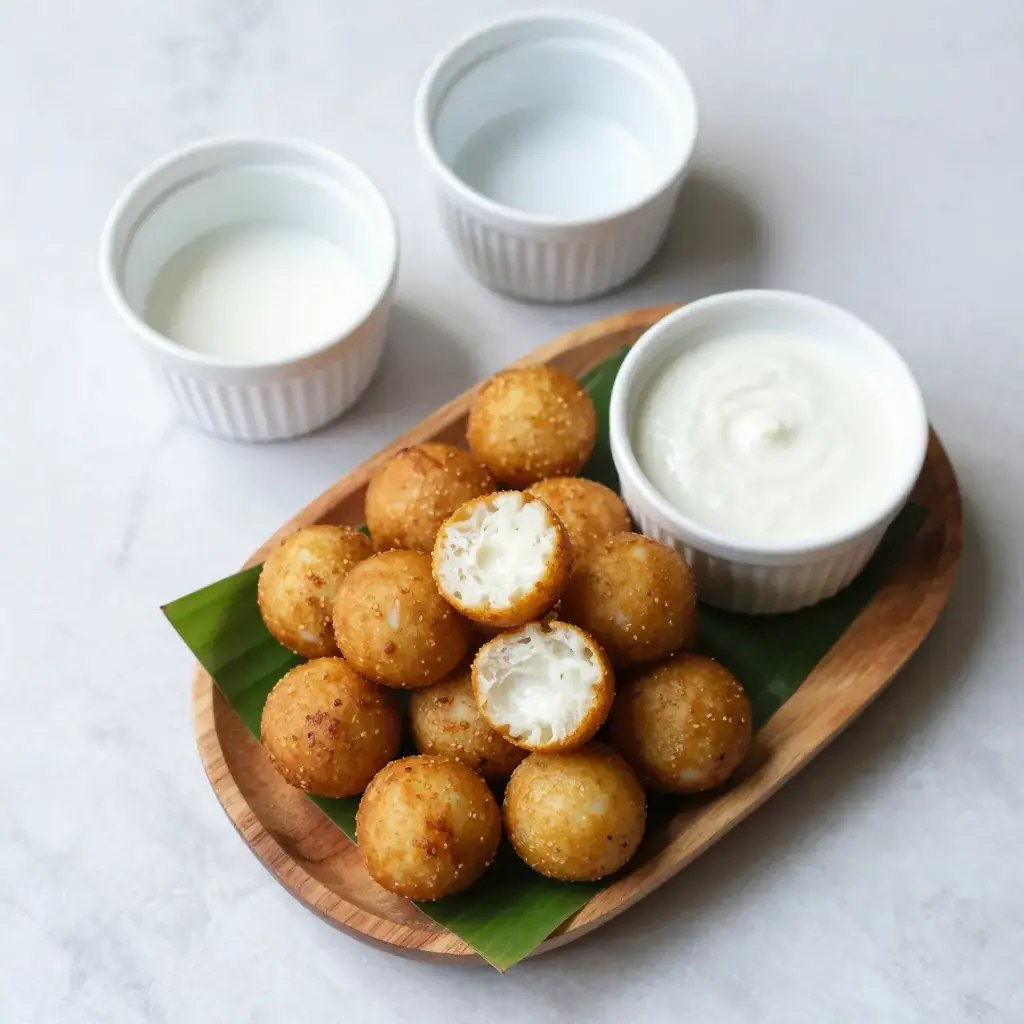
Kuzhi Paniyaram are irresistible little dumpling-balls made from the same fermented batter as idli and dosa, cooked in a special cast-iron or nonstick pan (paniyaram pan) with individual round moulds. They are crisp outside, soft and airy inside, and eaten for breakfast or as an afternoon snack across Tamil Nadu and parts of Karnataka, dunked in coconut chutney or sambar.
Serves: 4 (makes about 20 pieces)
Ingredients
For the batter (prepare 8-12 hours ahead):
- 200g (7 oz) idli rice or short-grain rice
- 100g (3.5 oz) urad dal (split black gram, hulled)
- ½ tsp fenugreek seeds
- Salt to taste
For the spiced tempering:
- 2 tbsp (30ml) sesame oil or vegetable oil, plus extra for the moulds
- 1 tsp mustard seeds
- 1 tsp chana dal
- 2 dried red chilies, broken
- 10 curry leaves
- 1 small red onion, finely diced
- 1 green chili, finely chopped
- 1 tsp freshly grated ginger
- 2 tbsp fresh coriander, chopped
Instructions
- Soak rice and urad dal (with fenugreek seeds) separately in water for 6 hours. Drain, then grind each separately in a blender to a smooth batter. Combine, add salt, and ferment in a warm place for 8-12 hours until bubbly and risen.
- Prepare the tempering: heat oil in a small pan over medium heat. Add mustard seeds and let them pop, 30 seconds. Add chana dal and dried red chilies and fry until golden, 1 minute. Add curry leaves, onion, green chili and ginger — cook 3-4 minutes until onion softens. Add coriander. Stir the tempering thoroughly into the batter.
- Heat a paniyaram pan (or aebleskiver pan) over medium heat. Add a few drops of oil to each mould.
- Fill each mould about three-quarters full with batter. Cook 3-4 minutes until the bottom is golden and set. Using a skewer or spoon, flip each dumpling. Cook 2-3 minutes more until golden all over.
- Serve immediately with coconut chutney and/or sambar.
Cook's Notes: A well-fermented batter is essential — it should smell pleasantly sour and have visibly bubbled up. A nonstick paniyaram pan gives excellent results; an electric model produces very consistent dumplings. Leftover batter keeps refrigerated for 3-4 days and the flavour improves.
All Revisions
generated
# Kuzhi Paniyaram Kuzhi Paniyaram are irresistible little dumpling-balls made from the same fermented batter as idli and dosa, cooked in a special cast-iron or nonstick pan (paniyaram pan) with individual round moulds. They are crisp outside, soft and airy inside, and eaten for breakfast or as an afternoon snack across Tamil Nadu and parts of Karnataka, dunked in coconut chutney or sambar. Serves: 4 (makes about 20 pieces) ## Ingredients **For the batter (prepare 8-12 hours ahead):** - 200g (7 oz) idli rice or short-grain rice - 100g (3.5 oz) urad dal (split black gram, hulled) - ½ tsp fenugreek seeds - Salt to taste **For the spiced tempering:** - 2 tbsp (30ml) sesame oil or vegetable oil, plus extra for the moulds - 1 tsp mustard seeds - 1 tsp chana dal - 2 dried red chilies, broken - 10 curry leaves - 1 small red onion, finely diced - 1 green chili, finely chopped - 1 tsp freshly grated ginger - 2 tbsp fresh coriander, chopped ## Instructions 1. Soak rice and urad dal (with fenugreek seeds) separately in water for 6 hours. Drain, then grind each separately in a blender to a smooth batter. Combine, add salt, and ferment in a warm place for 8-12 hours until bubbly and risen. 2. Prepare the tempering: heat oil in a small pan over medium heat. Add mustard seeds and let them pop, 30 seconds. Add chana dal and dried red chilies and fry until golden, 1 minute. Add curry leaves, onion, green chili and ginger — cook 3-4 minutes until onion softens. Add coriander. Stir the tempering thoroughly into the batter. 3. Heat a paniyaram pan (or aebleskiver pan) over medium heat. Add a few drops of oil to each mould. 4. Fill each mould about three-quarters full with batter. Cook 3-4 minutes until the bottom is golden and set. Using a skewer or spoon, flip each dumpling. Cook 2-3 minutes more until golden all over. 5. Serve immediately with coconut chutney and/or sambar. **Cook's Notes:** A well-fermented batter is essential — it should smell pleasantly sour and have visibly bubbled up. A nonstick paniyaram pan gives excellent results; an electric model produces very consistent dumplings. Leftover batter keeps refrigerated for 3-4 days and the flavour improves.Images

Tags
- authentic
- breakfast
- fermented
- gluten-free
- indian-south
- rice
- snack
- vegan