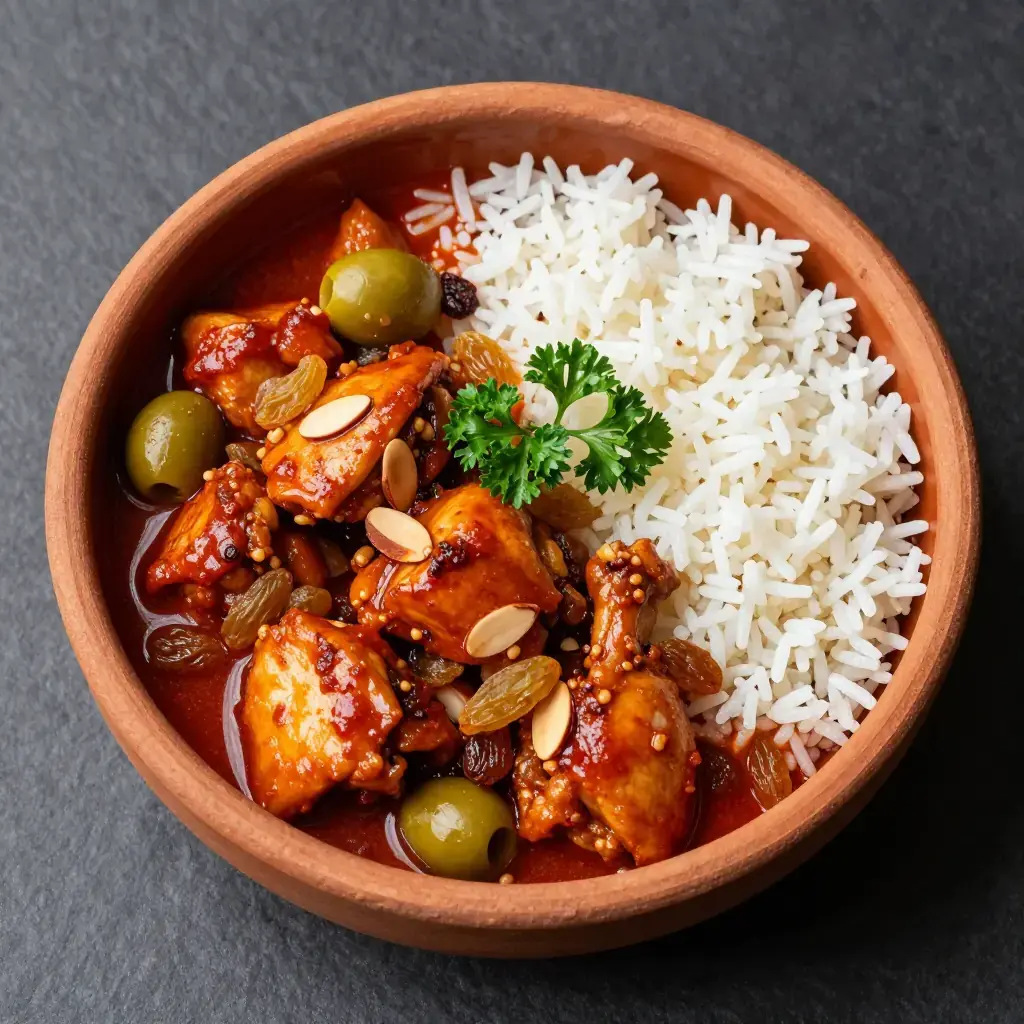
Estofado Yucateco
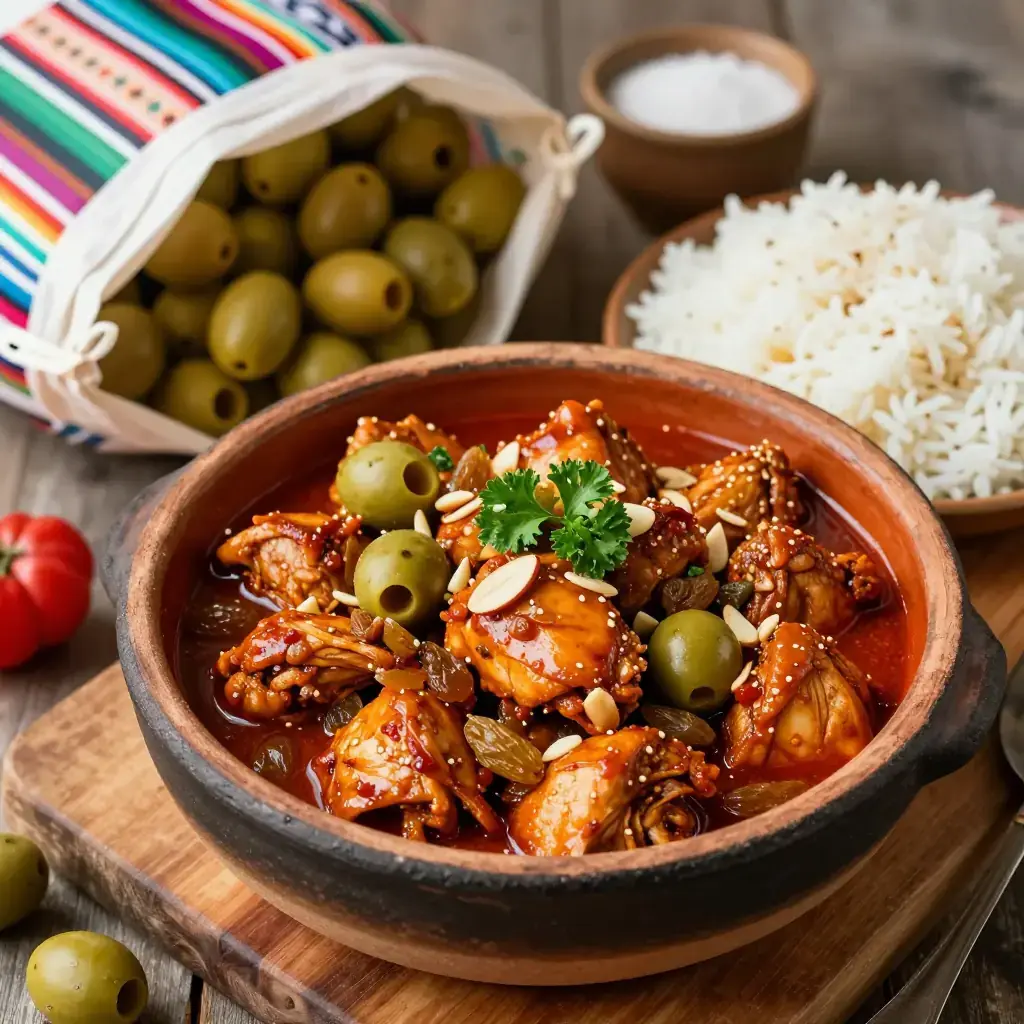
Estofado is the signature sweet-savoury braised dish of the Yucatán Peninsula, introduced by Spanish colonists in the sixteenth century and shaped over generations by Mayan cooks who added local chillies, achiote, and acidic sour oranges. The combination of olives, capers, raisins, and tomatoes in a single pot — a medieval Spanish technique called agridulce — makes this one of Mexico's most distinctive and historically layered dishes.
Serves: 6
Ingredients
- 1.5 kg (3.3 lb) chicken pieces (thighs and drumsticks)
- 3 medium ripe tomatoes, roughly chopped
- 1 medium white onion, roughly chopped
- 4 cloves garlic
- 1 chipotle chilli in adobo (or 1 dried ancho chilli, toasted)
- 60 g (2 oz) green olives, pitted and halved
- 2 tbsp (20 g) capers, drained
- 60 g (2 oz) raisins
- 60 g (2 oz) slivered almonds
- 2 tbsp (30 ml) apple cider vinegar
- 1 tsp ground cinnamon
- ½ tsp ground cumin
- ½ tsp ground black pepper
- 4 tbsp (60 ml) olive oil
- 500 ml (2 cups) chicken stock
- 2 tbsp (30 ml) achiote paste dissolved in 2 tbsp orange juice
- Salt to taste
- Fresh flat-leaf parsley or coriander to garnish
Instructions
- Season chicken pieces with salt and pepper. Heat oil in a large casserole over medium-high heat and brown the chicken in batches, about 4–5 minutes per side until golden. Remove and set aside.
- In a blender, combine tomatoes, onion, garlic, and chipotle chilli. Blitz to a smooth sauce.
- Pour off all but 2 tbsp of fat from the casserole. Add the blended sauce and cook over high heat, stirring constantly, for 8–10 minutes until it darkens and concentrates.
- Add cinnamon, cumin, and vinegar; stir for 1 minute. Add the chicken stock and dissolved achiote paste; stir to combine.
- Return the browned chicken to the casserole. Add olives, capers, raisins, and almonds. Bring to a simmer, cover, and braise over low heat for 45–50 minutes until the chicken is very tender.
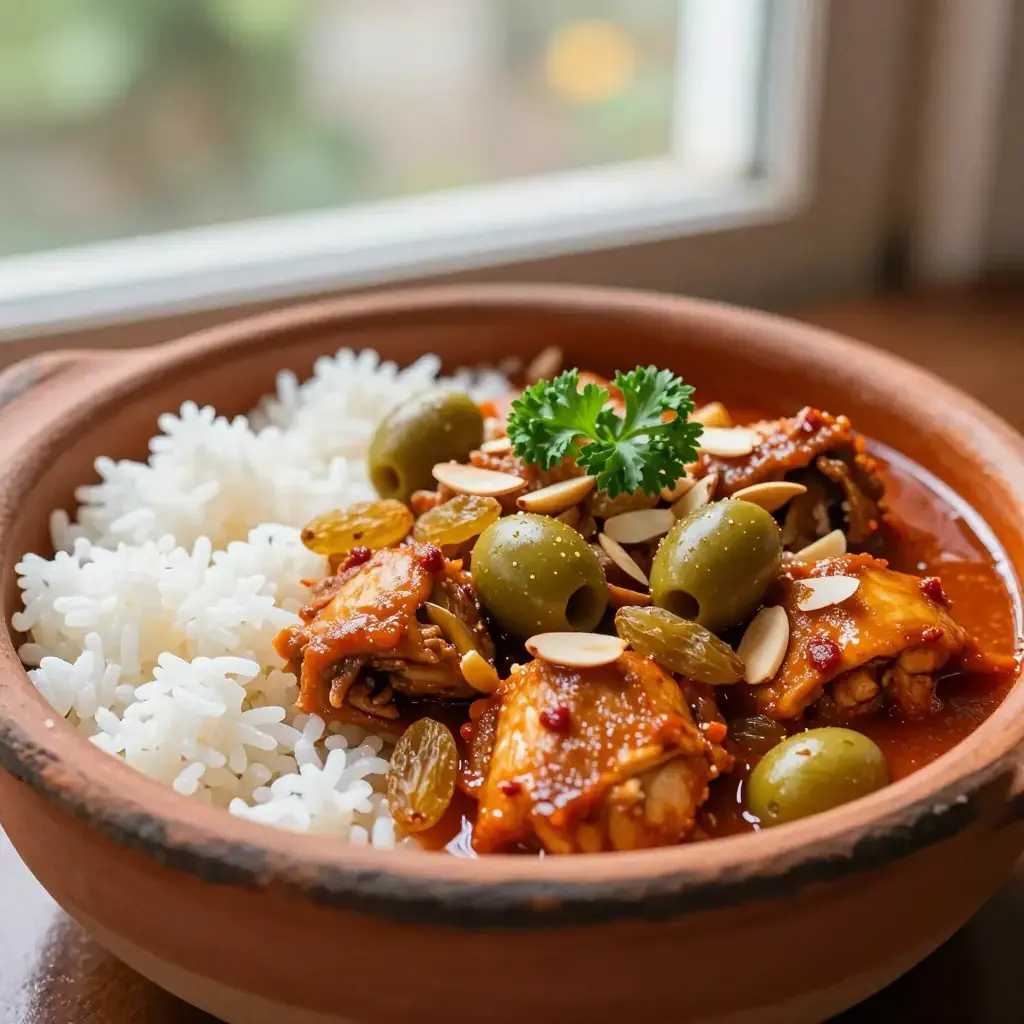
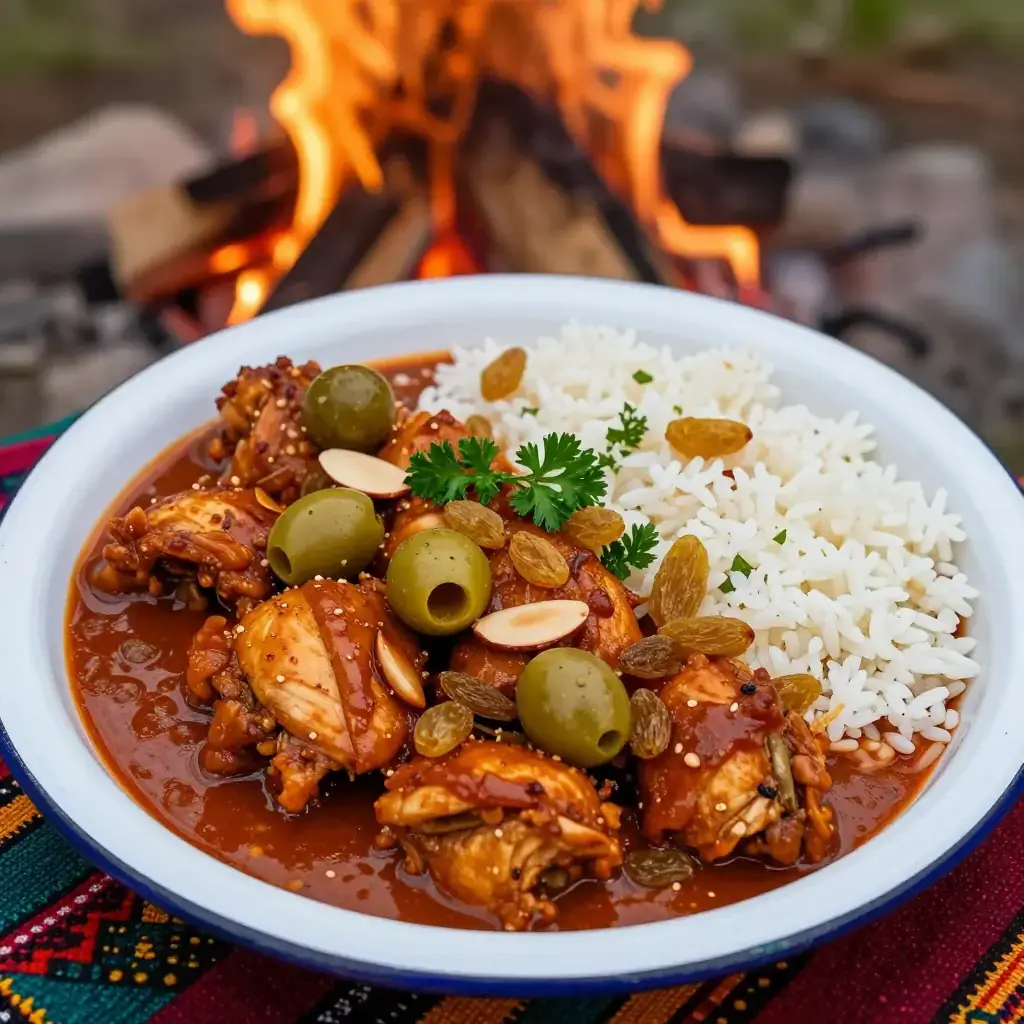
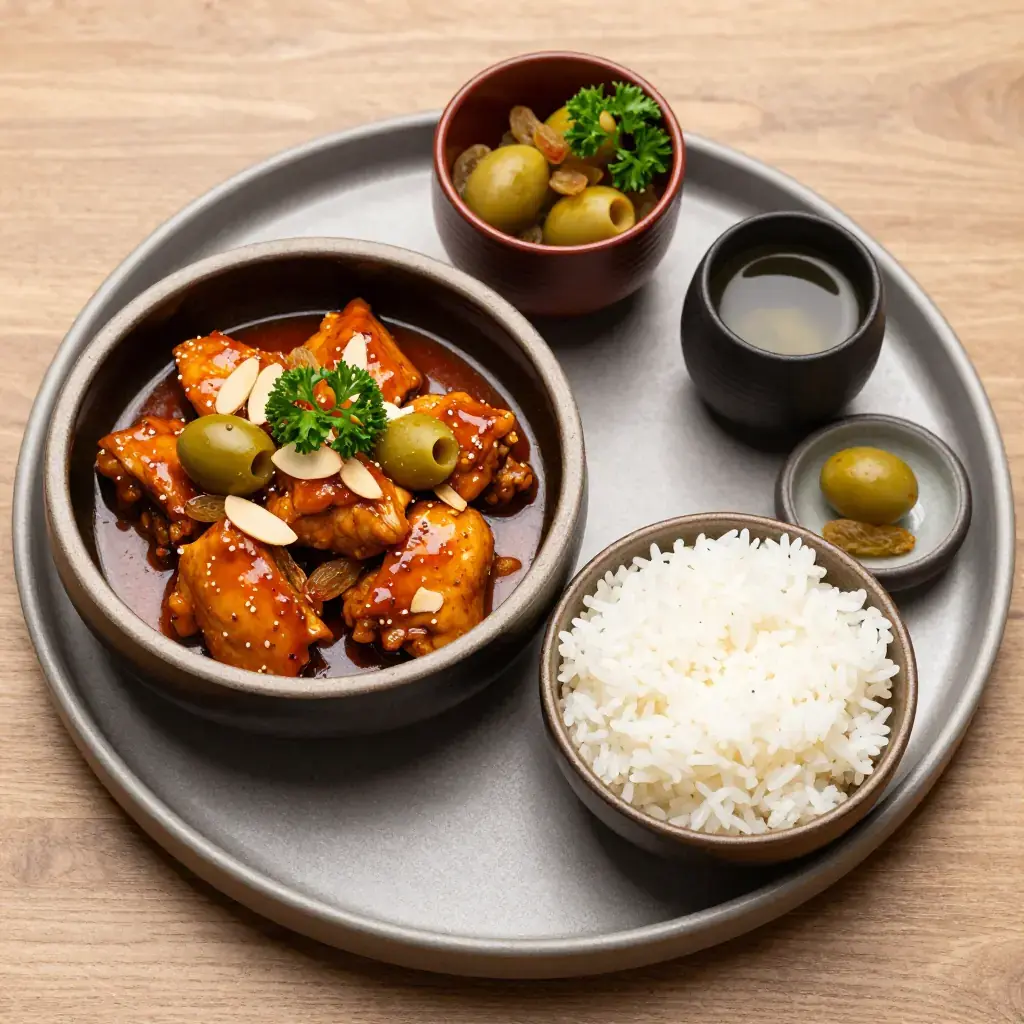
- Taste and adjust salt. The sauce should be rich, slightly sweet-sour, and brick-red from the achiote.
- Garnish with parsley or coriander and serve over white rice with warm corn tortillas.
Cook's Notes: Achiote paste (recado rojo) is available at Latin grocery stores or online; it is fundamental to authentic Yucatecan flavour. Sour Seville oranges can replace the cider vinegar if available. This dish tastes even better the next day as the agridulce flavours deepen overnight.
All Revisions
generated
# Estofado Yucateco Estofado is the signature sweet-savoury braised dish of the Yucatán Peninsula, introduced by Spanish colonists in the sixteenth century and shaped over generations by Mayan cooks who added local chillies, achiote, and acidic sour oranges. The combination of olives, capers, raisins, and tomatoes in a single pot — a medieval Spanish technique called agridulce — makes this one of Mexico's most distinctive and historically layered dishes. Serves: 6 ## Ingredients - 1.5 kg (3.3 lb) chicken pieces (thighs and drumsticks) - 3 medium ripe tomatoes, roughly chopped - 1 medium white onion, roughly chopped - 4 cloves garlic - 1 chipotle chilli in adobo (or 1 dried ancho chilli, toasted) - 60 g (2 oz) green olives, pitted and halved - 2 tbsp (20 g) capers, drained - 60 g (2 oz) raisins - 60 g (2 oz) slivered almonds - 2 tbsp (30 ml) apple cider vinegar - 1 tsp ground cinnamon - ½ tsp ground cumin - ½ tsp ground black pepper - 4 tbsp (60 ml) olive oil - 500 ml (2 cups) chicken stock - 2 tbsp (30 ml) achiote paste dissolved in 2 tbsp orange juice - Salt to taste - Fresh flat-leaf parsley or coriander to garnish ## Instructions 1. Season chicken pieces with salt and pepper. Heat oil in a large casserole over medium-high heat and brown the chicken in batches, about 4–5 minutes per side until golden. Remove and set aside. 2. In a blender, combine tomatoes, onion, garlic, and chipotle chilli. Blitz to a smooth sauce. 3. Pour off all but 2 tbsp of fat from the casserole. Add the blended sauce and cook over high heat, stirring constantly, for 8–10 minutes until it darkens and concentrates. 4. Add cinnamon, cumin, and vinegar; stir for 1 minute. Add the chicken stock and dissolved achiote paste; stir to combine. 5. Return the browned chicken to the casserole. Add olives, capers, raisins, and almonds. Bring to a simmer, cover, and braise over low heat for 45–50 minutes until the chicken is very tender. 6. Taste and adjust salt. The sauce should be rich, slightly sweet-sour, and brick-red from the achiote. 7. Garnish with parsley or coriander and serve over white rice with warm corn tortillas. **Cook's Notes:** Achiote paste (recado rojo) is available at Latin grocery stores or online; it is fundamental to authentic Yucatecan flavour. Sour Seville oranges can replace the cider vinegar if available. This dish tastes even better the next day as the agridulce flavours deepen overnight.Images
Tags
- authentic
- braised
- comfort-food
- dinner-party
- historical
- mexican
- stone-fruit