
Gaeng Om
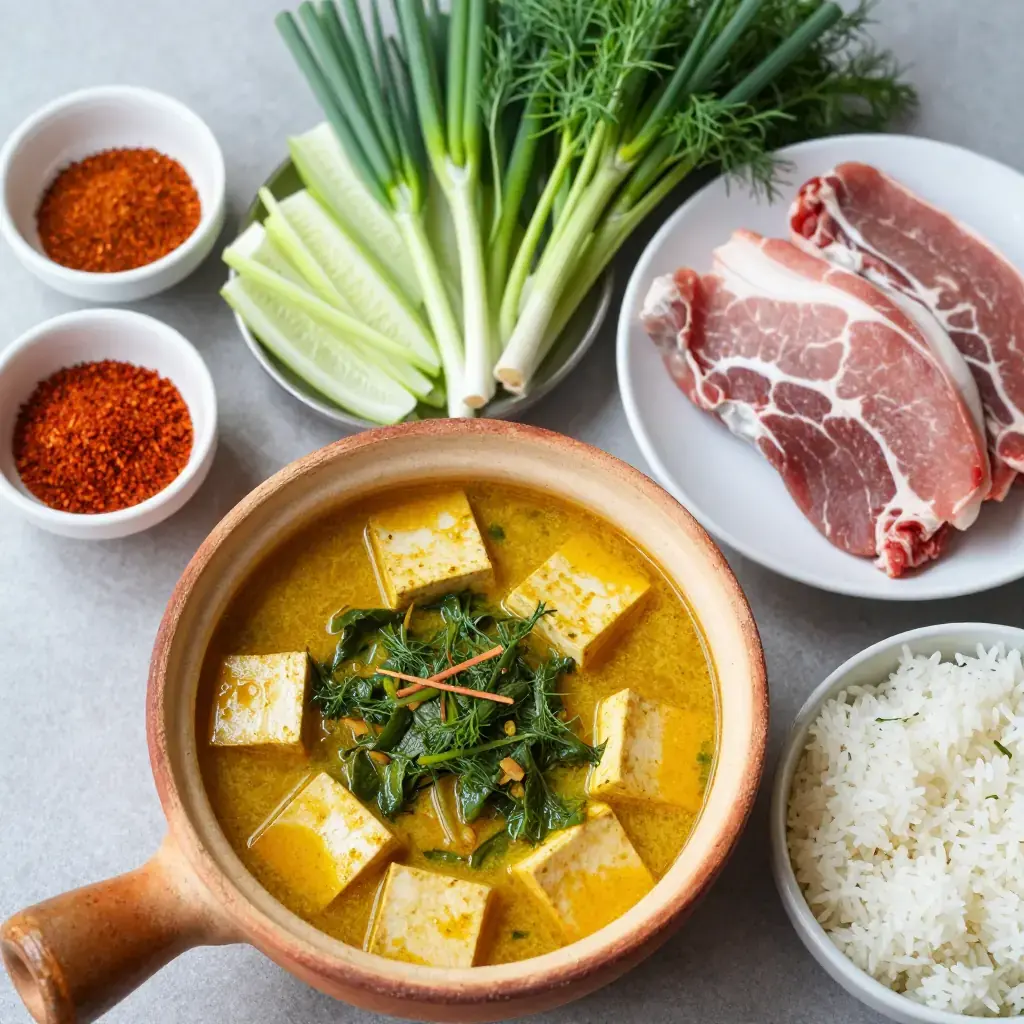
Gaeng Om is a dry, herbal curry from northern Thailand (Lanna cuisine) with no coconut milk, made by simmering meat or tofu with a pungent paste of lemongrass, galangal, turmeric, and dried chillies, then stirring through an aromatic mix of dill, spring onions, and fresh vegetables. Lighter and more intensely herbal than central Thai curries, it is a staple weekday lunch in Chiang Mai and the surrounding highlands.
Serves: 4
Ingredients
Curry Paste
- 3 stalks lemongrass, sliced thin
- 20g (1-inch piece) fresh galangal, sliced
- 20g (1-inch piece) fresh turmeric, or 1 tsp turmeric powder
- 4 dried red chillies, soaked in warm water 10 minutes
- 4 shallots, roughly chopped
- 4 cloves garlic
- 1 tsp shrimp paste (or 1 tbsp white miso for a vegetarian version)
- 1 tsp salt
Curry
- 2 tbsp (30ml) neutral oil
- 400g (14 oz) firm tofu, cut into 2cm cubes (or chicken thigh, diced)
- 400ml (1¾ cups) vegetable or chicken stock
- 2 tbsp (30ml) fish sauce (or soy sauce)
- 1 tsp palm sugar
- 100g (3.5 oz) young jackfruit or green beans, cut into 3cm pieces
- 2 medium tomatoes, quartered
Herbs (added last)
- Large bunch fresh dill (about 30g), roughly torn
- 4 spring onions (scallions), cut into 3cm pieces
- 10 fresh Thai basil leaves
Instructions
- Using a mortar and pestle or food processor, pound lemongrass, galangal, and turmeric first until fibrous and broken down (3–4 minutes). Add chillies, shallots, garlic, shrimp paste, and salt; continue pounding into a coarse, fragrant paste. This takes 8–10 minutes by hand.
- Heat oil in a wok or heavy saucepan over medium-high heat. Add the curry paste and fry, pressing and stirring, for 4–5 minutes until the raw smell transforms to something toasty and aromatic.
- Add tofu (or chicken) and stir-fry for 3 minutes to coat in the paste. Pour in the stock, bring to a simmer, and cook for 10 minutes.
- Add green beans and tomatoes. Simmer 5 more minutes until the vegetables are just tender and the broth has reduced slightly but not dried out. Season with fish sauce and palm sugar.
- Off the heat, stir through the dill, spring onions, and Thai basil. The residual heat will barely wilt them — the herbs should remain fresh and vibrantly green. Serve immediately with steamed jasmine rice.
Cook's Notes: Dill is the signature of northern Thai cooking and completely unexpected — do not substitute. Gaeng Om should be dry and intense, not soupy. Reduce the liquid further if the broth seems thin.
All Revisions
generated
# Gaeng Om Gaeng Om is a dry, herbal curry from northern Thailand (Lanna cuisine) with no coconut milk, made by simmering meat or tofu with a pungent paste of lemongrass, galangal, turmeric, and dried chillies, then stirring through an aromatic mix of dill, spring onions, and fresh vegetables. Lighter and more intensely herbal than central Thai curries, it is a staple weekday lunch in Chiang Mai and the surrounding highlands. Serves: 4 ## Ingredients ### Curry Paste - 3 stalks lemongrass, sliced thin - 20g (1-inch piece) fresh galangal, sliced - 20g (1-inch piece) fresh turmeric, or 1 tsp turmeric powder - 4 dried red chillies, soaked in warm water 10 minutes - 4 shallots, roughly chopped - 4 cloves garlic - 1 tsp shrimp paste (or 1 tbsp white miso for a vegetarian version) - 1 tsp salt ### Curry - 2 tbsp (30ml) neutral oil - 400g (14 oz) firm tofu, cut into 2cm cubes (or chicken thigh, diced) - 400ml (1¾ cups) vegetable or chicken stock - 2 tbsp (30ml) fish sauce (or soy sauce) - 1 tsp palm sugar - 100g (3.5 oz) young jackfruit or green beans, cut into 3cm pieces - 2 medium tomatoes, quartered ### Herbs (added last) - Large bunch fresh dill (about 30g), roughly torn - 4 spring onions (scallions), cut into 3cm pieces - 10 fresh Thai basil leaves ## Instructions 1. Using a mortar and pestle or food processor, pound lemongrass, galangal, and turmeric first until fibrous and broken down (3–4 minutes). Add chillies, shallots, garlic, shrimp paste, and salt; continue pounding into a coarse, fragrant paste. This takes 8–10 minutes by hand. 2. Heat oil in a wok or heavy saucepan over medium-high heat. Add the curry paste and fry, pressing and stirring, for 4–5 minutes until the raw smell transforms to something toasty and aromatic. 3. Add tofu (or chicken) and stir-fry for 3 minutes to coat in the paste. Pour in the stock, bring to a simmer, and cook for 10 minutes. 4. Add green beans and tomatoes. Simmer 5 more minutes until the vegetables are just tender and the broth has reduced slightly but not dried out. Season with fish sauce and palm sugar. 5. Off the heat, stir through the dill, spring onions, and Thai basil. The residual heat will barely wilt them — the herbs should remain fresh and vibrantly green. Serve immediately with steamed jasmine rice. **Cook's Notes:** Dill is the signature of northern Thai cooking and completely unexpected — do not substitute. Gaeng Om should be dry and intense, not soupy. Reduce the liquid further if the broth seems thin.Images



Tags
- authentic
- fresh-herbs
- gluten-free
- healthy
- lunch
- one-pot
- thai
- tofu