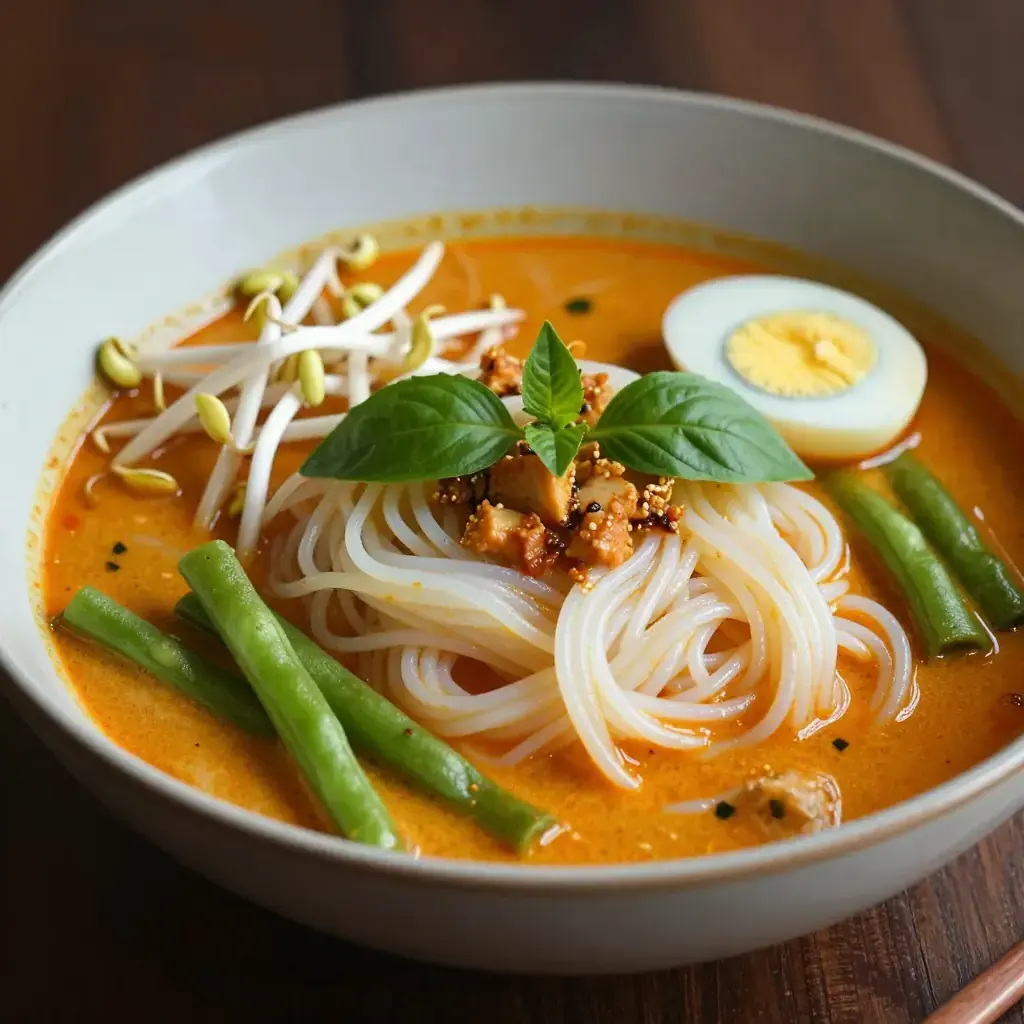
Khanom Chin Nam Ya
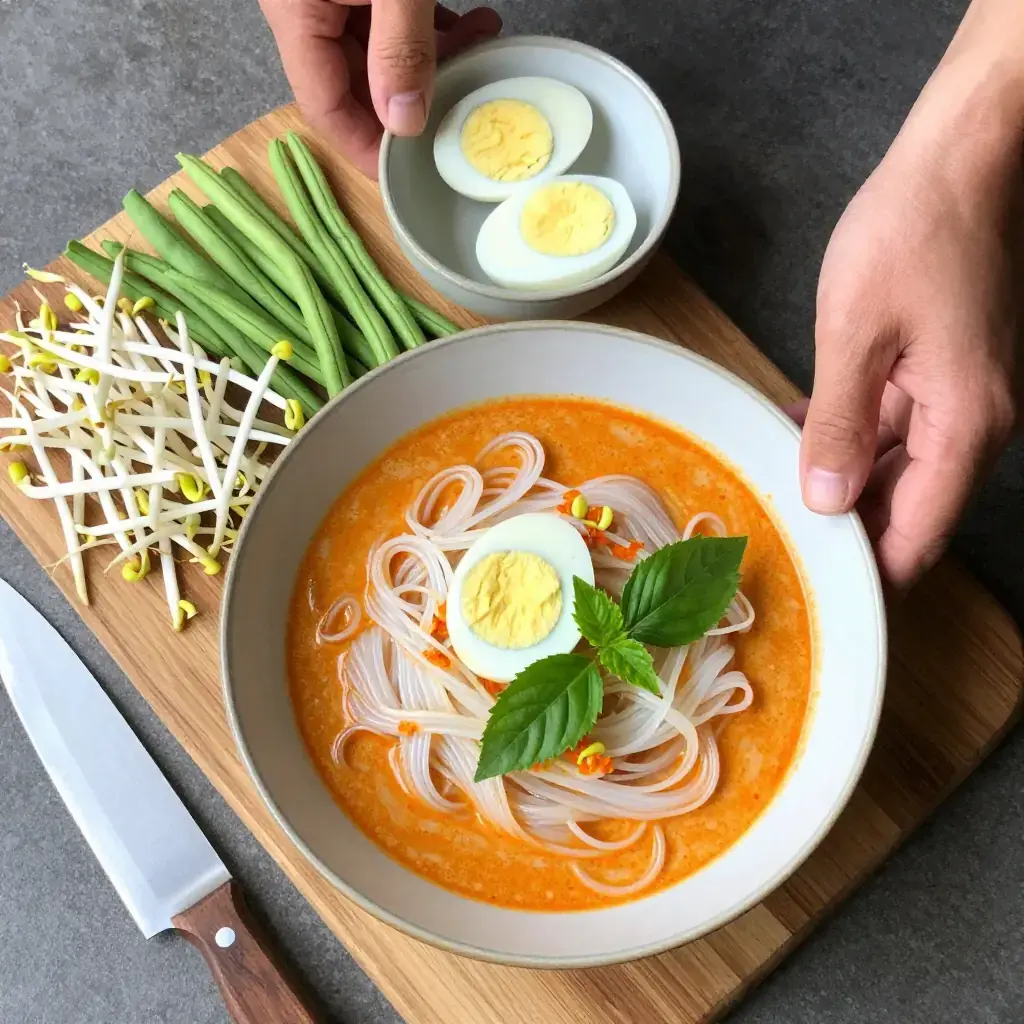
Khanom Chin Nam Ya is one of Thailand's oldest dishes — fermented rice noodles served with a fragrant, fish-based curry sauce made from lemongrass, galangal, kaffir lime, and grachai (fingerroot). The noodles themselves are traditionally pressed and fermented, giving them a distinctive soft, slightly sour character that pairs beautifully with the rich, aromatic sauce. The dish is a fixture of Thai temple festivals and communal lunches.
Serves: 4
Ingredients
Curry Paste
- 4 stalks lemongrass, tender inner part only, sliced
- 30g (2-inch piece) fresh galangal, sliced
- 30g grachai (fingerroot / krachai), sliced (or extra galangal)
- 6 kaffir lime leaves, centre vein removed
- 4 dried red chillies, soaked in warm water 10 minutes
- 4 shallots, roughly chopped
- 4 cloves garlic
- 1 tsp shrimp paste (kapi)
- 1 tsp salt
Curry Sauce
- 400ml (1¾ cups) coconut milk
- 200ml (¾ cup) fish stock or water
- 400g (14 oz) firm white fish (snapper or mackerel), steamed and flaked
- 2 tbsp (30ml) fish sauce
- 1 tsp palm sugar or brown sugar
To Serve
- 500g (1 lb) fresh khanom chin noodles (fermented rice noodles) or cooked thin rice vermicelli
- Bean sprouts, blanched
- Long beans, blanched and cut into 3cm pieces
- Hard-boiled eggs, halved
- Fresh Thai basil leaves
- Kaffir lime leaves, thinly sliced
Instructions
- Using a mortar and pestle (or food processor), pound together lemongrass, galangal, grachai, kaffir lime leaves, soaked chillies, shallots, garlic, shrimp paste, and salt into a fine, fragrant paste. Work in stages, adding harder ingredients first.
- In a medium saucepan, heat 4 tbsp of the thick coconut cream skimmed from the top of the tin over medium heat for 2–3 minutes until it bubbles and the oil separates. Add the curry paste and fry, stirring constantly, for 4–5 minutes until dark and very fragrant.
- Add remaining coconut milk and fish stock. Bring to a gentle simmer and cook for 10 minutes. Add the flaked fish and stir to incorporate, breaking it into fine shreds so it thickens the sauce. Simmer 8–10 minutes more until the sauce is rich and slightly thickened.
- Season with fish sauce and palm sugar. The sauce should be savoury, faintly sweet, and deeply aromatic. Adjust to taste.
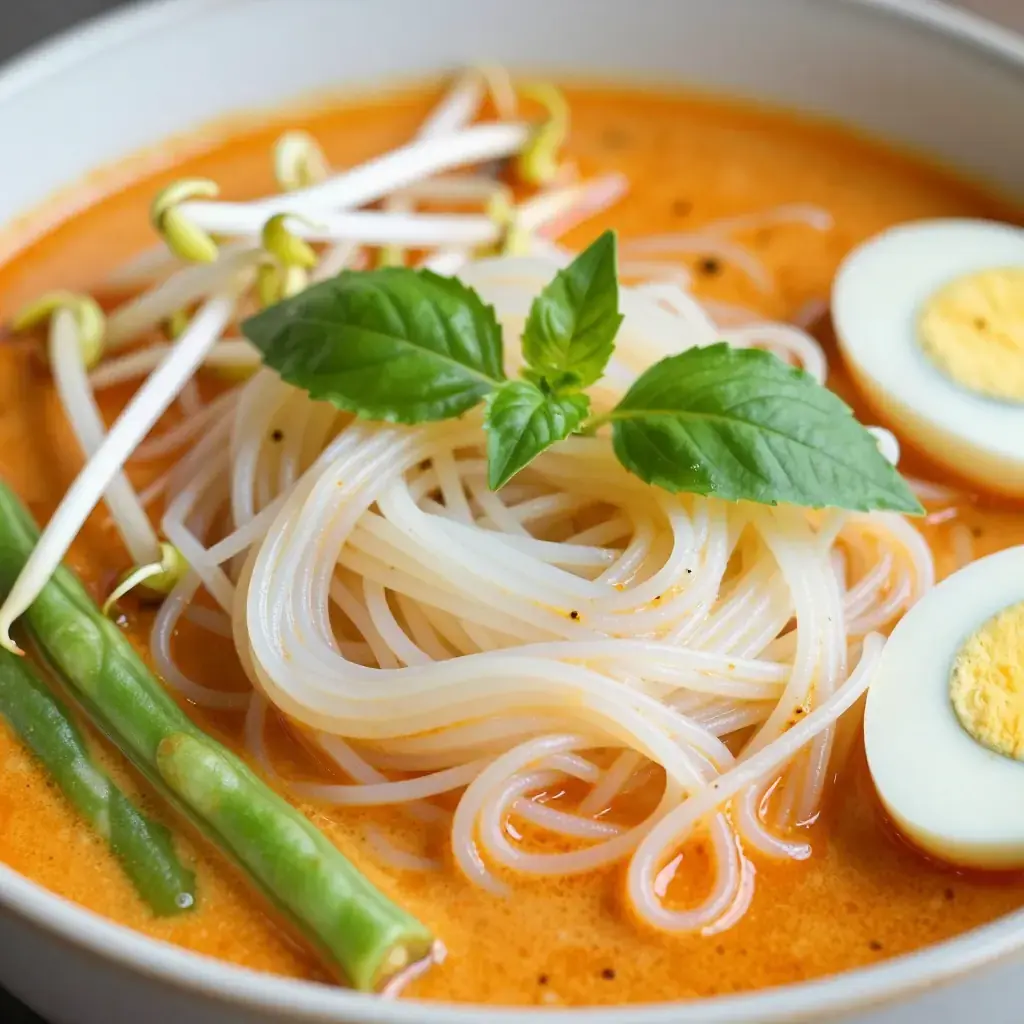
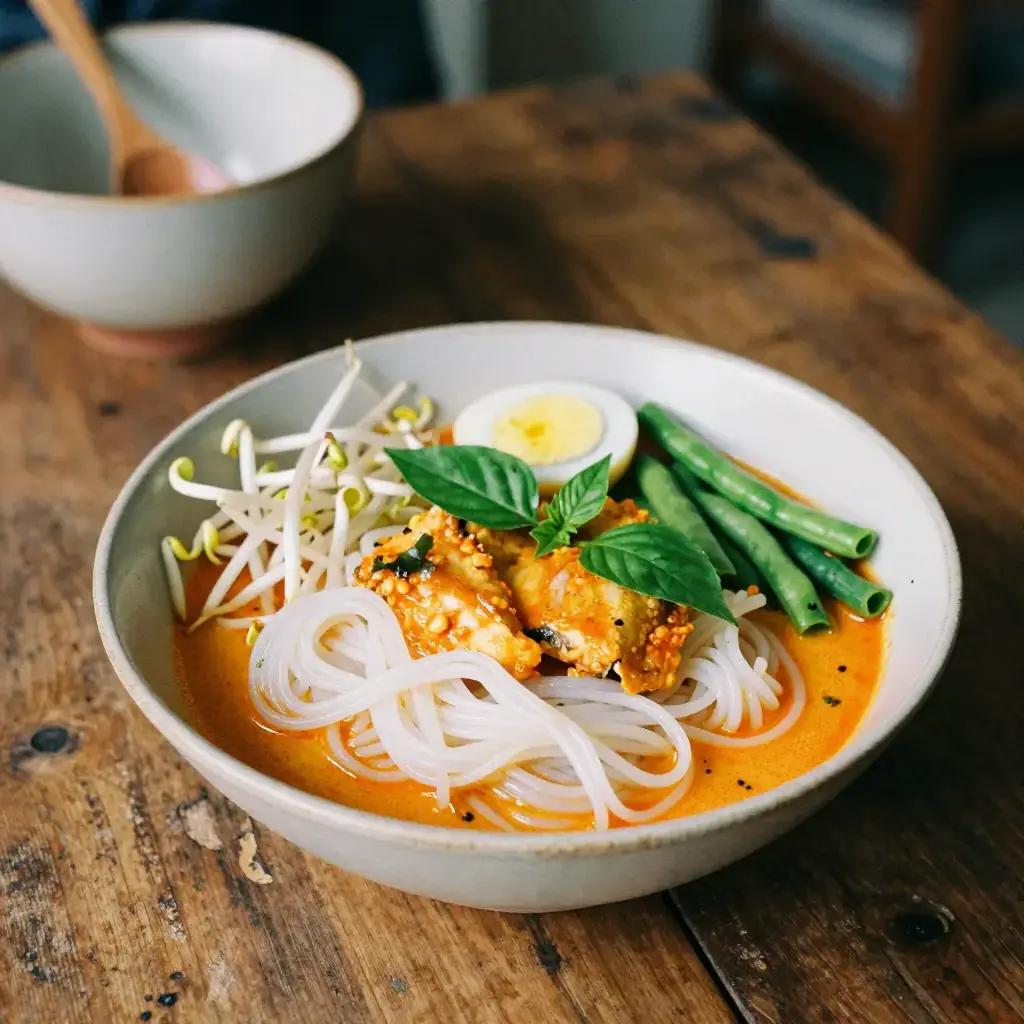
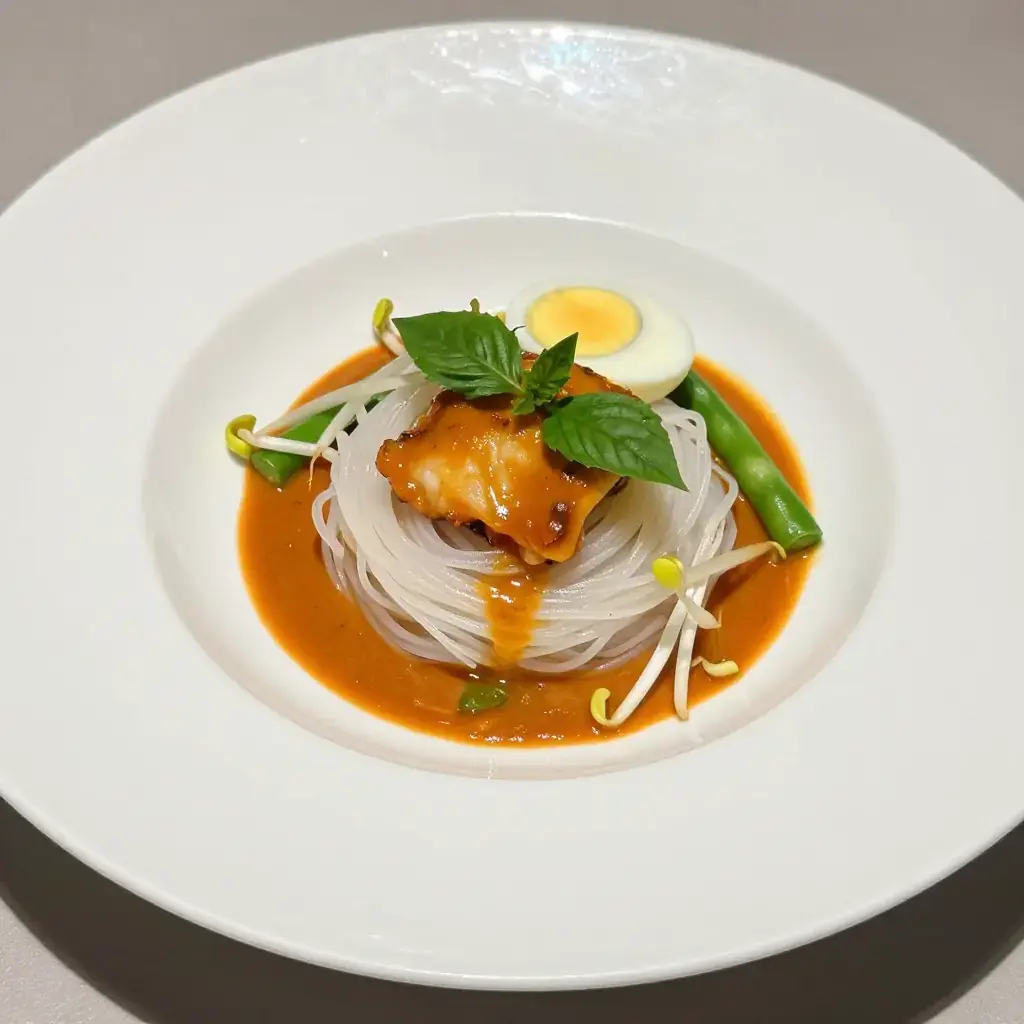
- To serve, arrange a portion of noodles in each bowl. Ladle generous curry sauce over the top. Place alongside bean sprouts, long beans, a halved egg, fresh Thai basil, and sliced kaffir lime leaves for diners to mix in as desired.
Cook's Notes: Grachai (fingerroot) is essential for the authentic flavour of Nam Ya; find it frozen at Asian grocery stores. The sauce thickens considerably as it cools — add a splash of coconut milk when reheating.
All Revisions
generated
# Khanom Chin Nam Ya Khanom Chin Nam Ya is one of Thailand's oldest dishes — fermented rice noodles served with a fragrant, fish-based curry sauce made from lemongrass, galangal, kaffir lime, and grachai (fingerroot). The noodles themselves are traditionally pressed and fermented, giving them a distinctive soft, slightly sour character that pairs beautifully with the rich, aromatic sauce. The dish is a fixture of Thai temple festivals and communal lunches. Serves: 4 ## Ingredients ### Curry Paste - 4 stalks lemongrass, tender inner part only, sliced - 30g (2-inch piece) fresh galangal, sliced - 30g grachai (fingerroot / krachai), sliced (or extra galangal) - 6 kaffir lime leaves, centre vein removed - 4 dried red chillies, soaked in warm water 10 minutes - 4 shallots, roughly chopped - 4 cloves garlic - 1 tsp shrimp paste (kapi) - 1 tsp salt ### Curry Sauce - 400ml (1¾ cups) coconut milk - 200ml (¾ cup) fish stock or water - 400g (14 oz) firm white fish (snapper or mackerel), steamed and flaked - 2 tbsp (30ml) fish sauce - 1 tsp palm sugar or brown sugar ### To Serve - 500g (1 lb) fresh khanom chin noodles (fermented rice noodles) or cooked thin rice vermicelli - Bean sprouts, blanched - Long beans, blanched and cut into 3cm pieces - Hard-boiled eggs, halved - Fresh Thai basil leaves - Kaffir lime leaves, thinly sliced ## Instructions 1. Using a mortar and pestle (or food processor), pound together lemongrass, galangal, grachai, kaffir lime leaves, soaked chillies, shallots, garlic, shrimp paste, and salt into a fine, fragrant paste. Work in stages, adding harder ingredients first. 2. In a medium saucepan, heat 4 tbsp of the thick coconut cream skimmed from the top of the tin over medium heat for 2–3 minutes until it bubbles and the oil separates. Add the curry paste and fry, stirring constantly, for 4–5 minutes until dark and very fragrant. 3. Add remaining coconut milk and fish stock. Bring to a gentle simmer and cook for 10 minutes. Add the flaked fish and stir to incorporate, breaking it into fine shreds so it thickens the sauce. Simmer 8–10 minutes more until the sauce is rich and slightly thickened. 4. Season with fish sauce and palm sugar. The sauce should be savoury, faintly sweet, and deeply aromatic. Adjust to taste. 5. To serve, arrange a portion of noodles in each bowl. Ladle generous curry sauce over the top. Place alongside bean sprouts, long beans, a halved egg, fresh Thai basil, and sliced kaffir lime leaves for diners to mix in as desired. **Cook's Notes:** Grachai (fingerroot) is essential for the authentic flavour of Nam Ya; find it frozen at Asian grocery stores. The sauce thickens considerably as it cools — add a splash of coconut milk when reheating.Images
Tags
- authentic
- fermented
- heirloom
- lunch
- noodles
- rice
- seafood
- thai