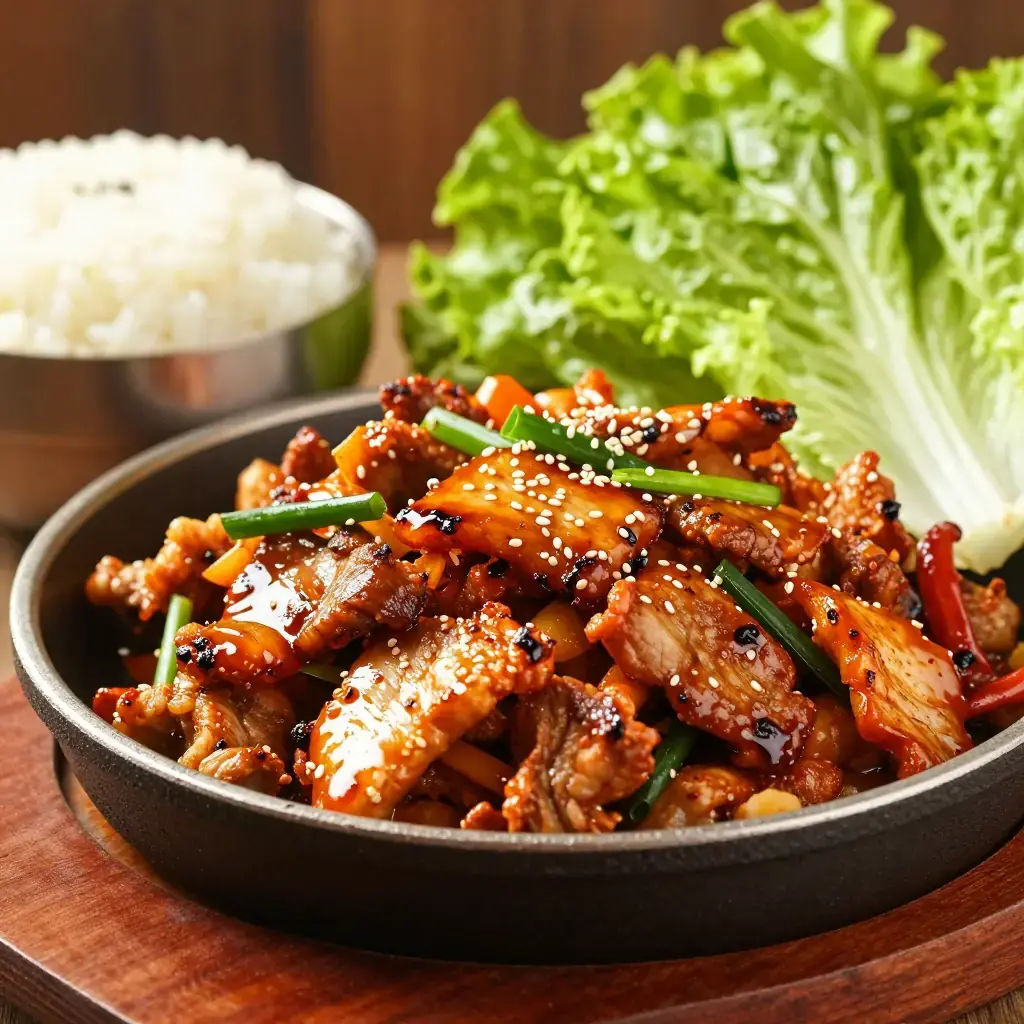
Jeyuk Bokkeum
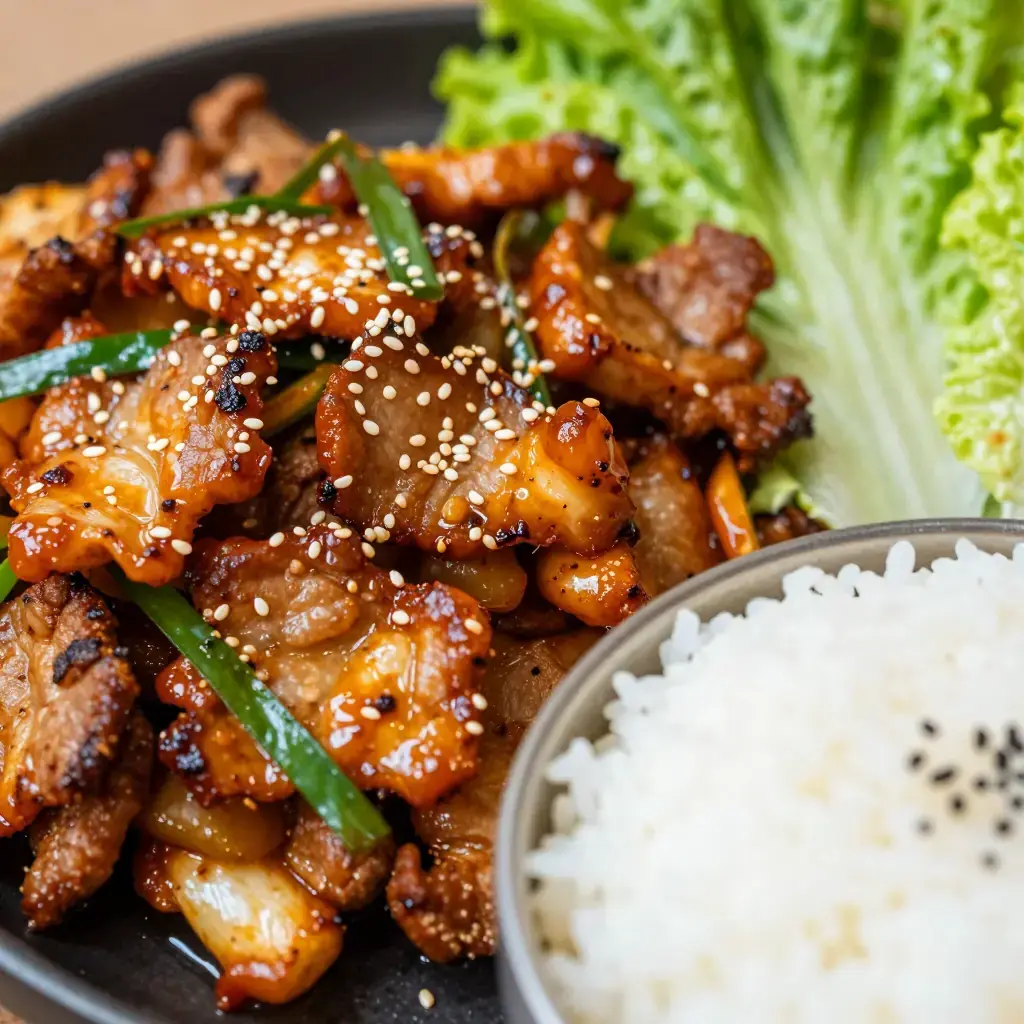
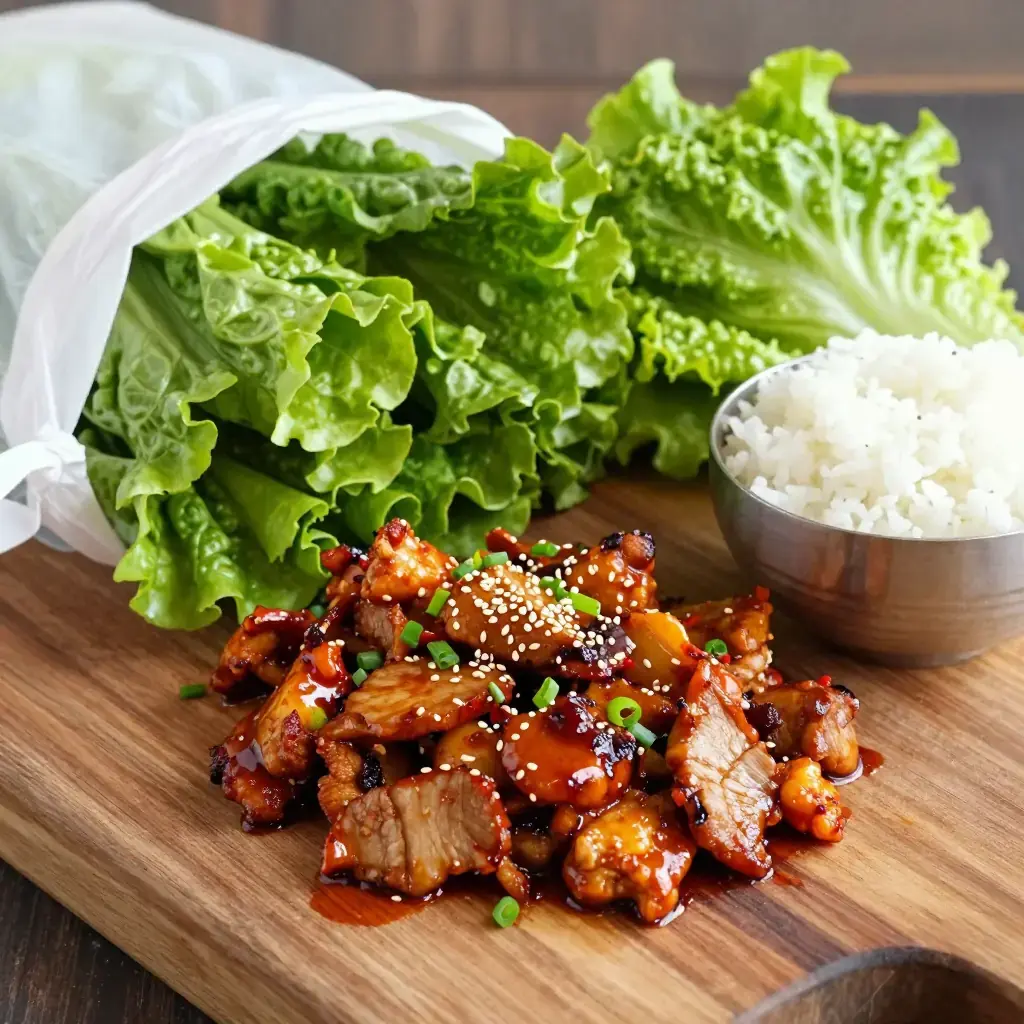
Jeyuk Bokkeum (제육볶음) is Korea's beloved spicy pork stir-fry, one of the most popular everyday dishes on the peninsula. Thin slices of pork belly or shoulder are marinated in a fiery gochujang-based paste with ginger and sesame, then stir-fried at high heat until slightly caramelised and fragrant. It is routinely served over rice and wrapped in lettuce leaves.
Serves: 4
Ingredients
Pork and marinade:
- 600g (1.3 lb) pork shoulder or belly, thinly sliced
- 3 tbsp (45ml) gochujang (Korean chilli paste)
- 2 tbsp (30ml) soy sauce
- 1 tbsp (15ml) gochugaru (Korean chilli flakes)
- 1 tbsp (15ml) sesame oil
- 1 tbsp (15ml) sugar
- 1 tbsp (15ml) rice wine (mirin or sake)
- 4 garlic cloves, minced
- 2 tsp (10ml) freshly grated ginger
Stir-fry:
- 2 tbsp (30ml) vegetable oil
- 1 medium onion, sliced into half-moons
- 1 medium carrot, julienned
- 3 spring onions, cut into 5cm (2-inch) pieces
- 1 tbsp (15ml) sesame seeds
To serve: steamed white rice, lettuce leaves
Instructions
- Combine all marinade ingredients in a bowl. Add the pork slices and toss to coat thoroughly. Marinate for at least 30 minutes at room temperature or up to 2 hours refrigerated.
- Heat a large wok or heavy frying pan over high heat until smoking. Add the vegetable oil.
- Add the marinated pork in a single layer and cook without moving for 2 minutes to allow caramelisation to begin.
- Add the onion and carrot. Toss and stir-fry vigorously for 4–5 minutes until the pork is cooked through and slightly charred at the edges and the vegetables are tender-crisp.
- Add the spring onions and toss for 30 seconds.
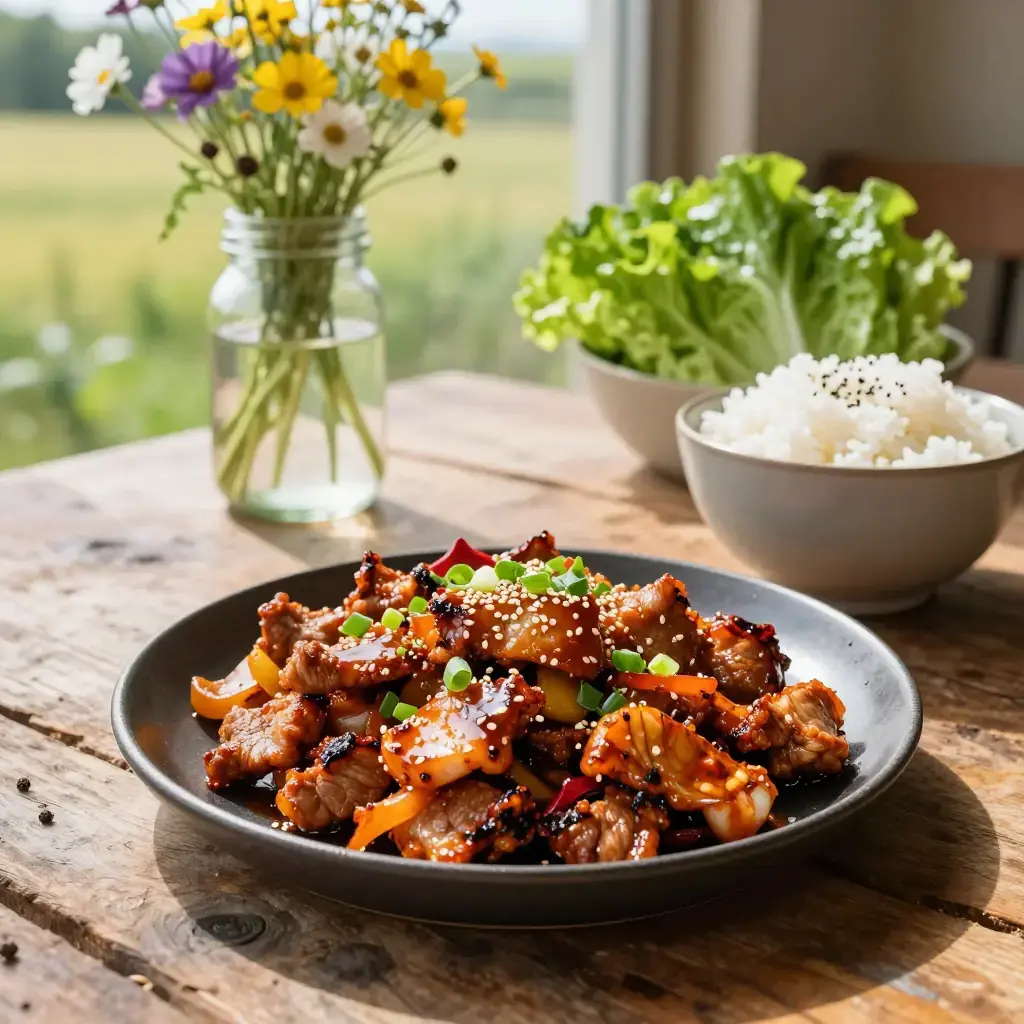
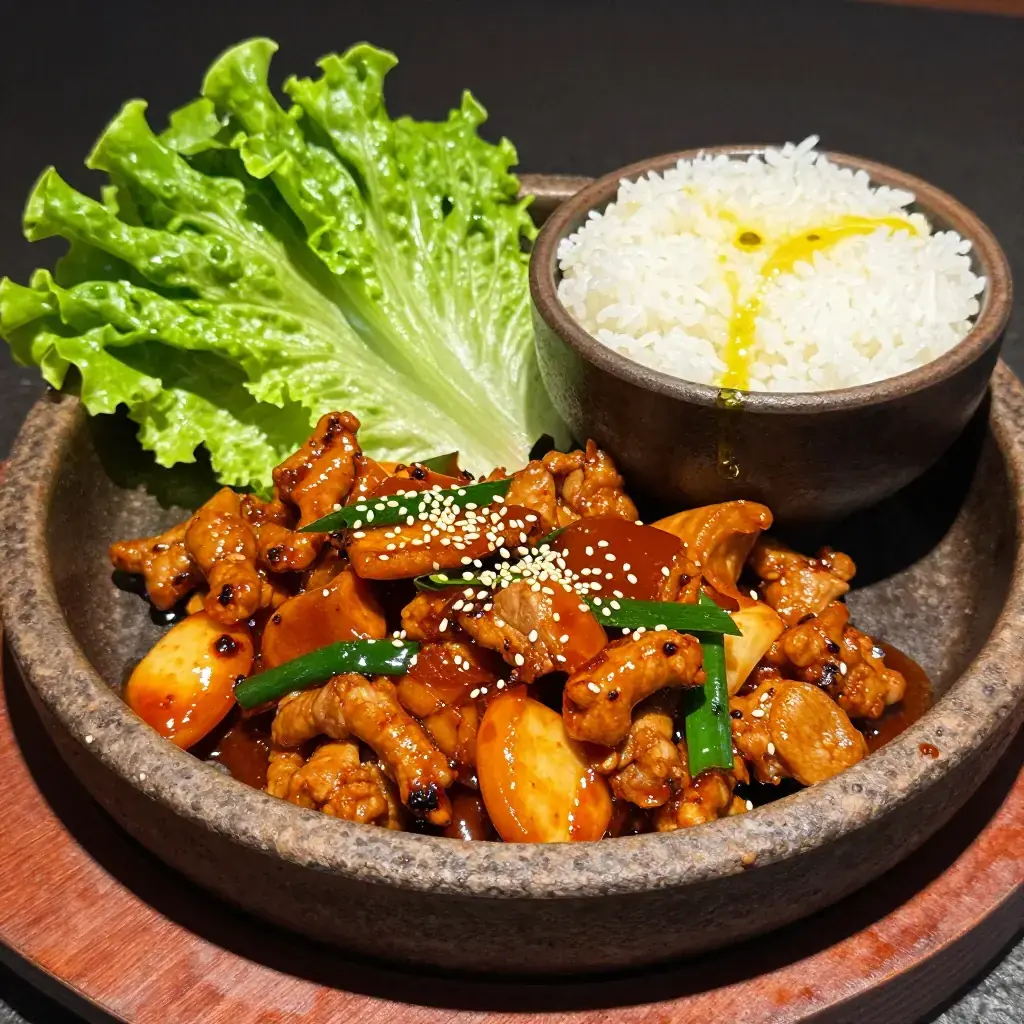
- Transfer to a plate, scatter sesame seeds over the top, and serve immediately with steamed rice and crisp lettuce leaves for wrapping.
Cook's Notes: Partially freezing the pork for 30 minutes before slicing makes it much easier to cut thinly. For extra smokiness, use a carbon-steel wok over the highest gas flame you have — the slight char is essential to authentic flavour.
All Revisions
generated
# Jeyuk Bokkeum Jeyuk Bokkeum (제육볶음) is Korea's beloved spicy pork stir-fry, one of the most popular everyday dishes on the peninsula. Thin slices of pork belly or shoulder are marinated in a fiery gochujang-based paste with ginger and sesame, then stir-fried at high heat until slightly caramelised and fragrant. It is routinely served over rice and wrapped in lettuce leaves. Serves: 4 ## Ingredients **Pork and marinade:** - 600g (1.3 lb) pork shoulder or belly, thinly sliced - 3 tbsp (45ml) gochujang (Korean chilli paste) - 2 tbsp (30ml) soy sauce - 1 tbsp (15ml) gochugaru (Korean chilli flakes) - 1 tbsp (15ml) sesame oil - 1 tbsp (15ml) sugar - 1 tbsp (15ml) rice wine (mirin or sake) - 4 garlic cloves, minced - 2 tsp (10ml) freshly grated ginger **Stir-fry:** - 2 tbsp (30ml) vegetable oil - 1 medium onion, sliced into half-moons - 1 medium carrot, julienned - 3 spring onions, cut into 5cm (2-inch) pieces - 1 tbsp (15ml) sesame seeds **To serve:** steamed white rice, lettuce leaves ## Instructions 1. Combine all marinade ingredients in a bowl. Add the pork slices and toss to coat thoroughly. Marinate for at least 30 minutes at room temperature or up to 2 hours refrigerated. 2. Heat a large wok or heavy frying pan over high heat until smoking. Add the vegetable oil. 3. Add the marinated pork in a single layer and cook without moving for 2 minutes to allow caramelisation to begin. 4. Add the onion and carrot. Toss and stir-fry vigorously for 4–5 minutes until the pork is cooked through and slightly charred at the edges and the vegetables are tender-crisp. 5. Add the spring onions and toss for 30 seconds. 6. Transfer to a plate, scatter sesame seeds over the top, and serve immediately with steamed rice and crisp lettuce leaves for wrapping. **Cook's Notes:** Partially freezing the pork for 30 minutes before slicing makes it much easier to cut thinly. For extra smokiness, use a carbon-steel wok over the highest gas flame you have — the slight char is essential to authentic flavour.Images
Tags
- comfort-food
- dinner
- korean
- quick-and-easy
- rice
- stir-fried