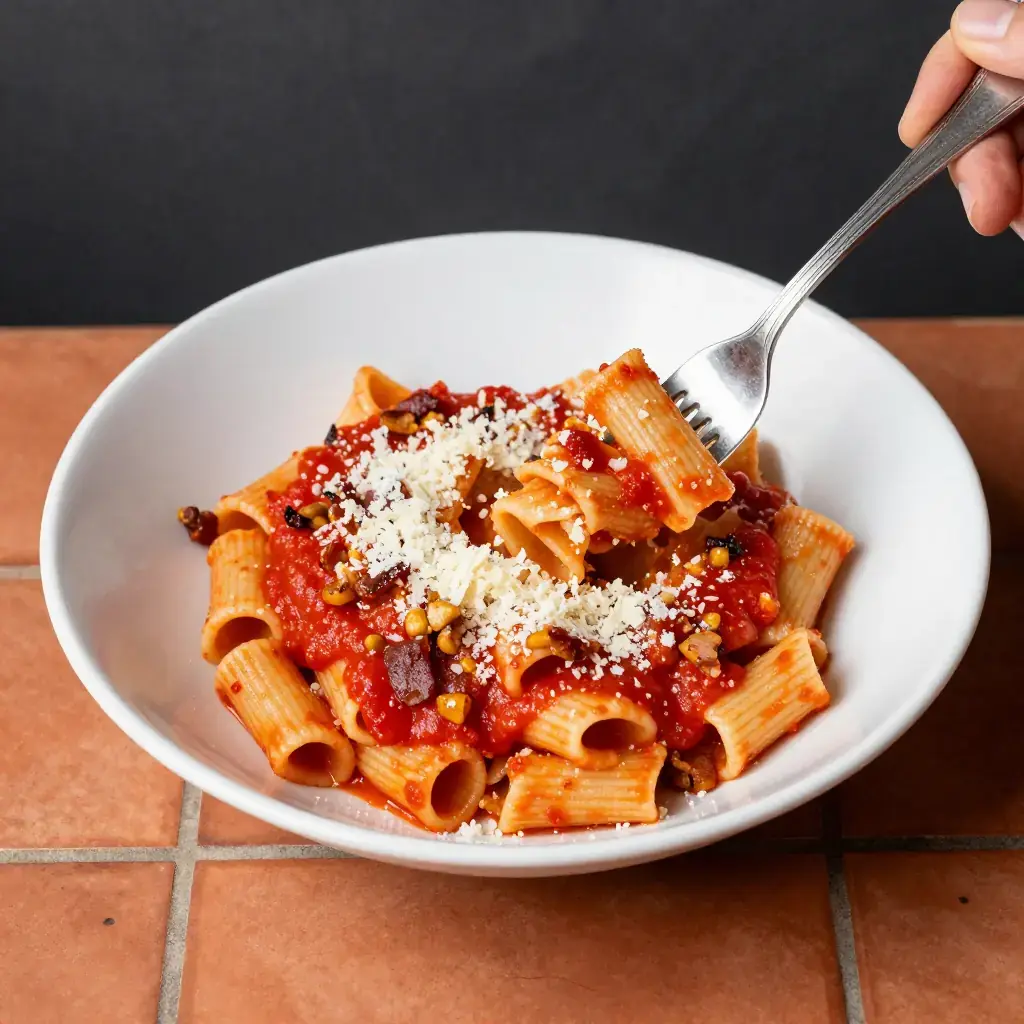
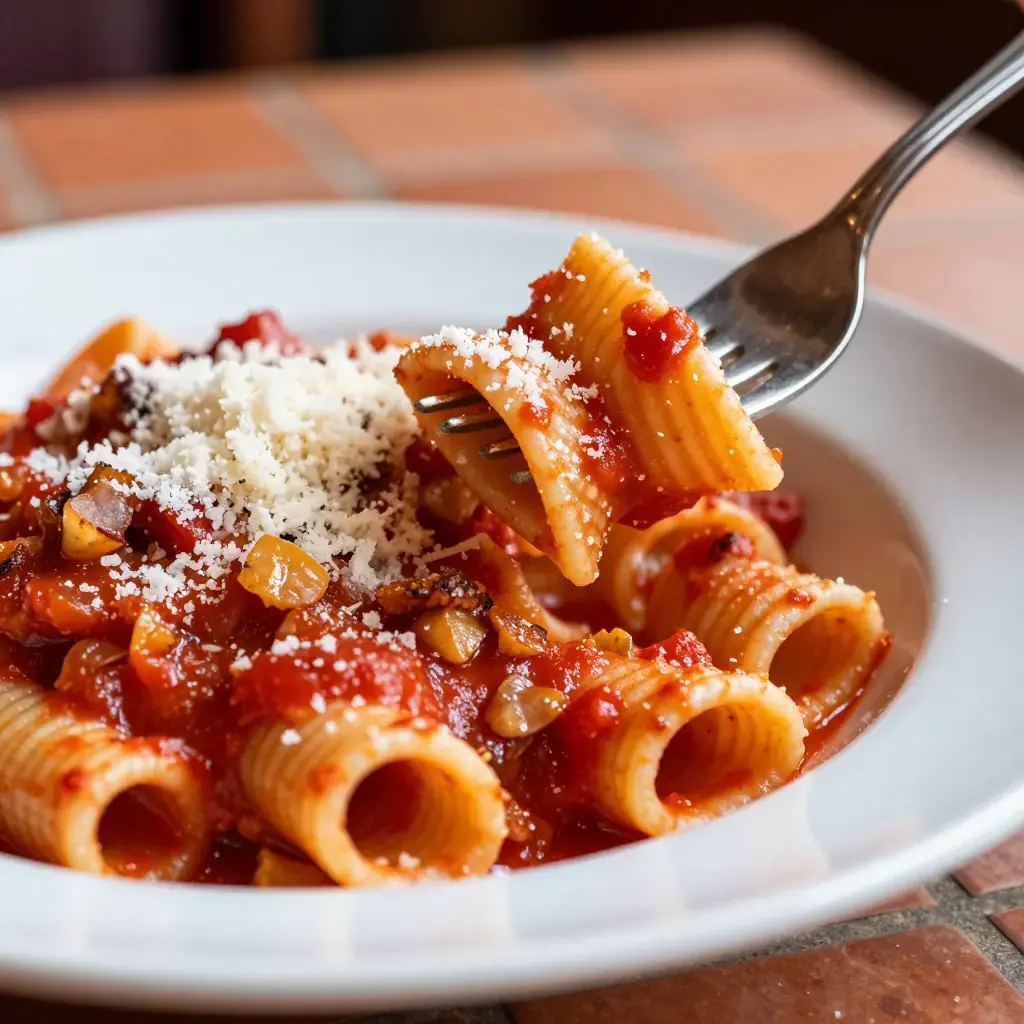
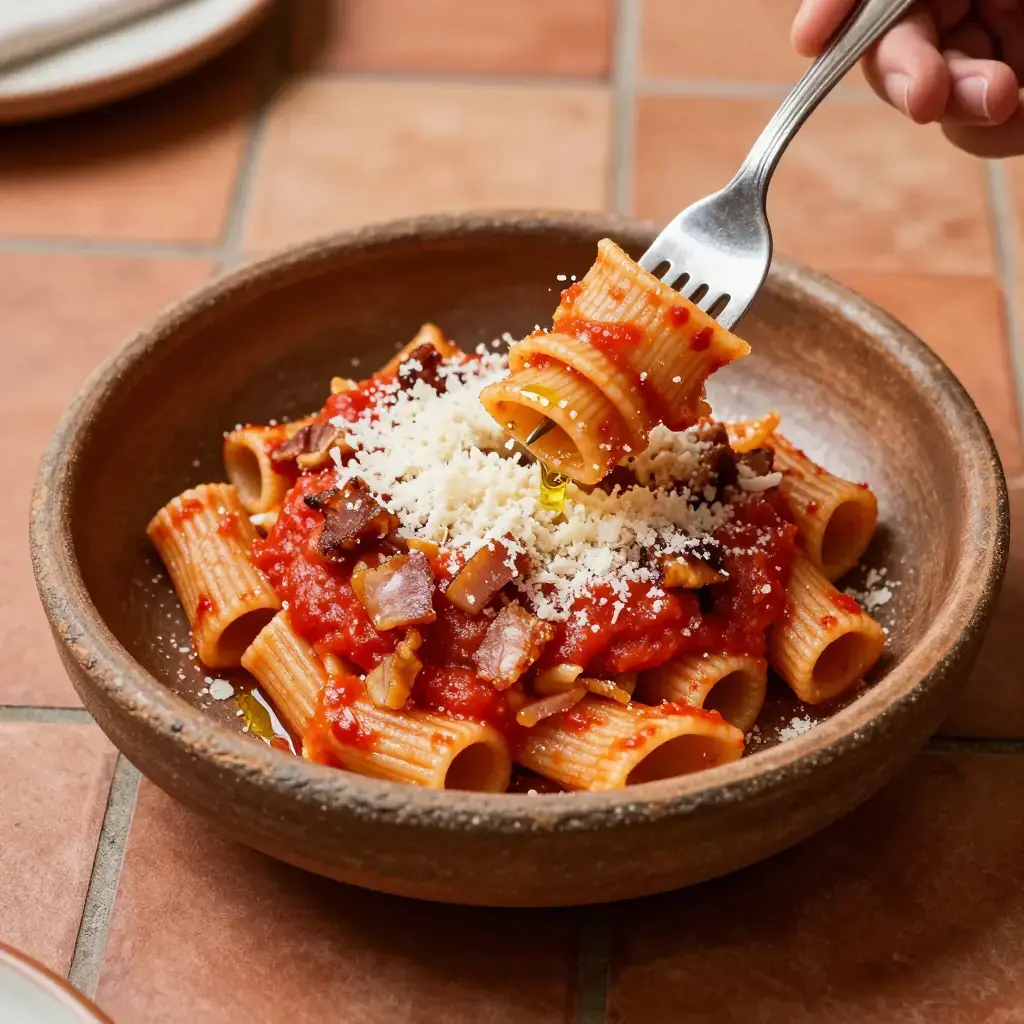
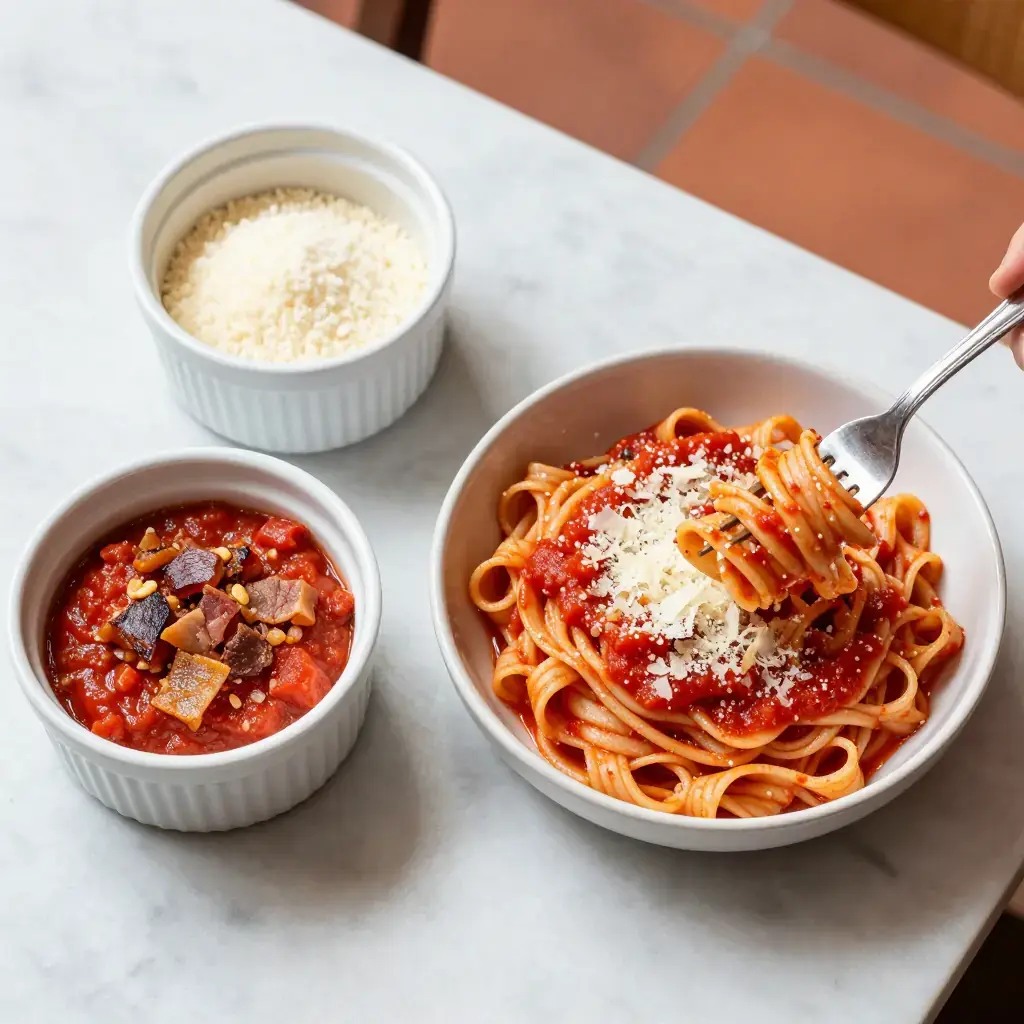
Bucatini all'Amatriciana
Amatriciana traces its origins to the mountain town of Amatrice, east of Rome in the Lazio-Abruzzo borderlands, where shepherds carried guanciale, pecorino, and pasta on transhumance routes. The original dish was simply pasta with cured pork and cheese — the tomato sauce arrived only after New World ingredients reached Italy in the 18th century. In 2020, Amatriciana was registered as a Traditional Specialty Guaranteed product by the EU, protecting its ingredient list.
Serves: 4
Ingredients
- 400g (14 oz) bucatini (thick hollow spaghetti)
- 200g (7 oz) guanciale (cured pork cheek), sliced into 5mm (¼ inch) lardons — pancetta works as substitute
- 400g (14 oz) San Marzano whole tomatoes, crushed by hand
- 100g (3.5 oz) Pecorino Romano, finely grated, plus more to serve
- ½ tsp (2g) dried chilli flakes (peperoncino)
- 80ml (⅓ cup) dry white wine
- Salt (for pasta water only — guanciale and pecorino provide all other salt)
- Freshly ground black pepper
Instructions
- Place guanciale in a cold heavy skillet (no oil needed). Cook over medium heat 6-8 minutes, turning occasionally, until fat renders and edges are golden and beginning to crisp. The rendered fat will be used as the cooking medium.
- Add chilli flakes and cook 30 seconds. Deglaze with white wine and reduce by half (about 1 minute).
- Add crushed tomatoes to the pan. Simmer over medium heat 15-18 minutes, stirring occasionally, until sauce thickens and oil pools on the surface, separating slightly from the tomatoes — this is correct.
- Meanwhile, bring a large pot of well-salted water to a boil. Cook bucatini 1 minute less than package directions (it will finish in the sauce). Reserve 200ml (¾ cup) pasta water before draining.
- Transfer drained bucatini to the sauce. Toss vigorously over medium heat 2 minutes, adding pasta water a splash at a time to create a glossy, emulsified coating.
- Remove from heat. Add half the pecorino and toss again — the residual heat will melt it into the sauce. Season with black pepper.
- Serve immediately in warmed bowls, topped with remaining pecorino.
Cook's Notes: The sacred triad is guanciale (not pancetta), Pecorino Romano (not parmesan), and San Marzano tomatoes. Traditionalists argue that onion and garlic have no place in this dish. Bucatini's hollow interior traps the sauce for the ideal bite-to-flavour ratio.
All Revisions
generated
# Bucatini all'Amatriciana Amatriciana traces its origins to the mountain town of Amatrice, east of Rome in the Lazio-Abruzzo borderlands, where shepherds carried guanciale, pecorino, and pasta on transhumance routes. The original dish was simply pasta with cured pork and cheese — the tomato sauce arrived only after New World ingredients reached Italy in the 18th century. In 2020, Amatriciana was registered as a Traditional Specialty Guaranteed product by the EU, protecting its ingredient list. Serves: 4 ## Ingredients - 400g (14 oz) bucatini (thick hollow spaghetti) - 200g (7 oz) guanciale (cured pork cheek), sliced into 5mm (¼ inch) lardons — pancetta works as substitute - 400g (14 oz) San Marzano whole tomatoes, crushed by hand - 100g (3.5 oz) Pecorino Romano, finely grated, plus more to serve - ½ tsp (2g) dried chilli flakes (peperoncino) - 80ml (⅓ cup) dry white wine - Salt (for pasta water only — guanciale and pecorino provide all other salt) - Freshly ground black pepper ## Instructions 1. Place guanciale in a cold heavy skillet (no oil needed). Cook over medium heat 6-8 minutes, turning occasionally, until fat renders and edges are golden and beginning to crisp. The rendered fat will be used as the cooking medium. 2. Add chilli flakes and cook 30 seconds. Deglaze with white wine and reduce by half (about 1 minute). 3. Add crushed tomatoes to the pan. Simmer over medium heat 15-18 minutes, stirring occasionally, until sauce thickens and oil pools on the surface, separating slightly from the tomatoes — this is correct. 4. Meanwhile, bring a large pot of well-salted water to a boil. Cook bucatini 1 minute less than package directions (it will finish in the sauce). Reserve 200ml (¾ cup) pasta water before draining. 5. Transfer drained bucatini to the sauce. Toss vigorously over medium heat 2 minutes, adding pasta water a splash at a time to create a glossy, emulsified coating. 6. Remove from heat. Add half the pecorino and toss again — the residual heat will melt it into the sauce. Season with black pepper. 7. Serve immediately in warmed bowls, topped with remaining pecorino. **Cook's Notes:** The sacred triad is guanciale (not pancetta), Pecorino Romano (not parmesan), and San Marzano tomatoes. Traditionalists argue that onion and garlic have no place in this dish. Bucatini's hollow interior traps the sauce for the ideal bite-to-flavour ratio.Images

Tags
- authentic
- comfort-food
- dinner
- historical
- italian
- noodles