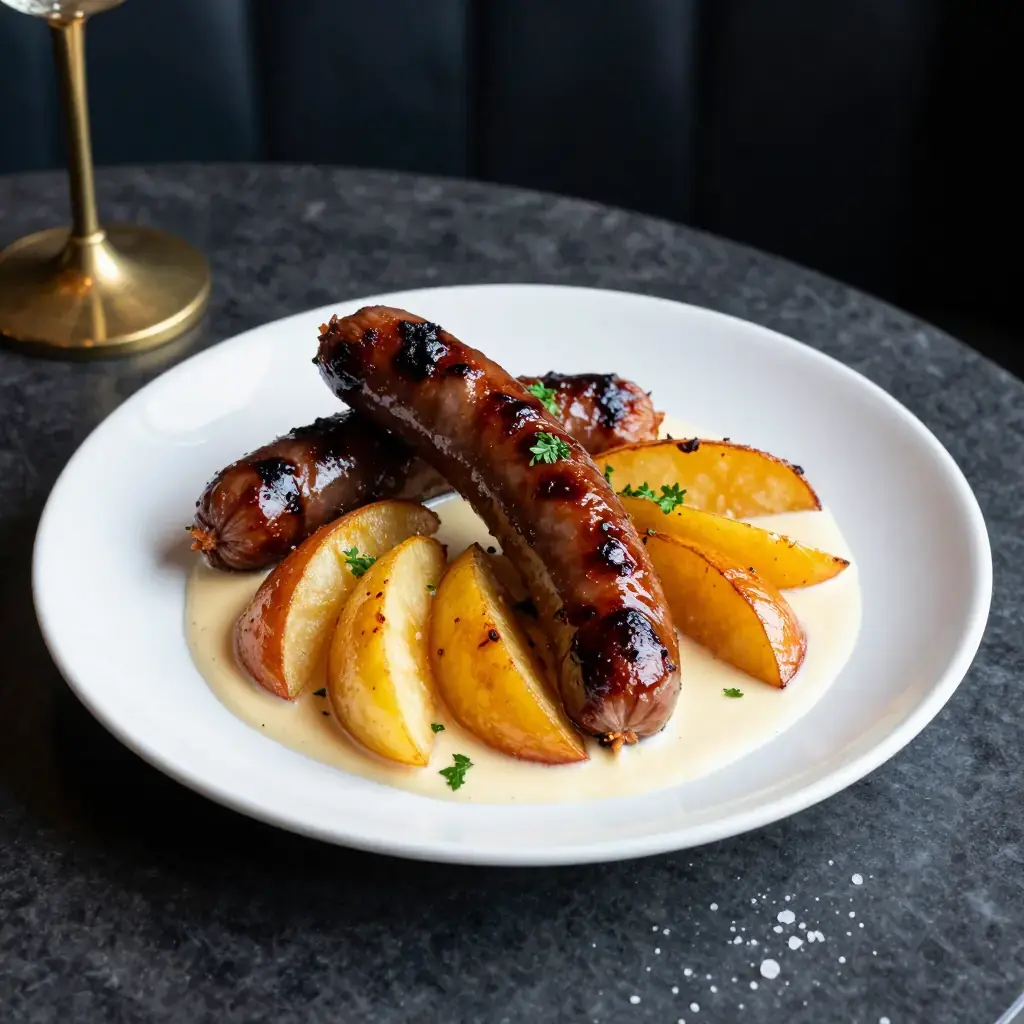
Boudin Noir aux Pommes
Boudin noir, France's ancient blood sausage, has been prepared since Roman times — it appears in medieval feast records and in Rabelais — and remains one of the most beloved dishes of French brasserie cooking. The combination of iron-rich sausage and sweet-sharp caramelised apples is a classic of charcutier tradition, the fat from the sausage enriching the pan sauce while the apples cut through the intensity.
Serves: 4
Ingredients
- 4 large boudin noir sausages (blood sausages), about 180g (6 oz) each
- 4 eating apples (Granny Smith or Cox), peeled, cored, cut into 8 wedges each
- 3 tbsp (45g) unsalted butter, divided
- 1 tbsp (12g) sugar
- 1 shallot, finely minced
- 80ml (⅓ cup) dry cider or white wine
- 2 tbsp (30ml) crème fraîche
- 1 tsp (5ml) cider vinegar
- Salt and freshly ground black pepper
- Fresh flat-leaf parsley or thyme, to garnish
- Flaky sea salt, to finish
Instructions
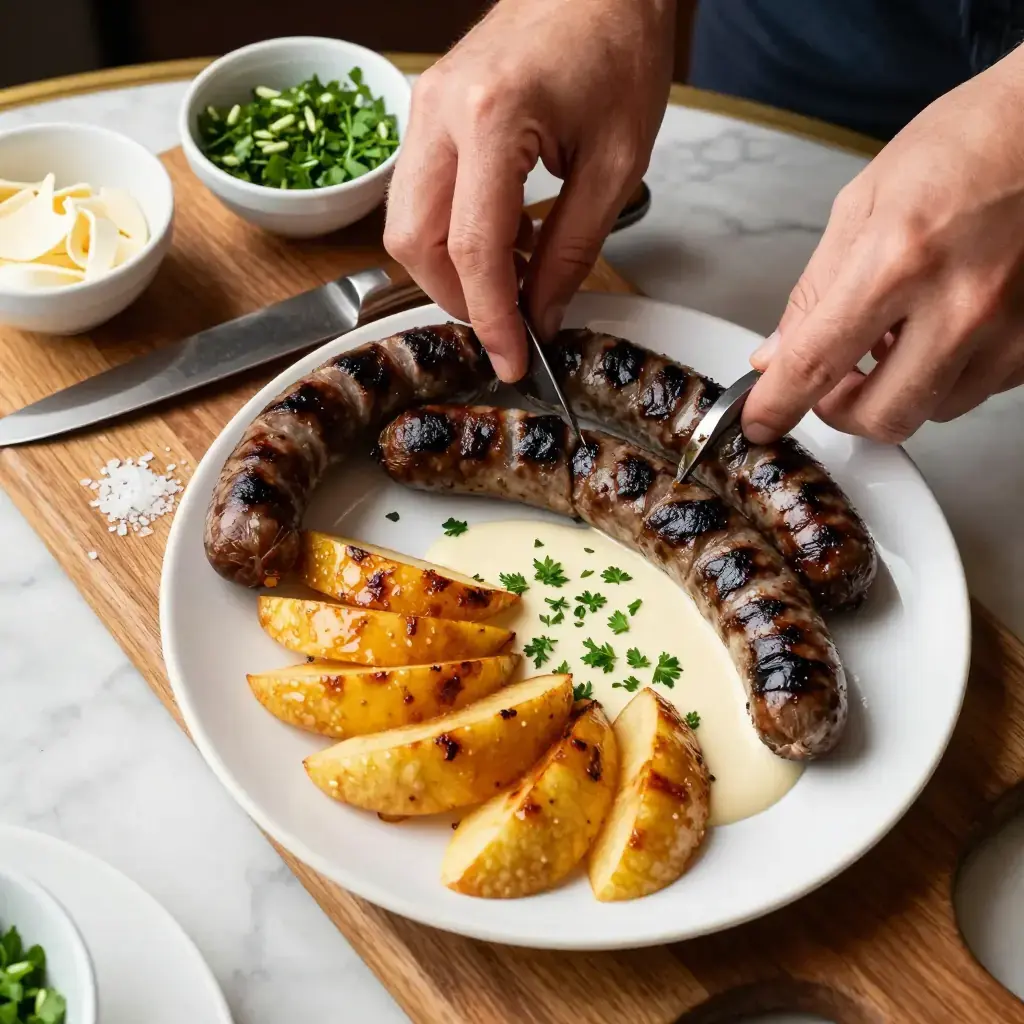
- Score the casing of each boudin noir 2-3 times with a sharp knife to prevent bursting during cooking.
- Melt 2 tbsp butter in a large heavy skillet over medium-high heat. When foam subsides, add apple wedges in a single layer. Sprinkle with sugar and cook undisturbed 3 minutes until golden underneath; turn and cook 2-3 minutes more until caramelised and just tender. Transfer apples to a warm plate.
- In the same pan over medium heat, add remaining butter. Place boudin noir in pan and cook 3-4 minutes per side, turning gently (the casing is delicate) until skin is lightly crisped and heated through — the interior should be hot but the sausage should hold its shape.
- Remove sausages to warmed plates. Add shallot to pan and cook 1 minute. Deglaze with cider, scraping up fond; reduce by half (about 2 minutes). Stir in crème fraîche and vinegar; simmer 1 minute. Season.
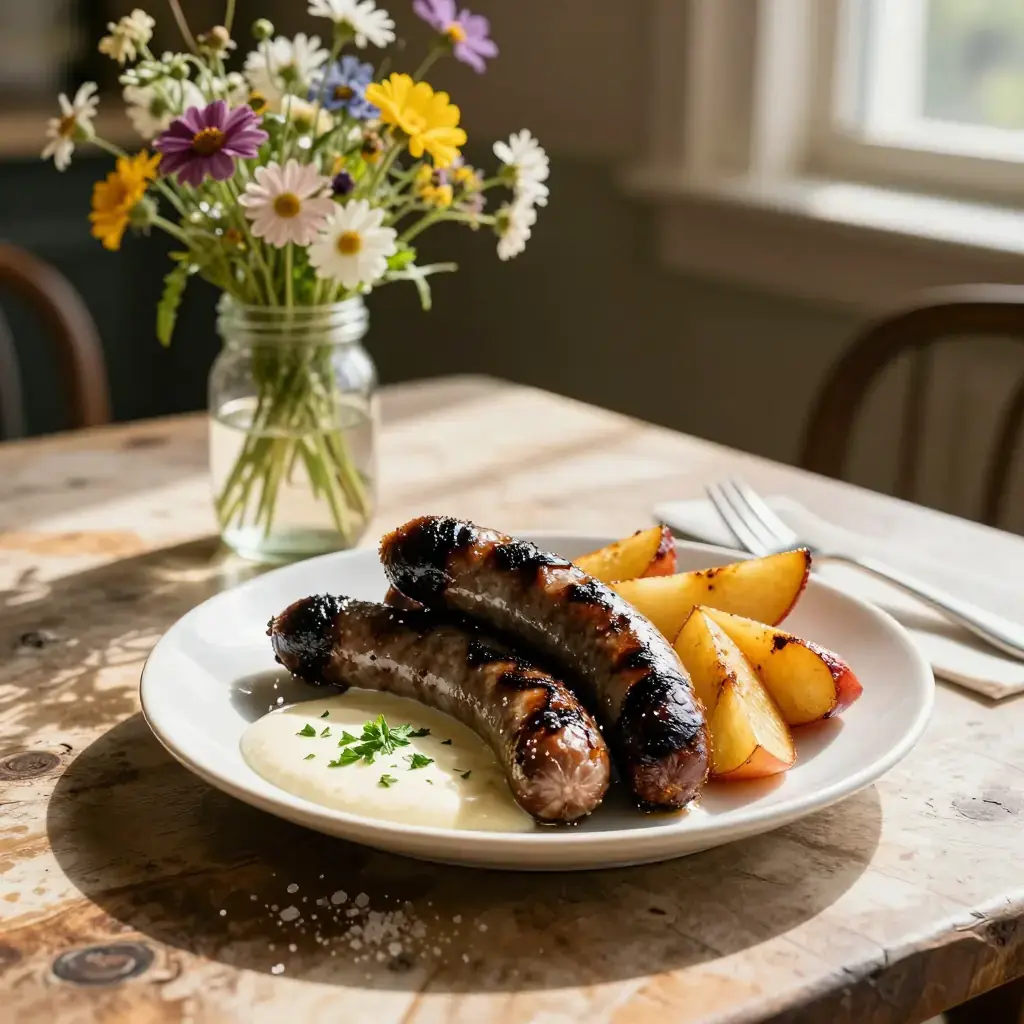
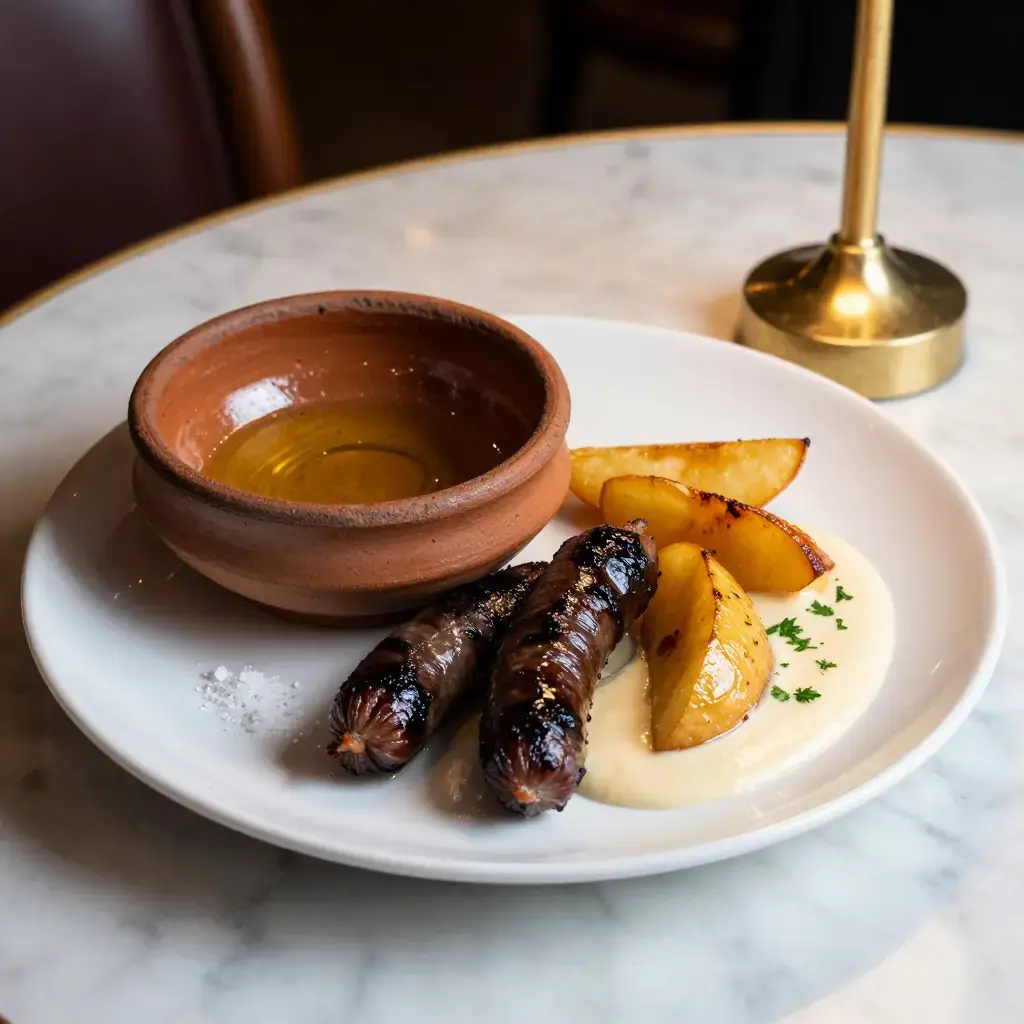
- Arrange apple wedges alongside sausage on each plate. Spoon pan sauce over, garnish with parsley, and finish with a pinch of flaky salt.
Cook's Notes: Boudin noir is sold at French charcuteries, many specialty butchers, and online. Do not cook it at too high a heat — the high blood content makes it prone to bursting and drying out. The dish is traditionally served with mashed potato or a green salad of bitter leaves to balance the richness.
All Revisions
generated
# Boudin Noir aux Pommes Boudin noir, France's ancient blood sausage, has been prepared since Roman times — it appears in medieval feast records and in Rabelais — and remains one of the most beloved dishes of French brasserie cooking. The combination of iron-rich sausage and sweet-sharp caramelised apples is a classic of charcutier tradition, the fat from the sausage enriching the pan sauce while the apples cut through the intensity. Serves: 4 ## Ingredients - 4 large boudin noir sausages (blood sausages), about 180g (6 oz) each - 4 eating apples (Granny Smith or Cox), peeled, cored, cut into 8 wedges each - 3 tbsp (45g) unsalted butter, divided - 1 tbsp (12g) sugar - 1 shallot, finely minced - 80ml (⅓ cup) dry cider or white wine - 2 tbsp (30ml) crème fraîche - 1 tsp (5ml) cider vinegar - Salt and freshly ground black pepper - Fresh flat-leaf parsley or thyme, to garnish - Flaky sea salt, to finish ## Instructions 1. Score the casing of each boudin noir 2-3 times with a sharp knife to prevent bursting during cooking. 2. Melt 2 tbsp butter in a large heavy skillet over medium-high heat. When foam subsides, add apple wedges in a single layer. Sprinkle with sugar and cook undisturbed 3 minutes until golden underneath; turn and cook 2-3 minutes more until caramelised and just tender. Transfer apples to a warm plate. 3. In the same pan over medium heat, add remaining butter. Place boudin noir in pan and cook 3-4 minutes per side, turning gently (the casing is delicate) until skin is lightly crisped and heated through — the interior should be hot but the sausage should hold its shape. 4. Remove sausages to warmed plates. Add shallot to pan and cook 1 minute. Deglaze with cider, scraping up fond; reduce by half (about 2 minutes). Stir in crème fraîche and vinegar; simmer 1 minute. Season. 5. Arrange apple wedges alongside sausage on each plate. Spoon pan sauce over, garnish with parsley, and finish with a pinch of flaky salt. **Cook's Notes:** Boudin noir is sold at French charcuteries, many specialty butchers, and online. Do not cook it at too high a heat — the high blood content makes it prone to bursting and drying out. The dish is traditionally served with mashed potato or a green salad of bitter leaves to balance the richness.Images

Tags
- dinner-party
- fall
- french
- historical
- indulgent
- offal