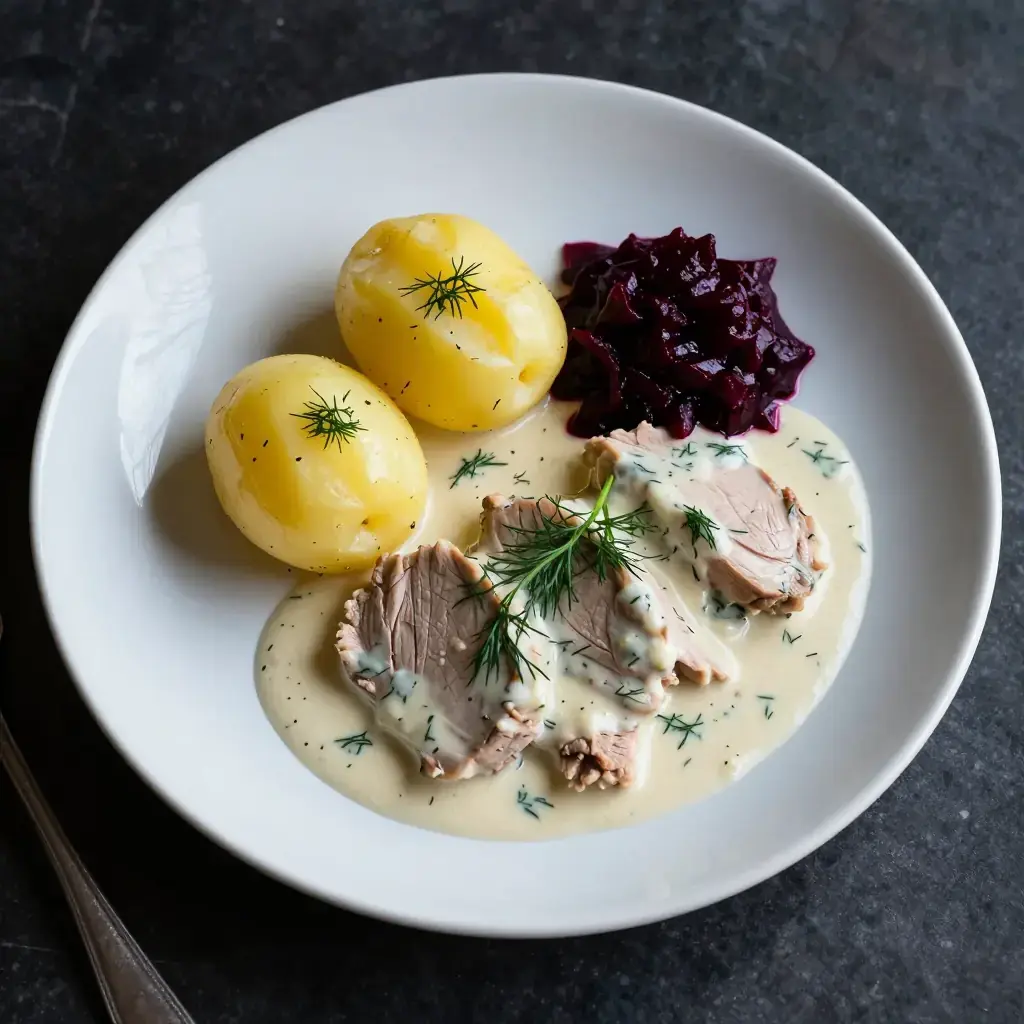
Dillkött
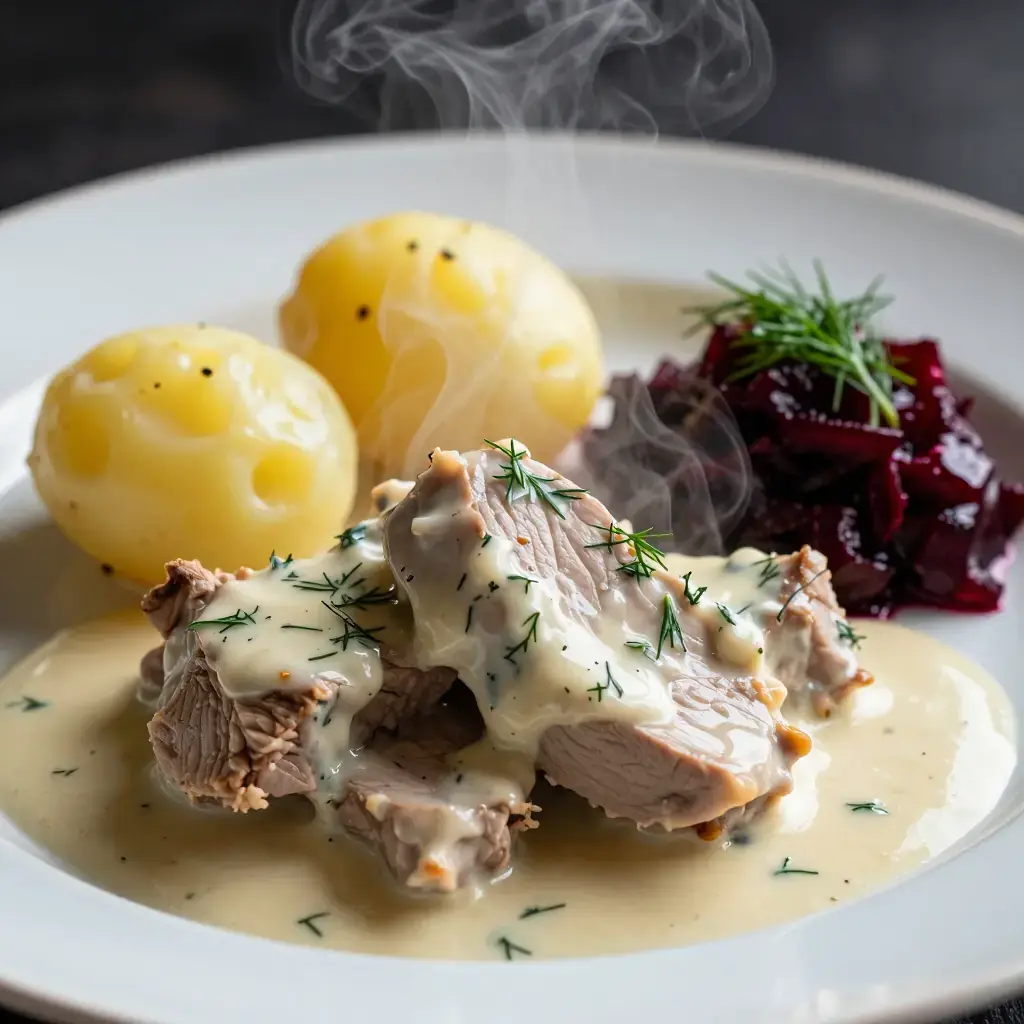
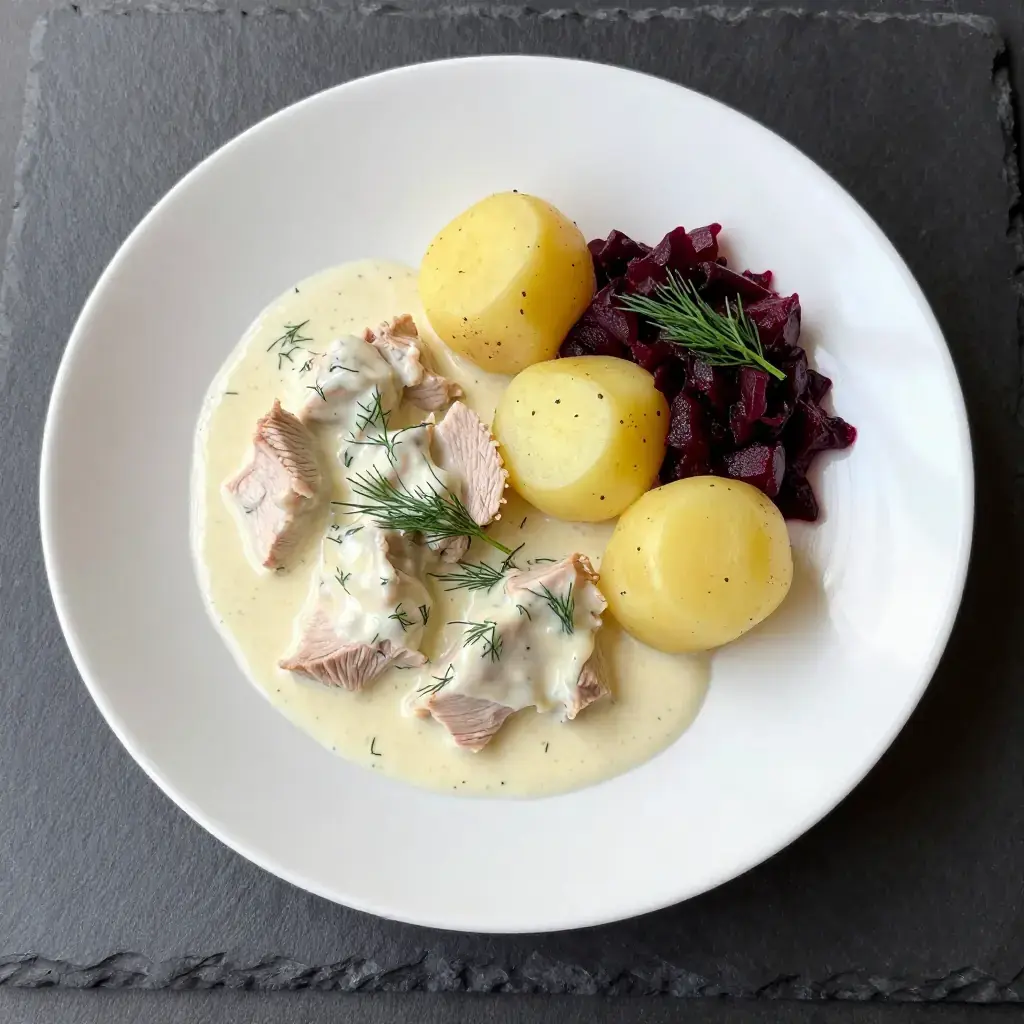
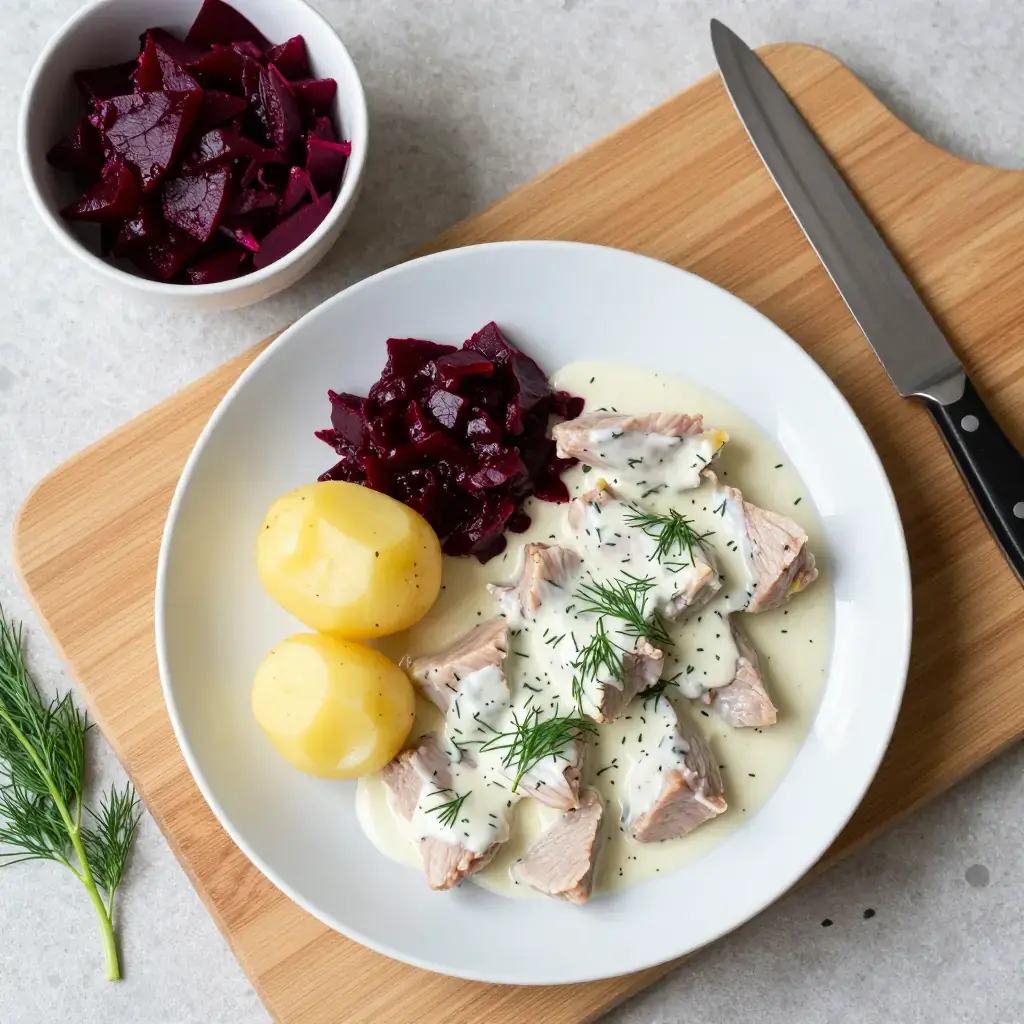
Dillkött — literally "dill meat" — is a cornerstone of Swedish husmanskost, the honest home cooking that Swedes regard with the same reverence the French apply to cuisine bourgeoise. Tender veal simmered in broth until it is yielding and pale, then napped in a bright, fresh dill velouté, it is restorative and deeply comforting. Traditionally served on a Thursday alongside boiled potatoes and pickled beetroot.
Serves: 4
Ingredients
Braised Veal
- 1kg (2¼ lb) bone-in veal shoulder or breast, cut into 5cm (2 in) chunks
- 1 yellow onion, halved
- 2 carrots, roughly chopped
- 2 celery stalks, roughly chopped
- 1 bay leaf
- 8 black peppercorns
- 1 tsp salt
- 1.5 litres (6 cups) cold water
Dill Sauce
- 40g (3 tbsp) unsalted butter
- 40g (5 tbsp) plain flour
- 600ml (2½ cups) strained veal cooking broth
- 120ml (½ cup) single cream
- 1 tbsp (15ml) white wine vinegar or lemon juice
- 1 tsp caster sugar
- Large bunch of fresh dill, fronds only, roughly chopped (about 30g / 1 oz)
- Salt and white pepper to taste
To Serve
- 600g (1¼ lb) small waxy potatoes, boiled
- Pickled beetroot
Instructions
- Place the veal in a large pot with the onion, carrots, celery, bay leaf, peppercorns, and salt. Cover with cold water. Bring slowly to a boil, skimming any grey foam from the surface over the first 10 minutes.
- Reduce heat to a gentle simmer. Cook, partially covered, for 1 hour 30 minutes to 2 hours until the veal is completely tender when pierced with a fork. Strain and reserve 600ml (2½ cups) of the broth. Discard the vegetables.
- Make the dill sauce: melt butter in a saucepan over medium heat. Whisk in the flour and cook, stirring, for 2 minutes — do not let it colour. Gradually whisk in the warm broth, a ladleful at a time, until smooth and thickened. Simmer 5 minutes.
- Stir in the cream, vinegar, and sugar. Season with salt and white pepper. The sauce should be velvety and slightly tangy. Add the chopped dill and stir through.
- Return the cooked veal to the pan and fold gently to coat in the sauce. Warm through on low heat for 5 minutes.
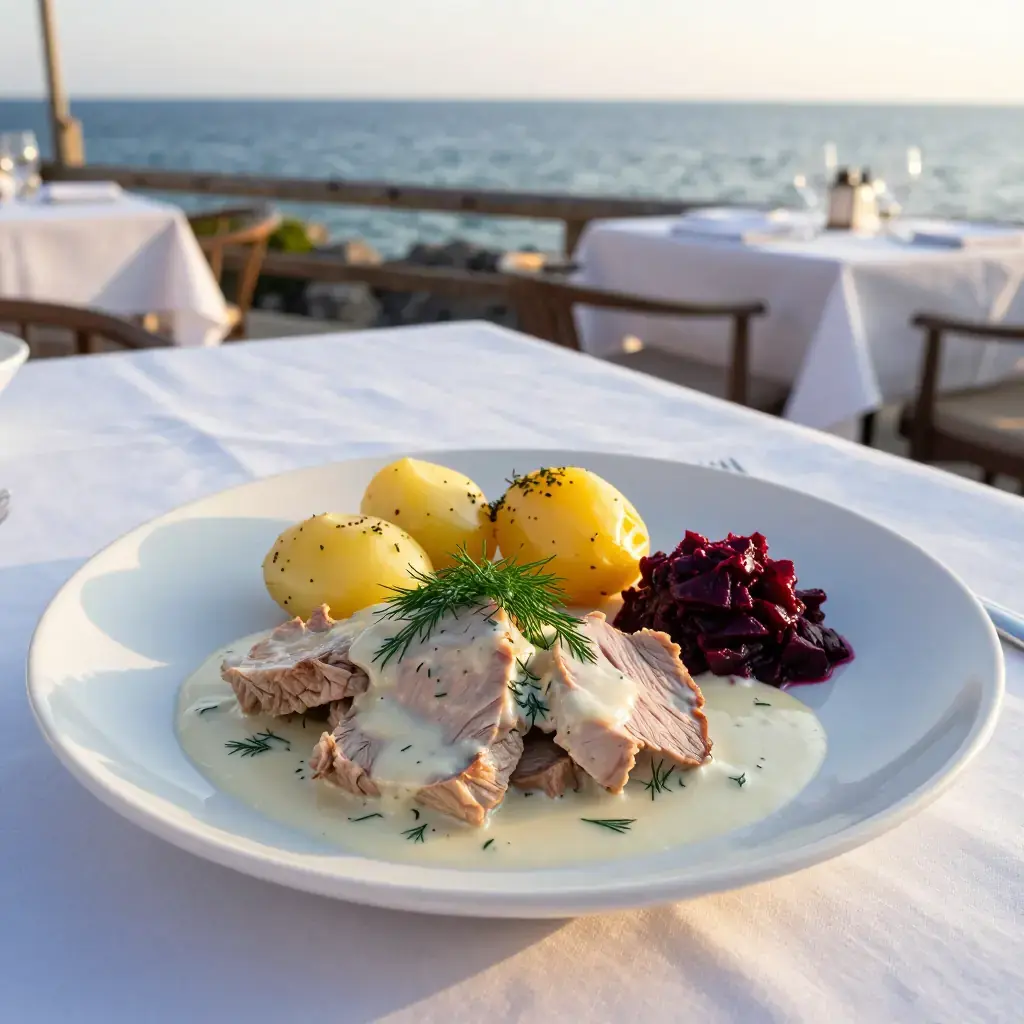
- Serve with boiled potatoes and pickled beetroot.
Cook's Notes: Do not add the dill until just before serving — prolonged heat turns it khaki and bitter. The broth from cooking the veal is excellent strained and refrigerated for later use as the base for other Swedish soups.
All Revisions
generated
# Dillkött Dillkött — literally "dill meat" — is a cornerstone of Swedish husmanskost, the honest home cooking that Swedes regard with the same reverence the French apply to cuisine bourgeoise. Tender veal simmered in broth until it is yielding and pale, then napped in a bright, fresh dill velouté, it is restorative and deeply comforting. Traditionally served on a Thursday alongside boiled potatoes and pickled beetroot. Serves: 4 ## Ingredients ### Braised Veal - 1kg (2¼ lb) bone-in veal shoulder or breast, cut into 5cm (2 in) chunks - 1 yellow onion, halved - 2 carrots, roughly chopped - 2 celery stalks, roughly chopped - 1 bay leaf - 8 black peppercorns - 1 tsp salt - 1.5 litres (6 cups) cold water ### Dill Sauce - 40g (3 tbsp) unsalted butter - 40g (5 tbsp) plain flour - 600ml (2½ cups) strained veal cooking broth - 120ml (½ cup) single cream - 1 tbsp (15ml) white wine vinegar or lemon juice - 1 tsp caster sugar - Large bunch of fresh dill, fronds only, roughly chopped (about 30g / 1 oz) - Salt and white pepper to taste ### To Serve - 600g (1¼ lb) small waxy potatoes, boiled - Pickled beetroot ## Instructions 1. Place the veal in a large pot with the onion, carrots, celery, bay leaf, peppercorns, and salt. Cover with cold water. Bring slowly to a boil, skimming any grey foam from the surface over the first 10 minutes. 2. Reduce heat to a gentle simmer. Cook, partially covered, for 1 hour 30 minutes to 2 hours until the veal is completely tender when pierced with a fork. Strain and reserve 600ml (2½ cups) of the broth. Discard the vegetables. 3. Make the dill sauce: melt butter in a saucepan over medium heat. Whisk in the flour and cook, stirring, for 2 minutes — do not let it colour. Gradually whisk in the warm broth, a ladleful at a time, until smooth and thickened. Simmer 5 minutes. 4. Stir in the cream, vinegar, and sugar. Season with salt and white pepper. The sauce should be velvety and slightly tangy. Add the chopped dill and stir through. 5. Return the cooked veal to the pan and fold gently to coat in the sauce. Warm through on low heat for 5 minutes. 6. Serve with boiled potatoes and pickled beetroot. **Cook's Notes:** Do not add the dill until just before serving — prolonged heat turns it khaki and bitter. The broth from cooking the veal is excellent strained and refrigerated for later use as the base for other Swedish soups.Images
Tags
- braised
- comfort-food
- dinner
- fresh-herbs
- root-vegetables
- swedish
- winter