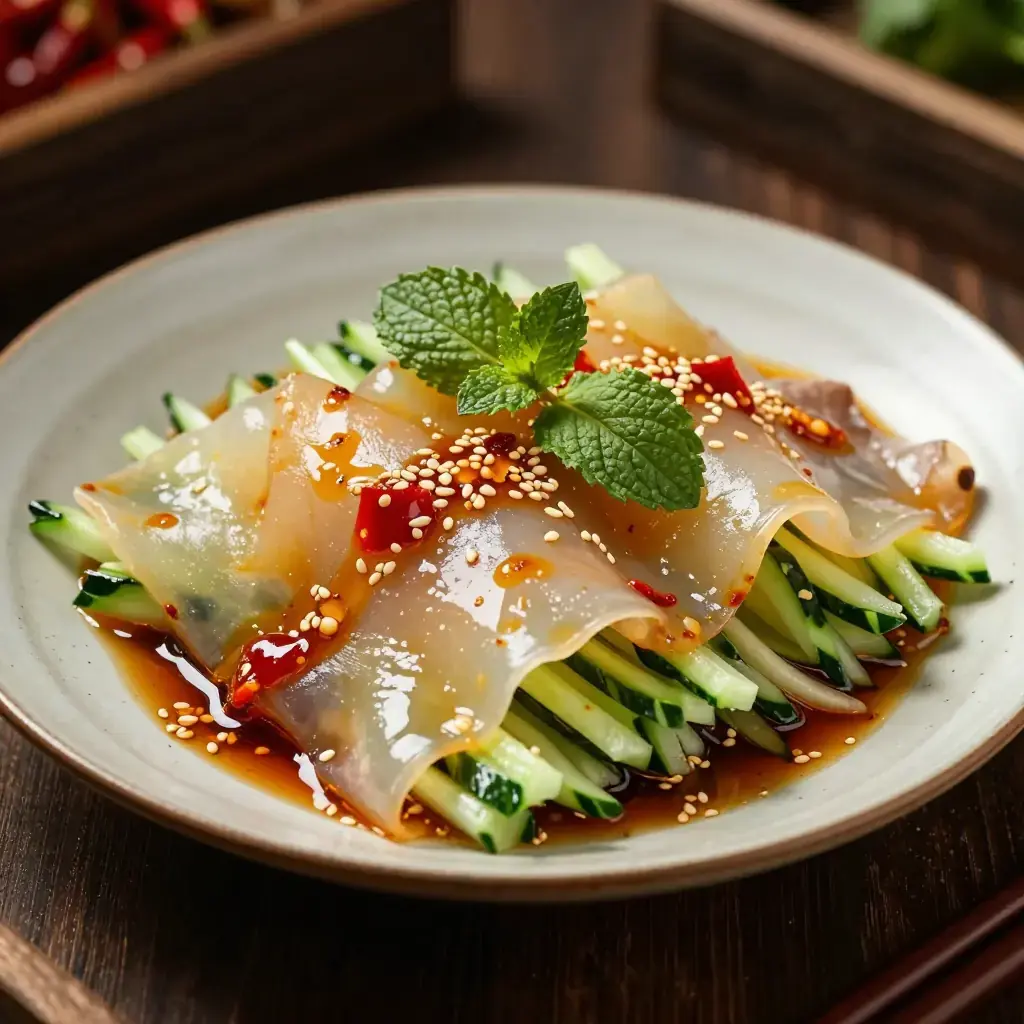
Yunnan Sheng Pi (生皮)
Sheng pi is the most daring dish in the Yunnan repertoire — a traditional Bai-ethnic preparation of raw pork skin and meat eaten only in Dali and only during festival seasons when the slaughtered pig is treated with intense fire to kill surface pathogens. The cured skin is shaved thin and dressed with raw garlic, vinegar, dried chilli, and fresh herbs. It is an ancient dish connected to ritual, and arguably the most authentic expression of Yunnan's indigenous food culture.
Serves: 4 (as a cold appetiser)
Ingredients
- 400g (14 oz) very fresh pork back skin and loin, fire-cured (or use thinly sliced poached pork belly as a safe home substitute)
- 4 garlic cloves, crushed to paste
- 2 tbsp (30ml) aged rice vinegar or apple cider vinegar
- 1 tbsp (15ml) light soy sauce
- 1 tbsp (15ml) sesame oil
- 1–2 tsp (3–6g) dried Yunnan chilli flakes, to taste
- 1 tsp (4g) sugar
- 30g (1 oz) fresh coriander, roughly chopped
- 20g (¾ oz) fresh mint leaves
- 1 small cucumber, julienned
- 2 spring onions, shredded
- 1 tsp (3g) toasted sesame seeds
Instructions
- Traditional method: the pork skin is singed over an open flame until the outer layer chars (this kills surface bacteria), then scraped clean. The meat is then shaved paper-thin using a very sharp cleaver.
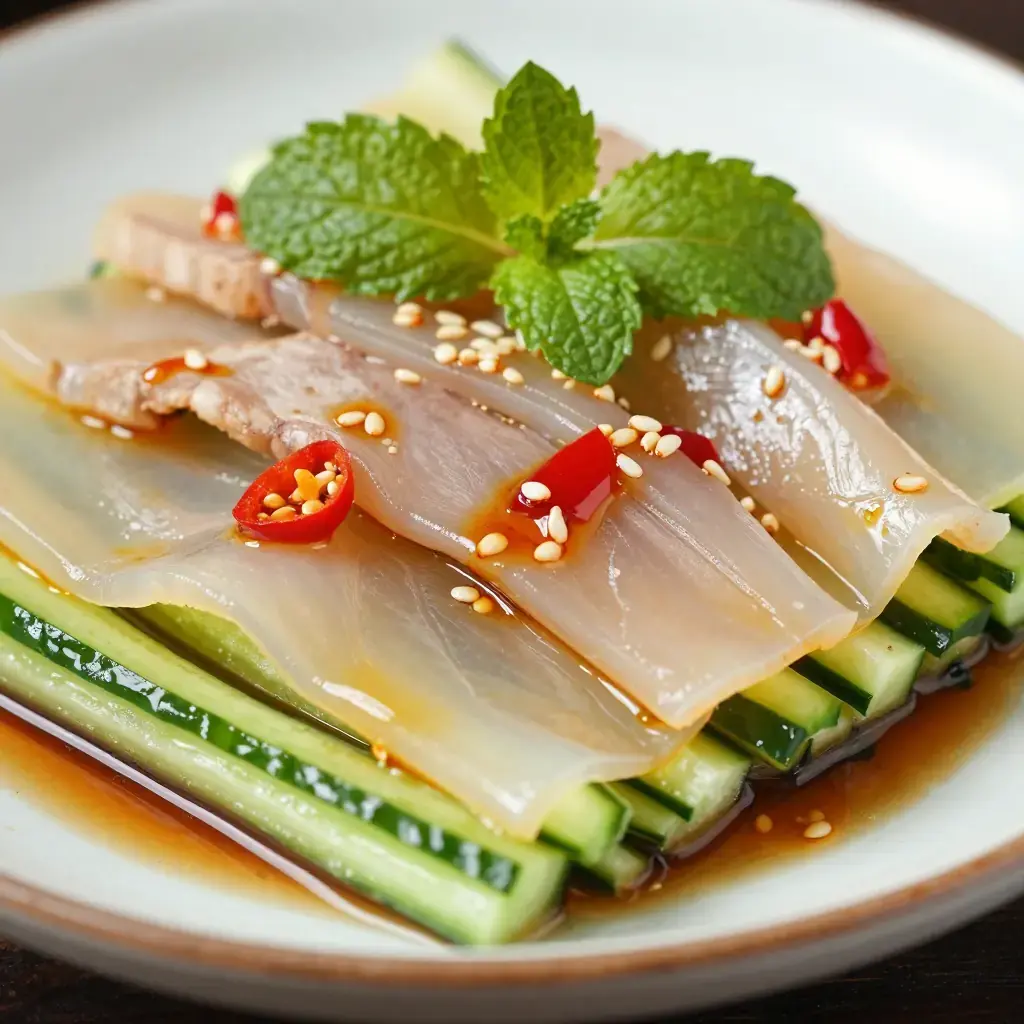
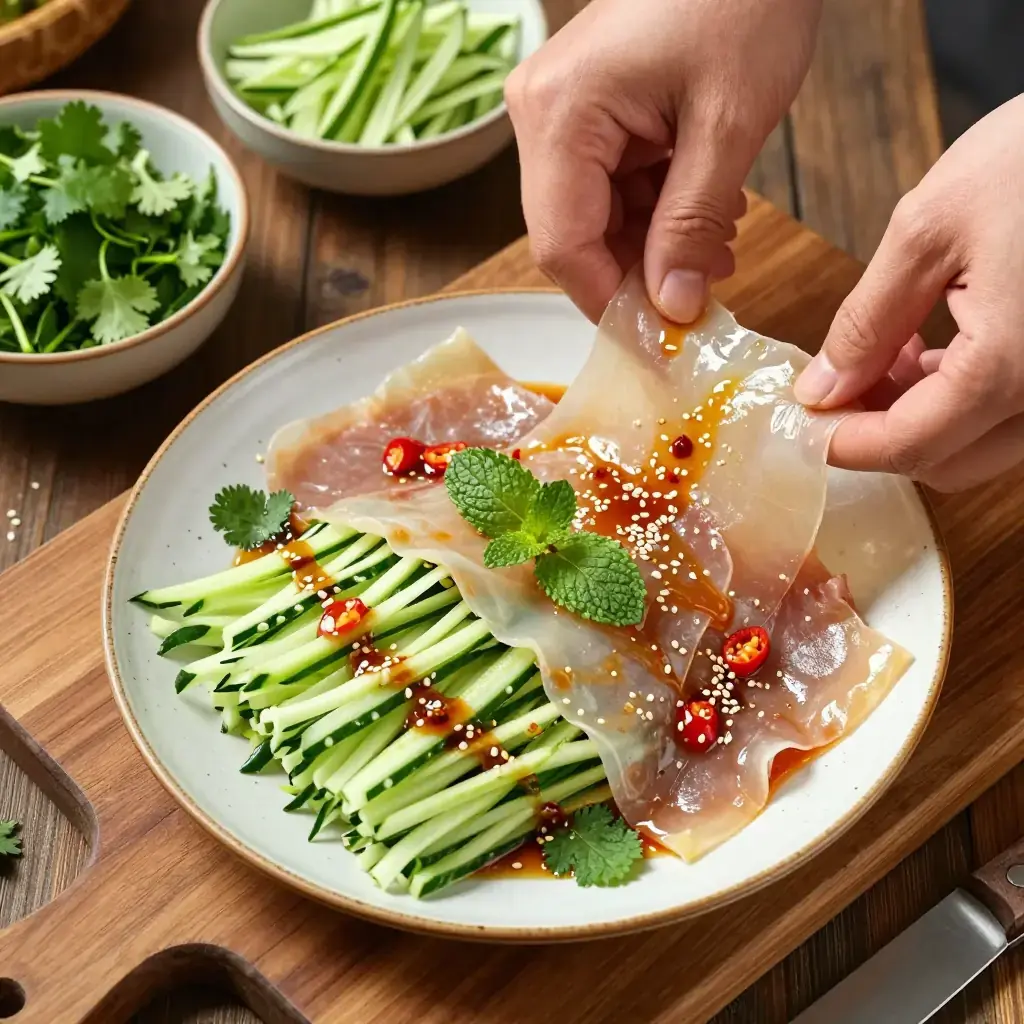
- Home adaptation: poach pork belly in unsalted water for 20 minutes until just cooked through but still slightly pink at the centre. Cool in ice water. Slice as thinly as possible (a mandoline helps) — aim for near-translucent sheets.
- Arrange pork slices on a chilled plate. Lay cucumber julienne and shredded spring onion over the top.
- In a small bowl, whisk garlic paste, rice vinegar, soy sauce, sesame oil, sugar, and chilli flakes into a dressing. Adjust tartness and heat to taste.
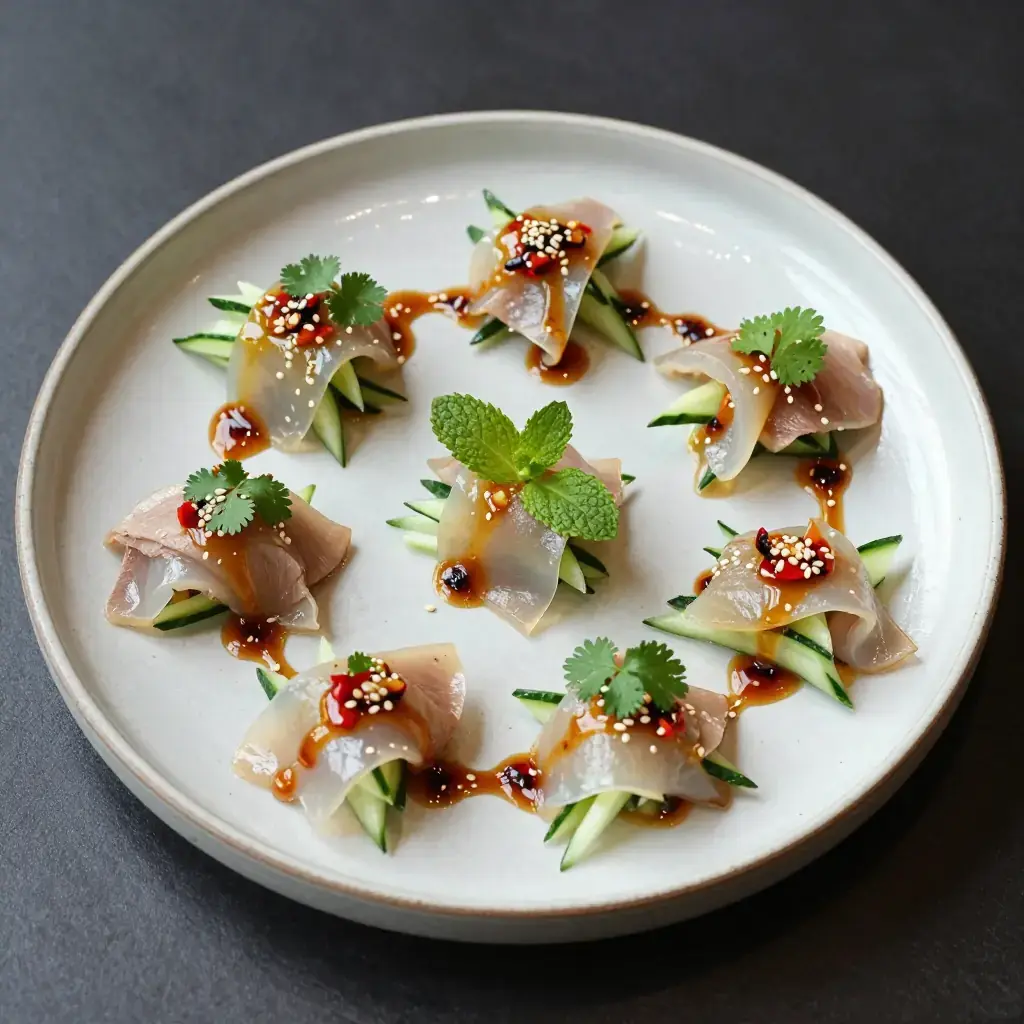
- Spoon dressing generously over the pork. Scatter coriander, mint, and sesame seeds.
- Toss briefly at the table and serve immediately as a cold starter.
Cook's Notes: In Dali, traditional sheng pi is eaten truly raw after fire-curing — do not attempt this without sourcing pork from a trusted supplier who follows fire-curing protocols. The poached version delivered here captures the flavours safely without the ritual risk.
All Revisions
generated
# Yunnan Sheng Pi (生皮) Sheng pi is the most daring dish in the Yunnan repertoire — a traditional Bai-ethnic preparation of raw pork skin and meat eaten only in Dali and only during festival seasons when the slaughtered pig is treated with intense fire to kill surface pathogens. The cured skin is shaved thin and dressed with raw garlic, vinegar, dried chilli, and fresh herbs. It is an ancient dish connected to ritual, and arguably the most authentic expression of Yunnan's indigenous food culture. Serves: 4 (as a cold appetiser) ## Ingredients - 400g (14 oz) very fresh pork back skin and loin, fire-cured (or use thinly sliced poached pork belly as a safe home substitute) - 4 garlic cloves, crushed to paste - 2 tbsp (30ml) aged rice vinegar or apple cider vinegar - 1 tbsp (15ml) light soy sauce - 1 tbsp (15ml) sesame oil - 1–2 tsp (3–6g) dried Yunnan chilli flakes, to taste - 1 tsp (4g) sugar - 30g (1 oz) fresh coriander, roughly chopped - 20g (¾ oz) fresh mint leaves - 1 small cucumber, julienned - 2 spring onions, shredded - 1 tsp (3g) toasted sesame seeds ## Instructions 1. Traditional method: the pork skin is singed over an open flame until the outer layer chars (this kills surface bacteria), then scraped clean. The meat is then shaved paper-thin using a very sharp cleaver. 2. Home adaptation: poach pork belly in unsalted water for 20 minutes until just cooked through but still slightly pink at the centre. Cool in ice water. Slice as thinly as possible (a mandoline helps) — aim for near-translucent sheets. 3. Arrange pork slices on a chilled plate. Lay cucumber julienne and shredded spring onion over the top. 4. In a small bowl, whisk garlic paste, rice vinegar, soy sauce, sesame oil, sugar, and chilli flakes into a dressing. Adjust tartness and heat to taste. 5. Spoon dressing generously over the pork. Scatter coriander, mint, and sesame seeds. 6. Toss briefly at the table and serve immediately as a cold starter. **Cook's Notes:** In Dali, traditional sheng pi is eaten truly raw after fire-curing — do not attempt this without sourcing pork from a trusted supplier who follows fire-curing protocols. The poached version delivered here captures the flavours safely without the ritual risk.Images
Tags
- authentic
- cold-dish
- fresh-herbs
- historical
- raw
- yunnan