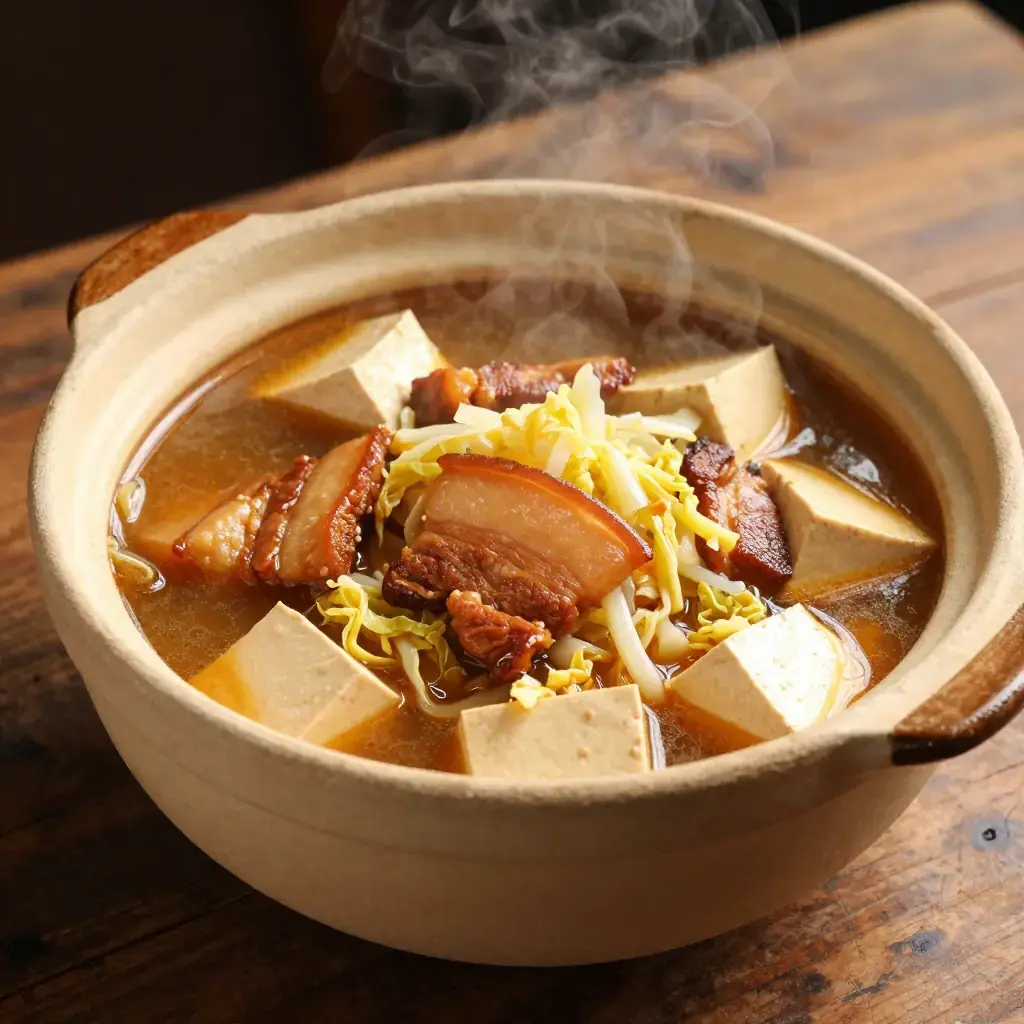
Dongbei Pao Cai Dun Rou Dou Fu (泡菜炖肉豆腐)
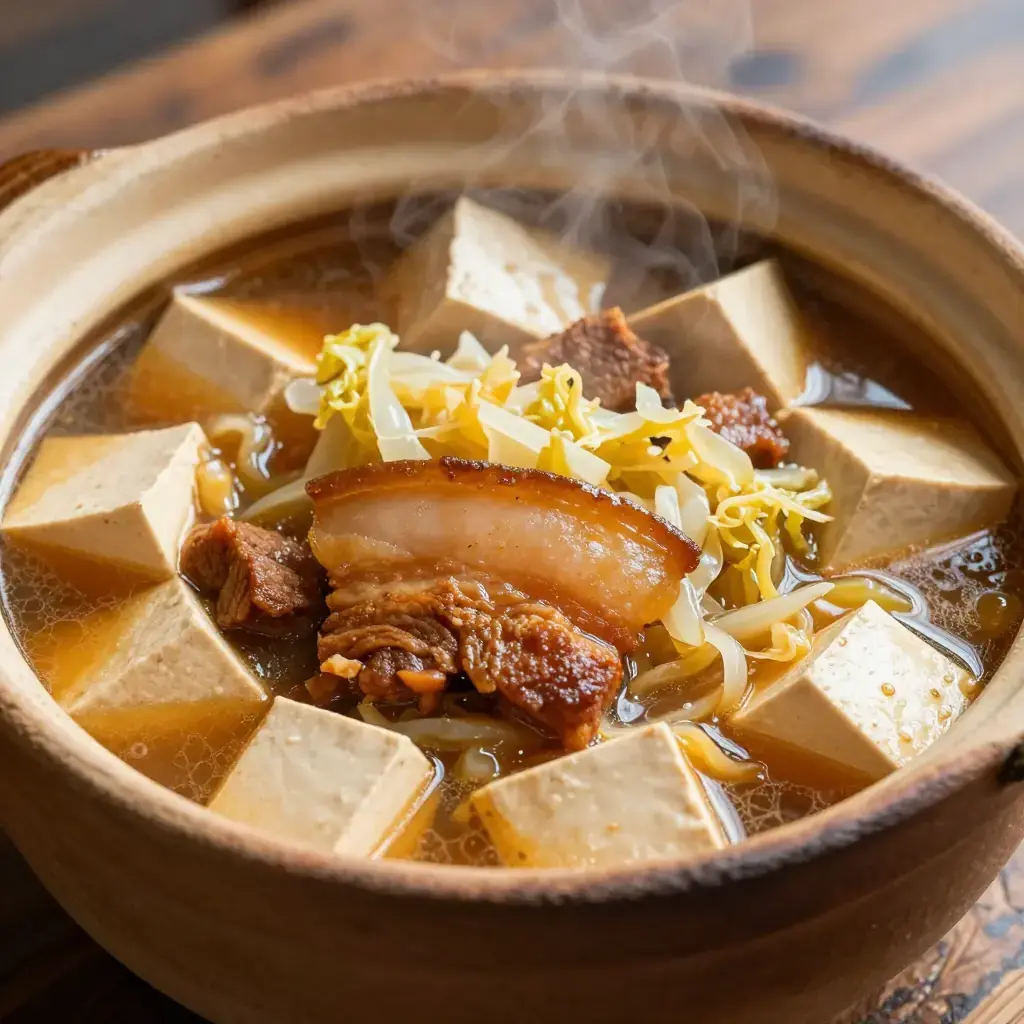
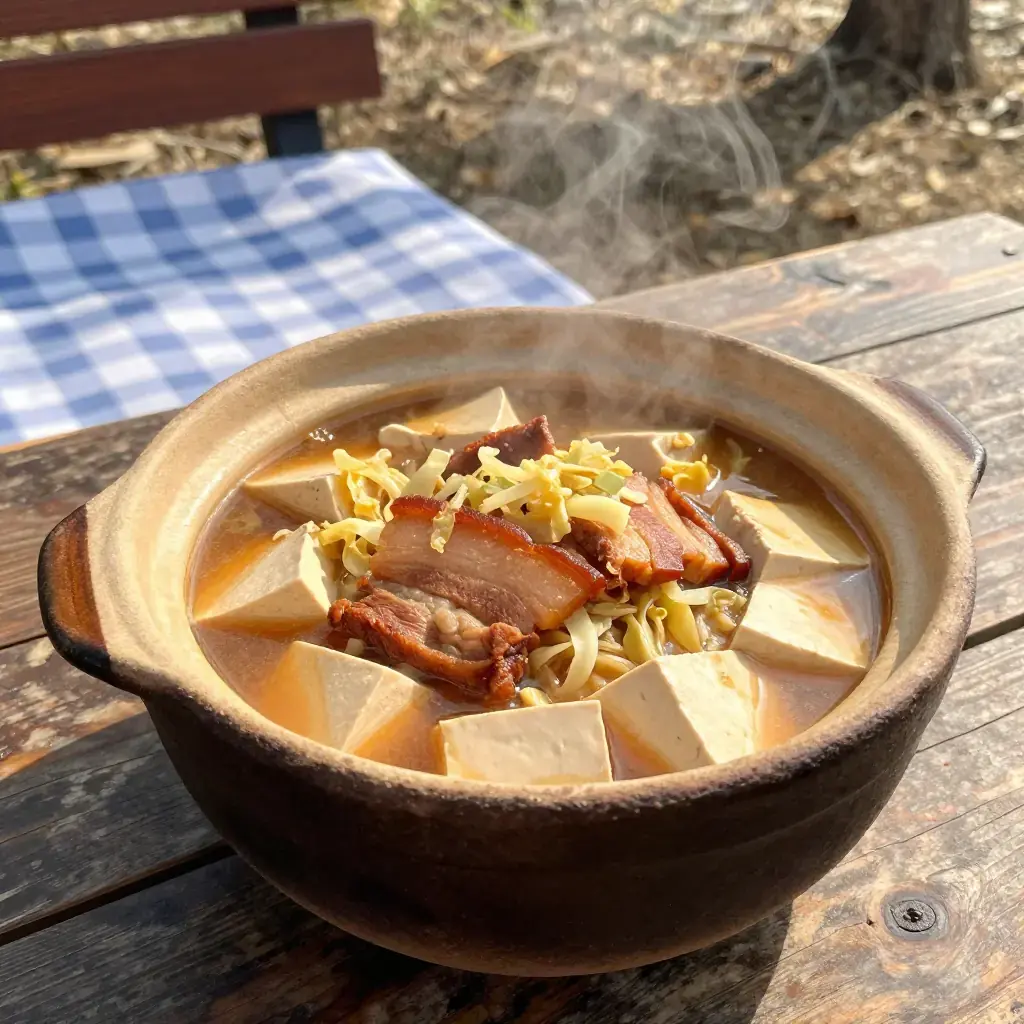
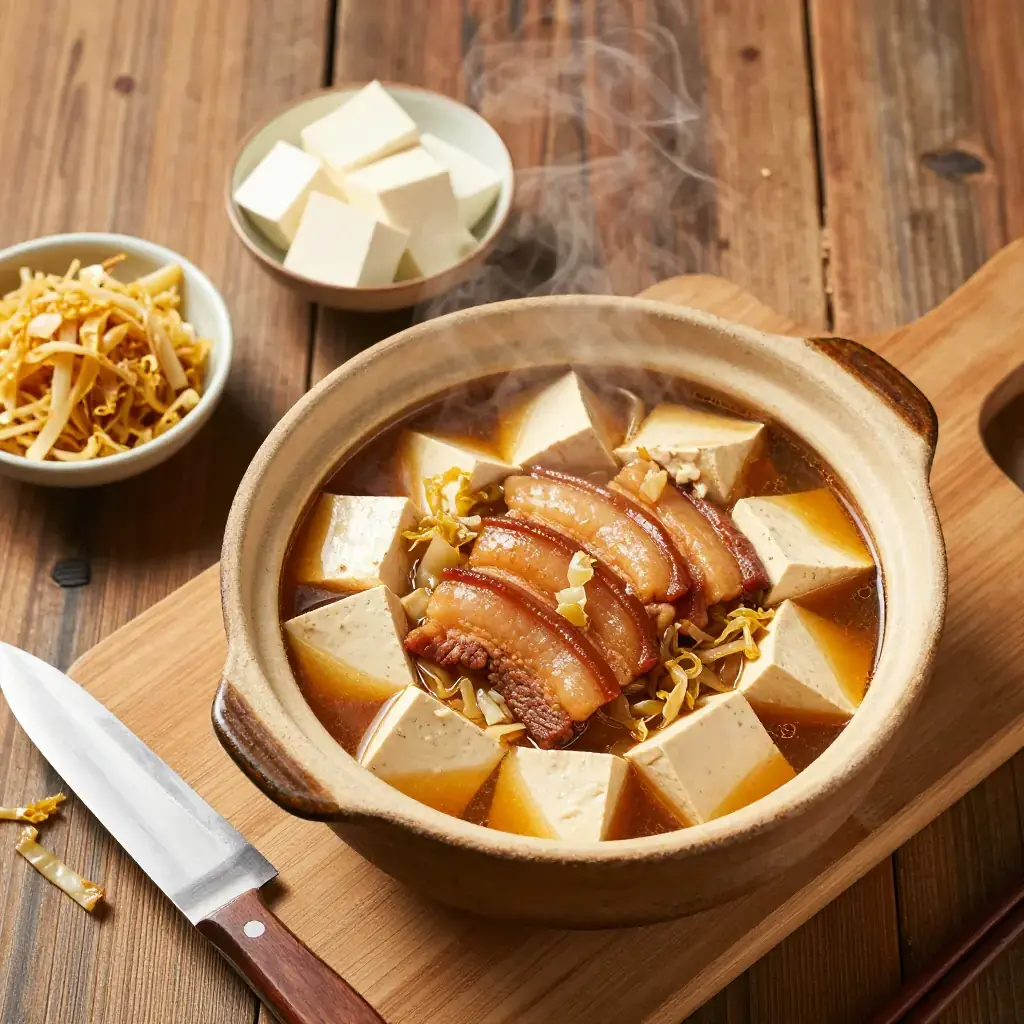
In the bitter winters of Northeast China, suan cai — long-fermented Napa cabbage — is pulled from ceramic crocks to make hearty braises that warm the bones. This household staple pairs the sour, funky cabbage with fatty pork belly and firm tofu, all simmered until the tofu is saturated with the complex broth. It is arguably the truest expression of Dongbei home cooking.
Serves: 4
Ingredients
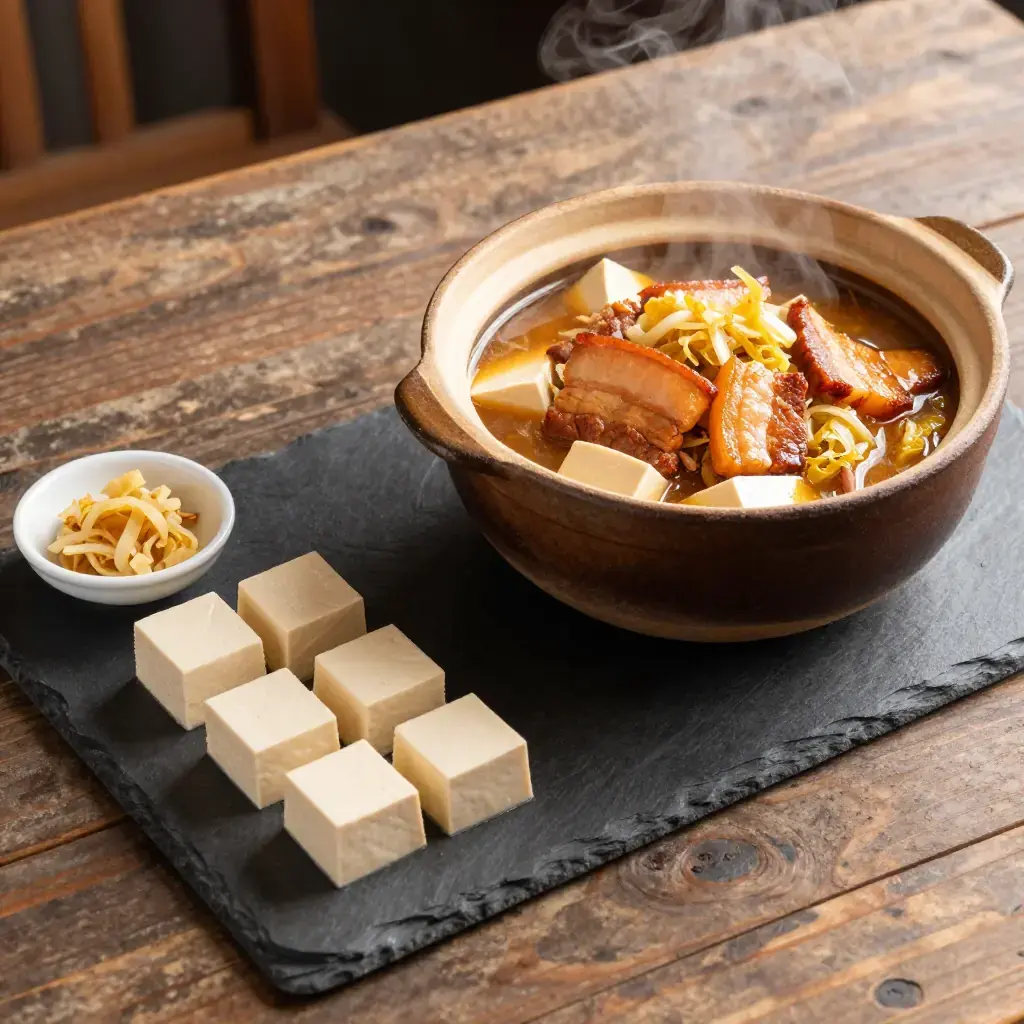
- 400g (14 oz) suan cai (Dongbei fermented Napa cabbage), rinsed and cut into strips
- 300g (10 oz) pork belly, sliced into 4cm (1½-inch) strips
- 400g (14 oz) firm tofu, cut into 3cm (1-inch) cubes
- 2 tbsp (30ml) vegetable oil
- 3 garlic cloves, smashed
- 4 slices fresh ginger
- 2 tbsp (30ml) light soy sauce
- 1 tsp (5ml) dark soy sauce
- 1 tsp (4g) sugar
- 600ml (2½ cups) water or unsalted pork stock
- 2 spring onions, cut into segments
- White pepper to taste
Instructions
- Pat pork belly dry. Heat oil in a heavy pot or Dutch oven over medium-high heat. Add pork and sear until lightly golden, about 4–5 minutes. Remove and set aside.
- In the same pot, add garlic and ginger; stir-fry 30 seconds until fragrant.
- Add the rinsed suan cai and stir-fry 3 minutes to develop flavour and cook off excess moisture.
- Return pork to the pot. Add light soy sauce, dark soy sauce, sugar, and stock. Bring to a boil.
- Nestle tofu cubes gently into the pot. Cover and simmer on low heat for 25–30 minutes until pork is tender and broth has deepened in colour.
- Taste and adjust seasoning. The suan cai should provide most of the salt. Add spring onion segments and a pinch of white pepper. Simmer uncovered 5 minutes more.
- Serve directly from the pot with steamed rice and a splash of the broth spooned over.
Cook's Notes: Rinse the suan cai thoroughly — once or twice if it is very sour — but preserve some tang for the broth. Silken tofu can be used for a softer texture but handle it gently as it breaks apart easily.
All Revisions
generated
# Dongbei Pao Cai Dun Rou Dou Fu (泡菜炖肉豆腐) In the bitter winters of Northeast China, suan cai — long-fermented Napa cabbage — is pulled from ceramic crocks to make hearty braises that warm the bones. This household staple pairs the sour, funky cabbage with fatty pork belly and firm tofu, all simmered until the tofu is saturated with the complex broth. It is arguably the truest expression of Dongbei home cooking. Serves: 4 ## Ingredients - 400g (14 oz) suan cai (Dongbei fermented Napa cabbage), rinsed and cut into strips - 300g (10 oz) pork belly, sliced into 4cm (1½-inch) strips - 400g (14 oz) firm tofu, cut into 3cm (1-inch) cubes - 2 tbsp (30ml) vegetable oil - 3 garlic cloves, smashed - 4 slices fresh ginger - 2 tbsp (30ml) light soy sauce - 1 tsp (5ml) dark soy sauce - 1 tsp (4g) sugar - 600ml (2½ cups) water or unsalted pork stock - 2 spring onions, cut into segments - White pepper to taste ## Instructions 1. Pat pork belly dry. Heat oil in a heavy pot or Dutch oven over medium-high heat. Add pork and sear until lightly golden, about 4–5 minutes. Remove and set aside. 2. In the same pot, add garlic and ginger; stir-fry 30 seconds until fragrant. 3. Add the rinsed suan cai and stir-fry 3 minutes to develop flavour and cook off excess moisture. 4. Return pork to the pot. Add light soy sauce, dark soy sauce, sugar, and stock. Bring to a boil. 5. Nestle tofu cubes gently into the pot. Cover and simmer on low heat for 25–30 minutes until pork is tender and broth has deepened in colour. 6. Taste and adjust seasoning. The suan cai should provide most of the salt. Add spring onion segments and a pinch of white pepper. Simmer uncovered 5 minutes more. 7. Serve directly from the pot with steamed rice and a splash of the broth spooned over. **Cook's Notes:** Rinse the suan cai thoroughly — once or twice if it is very sour — but preserve some tang for the broth. Silken tofu can be used for a softer texture but handle it gently as it breaks apart easily.Images
Tags
- braised
- comfort-food
- dinner
- dongbei
- fermented
- one-pot
- tofu
- winter