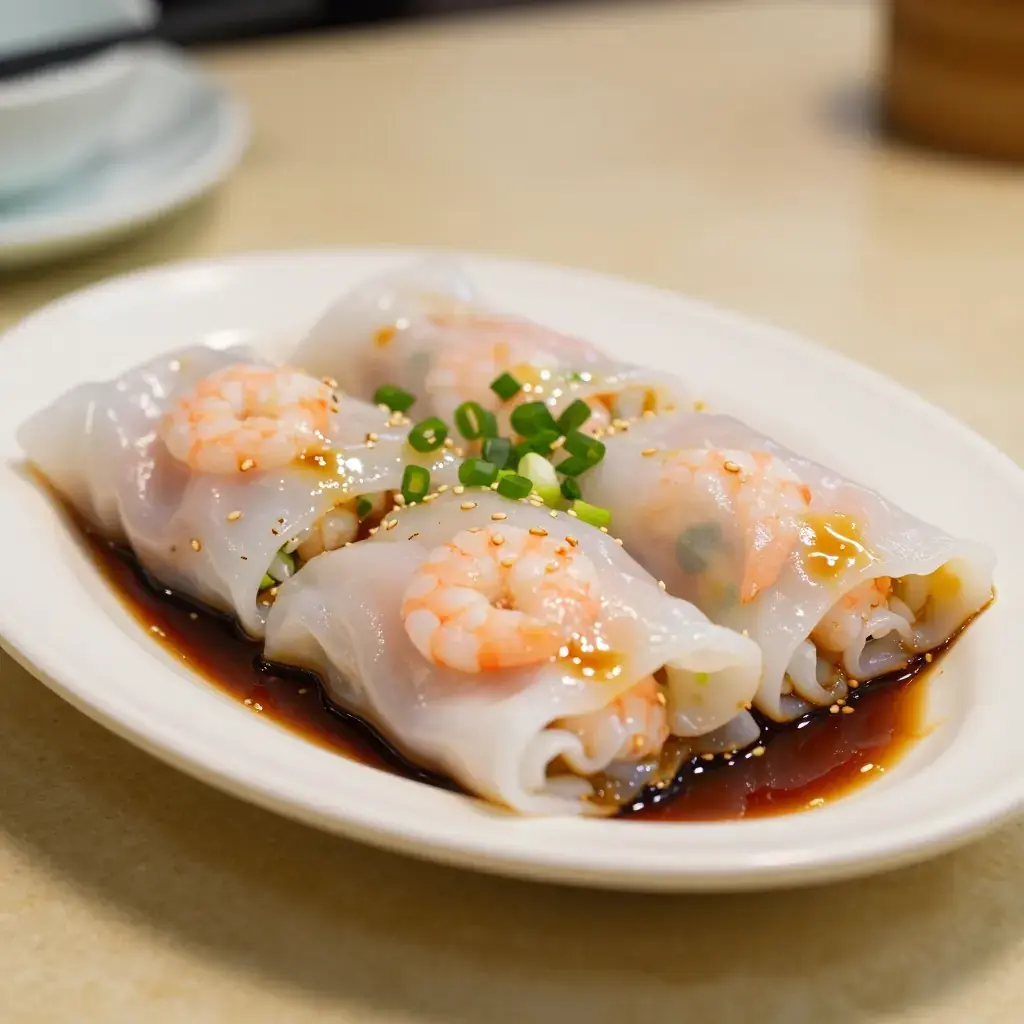
Cheong Fun
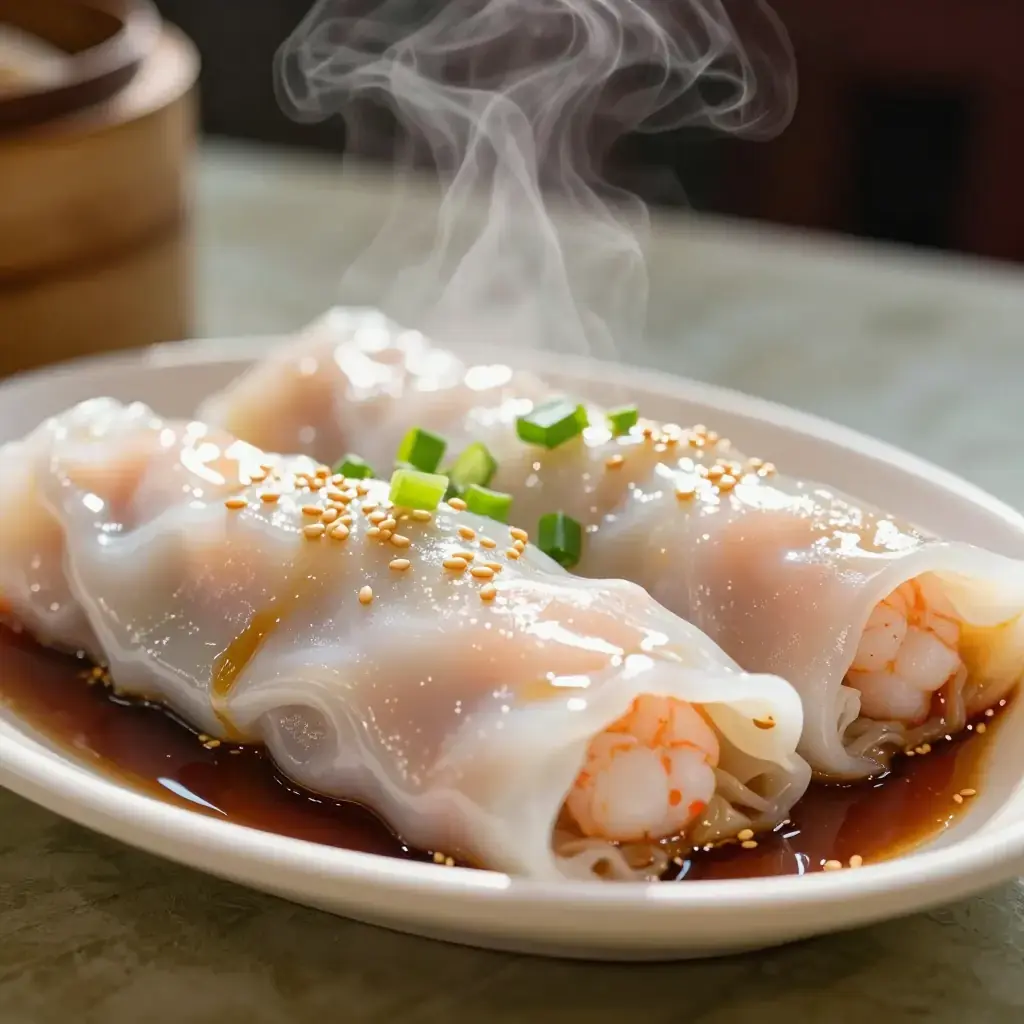
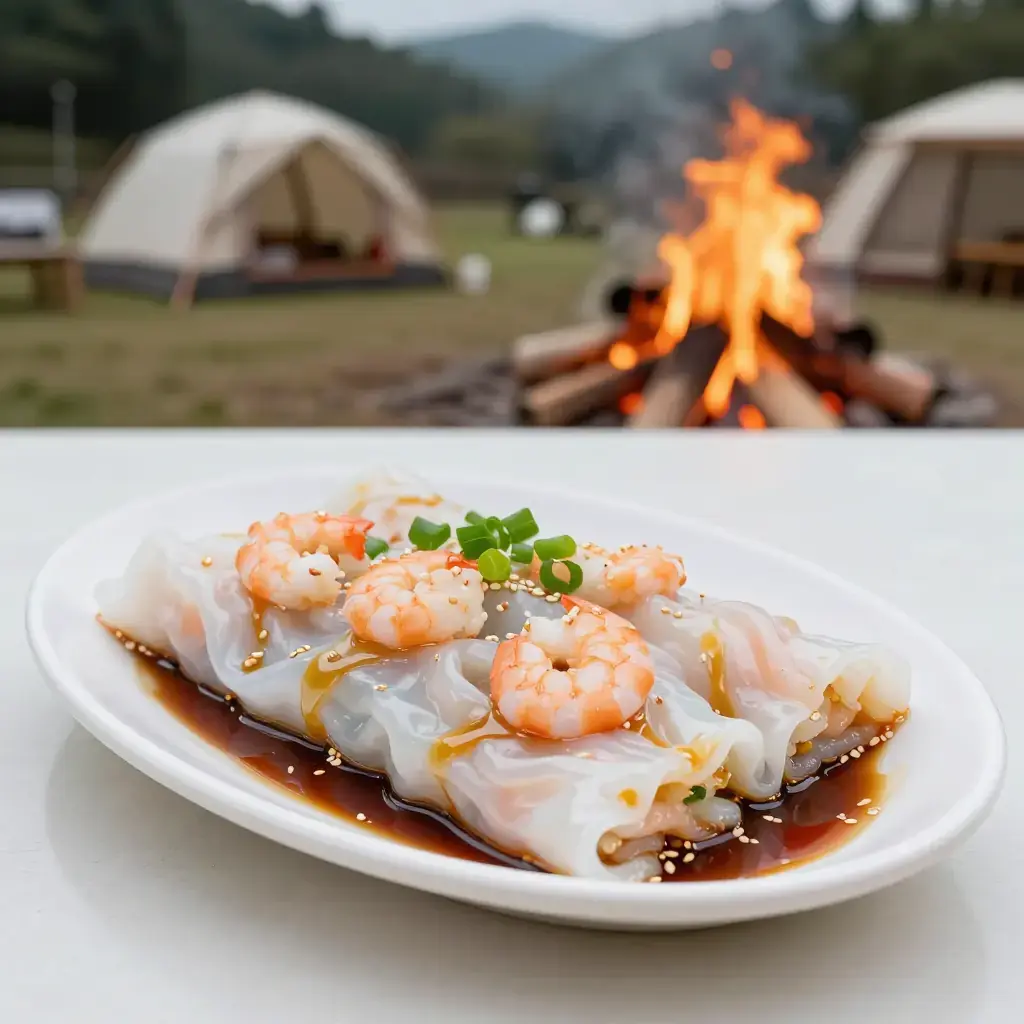
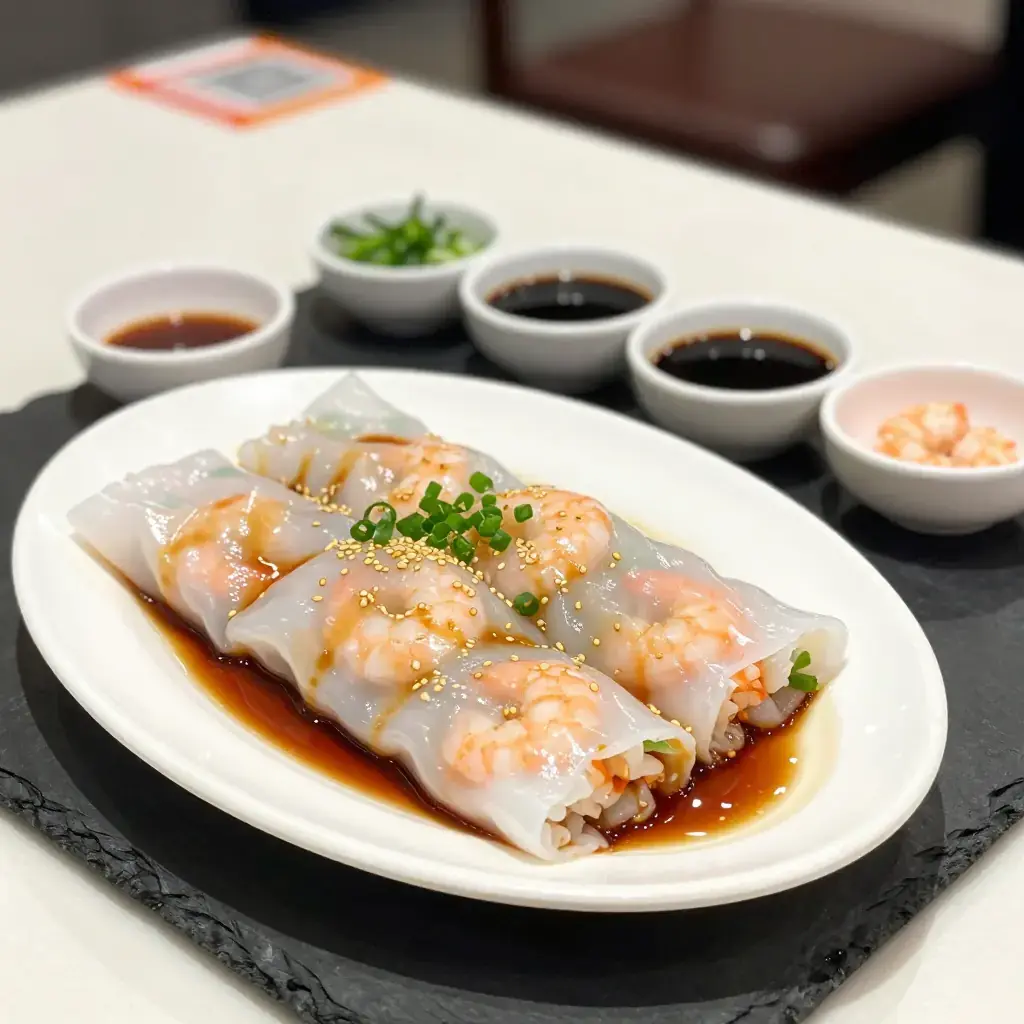
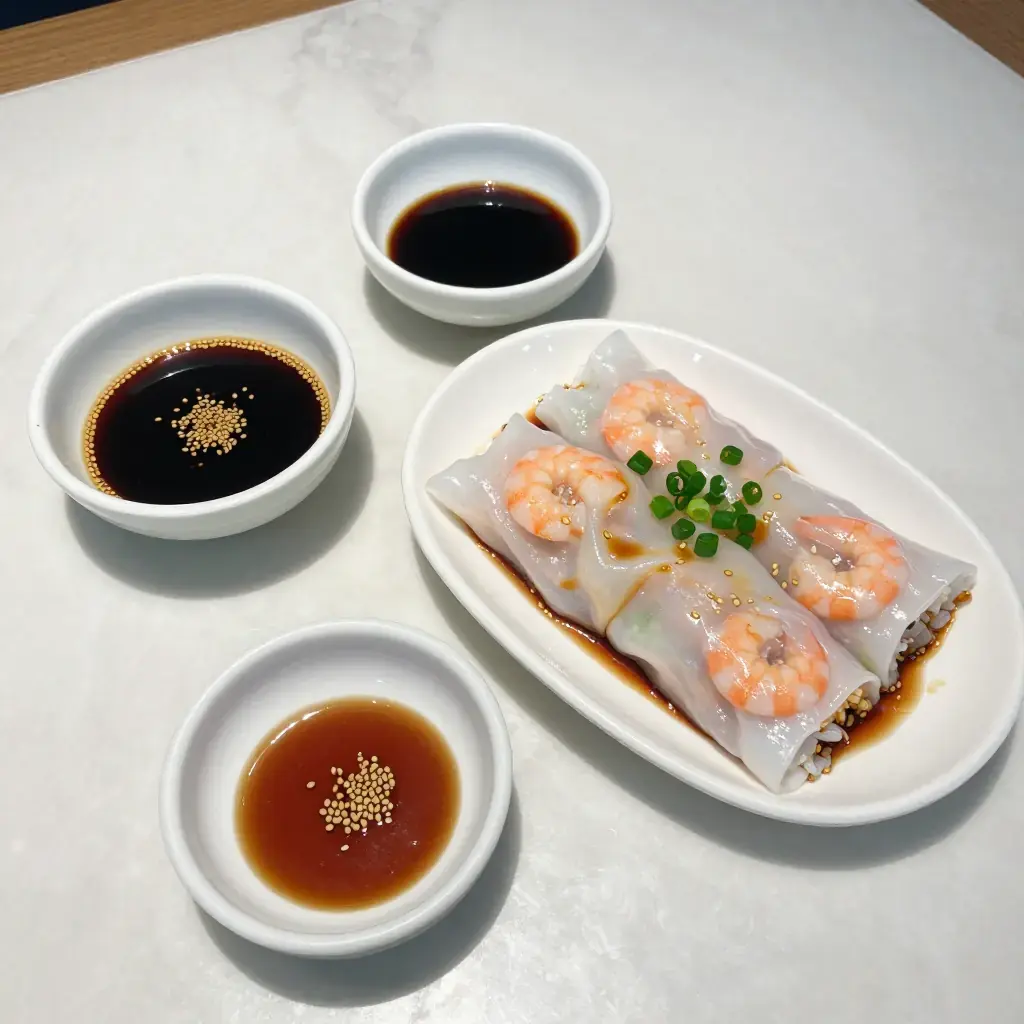
Cheong Fun — silky steamed rice noodle rolls — are a cornerstone of Cantonese dim sum, their translucent, gossamer sheets wrapped around fillings of prawn, char siu, or beef and finished with a drizzle of sweet soy and sesame oil. Originating in Guangdong, they require a fine rice flour slurry steamed in thin layers on oiled trays.
Serves: 4
Ingredients
Rice noodle sheets
- 120g (1 cup) rice flour
- 30g (¼ cup) wheat starch (tang mien fun)
- 30g (¼ cup) tapioca starch
- 480ml (2 cups) cold water
- 1 tbsp (15ml) vegetable oil
- ½ tsp fine sea salt
Prawn filling
- 300g (10 oz) medium raw prawns, peeled and deveined
- 1 tsp sesame oil
- ½ tsp soy sauce
- ¼ tsp white pepper
- 1 spring onion, finely sliced
Sauce
- 3 tbsp (45ml) light soy sauce
- 2 tbsp (30ml) dark soy sauce
- 2 tbsp (30ml) oyster sauce
- 1 tbsp (15ml) sesame oil
- 1 tsp sugar
- 60ml (¼ cup) warm water
Instructions
- Marinate prawns in sesame oil, soy sauce, white pepper, and spring onion for 15 minutes.
- Whisk rice flour, wheat starch, tapioca starch, salt, and oil with cold water until smooth. Rest the batter for 20 minutes.
- Lightly oil a flat metal tray or the insert of a cheong fun steamer. Pour a thin ladleful of batter (about 80ml) onto the tray and tilt to spread into a 2–3mm thick even layer.
- Arrange 3–4 prawns across the lower third. Steam over vigorously boiling water for 3–4 minutes until the sheet is set and slightly translucent.
- Using a wide spatula, roll the sheet over the filling from the near edge. Slide onto a serving plate.
- Repeat with remaining batter and prawns. Combine sauce ingredients and stir until sugar dissolves. Drizzle generously over the rolls before serving.
Cook's Notes: Getting the batter thickness right takes practice — too thick and the sheets are gummy, too thin and they tear when rolling. Keep the batter well stirred between each pour as the starches settle. Serve immediately; cheong fun toughens as it cools.
All Revisions
generated
# Cheong Fun Cheong Fun — silky steamed rice noodle rolls — are a cornerstone of Cantonese dim sum, their translucent, gossamer sheets wrapped around fillings of prawn, char siu, or beef and finished with a drizzle of sweet soy and sesame oil. Originating in Guangdong, they require a fine rice flour slurry steamed in thin layers on oiled trays. Serves: 4 ## Ingredients **Rice noodle sheets** - 120g (1 cup) rice flour - 30g (¼ cup) wheat starch (tang mien fun) - 30g (¼ cup) tapioca starch - 480ml (2 cups) cold water - 1 tbsp (15ml) vegetable oil - ½ tsp fine sea salt **Prawn filling** - 300g (10 oz) medium raw prawns, peeled and deveined - 1 tsp sesame oil - ½ tsp soy sauce - ¼ tsp white pepper - 1 spring onion, finely sliced **Sauce** - 3 tbsp (45ml) light soy sauce - 2 tbsp (30ml) dark soy sauce - 2 tbsp (30ml) oyster sauce - 1 tbsp (15ml) sesame oil - 1 tsp sugar - 60ml (¼ cup) warm water ## Instructions 1. Marinate prawns in sesame oil, soy sauce, white pepper, and spring onion for 15 minutes. 2. Whisk rice flour, wheat starch, tapioca starch, salt, and oil with cold water until smooth. Rest the batter for 20 minutes. 3. Lightly oil a flat metal tray or the insert of a cheong fun steamer. Pour a thin ladleful of batter (about 80ml) onto the tray and tilt to spread into a 2–3mm thick even layer. 4. Arrange 3–4 prawns across the lower third. Steam over vigorously boiling water for 3–4 minutes until the sheet is set and slightly translucent. 5. Using a wide spatula, roll the sheet over the filling from the near edge. Slide onto a serving plate. 6. Repeat with remaining batter and prawns. Combine sauce ingredients and stir until sugar dissolves. Drizzle generously over the rolls before serving. **Cook's Notes:** Getting the batter thickness right takes practice — too thick and the sheets are gummy, too thin and they tear when rolling. Keep the batter well stirred between each pour as the starches settle. Serve immediately; cheong fun toughens as it cools.Images
Tags
- authentic
- breakfast
- cantonese
- noodles
- seafood
- steamed
- weekend-project