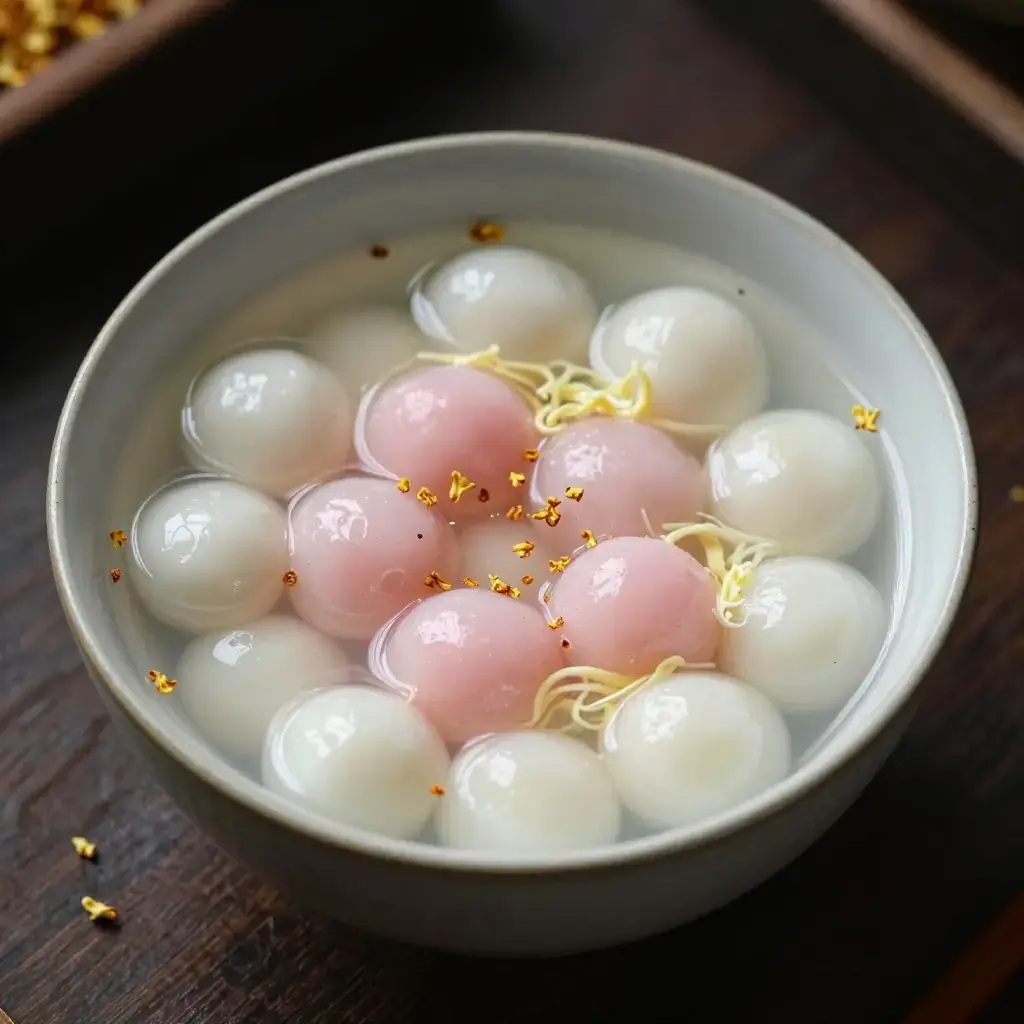
Sichuan Jiu Niang Tang Yuan (酒酿汤圆)
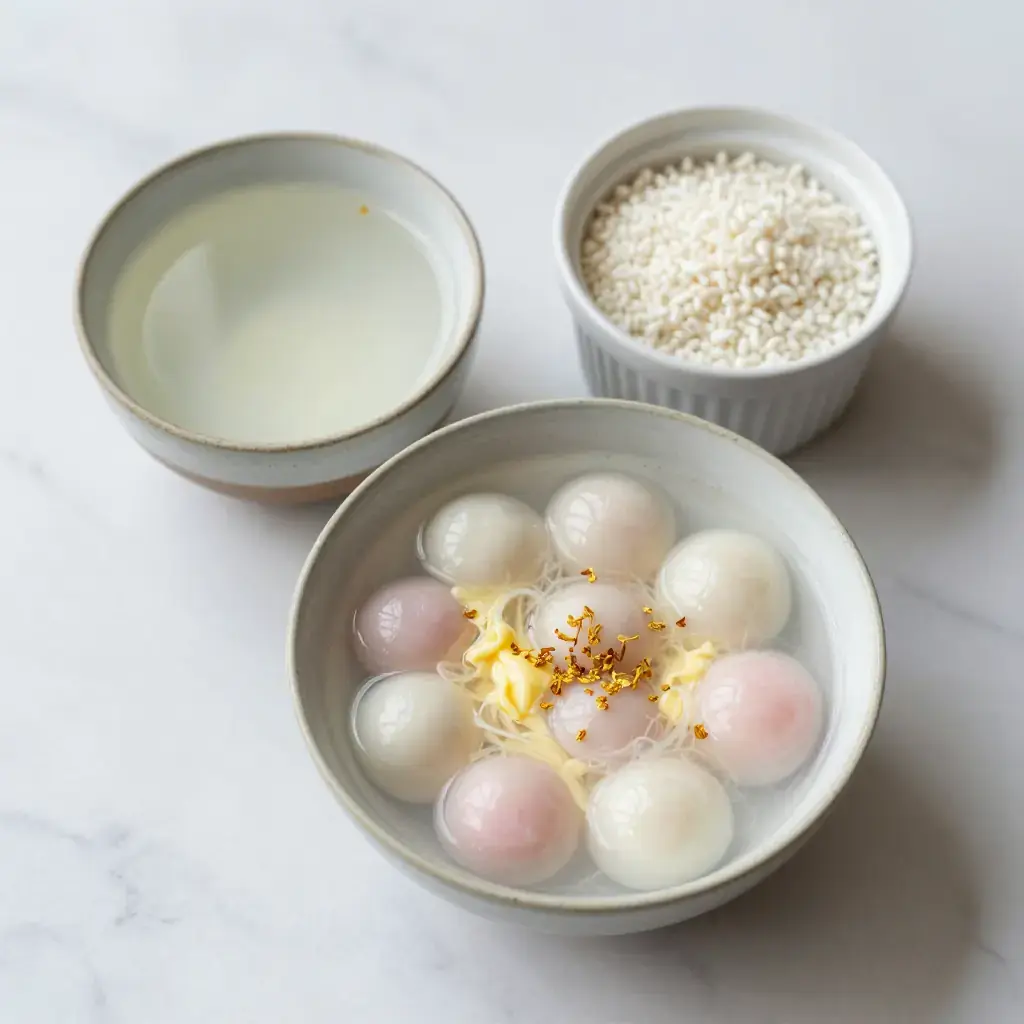
Jiu Niang — the cloudy, mildly alcoholic liquid produced when glutinous rice ferments with a rice-wine starter — is one of Sichuan's most beloved pantry staples, prized for its honeyed sweetness and gentle effervescence. Combined with hand-rolled glutinous rice balls and fragrant osmanthus syrup in a warm, barely alcoholic broth, it becomes Jiu Niang Tang Yuan: a dessert soup eaten at the Lantern Festival, winter solstice, and whenever comfort is needed. The small plain rice balls are called "xiao tang yuan" — their simplicity allows the delicate fermented broth to shine.
Serves: 4
Ingredients
Small tang yuan:
- 150g (1¼ cups) glutinous rice flour
- 120ml (½ cup) warm water
- Pink food colouring (optional, for half the balls)
Broth:
- 250g (9 oz) jiu niang (fermented glutinous rice), with liquid
- 800ml (3¼ cups) water
- 2 tbsp (30g) rock sugar, or to taste
- 1 tbsp (15ml) osmanthus syrup (gui hua tang) or clear honey
- 1 egg, beaten
- 1 tsp (5g) grated fresh ginger
Instructions
- Make the tang yuan: Mix glutinous rice flour with warm water gradually, kneading into a smooth, pliable dough — it should not crack but not stick. Divide into two portions; tint one with a drop of pink colouring if desired. Roll both into long ropes and pinch off walnut-sized pieces. Roll each between palms into a smooth ball about 2cm wide. Place on a lightly floured tray.
- Cook tang yuan: Bring a pot of water to a rolling boil. Add rice balls and cook 2–4 minutes until they float and have been bobbing for 1 minute. Remove with a slotted spoon into individual bowls.
- Make the broth: In a separate saucepan, combine water and ginger. Bring to a gentle simmer. Add jiu niang (including the fermented rice grains and liquid). Stir in rock sugar and osmanthus syrup. Taste for sweetness.
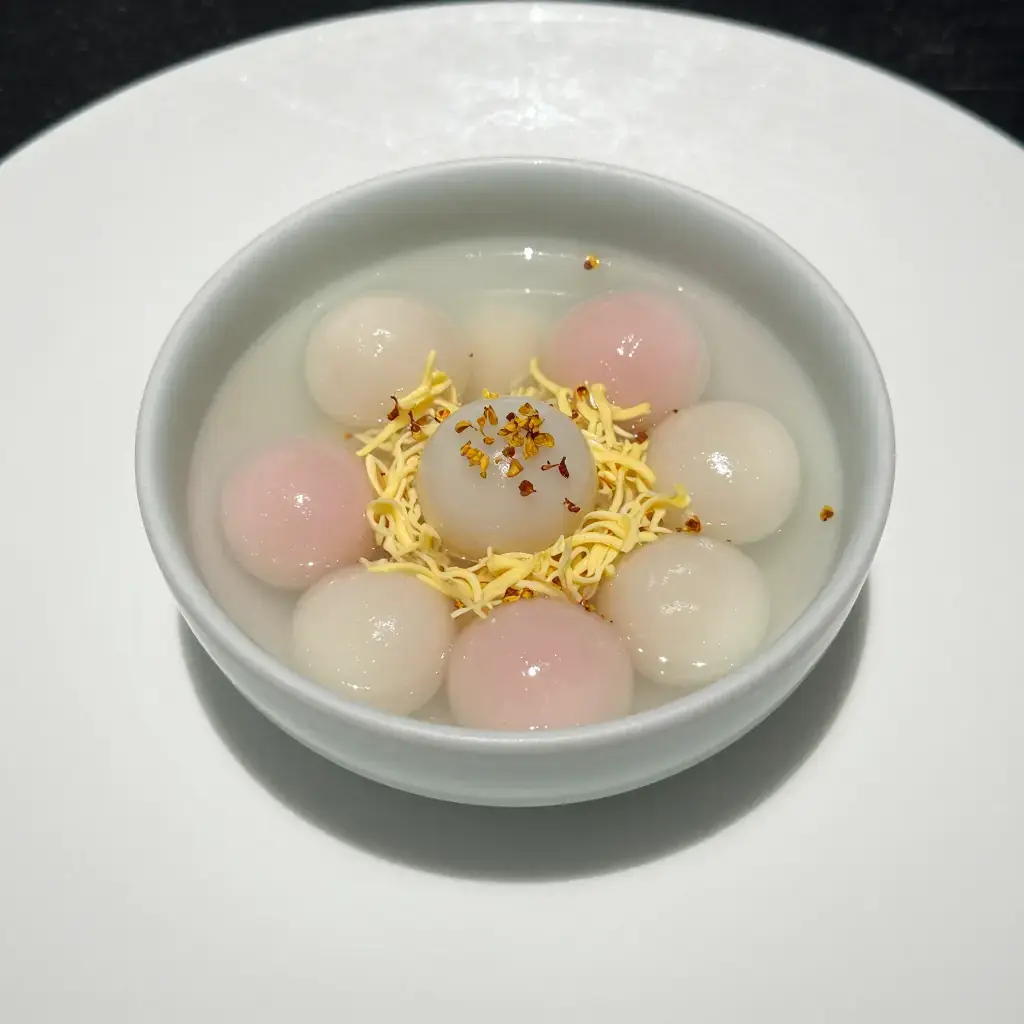
- When broth is gently simmering, drizzle in the beaten egg in a thin stream, stirring slowly in one direction, to create fine silky threads.
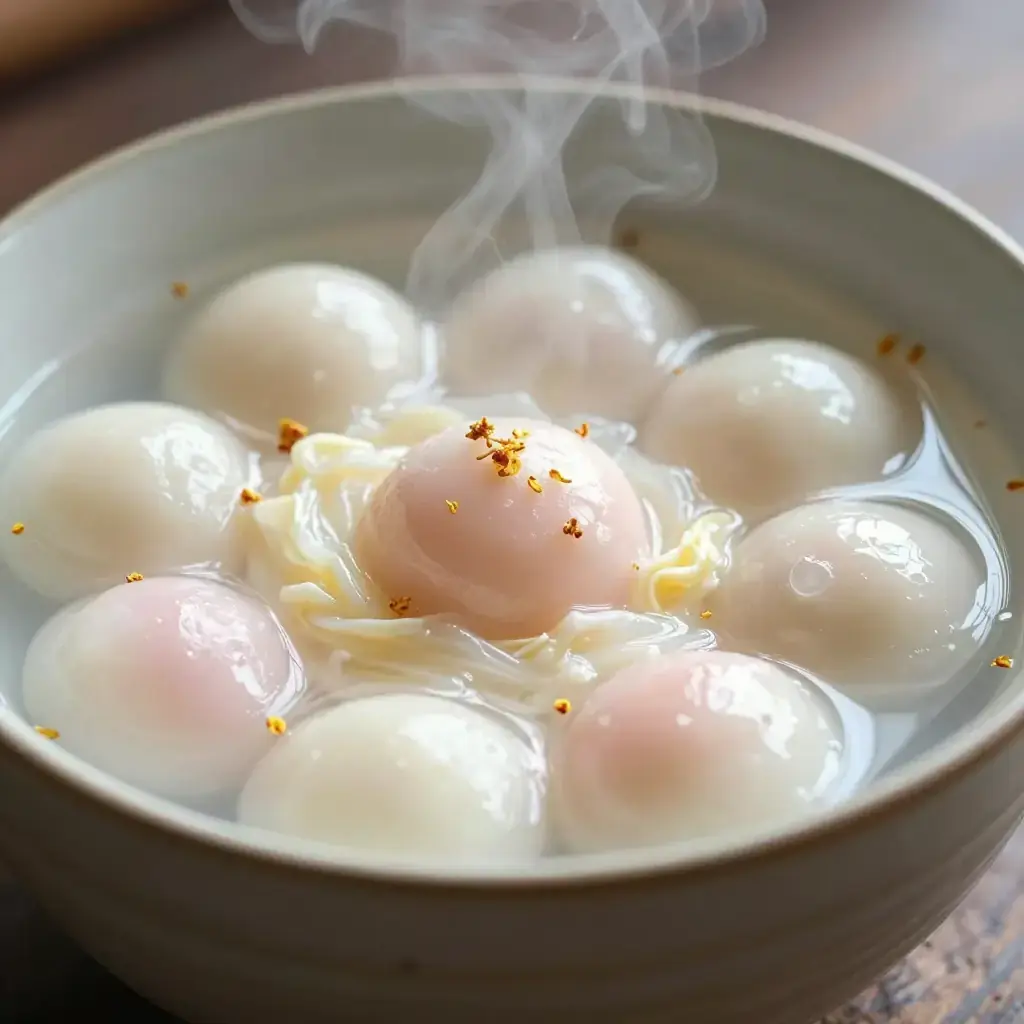
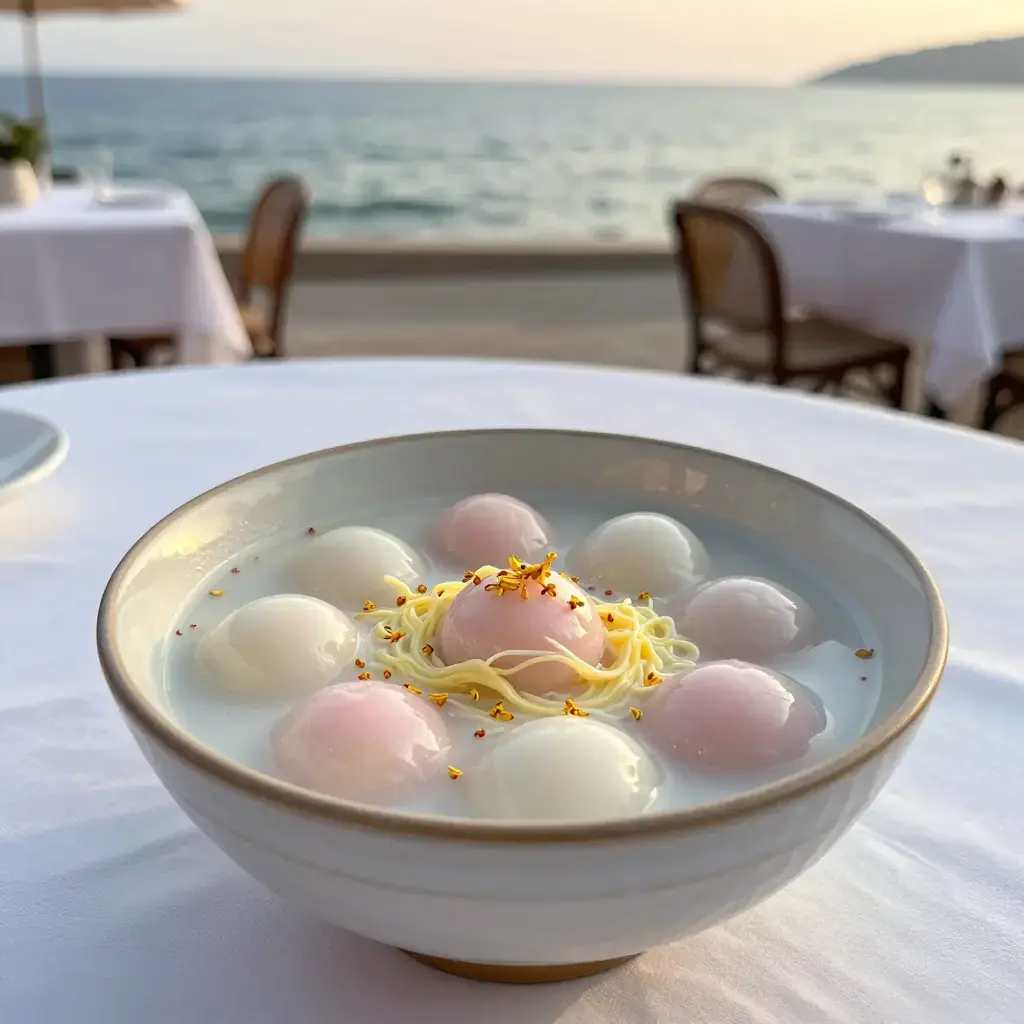
- Ladle the fragrant jiu niang broth over the cooked tang yuan and serve immediately in small bowls.
Cook's Notes: Jiu Niang is available in jars at Chinese supermarkets; it should smell sweet and faintly alcoholic. Do not boil vigorously once added, or the delicate flavour will cook off. Ginger adds warmth and aids digestion — a standard addition in Sichuan winter desserts.
All Revisions
generated
# Sichuan Jiu Niang Tang Yuan (酒酿汤圆) Jiu Niang — the cloudy, mildly alcoholic liquid produced when glutinous rice ferments with a rice-wine starter — is one of Sichuan's most beloved pantry staples, prized for its honeyed sweetness and gentle effervescence. Combined with hand-rolled glutinous rice balls and fragrant osmanthus syrup in a warm, barely alcoholic broth, it becomes Jiu Niang Tang Yuan: a dessert soup eaten at the Lantern Festival, winter solstice, and whenever comfort is needed. The small plain rice balls are called "xiao tang yuan" — their simplicity allows the delicate fermented broth to shine. Serves: 4 ## Ingredients **Small tang yuan:** - 150g (1¼ cups) glutinous rice flour - 120ml (½ cup) warm water - Pink food colouring (optional, for half the balls) **Broth:** - 250g (9 oz) jiu niang (fermented glutinous rice), with liquid - 800ml (3¼ cups) water - 2 tbsp (30g) rock sugar, or to taste - 1 tbsp (15ml) osmanthus syrup (gui hua tang) or clear honey - 1 egg, beaten - 1 tsp (5g) grated fresh ginger ## Instructions 1. **Make the tang yuan:** Mix glutinous rice flour with warm water gradually, kneading into a smooth, pliable dough — it should not crack but not stick. Divide into two portions; tint one with a drop of pink colouring if desired. Roll both into long ropes and pinch off walnut-sized pieces. Roll each between palms into a smooth ball about 2cm wide. Place on a lightly floured tray. 2. **Cook tang yuan:** Bring a pot of water to a rolling boil. Add rice balls and cook 2–4 minutes until they float and have been bobbing for 1 minute. Remove with a slotted spoon into individual bowls. 3. **Make the broth:** In a separate saucepan, combine water and ginger. Bring to a gentle simmer. Add jiu niang (including the fermented rice grains and liquid). Stir in rock sugar and osmanthus syrup. Taste for sweetness. 4. When broth is gently simmering, drizzle in the beaten egg in a thin stream, stirring slowly in one direction, to create fine silky threads. 5. Ladle the fragrant jiu niang broth over the cooked tang yuan and serve immediately in small bowls. **Cook's Notes:** Jiu Niang is available in jars at Chinese supermarkets; it should smell sweet and faintly alcoholic. Do not boil vigorously once added, or the delicate flavour will cook off. Ginger adds warmth and aids digestion — a standard addition in Sichuan winter desserts.Images
Tags
- comfort-food
- fermented
- gluten-free
- hot-soup
- rice
- sichuan
- vegetarian