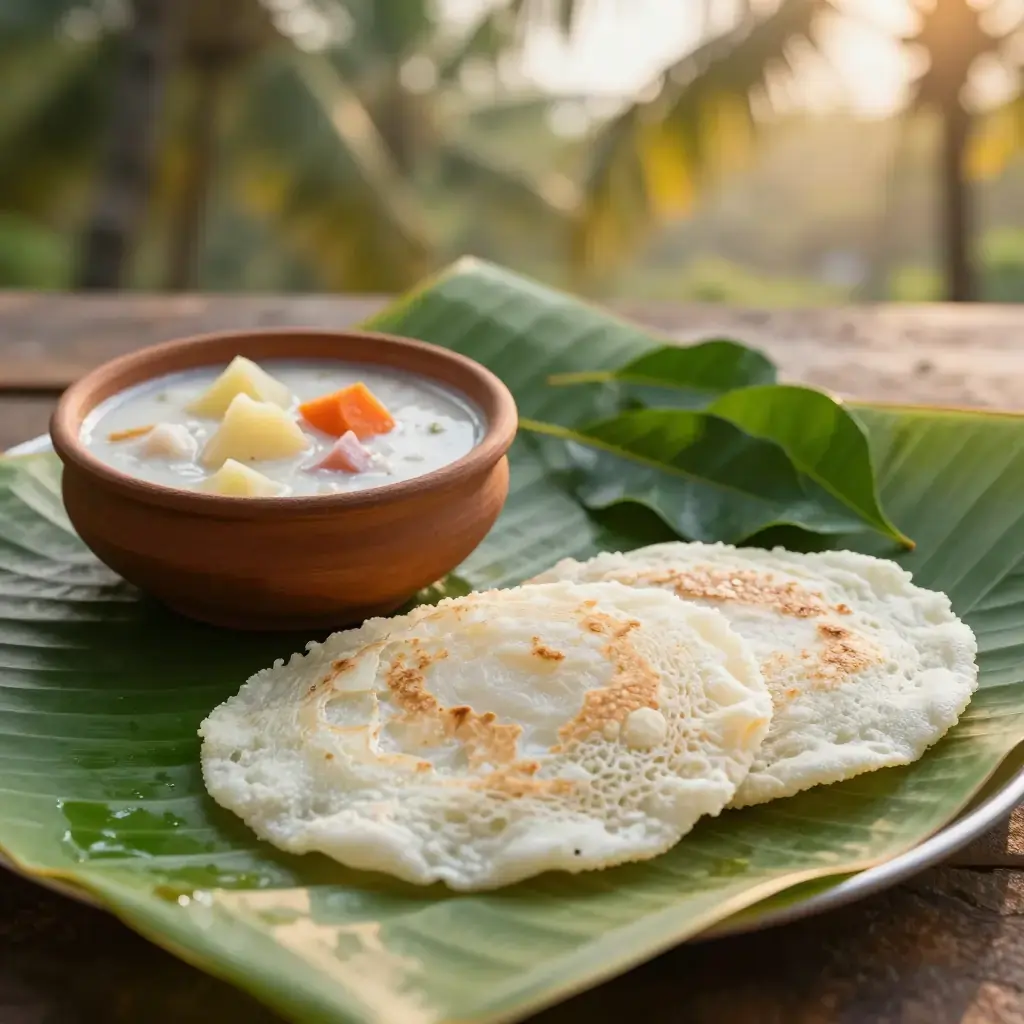
Appam with Vegetable Ishtu (അപ്പം)
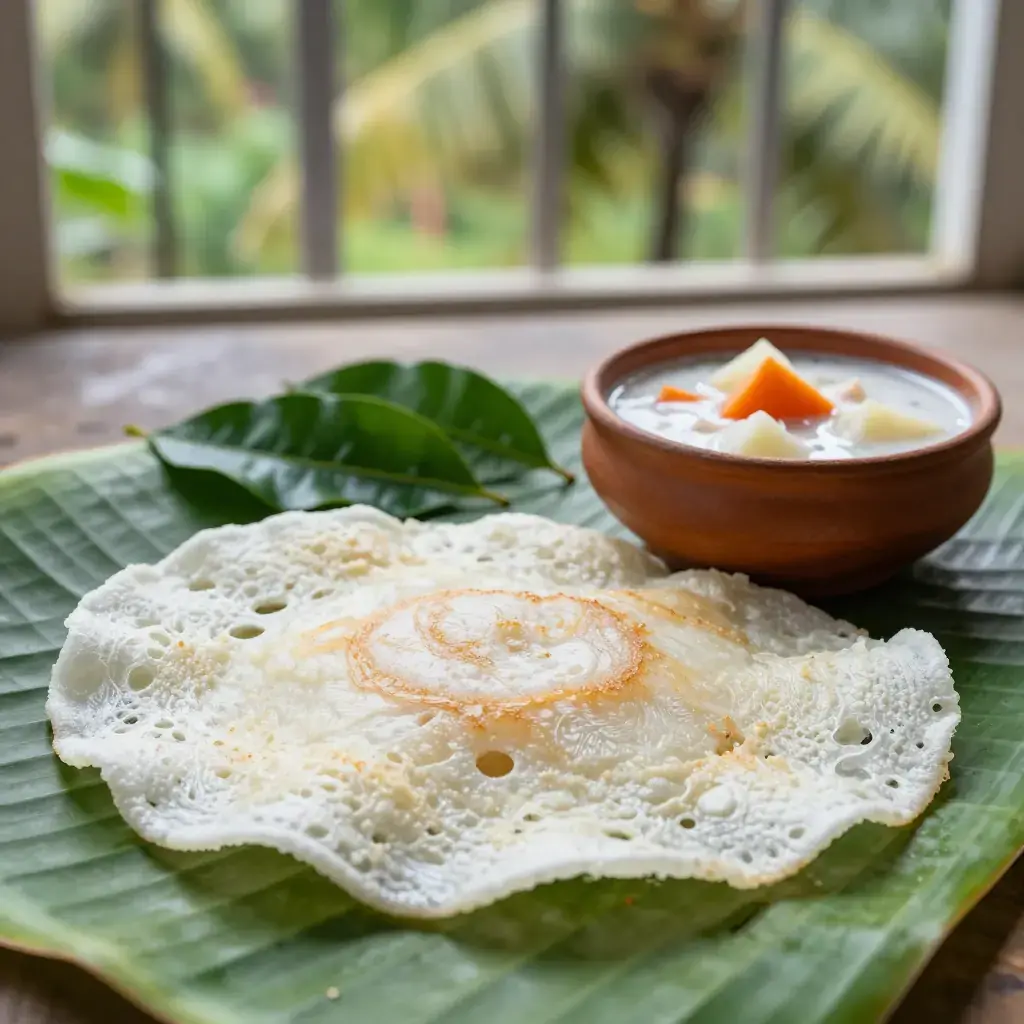
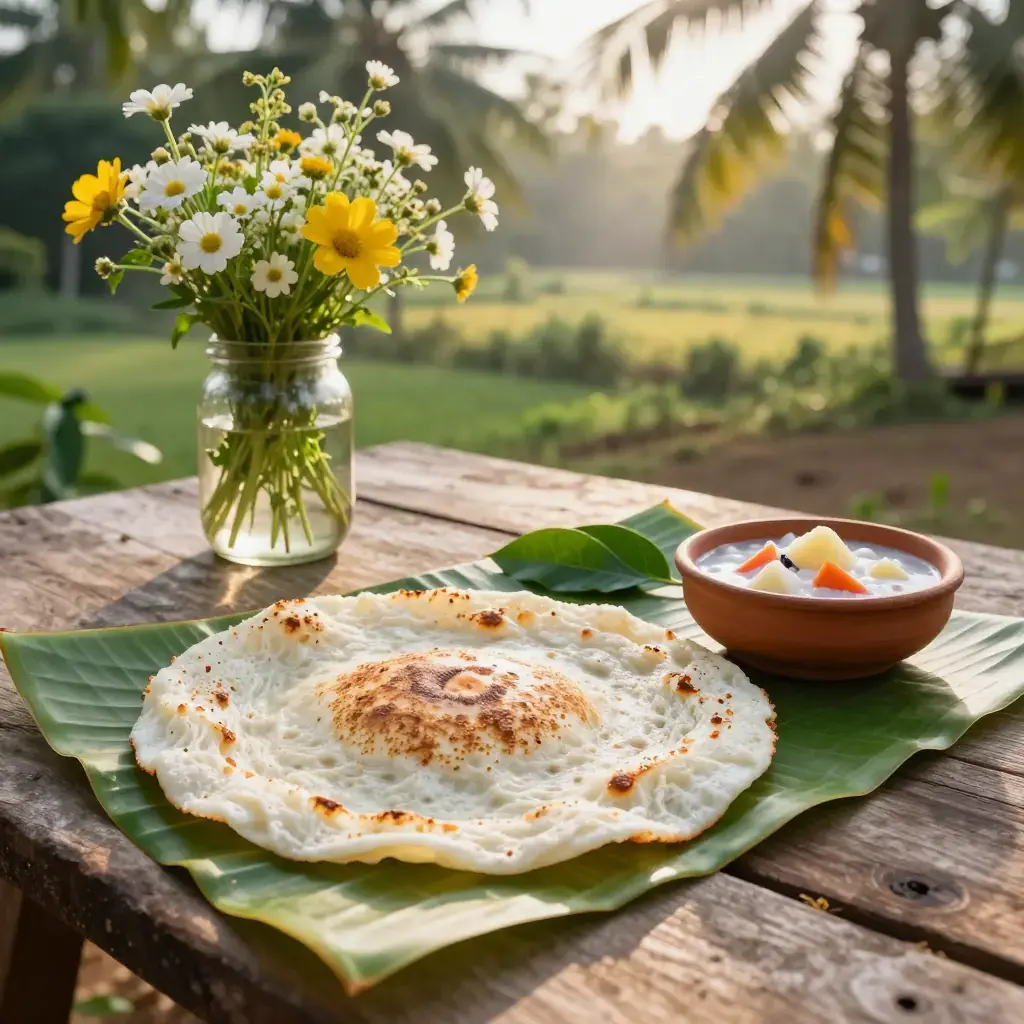
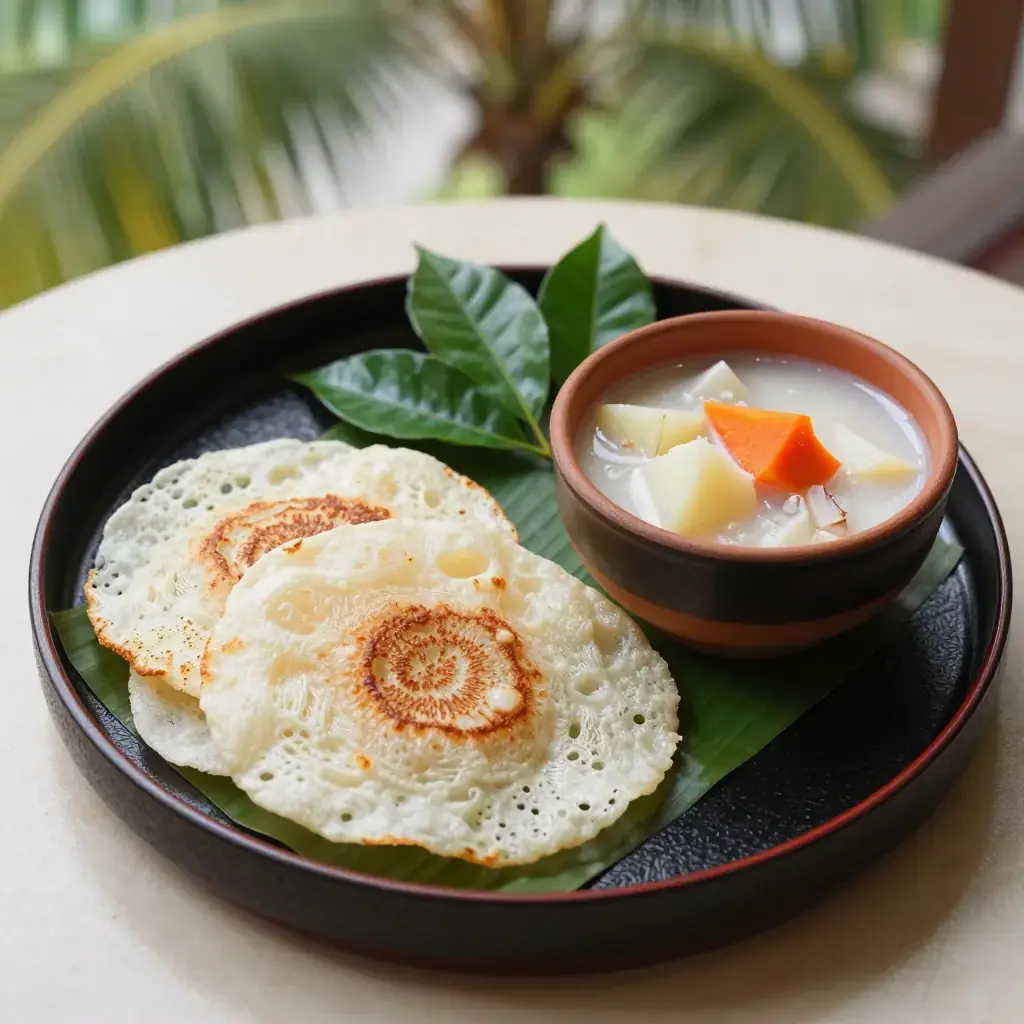
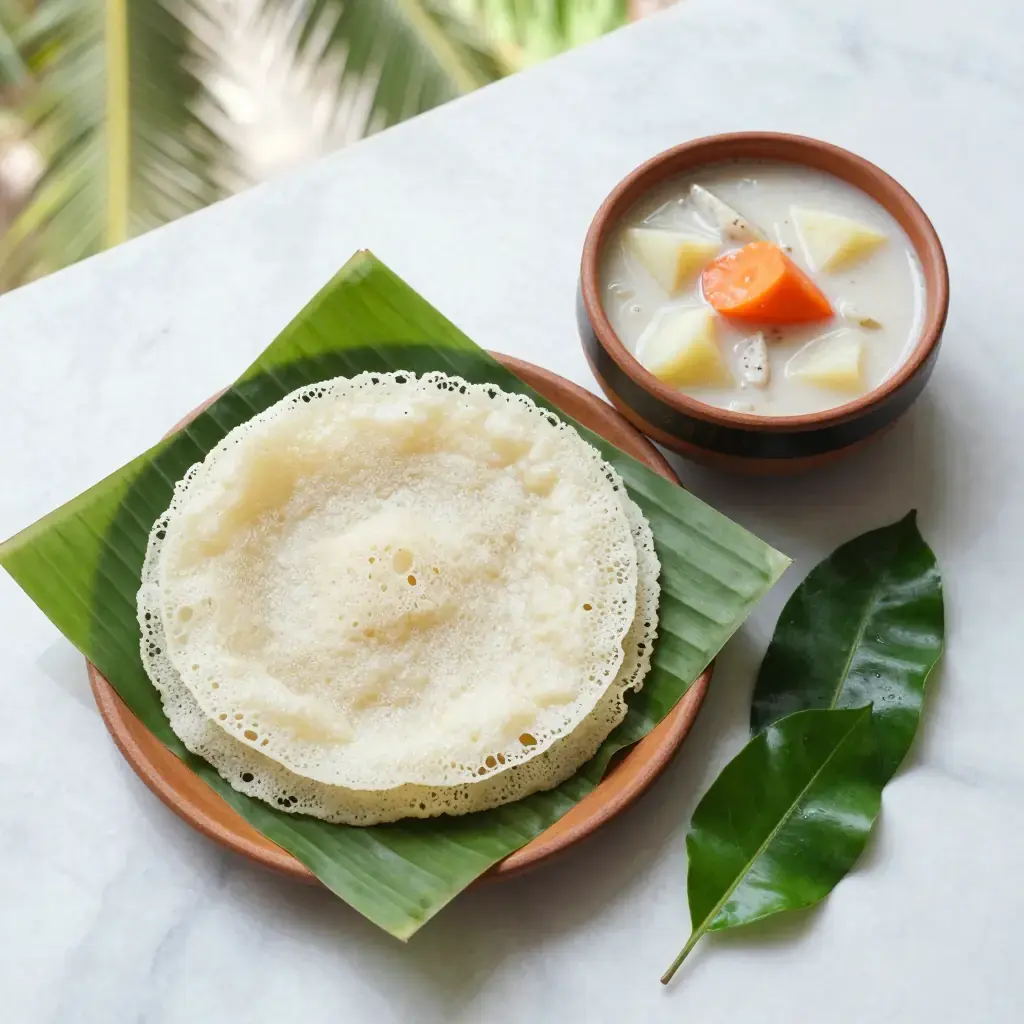
Appam — the lacy, bowl-shaped fermented rice crepes of Kerala — are one of the subcontinent's most elegant breakfast and dinner foods. Their feathery, crisp edges and soft, spongy centre are made for soaking up Ishtu, a mild, fragrant coconut milk stew with vegetables — a dish that reflects Kerala's Syrian Christian culinary heritage.
Serves: 4
Ingredients
Appam batter (start the night before):
- 300g (1.5 cups) raw rice (parboiled or regular), soaked 4 hours
- 100g (1/2 cup) cooked rice
- 50g (1/4 cup) freshly grated coconut (or desiccated, rehydrated)
- 1 tsp active dry yeast
- 1 tsp sugar
- 1/4 tsp salt
- 150ml (2/3 cup) warm water (for blending)
Vegetable Ishtu:
- 300g (10.5 oz) mixed vegetables (potato cubes, carrot, green beans, green peas)
- 2 medium onions, thinly sliced
- 3 green chillies, slit
- 2cm (3/4 inch) piece ginger, julienned
- 15 fresh curry leaves
- 400ml (13.5 fl oz / 1 can) coconut milk
- 200ml (3/4 cup) water
- 2 tbsp (30ml) coconut oil
- 1/2 tsp black pepper, coarsely cracked
- Salt to taste
- 1 sprig curry leaves and coconut oil, to finish
Instructions
- Batter (evening before): Drain soaked rice. Blend with cooked rice, grated coconut, and warm water until completely smooth — blend in stages for at least 5 minutes for a fine texture. Dissolve yeast and sugar in 2 tablespoons warm water, add to batter with salt, stir well. Cover and ferment at room temperature 8-12 hours (overnight) until slightly bubbly and mildly sour.
- Ishtu: Heat coconut oil in a heavy pot over medium heat. Add sliced onions, green chillies, ginger, and curry leaves. Sauté 5-6 minutes until the onions are soft and translucent — do not allow them to colour.
- Add the mixed vegetables and water. Cover and cook for 12-15 minutes until the vegetables are just tender.
- Pour in the coconut milk, add cracked black pepper and salt. Bring to a gentle simmer — do not boil vigorously or the coconut milk will split. Simmer 3-4 minutes. Finish with a drizzle of fresh coconut oil and extra curry leaves.
- Appam: Heat an appam pan (or small non-stick wok) over medium-high heat. Lightly grease. Pour a ladleful of batter into the centre, then quickly swirl the pan to spread the batter into a thin circle on the sides while leaving the centre thick. Cover and cook 2-3 minutes until the edges are lacy and crisp and the centre is cooked through. Remove without flipping.
- Serve appam immediately with the warm vegetable ishtu alongside.
Cook's Notes: The batter should be slightly thinner than pancake batter — thin it with water if needed after fermentation. An authentic appam pan has a curved base ideal for swirling; a small non-stick wok works as a substitute. Longer fermentation (up to 18 hours in cool weather) gives more complex flavour.
All Revisions
generated
# Appam with Vegetable Ishtu (അപ്പം) Appam — the lacy, bowl-shaped fermented rice crepes of Kerala — are one of the subcontinent's most elegant breakfast and dinner foods. Their feathery, crisp edges and soft, spongy centre are made for soaking up Ishtu, a mild, fragrant coconut milk stew with vegetables — a dish that reflects Kerala's Syrian Christian culinary heritage. Serves: 4 ## Ingredients **Appam batter (start the night before):** - 300g (1.5 cups) raw rice (parboiled or regular), soaked 4 hours - 100g (1/2 cup) cooked rice - 50g (1/4 cup) freshly grated coconut (or desiccated, rehydrated) - 1 tsp active dry yeast - 1 tsp sugar - 1/4 tsp salt - 150ml (2/3 cup) warm water (for blending) **Vegetable Ishtu:** - 300g (10.5 oz) mixed vegetables (potato cubes, carrot, green beans, green peas) - 2 medium onions, thinly sliced - 3 green chillies, slit - 2cm (3/4 inch) piece ginger, julienned - 15 fresh curry leaves - 400ml (13.5 fl oz / 1 can) coconut milk - 200ml (3/4 cup) water - 2 tbsp (30ml) coconut oil - 1/2 tsp black pepper, coarsely cracked - Salt to taste - 1 sprig curry leaves and coconut oil, to finish ## Instructions 1. **Batter (evening before):** Drain soaked rice. Blend with cooked rice, grated coconut, and warm water until completely smooth — blend in stages for at least 5 minutes for a fine texture. Dissolve yeast and sugar in 2 tablespoons warm water, add to batter with salt, stir well. Cover and ferment at room temperature 8-12 hours (overnight) until slightly bubbly and mildly sour. 2. **Ishtu:** Heat coconut oil in a heavy pot over medium heat. Add sliced onions, green chillies, ginger, and curry leaves. Sauté 5-6 minutes until the onions are soft and translucent — do not allow them to colour. 3. Add the mixed vegetables and water. Cover and cook for 12-15 minutes until the vegetables are just tender. 4. Pour in the coconut milk, add cracked black pepper and salt. Bring to a gentle simmer — do not boil vigorously or the coconut milk will split. Simmer 3-4 minutes. Finish with a drizzle of fresh coconut oil and extra curry leaves. 5. **Appam:** Heat an appam pan (or small non-stick wok) over medium-high heat. Lightly grease. Pour a ladleful of batter into the centre, then quickly swirl the pan to spread the batter into a thin circle on the sides while leaving the centre thick. Cover and cook 2-3 minutes until the edges are lacy and crisp and the centre is cooked through. Remove without flipping. 6. Serve appam immediately with the warm vegetable ishtu alongside. **Cook's Notes:** The batter should be slightly thinner than pancake batter — thin it with water if needed after fermentation. An authentic appam pan has a curved base ideal for swirling; a small non-stick wok works as a substitute. Longer fermentation (up to 18 hours in cool weather) gives more complex flavour.Images
Tags
- breakfast
- dairy-free
- dinner
- fermented
- gluten-free
- indian-south
- rice
- vegan