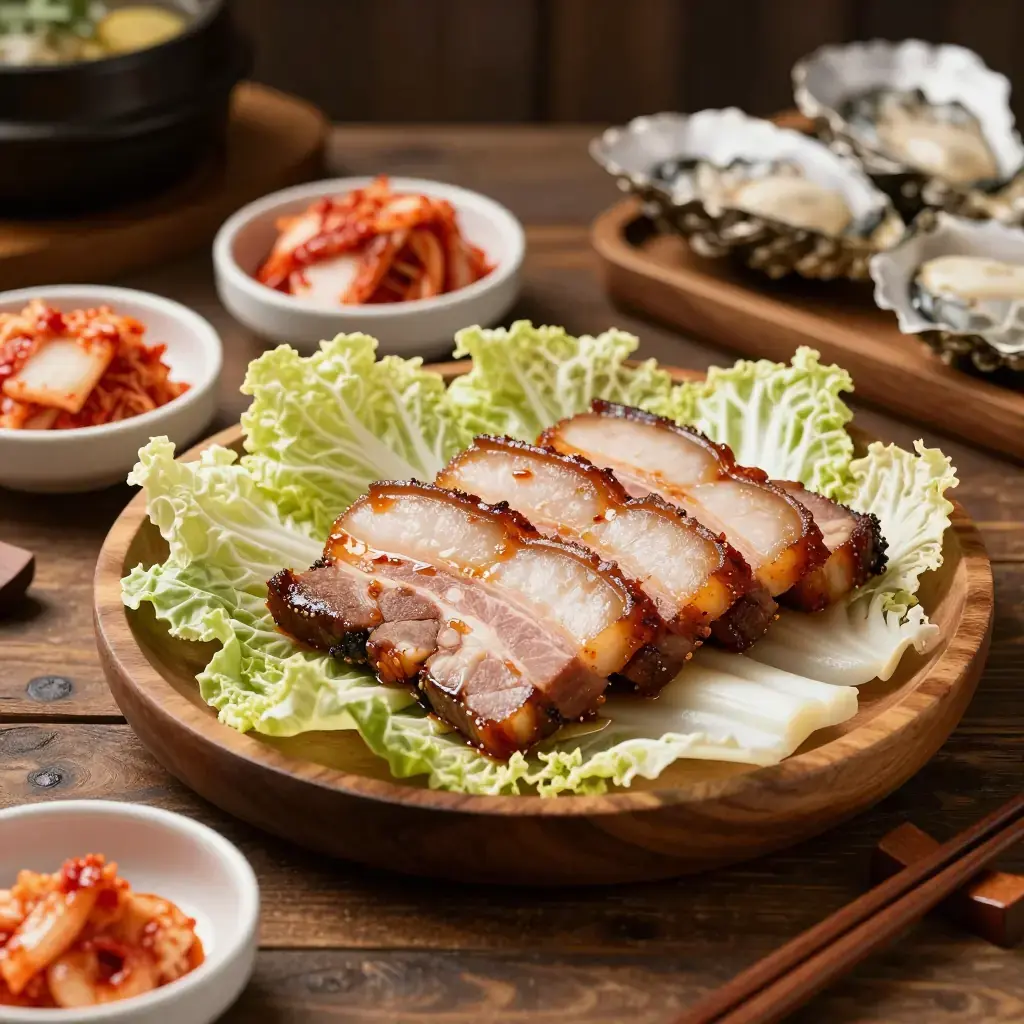
Bossam (보쌈)
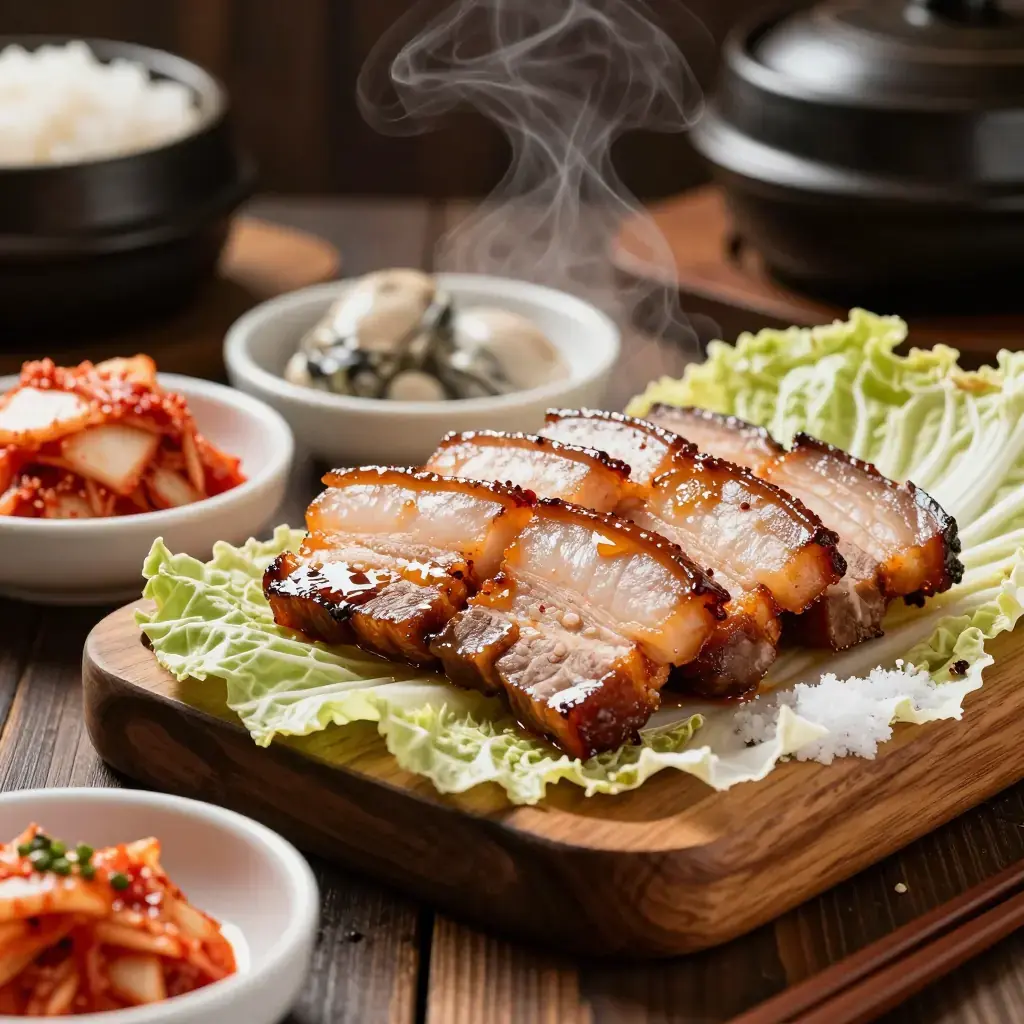
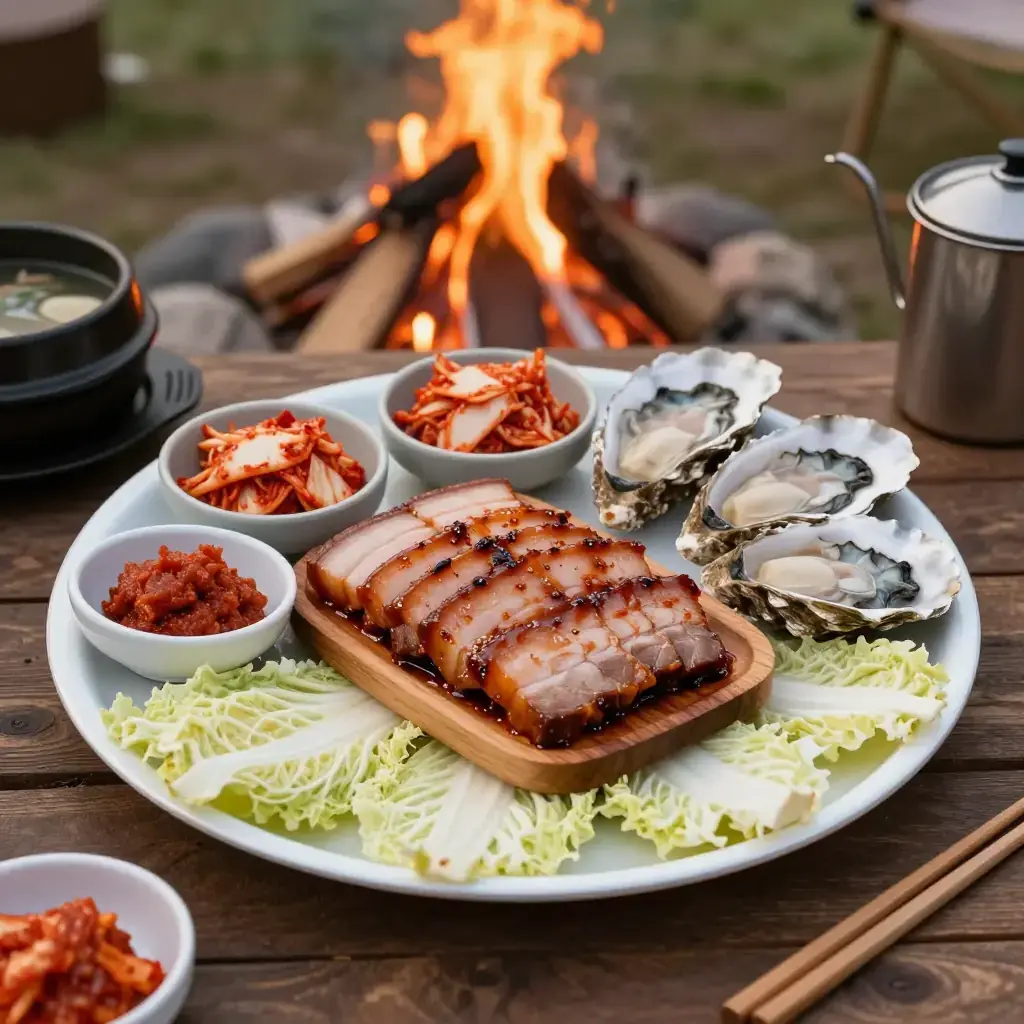
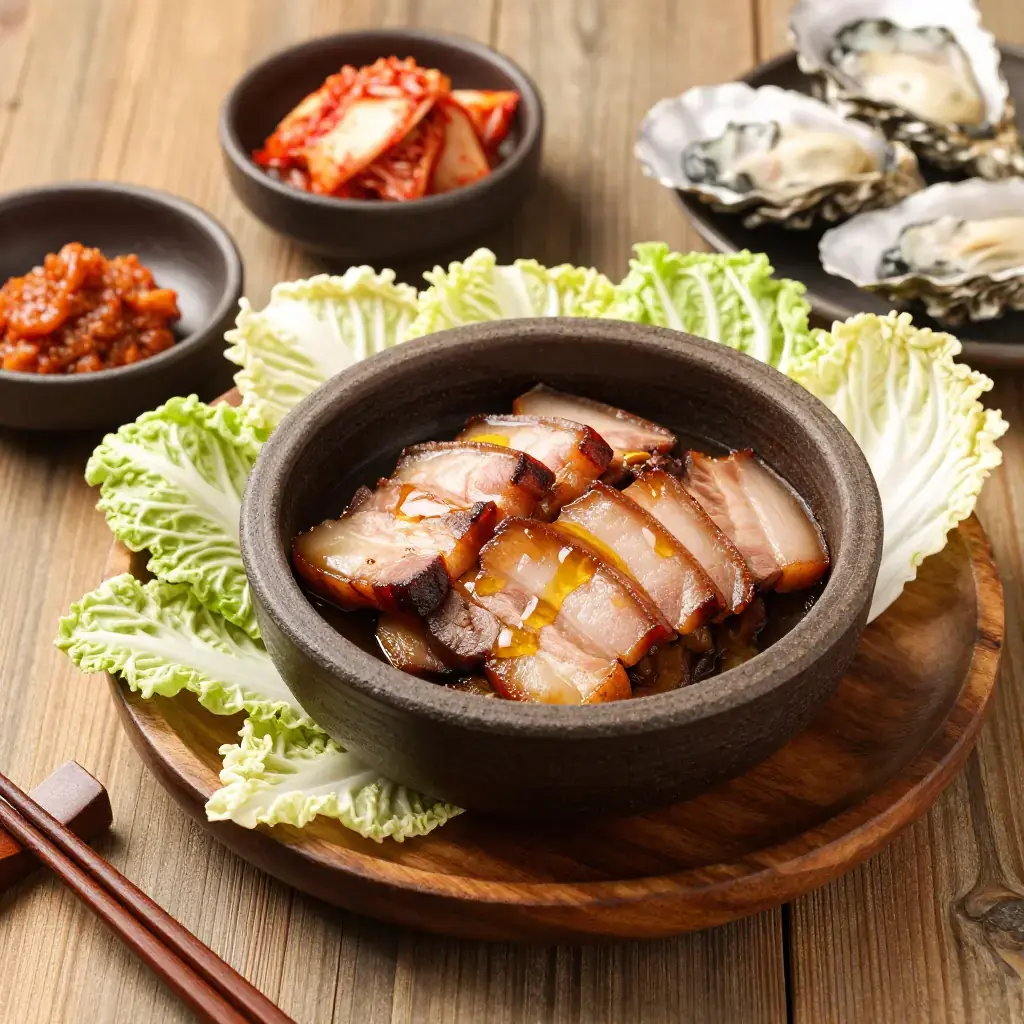
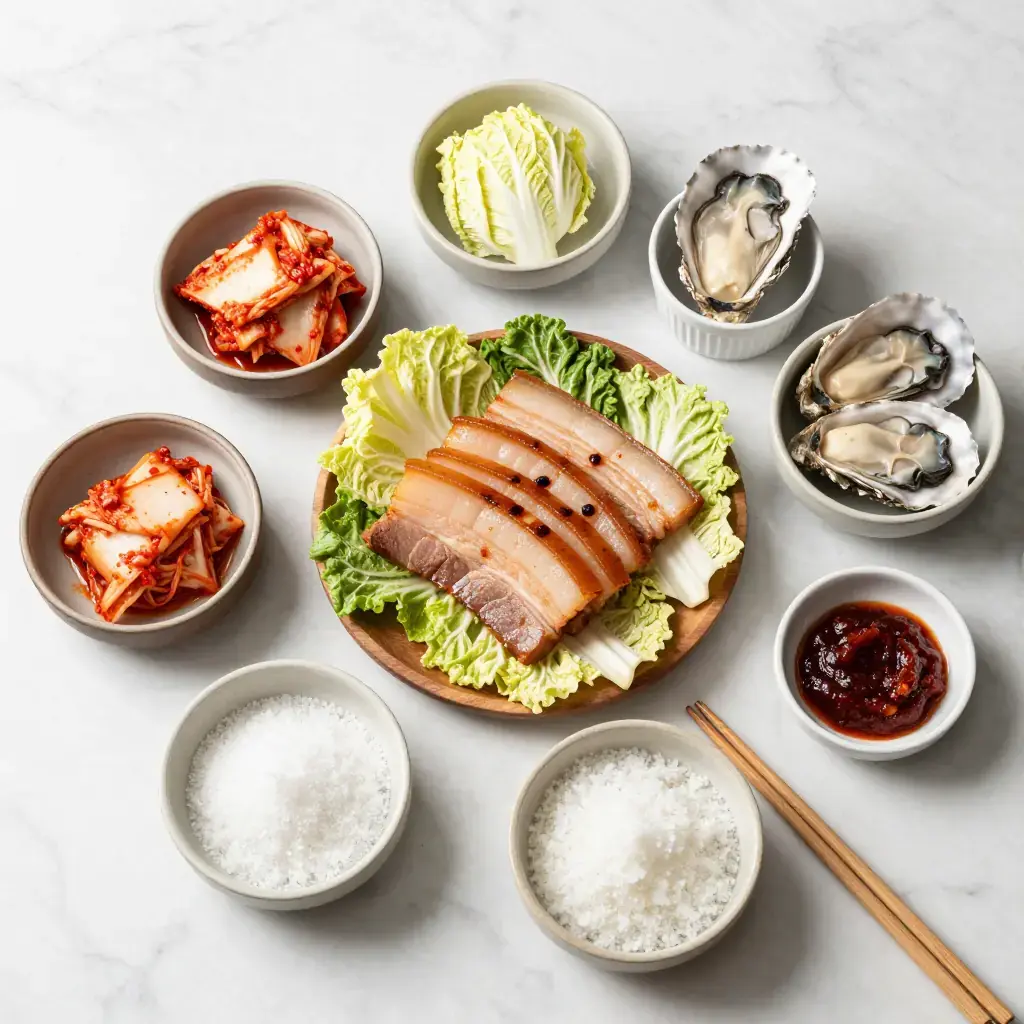
Bossam is a festive Korean sharing dish of tender soy-braised pork belly sliced and wrapped in salted cabbage leaves with kimchi, sliced raw oysters, and fermented shrimp paste — a combination that turns an affordable cut into a showstopping centrepiece for the table.
Serves: 6
Ingredients
For the pork:
- 1.5 kg (3.3 lb) skin-on pork belly, in one piece
- 2 litres (8 cups) water
- 1 medium onion, halved
- 6 cloves garlic
- 3 tbsp (45ml) doenjang (Korean soybean paste)
- 2 tbsp (30ml) soy sauce
- 1 tbsp (15ml) gochugaru (Korean chilli flakes)
- 1 tbsp (15ml) rice wine (cheongju or sake)
- 1 tsp black peppercorns
- 3 slices fresh ginger
- 2 dried bay leaves
For the table:
- 1/2 head salted napa cabbage (or fresh outer leaves)
- 200g (7 oz) fresh oysters, shucked
- 200g (7 oz) baechu kimchi, roughly chopped
- 3 tbsp (45ml) saeujeot (fermented salted shrimp)
- 4 cloves garlic, thinly sliced
- 1 tsp sesame oil
Instructions
- Place the pork belly in a large pot. Cover with cold water, bring to a boil, and blanch for 5 minutes. Drain and rinse the pork under cold water to remove impurities.
- Return the pork to the pot with 2 litres fresh water, onion, garlic, doenjang, soy sauce, gochugaru, rice wine, peppercorns, ginger, and bay leaves. Bring to a boil, then reduce to a gentle simmer.
- Braise uncovered for 1 hour 15 minutes, turning the pork once halfway through, until a skewer passes through the thickest part without resistance. The broth will darken and reduce slightly.
- Remove the pork and rest on a board for 10 minutes before slicing about 5mm (1/4 inch) thick against the grain.
- While the pork rests, toss the fresh oysters with sesame oil and a pinch of salt.
- To serve, lay cabbage leaves flat, top with a slice of pork, a spoonful of kimchi, a fresh oyster, a dab of saeujeot, and a sliver of garlic. Wrap and eat in one bite.
Cook's Notes: Salting napa cabbage leaves for 30 minutes beforehand softens them for easier wrapping. Leftover braising liquid makes an excellent base for doenjang jjigae the following day.
All Revisions
generated
# Bossam (보쌈) Bossam is a festive Korean sharing dish of tender soy-braised pork belly sliced and wrapped in salted cabbage leaves with kimchi, sliced raw oysters, and fermented shrimp paste — a combination that turns an affordable cut into a showstopping centrepiece for the table. Serves: 6 ## Ingredients **For the pork:** - 1.5 kg (3.3 lb) skin-on pork belly, in one piece - 2 litres (8 cups) water - 1 medium onion, halved - 6 cloves garlic - 3 tbsp (45ml) doenjang (Korean soybean paste) - 2 tbsp (30ml) soy sauce - 1 tbsp (15ml) gochugaru (Korean chilli flakes) - 1 tbsp (15ml) rice wine (cheongju or sake) - 1 tsp black peppercorns - 3 slices fresh ginger - 2 dried bay leaves **For the table:** - 1/2 head salted napa cabbage (or fresh outer leaves) - 200g (7 oz) fresh oysters, shucked - 200g (7 oz) baechu kimchi, roughly chopped - 3 tbsp (45ml) saeujeot (fermented salted shrimp) - 4 cloves garlic, thinly sliced - 1 tsp sesame oil ## Instructions 1. Place the pork belly in a large pot. Cover with cold water, bring to a boil, and blanch for 5 minutes. Drain and rinse the pork under cold water to remove impurities. 2. Return the pork to the pot with 2 litres fresh water, onion, garlic, doenjang, soy sauce, gochugaru, rice wine, peppercorns, ginger, and bay leaves. Bring to a boil, then reduce to a gentle simmer. 3. Braise uncovered for 1 hour 15 minutes, turning the pork once halfway through, until a skewer passes through the thickest part without resistance. The broth will darken and reduce slightly. 4. Remove the pork and rest on a board for 10 minutes before slicing about 5mm (1/4 inch) thick against the grain. 5. While the pork rests, toss the fresh oysters with sesame oil and a pinch of salt. 6. To serve, lay cabbage leaves flat, top with a slice of pork, a spoonful of kimchi, a fresh oyster, a dab of saeujeot, and a sliver of garlic. Wrap and eat in one bite. **Cook's Notes:** Salting napa cabbage leaves for 30 minutes beforehand softens them for easier wrapping. Leftover braising liquid makes an excellent base for doenjang jjigae the following day.Images
Tags
- authentic
- braised
- comfort-food
- dinner-party
- indulgent
- korean
- seafood