Kategna
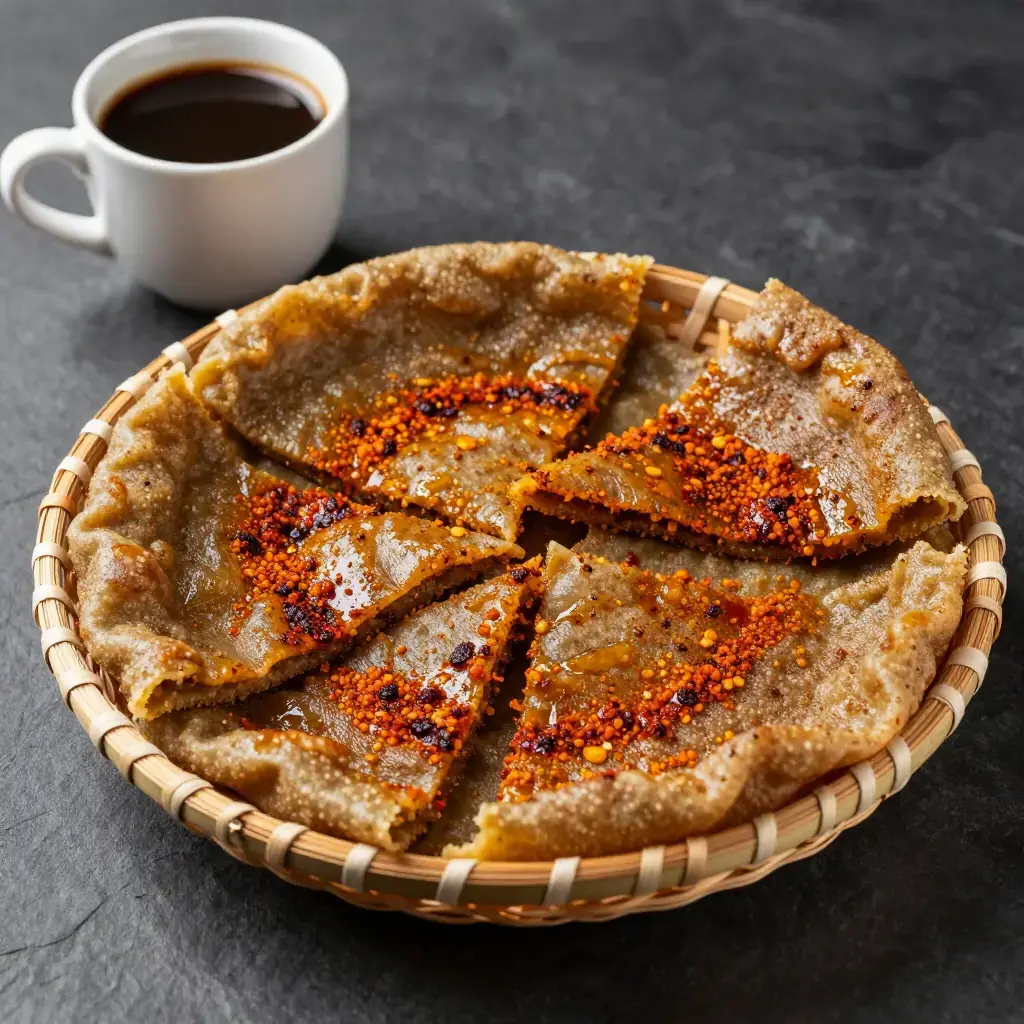
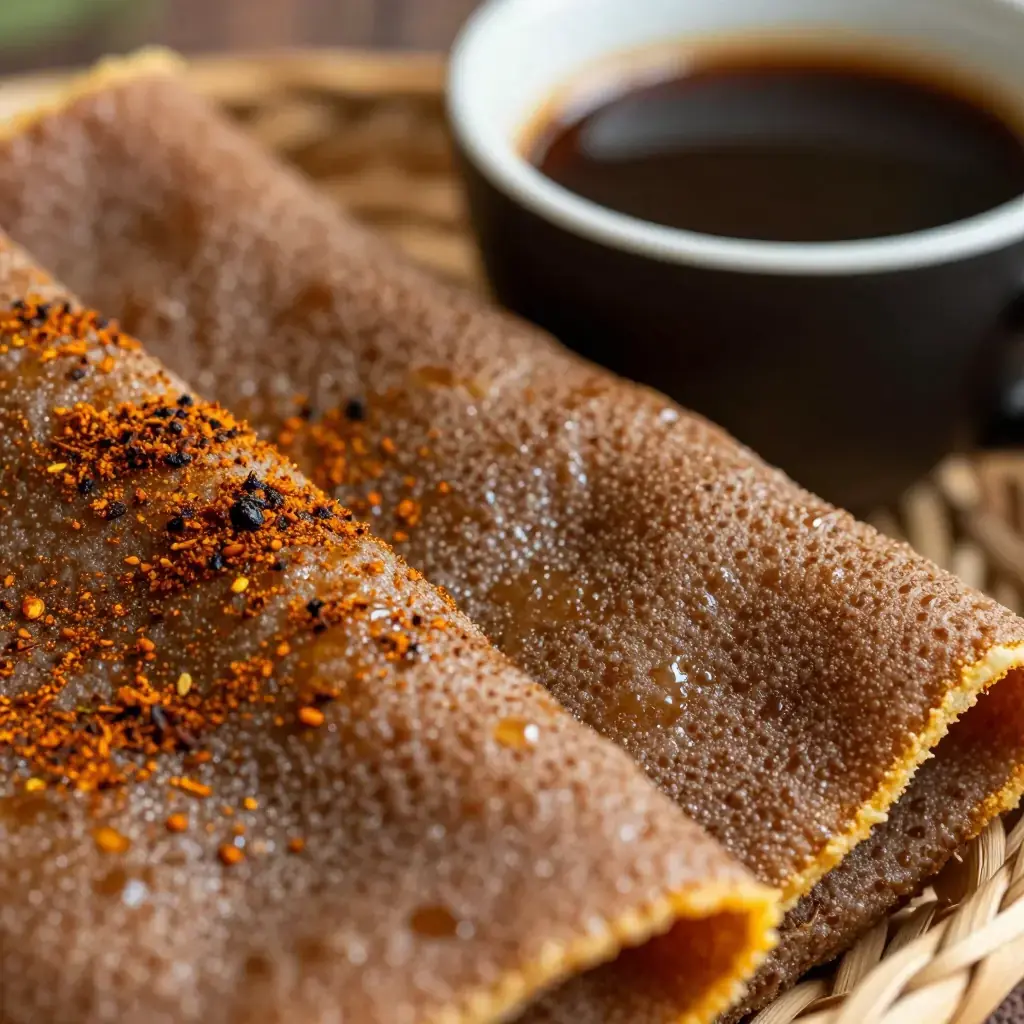
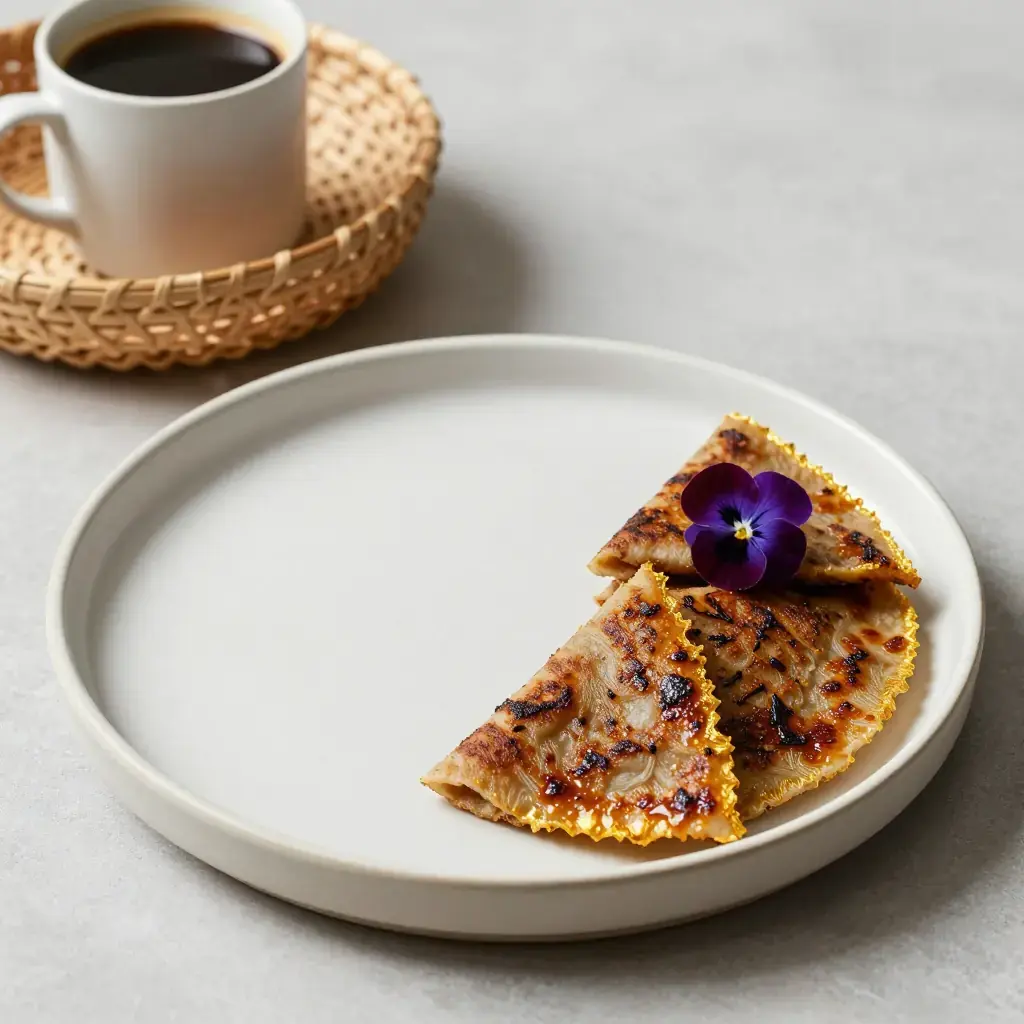
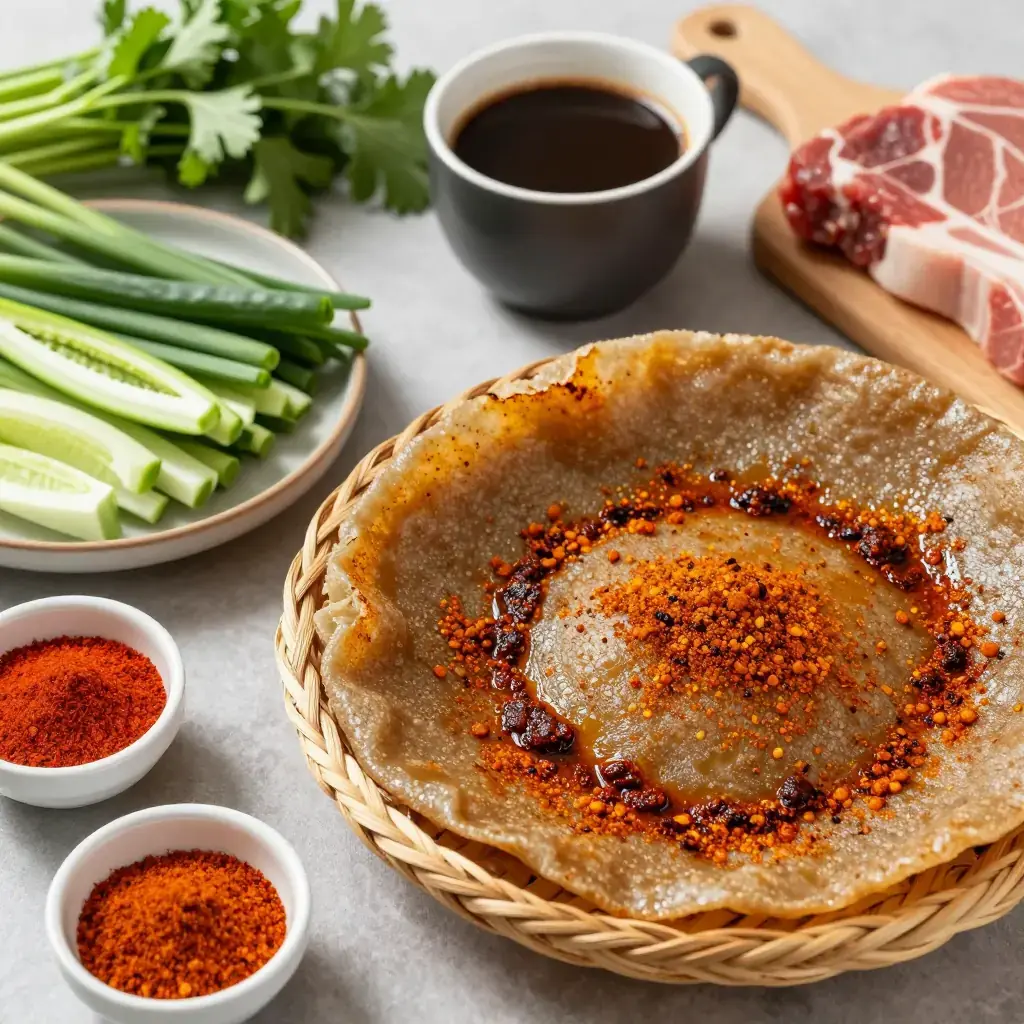
Kategna is one of Ethiopia's most beloved snacks — a slice of injera brushed with spiced niter kibbeh (Ethiopian clarified butter) and berbere, then toasted until the edges crisp and the surface turns golden and fragrant. Eaten as a breakfast, an afternoon snack, or alongside coffee, Kategna is the Ethiopian answer to garlic bread: impossible to eat just one piece.
Serves: 4
Ingredients
- 4 large injera, each cut into quarters (or 2 injera, halved)
- 80g (3 oz) niter kibbeh (Ethiopian spiced clarified butter) — substitute plain butter mixed with 0.25 tsp each turmeric, fenugreek, and cinnamon
- 2 tbsp berbere spice blend
- Salt to taste
For niter kibbeh (if making from scratch):
- 200g (7 oz) unsalted butter
- 0.5 small onion, chopped
- 2 garlic cloves
- 1 tsp grated fresh ginger
- 0.25 tsp turmeric, 0.25 tsp fenugreek seeds, small stick cinnamon, 2 cardamom pods
Instructions
- If making niter kibbeh: melt the butter slowly over low heat with the onion, garlic, ginger, and spices. Simmer very gently for 20 minutes without browning. Strain through a fine sieve and cool.
- Preheat a large dry skillet, griddle, or grill pan over medium heat until very hot — about 3 minutes.
- In a small bowl, mix the softened niter kibbeh with the berbere spice to form a paste. Season with a pinch of salt.
- Brush one side of each injera quarter generously with the spiced butter paste, covering the surface right to the edges.
- Place the injera butter-side down on the hot dry pan. Toast for 2–3 minutes until the butter-coated side is deeply golden and slightly crisp. Do not move it.
- Flip briefly — 30 seconds on the plain side just to warm through.
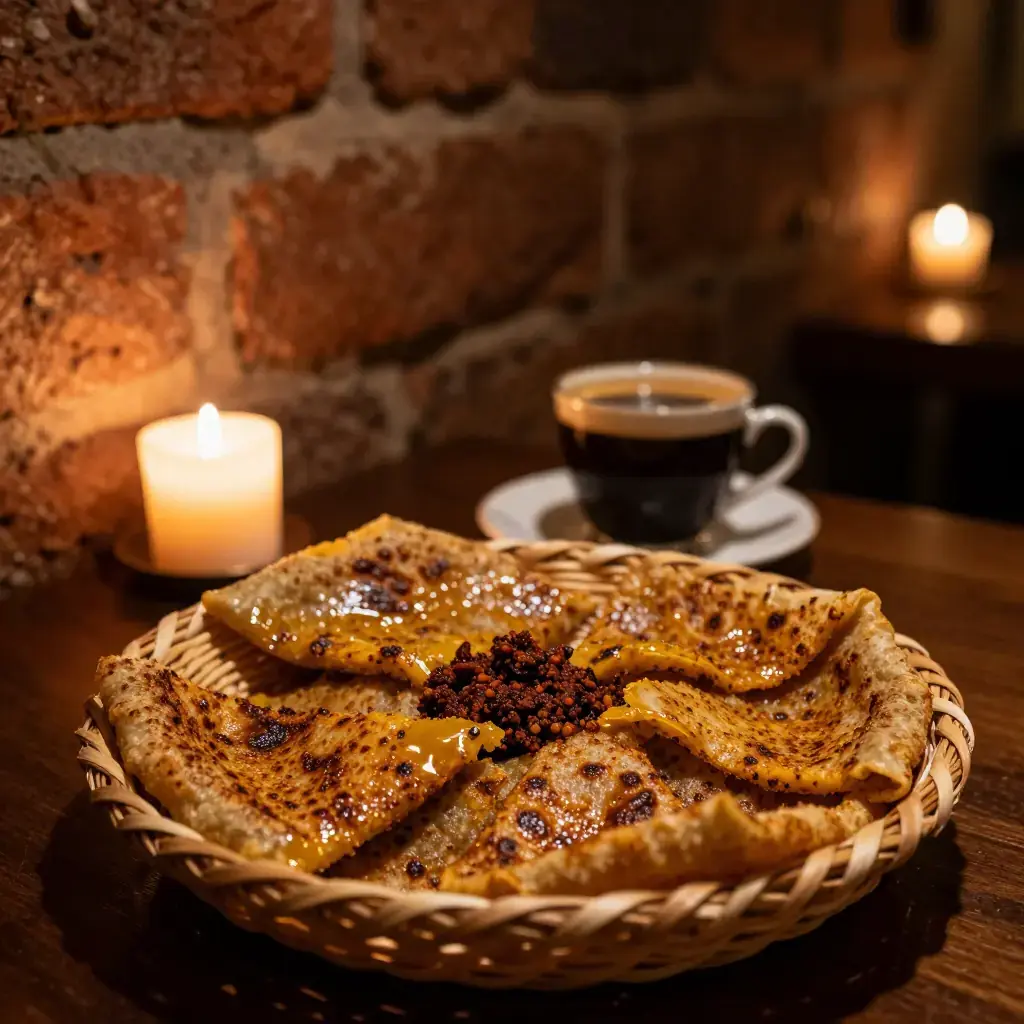
- Serve immediately while hot and fragrant, stacked in a basket lined with cloth.
Cook's Notes: The key is a genuinely hot pan — a lukewarm pan steams the injera rather than crisping it. Kategna is eaten with the fingers, tearing off pieces. It is traditionally served with Ethiopian coffee (buna) as a morning pairing.
All Revisions
generated
# Kategna Kategna is one of Ethiopia's most beloved snacks — a slice of injera brushed with spiced niter kibbeh (Ethiopian clarified butter) and berbere, then toasted until the edges crisp and the surface turns golden and fragrant. Eaten as a breakfast, an afternoon snack, or alongside coffee, Kategna is the Ethiopian answer to garlic bread: impossible to eat just one piece. Serves: 4 ## Ingredients - 4 large injera, each cut into quarters (or 2 injera, halved) - 80g (3 oz) niter kibbeh (Ethiopian spiced clarified butter) — substitute plain butter mixed with 0.25 tsp each turmeric, fenugreek, and cinnamon - 2 tbsp berbere spice blend - Salt to taste **For niter kibbeh (if making from scratch):** - 200g (7 oz) unsalted butter - 0.5 small onion, chopped - 2 garlic cloves - 1 tsp grated fresh ginger - 0.25 tsp turmeric, 0.25 tsp fenugreek seeds, small stick cinnamon, 2 cardamom pods ## Instructions 1. If making niter kibbeh: melt the butter slowly over low heat with the onion, garlic, ginger, and spices. Simmer very gently for 20 minutes without browning. Strain through a fine sieve and cool. 2. Preheat a large dry skillet, griddle, or grill pan over medium heat until very hot — about 3 minutes. 3. In a small bowl, mix the softened niter kibbeh with the berbere spice to form a paste. Season with a pinch of salt. 4. Brush one side of each injera quarter generously with the spiced butter paste, covering the surface right to the edges. 5. Place the injera butter-side down on the hot dry pan. Toast for 2–3 minutes until the butter-coated side is deeply golden and slightly crisp. Do not move it. 6. Flip briefly — 30 seconds on the plain side just to warm through. 7. Serve immediately while hot and fragrant, stacked in a basket lined with cloth. **Cook's Notes:** The key is a genuinely hot pan — a lukewarm pan steams the injera rather than crisping it. Kategna is eaten with the fingers, tearing off pieces. It is traditionally served with Ethiopian coffee (buna) as a morning pairing.Images
Tags
- breakfast
- comfort-food
- ethiopian
- quick-and-easy
- snack
- vegetarian