
Elarji
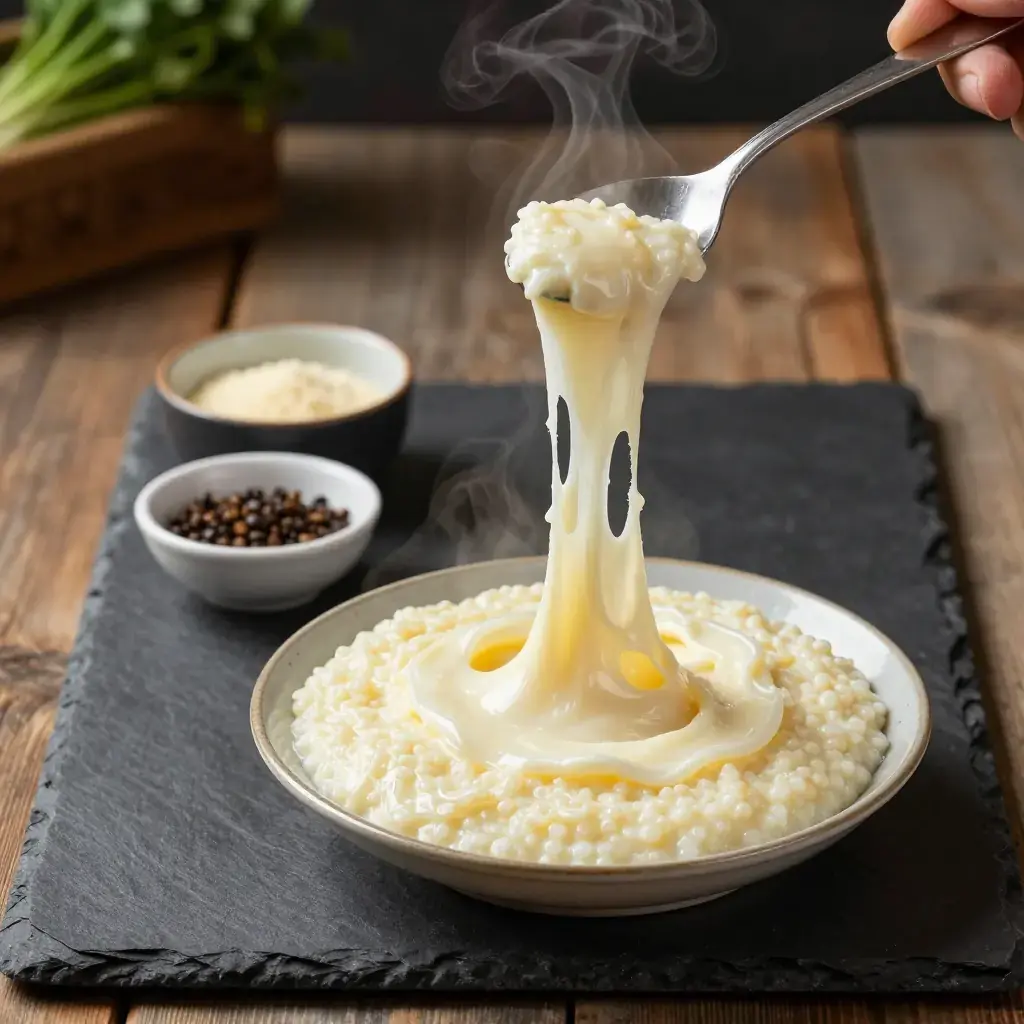
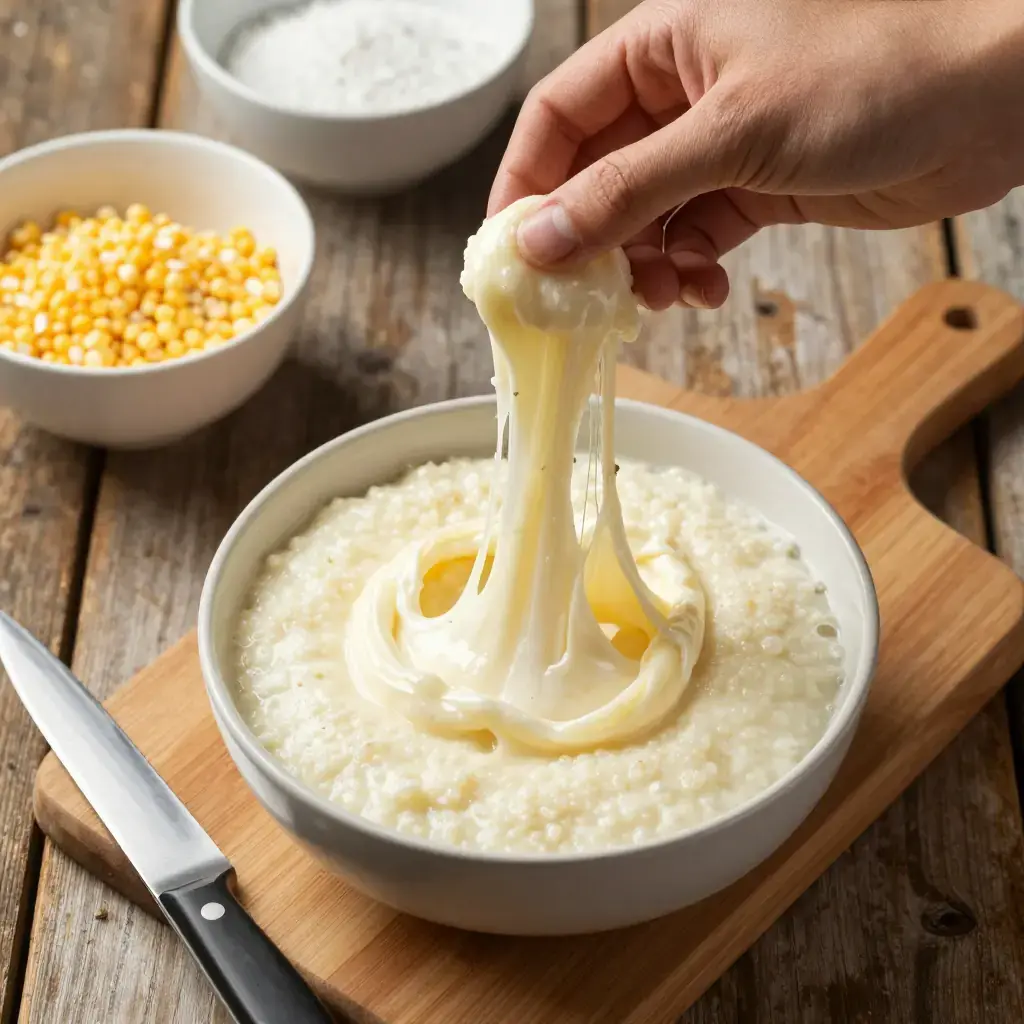
Elarji is a beloved dish from the Samegrelo region of western Georgia — a silky, stretchy polenta-like porridge enriched with so much Sulguni cheese that it forms long, elastic strands when you lift a spoon. It is served piping hot as a main course or substantial side, often accompanied by fresh vegetables or pickles to cut its richness.
Serves: 4
Ingredients
- 200g (7 oz) fine white cornmeal (not polenta grind — Georgian-style fine grind preferred)
- 1 litre (4 cups) water
- 1 tsp salt
- 400g (14 oz) Sulguni cheese, coarsely grated (substitute: a 50/50 mix of low-moisture mozzarella and mild feta)
- 30g (2 tbsp) unsalted butter
Instructions
- Bring the water to a rolling boil in a heavy-based saucepan over medium-high heat. Add the salt.
- Pour the cornmeal into the boiling water in a thin, steady stream, stirring constantly with a wooden spoon or whisk to prevent lumps — about 2 minutes.
- Reduce heat to low. Cook, stirring frequently, until the porridge thickens and begins to pull away from the sides of the pan, about 20–25 minutes.
- Add the butter and stir until melted. Then add the grated Sulguni in three additions, folding and pulling vigorously with a spoon after each addition. The mixture will become very stretchy and elastic as the cheese incorporates — this is the sign of a properly made Elarji.
- Continue cooking and stirring for a further 5 minutes until the cheese is fully melted and the mixture is cohesive and pulls into long strands. Season to taste.
- Serve immediately in bowls — Elarji waits for no one. Pull strands dramatically from the pot to the bowl for the full effect.
Cook's Notes: The quality of the cheese is everything — Sulguni's salty, milky tang and elastic texture are irreplaceable. Avoid pre-shredded cheese, as anti-caking agents prevent proper stretching. For a Megrelian feast, serve alongside Satsivi and pickled Jonjoli.
All Revisions
generated
# Elarji Elarji is a beloved dish from the Samegrelo region of western Georgia — a silky, stretchy polenta-like porridge enriched with so much Sulguni cheese that it forms long, elastic strands when you lift a spoon. It is served piping hot as a main course or substantial side, often accompanied by fresh vegetables or pickles to cut its richness. Serves: 4 ## Ingredients - 200g (7 oz) fine white cornmeal (not polenta grind — Georgian-style fine grind preferred) - 1 litre (4 cups) water - 1 tsp salt - 400g (14 oz) Sulguni cheese, coarsely grated (substitute: a 50/50 mix of low-moisture mozzarella and mild feta) - 30g (2 tbsp) unsalted butter ## Instructions 1. Bring the water to a rolling boil in a heavy-based saucepan over medium-high heat. Add the salt. 2. Pour the cornmeal into the boiling water in a thin, steady stream, stirring constantly with a wooden spoon or whisk to prevent lumps — about 2 minutes. 3. Reduce heat to low. Cook, stirring frequently, until the porridge thickens and begins to pull away from the sides of the pan, about 20–25 minutes. 4. Add the butter and stir until melted. Then add the grated Sulguni in three additions, folding and pulling vigorously with a spoon after each addition. The mixture will become very stretchy and elastic as the cheese incorporates — this is the sign of a properly made Elarji. 5. Continue cooking and stirring for a further 5 minutes until the cheese is fully melted and the mixture is cohesive and pulls into long strands. Season to taste. 6. Serve immediately in bowls — Elarji waits for no one. Pull strands dramatically from the pot to the bowl for the full effect. **Cook's Notes:** The quality of the cheese is everything — Sulguni's salty, milky tang and elastic texture are irreplaceable. Avoid pre-shredded cheese, as anti-caking agents prevent proper stretching. For a Megrelian feast, serve alongside Satsivi and pickled Jonjoli.Images


Tags
- authentic
- comfort-food
- dinner
- georgian
- gluten-free
- vegetarian