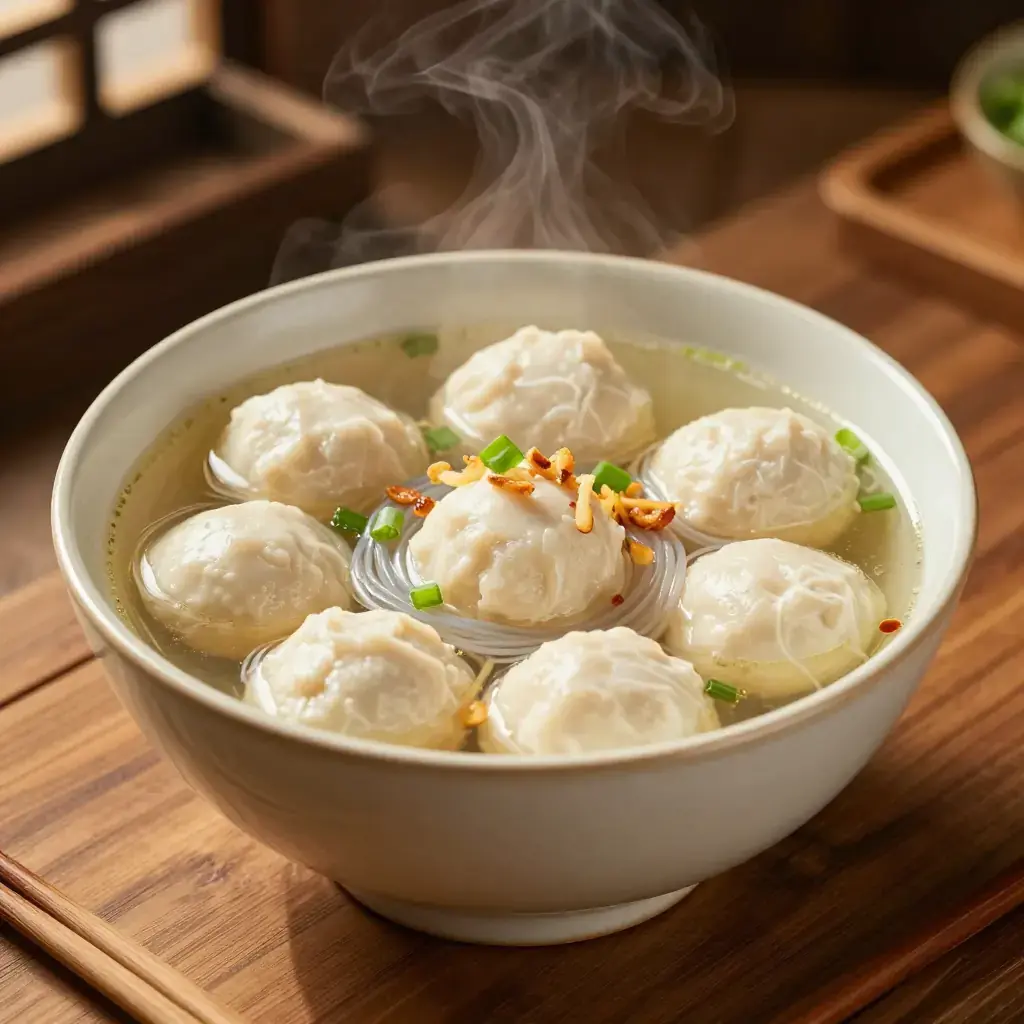
Fu Ding Yu Wan Tang (福鼎鱼丸汤)
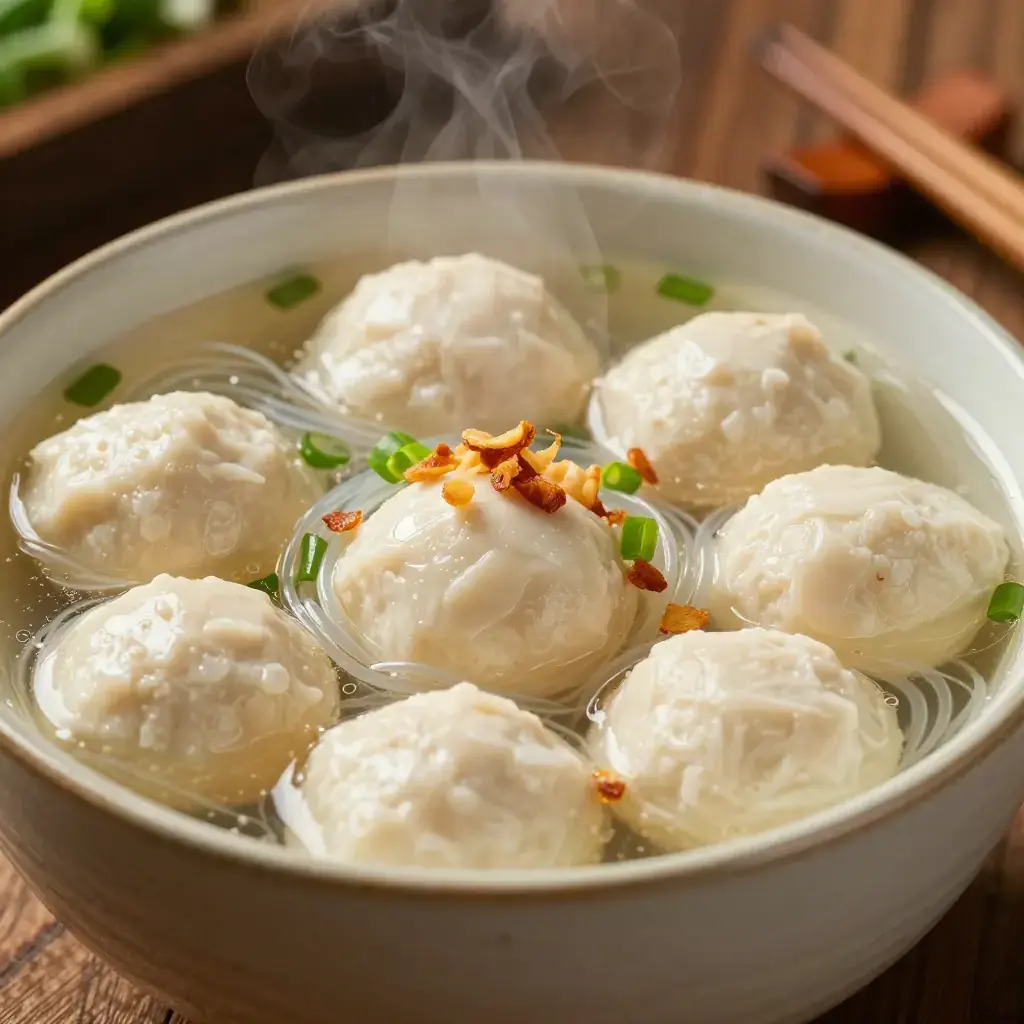
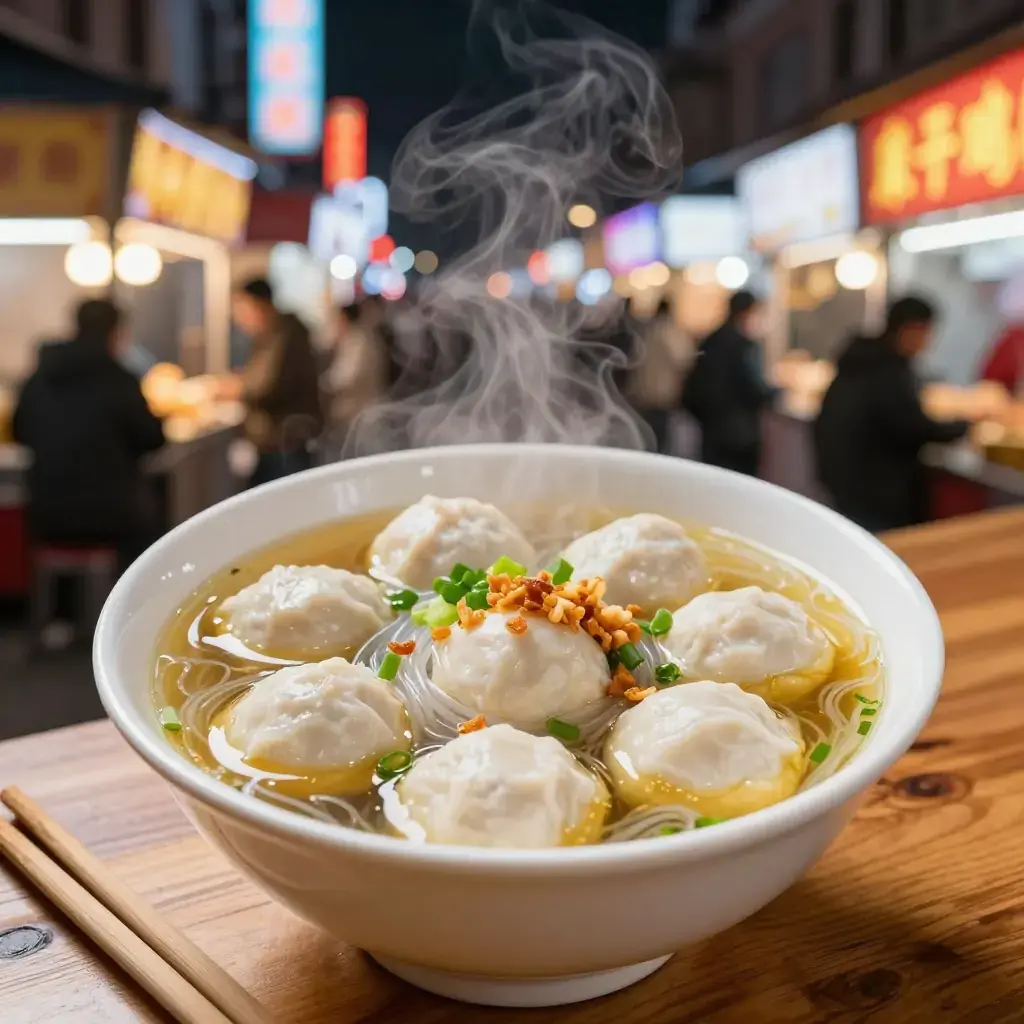
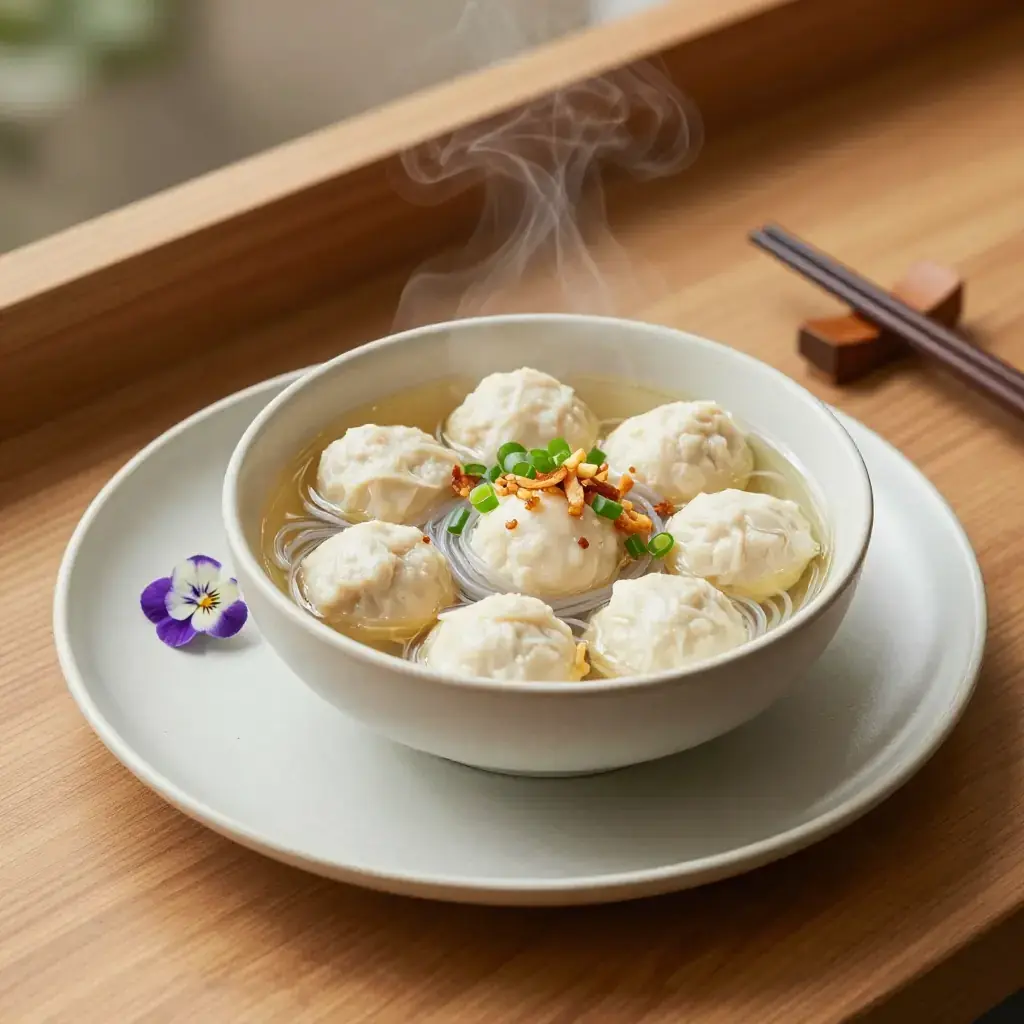
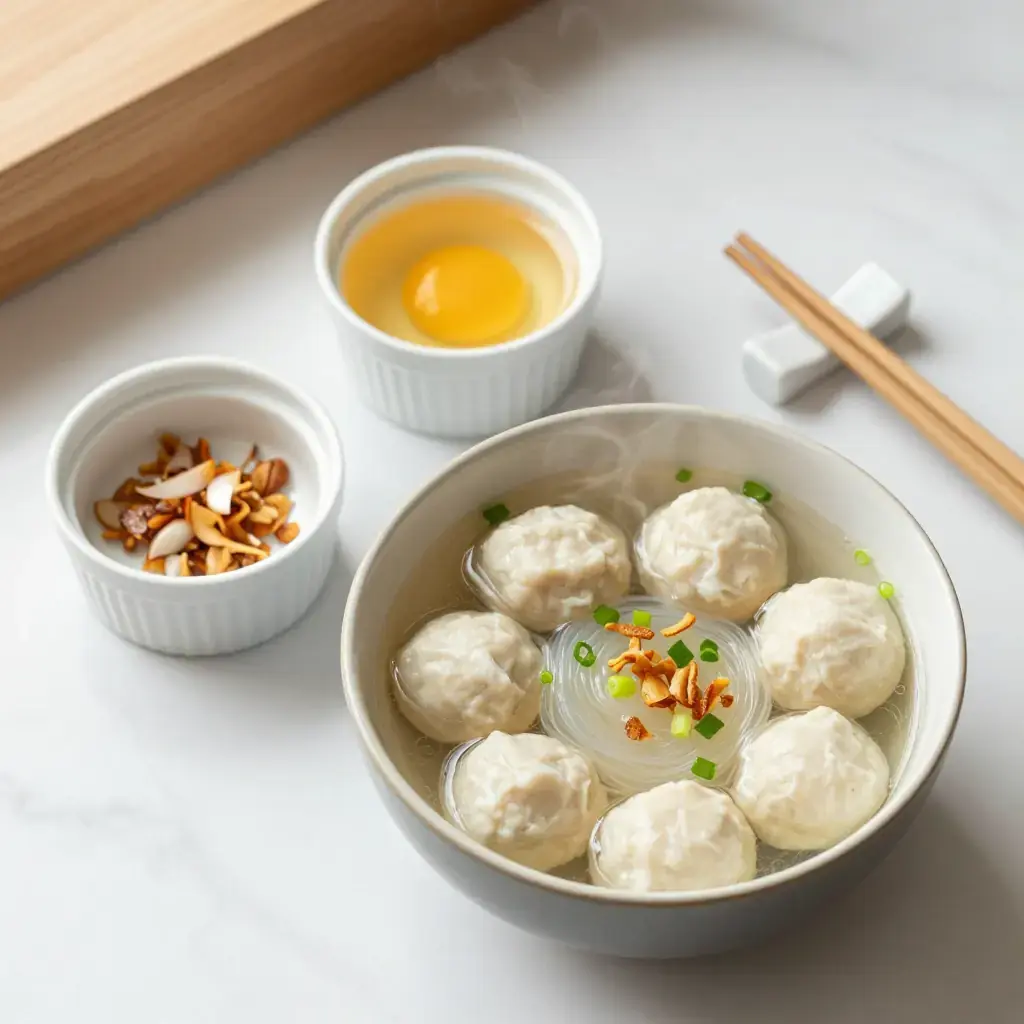
Fuding, a coastal city in northern Fujian, is celebrated across China for its hand-beaten fish balls — smooth, ivory spheres with a uniquely springy bite achieved by working fresh blue mackerel or hairtail paste with ice water until the proteins form long elastic strands. Unlike the dense Cantonese variety, Fuding fish balls are lighter and hollow enough to hold a pork-and-ginger filling. They are simmered in a clear seafood broth and served over thin rice noodles as a beloved breakfast or late-night supper.
Serves: 4
Ingredients
Fish balls
- 600g (1.3 lb) fresh blue mackerel or hairtail fillets, skin removed
- 1 egg white
- 1 tsp fine salt
- ½ tsp white pepper
- 2 tbsp (30 ml) ice water
- 1 tsp potato starch
Pork filling
- 100g (3.5 oz) minced fatty pork
- 1 tsp finely minced ginger
- 1 tsp light soy sauce
- ½ tsp sesame oil
Broth and assembly
- 1.5 litres (6 cups) light fish or chicken stock
- 2 tbsp (30 ml) light soy sauce
- 1 tsp sesame oil
- 200g (7 oz) thin rice vermicelli noodles, soaked
- 4 spring onions, thinly sliced
- Fried shallots, to serve
- White pepper, to finish
Instructions
- Chill all fish-ball tools (bowl, spatula) in the freezer for 10 minutes. Process fish fillets in a food processor for 2 minutes until smooth paste. Add egg white, salt, and white pepper; process 1 minute. Add ice water and starch; process another 2 minutes until the paste is sticky and elastic.
- Combine pork filling ingredients. Wet your hands with cold water. Take 2 tbsp fish paste, flatten in your palm, place ½ tsp filling in the centre, and seal into a smooth ball about 3 cm (1¼ inch) wide.
- Drop formed balls into a bowl of cold salted water as you work. Refrigerate 15 minutes to firm up.
- Bring a pot of unsalted water to a gentle simmer (not a rolling boil). Poach fish balls for 7–8 minutes until they float and are cooked through. Transfer with a slotted spoon.
- Heat stock with soy sauce and sesame oil. Cook rice vermicelli in the stock for 2 minutes.
- Divide noodles and broth between bowls. Add fish balls. Top with spring onion, fried shallots, and white pepper.
Cook's Notes: The secret to bouncy texture is continuous processing and ice-cold ingredients — warmth makes the paste gummy. If the paste sticks to your hands too much, wet them more frequently.
All Revisions
generated
# Fu Ding Yu Wan Tang (福鼎鱼丸汤) Fuding, a coastal city in northern Fujian, is celebrated across China for its hand-beaten fish balls — smooth, ivory spheres with a uniquely springy bite achieved by working fresh blue mackerel or hairtail paste with ice water until the proteins form long elastic strands. Unlike the dense Cantonese variety, Fuding fish balls are lighter and hollow enough to hold a pork-and-ginger filling. They are simmered in a clear seafood broth and served over thin rice noodles as a beloved breakfast or late-night supper. Serves: 4 ## Ingredients **Fish balls** - 600g (1.3 lb) fresh blue mackerel or hairtail fillets, skin removed - 1 egg white - 1 tsp fine salt - ½ tsp white pepper - 2 tbsp (30 ml) ice water - 1 tsp potato starch **Pork filling** - 100g (3.5 oz) minced fatty pork - 1 tsp finely minced ginger - 1 tsp light soy sauce - ½ tsp sesame oil **Broth and assembly** - 1.5 litres (6 cups) light fish or chicken stock - 2 tbsp (30 ml) light soy sauce - 1 tsp sesame oil - 200g (7 oz) thin rice vermicelli noodles, soaked - 4 spring onions, thinly sliced - Fried shallots, to serve - White pepper, to finish ## Instructions 1. Chill all fish-ball tools (bowl, spatula) in the freezer for 10 minutes. Process fish fillets in a food processor for 2 minutes until smooth paste. Add egg white, salt, and white pepper; process 1 minute. Add ice water and starch; process another 2 minutes until the paste is sticky and elastic. 2. Combine pork filling ingredients. Wet your hands with cold water. Take 2 tbsp fish paste, flatten in your palm, place ½ tsp filling in the centre, and seal into a smooth ball about 3 cm (1¼ inch) wide. 3. Drop formed balls into a bowl of cold salted water as you work. Refrigerate 15 minutes to firm up. 4. Bring a pot of unsalted water to a gentle simmer (not a rolling boil). Poach fish balls for 7–8 minutes until they float and are cooked through. Transfer with a slotted spoon. 5. Heat stock with soy sauce and sesame oil. Cook rice vermicelli in the stock for 2 minutes. 6. Divide noodles and broth between bowls. Add fish balls. Top with spring onion, fried shallots, and white pepper. **Cook's Notes:** The secret to bouncy texture is continuous processing and ice-cold ingredients — warmth makes the paste gummy. If the paste sticks to your hands too much, wet them more frequently.Images
Tags
- authentic
- breakfast
- fujian
- hot-soup
- noodles
- seafood