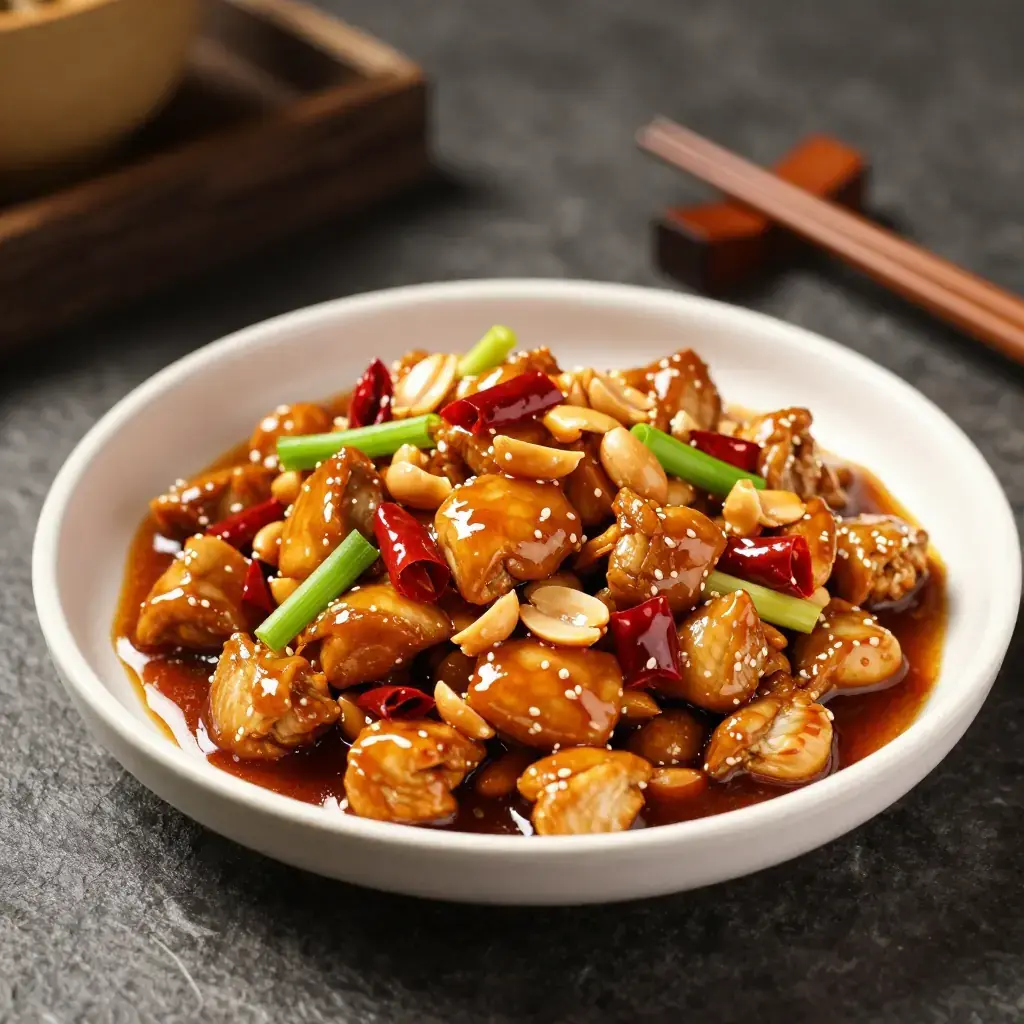
Gong Bao Ji Ding
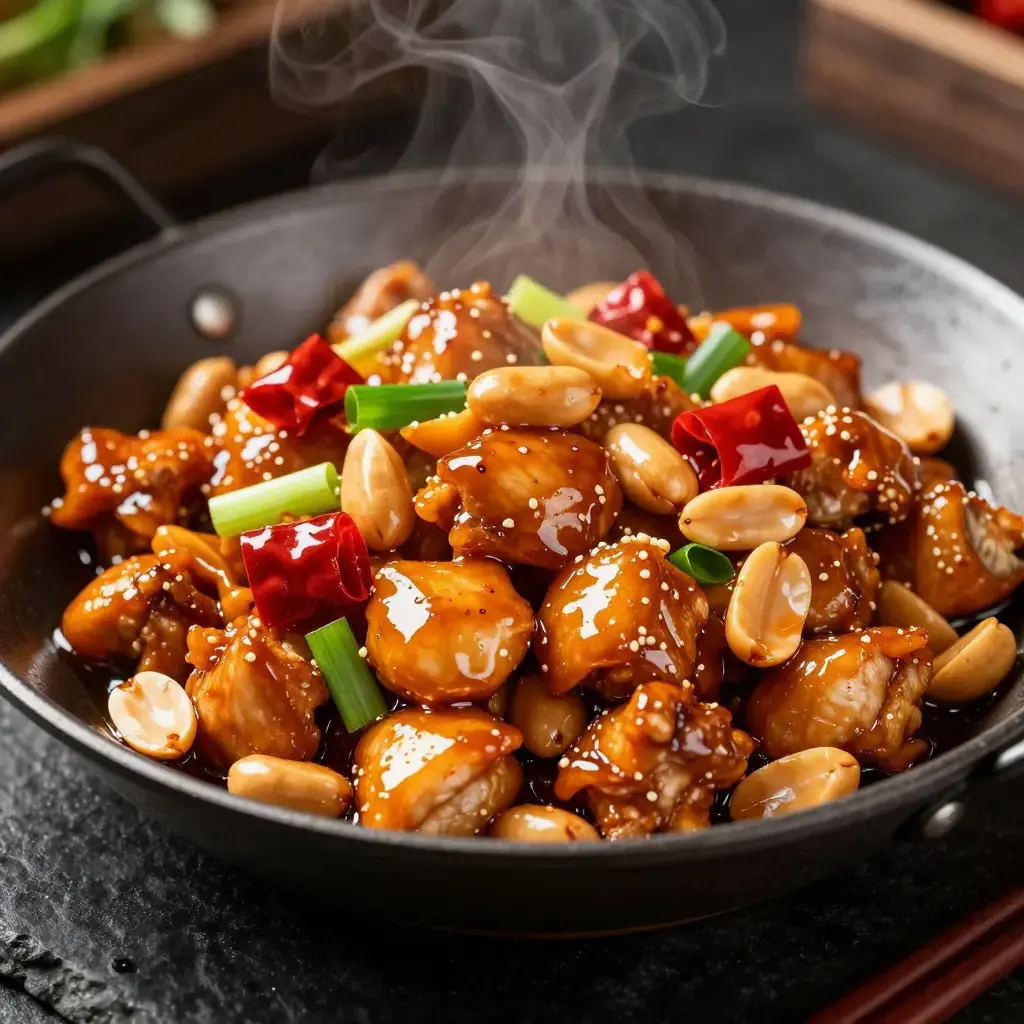
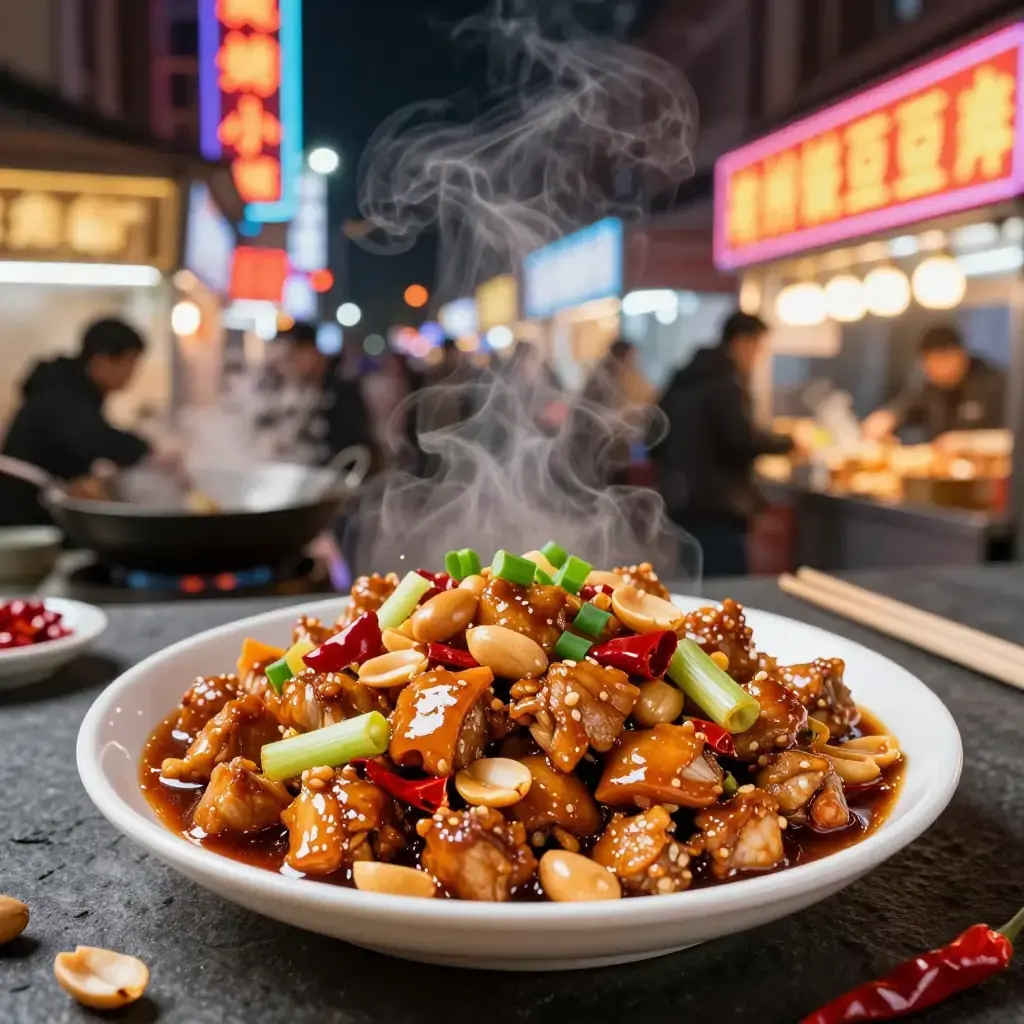
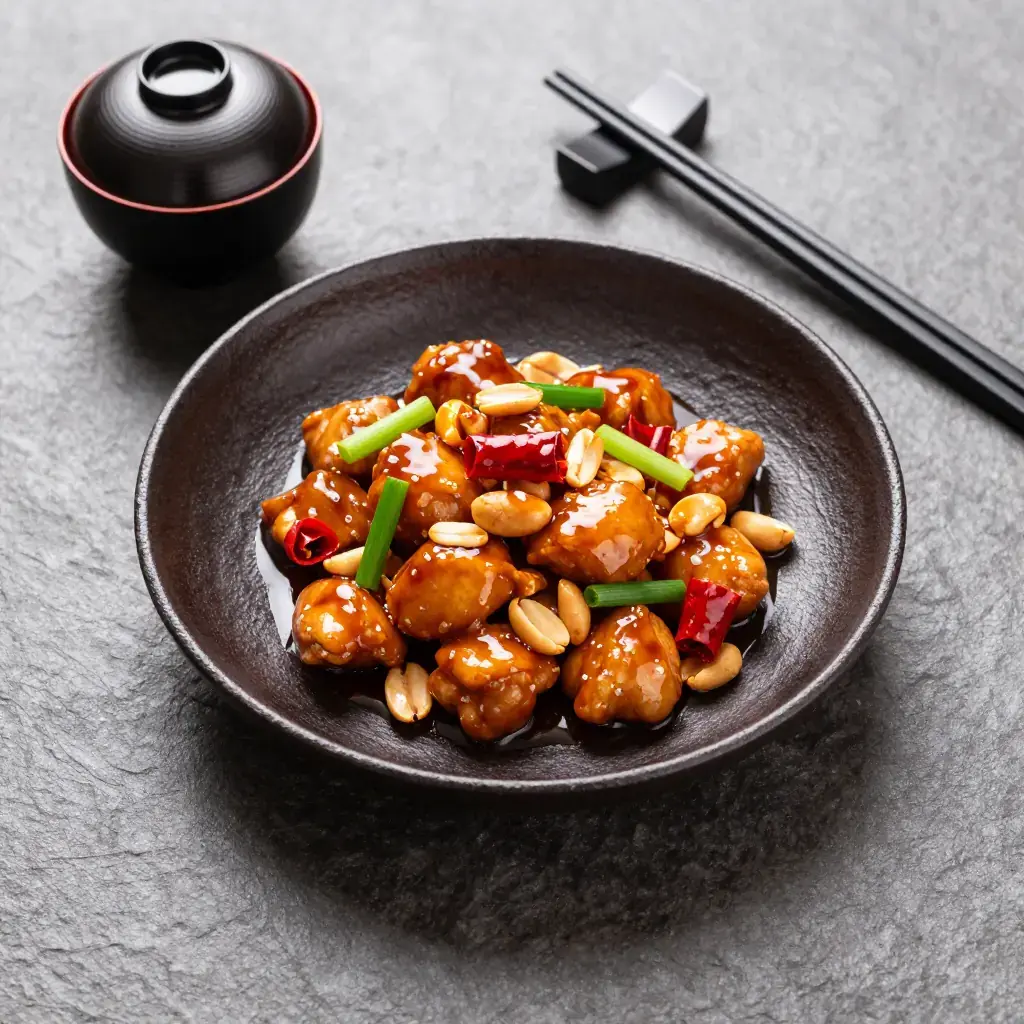
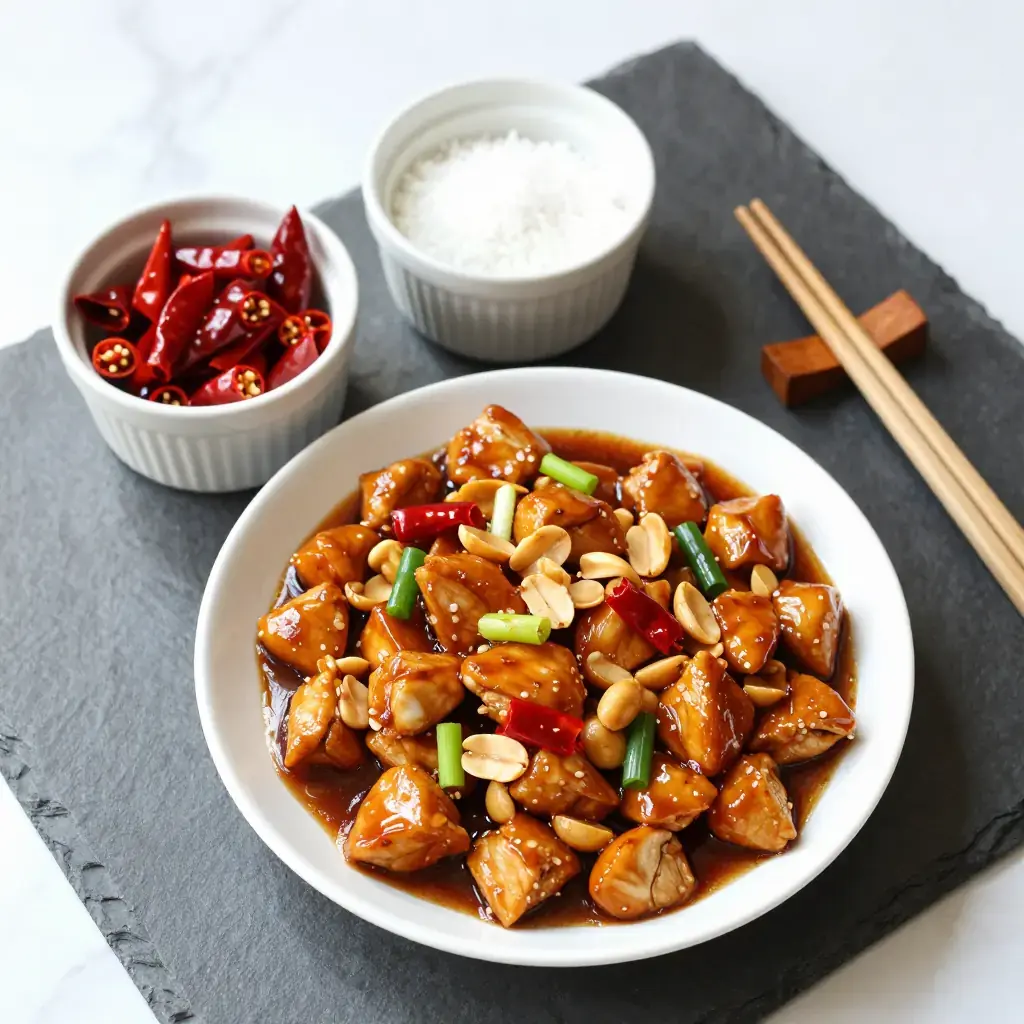
Gong Bao Ji Ding is one of China's most recognised and beloved dishes, named after Ding Baozhen, a Qing dynasty governor of Sichuan who purportedly loved this preparation of wok-fried diced chicken with peanuts, dried chiles, and the numbing heat of Sichuan peppercorn. The original Sichuan version is sharper and more vinegary than its many international adaptations — a thrilling balance of ma la (numbing-hot), sweet, sour, and savoury.
Serves: 4
Ingredients
- 500g (1 lb) boneless chicken thighs, cut into 1.5cm (1/2-inch) dice
- 100g (3.5 oz) raw peanuts, deep-fried or dry-roasted until golden
- 10-15 dried red chiles, halved and seeds mostly removed
- 1 tsp whole Sichuan peppercorns
- 4 spring onions (scallions), white parts cut into 2cm batons, green parts reserved
- 2 cloves garlic, minced
- 2cm piece ginger, minced
- 2 tbsp (30ml) neutral oil
Marinade:
- 1 tbsp (15ml) light soy sauce
- 1 tbsp (15ml) Shaoxing rice wine
- 1 tsp cornflour (cornstarch)
Sauce:
- 2 tbsp (30ml) Chinkiang black vinegar
- 1.5 tbsp (22ml) light soy sauce
- 1 tbsp (15ml) Shaoxing rice wine
- 2 tsp sugar
- 1 tsp sesame oil
- 1 tsp cornflour (cornstarch) dissolved in 2 tbsp water
Instructions
- Toss diced chicken with marinade ingredients. Set aside 15 minutes. Mix the sauce ingredients together in a small bowl and set aside.
- Heat wok over highest possible heat until smoking. Add 2 tbsp oil. Spread chicken in a single layer and fry undisturbed 1-2 minutes until lightly golden on one side. Toss and stir-fry another 2 minutes until just cooked through. Remove.
- In the same wok over medium heat, fry dried chiles and Sichuan peppercorns 30-45 seconds until fragrant and the chiles darken slightly. Add garlic, ginger, and spring onion whites; stir-fry 30 seconds.
- Return chicken to wok. Pour in the sauce and toss vigorously over high heat for 60 seconds until the sauce thickens and coats every piece.
- Add the peanuts and toss to combine. Garnish with spring onion greens and serve immediately with steamed rice.
Cook's Notes: The vinegar is what distinguishes the authentic Sichuan version — do not reduce it or substitute with rice vinegar; Chinkiang's depth is essential. Peanuts go in last to preserve their crunch.
All Revisions
generated
# Gong Bao Ji Ding Gong Bao Ji Ding is one of China's most recognised and beloved dishes, named after Ding Baozhen, a Qing dynasty governor of Sichuan who purportedly loved this preparation of wok-fried diced chicken with peanuts, dried chiles, and the numbing heat of Sichuan peppercorn. The original Sichuan version is sharper and more vinegary than its many international adaptations — a thrilling balance of ma la (numbing-hot), sweet, sour, and savoury. Serves: 4 ## Ingredients - 500g (1 lb) boneless chicken thighs, cut into 1.5cm (1/2-inch) dice - 100g (3.5 oz) raw peanuts, deep-fried or dry-roasted until golden - 10-15 dried red chiles, halved and seeds mostly removed - 1 tsp whole Sichuan peppercorns - 4 spring onions (scallions), white parts cut into 2cm batons, green parts reserved - 2 cloves garlic, minced - 2cm piece ginger, minced - 2 tbsp (30ml) neutral oil **Marinade:** - 1 tbsp (15ml) light soy sauce - 1 tbsp (15ml) Shaoxing rice wine - 1 tsp cornflour (cornstarch) **Sauce:** - 2 tbsp (30ml) Chinkiang black vinegar - 1.5 tbsp (22ml) light soy sauce - 1 tbsp (15ml) Shaoxing rice wine - 2 tsp sugar - 1 tsp sesame oil - 1 tsp cornflour (cornstarch) dissolved in 2 tbsp water ## Instructions 1. Toss diced chicken with marinade ingredients. Set aside 15 minutes. Mix the sauce ingredients together in a small bowl and set aside. 2. Heat wok over highest possible heat until smoking. Add 2 tbsp oil. Spread chicken in a single layer and fry undisturbed 1-2 minutes until lightly golden on one side. Toss and stir-fry another 2 minutes until just cooked through. Remove. 3. In the same wok over medium heat, fry dried chiles and Sichuan peppercorns 30-45 seconds until fragrant and the chiles darken slightly. Add garlic, ginger, and spring onion whites; stir-fry 30 seconds. 4. Return chicken to wok. Pour in the sauce and toss vigorously over high heat for 60 seconds until the sauce thickens and coats every piece. 5. Add the peanuts and toss to combine. Garnish with spring onion greens and serve immediately with steamed rice. **Cook's Notes:** The vinegar is what distinguishes the authentic Sichuan version — do not reduce it or substitute with rice vinegar; Chinkiang's depth is essential. Peanuts go in last to preserve their crunch.Images
Tags
- authentic
- dinner
- quick-and-easy
- sichuan
- stir-fried