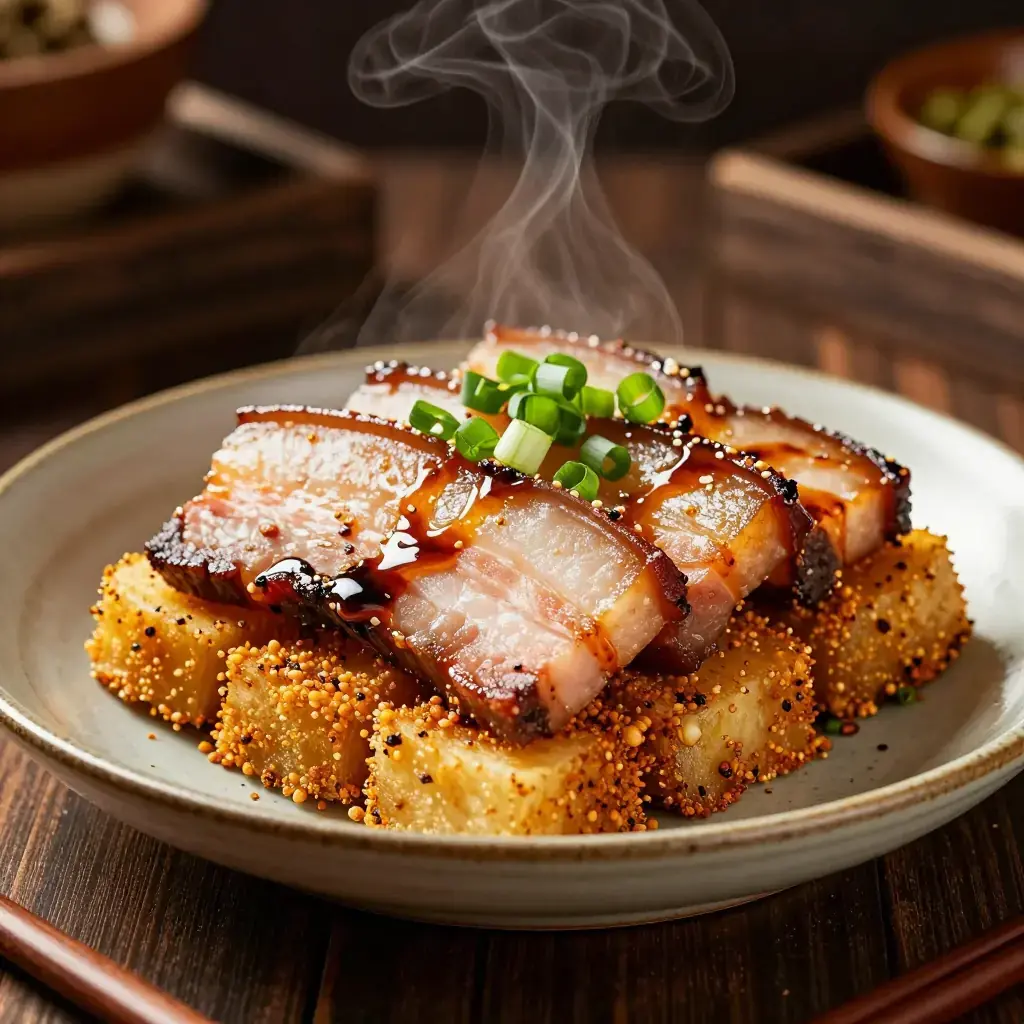
Mi Fen Rou
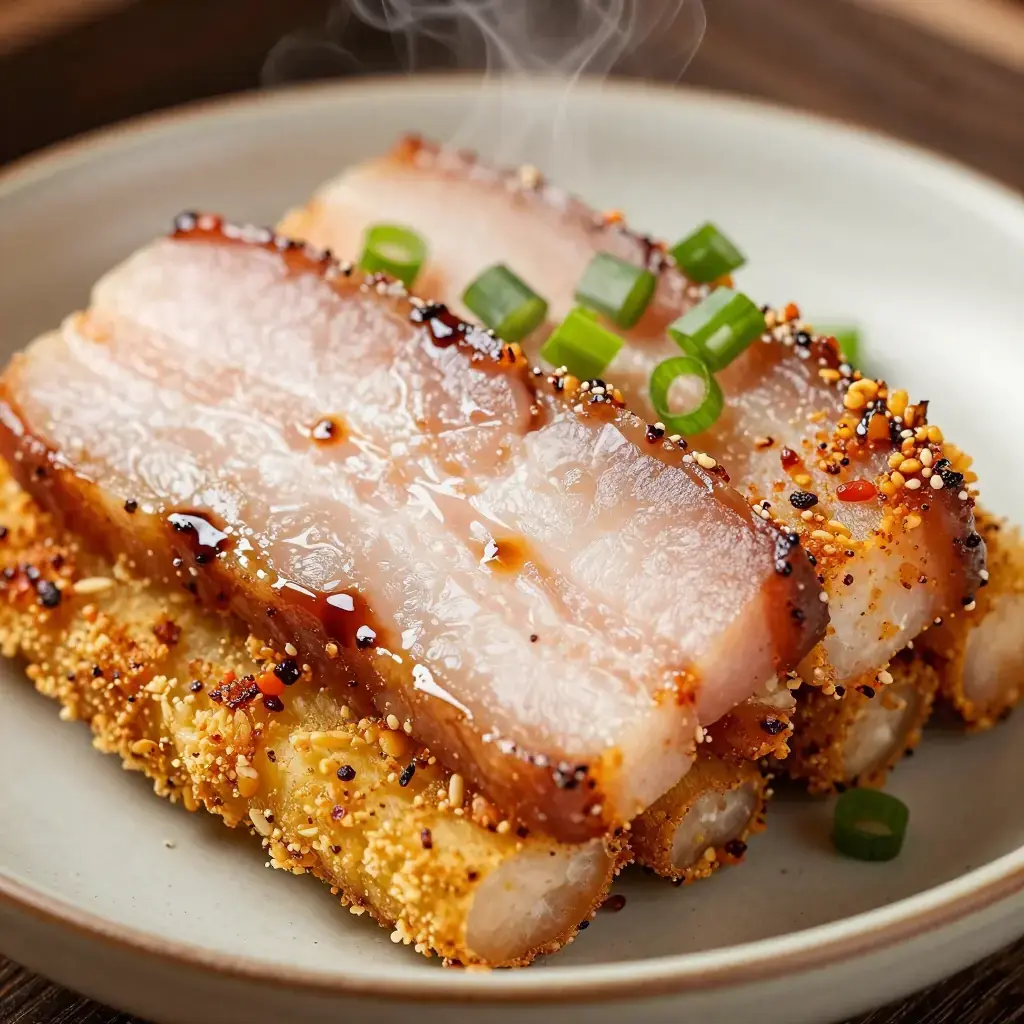
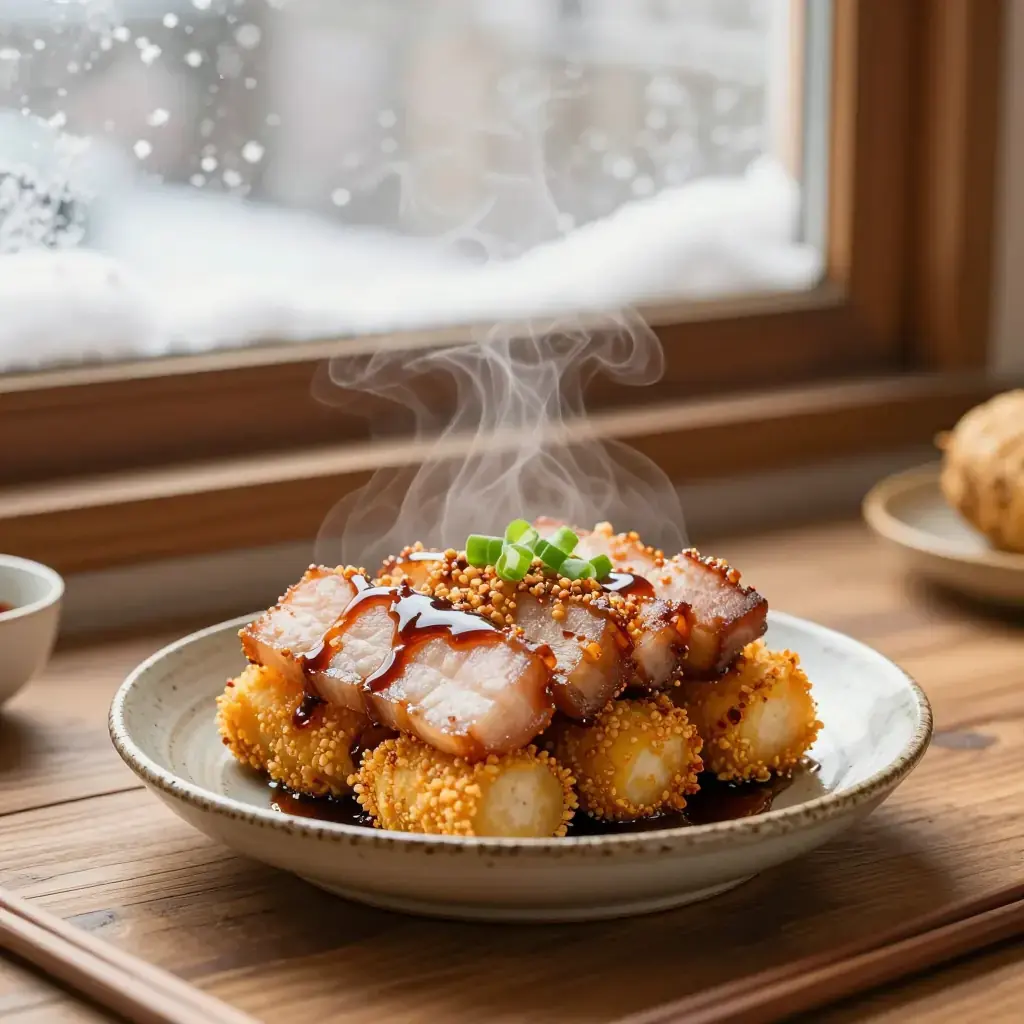
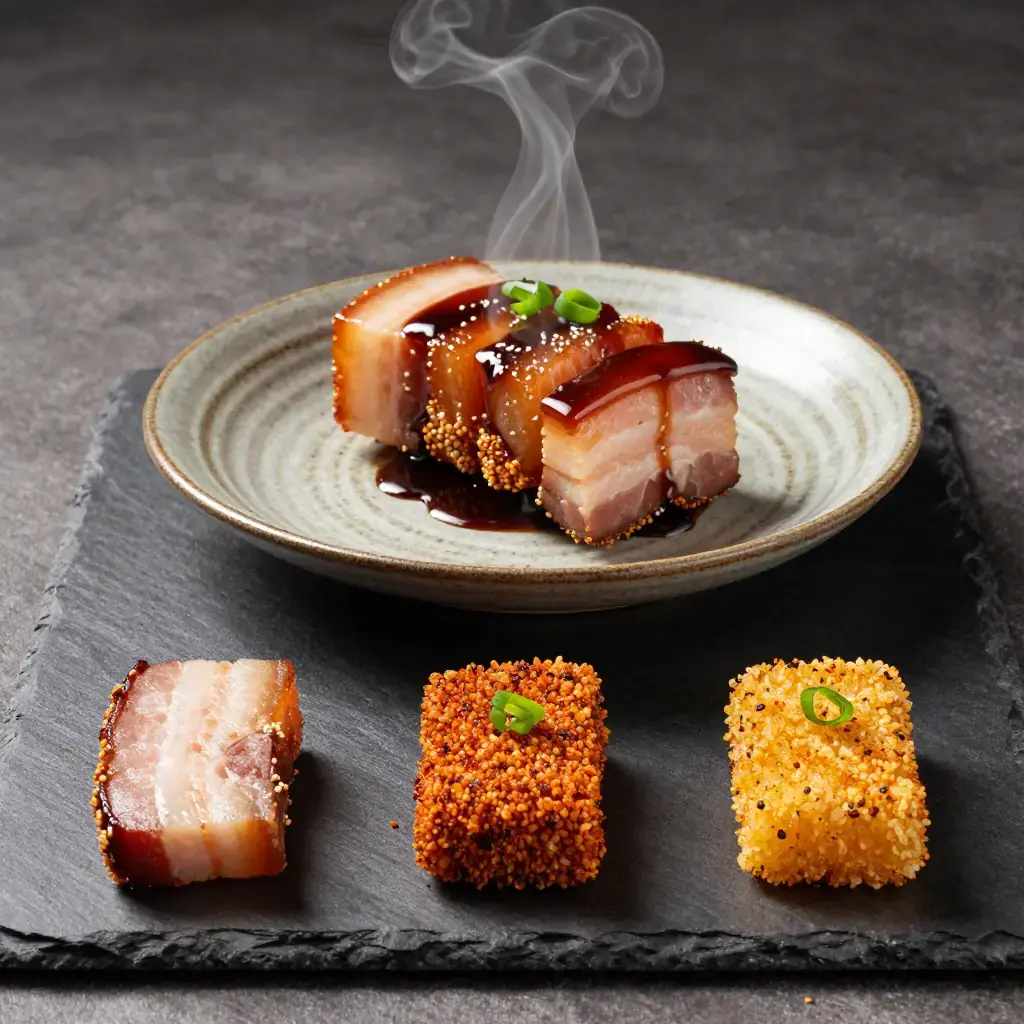
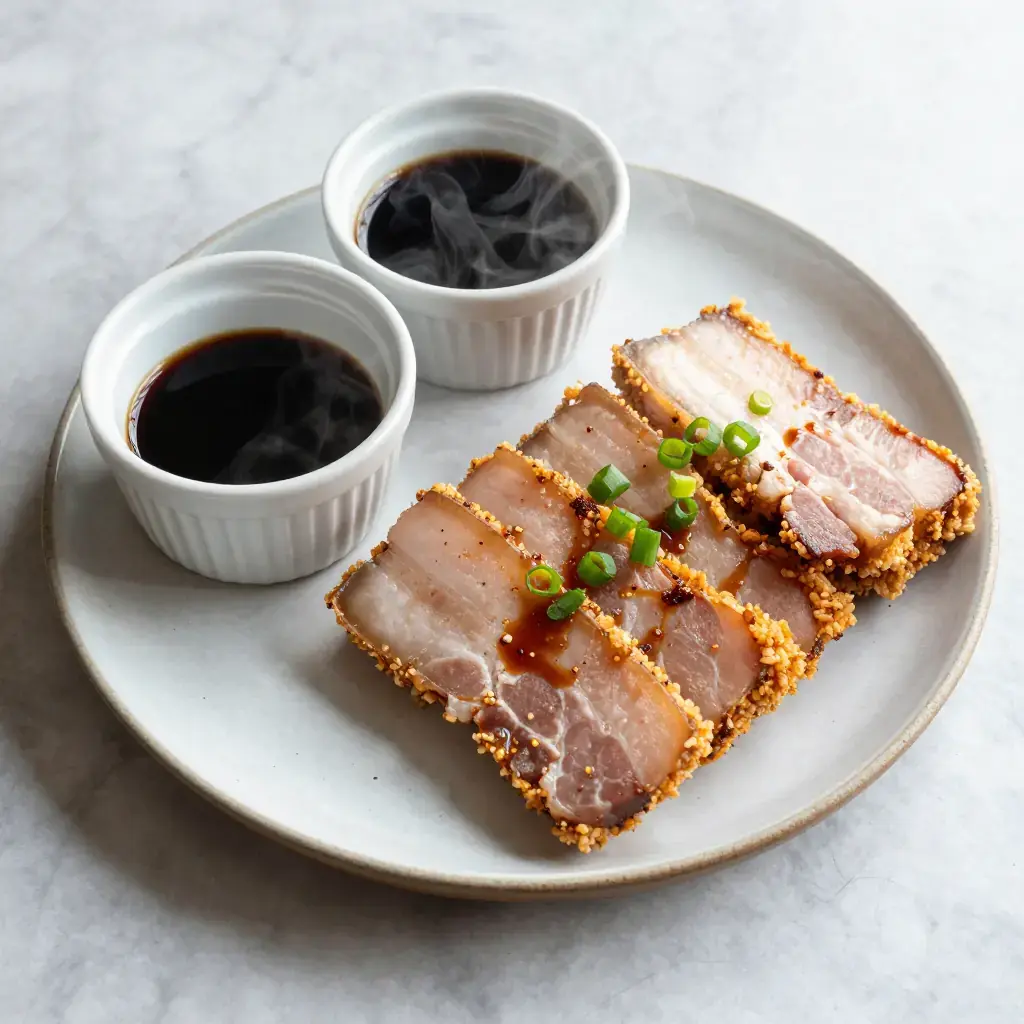
Mi Fen Rou is a jewel of Hunan home cooking and a staple of New Year banquets — thick slices of fatty pork belly coated in toasted spiced rice flour and steamed over a base of taro or sweet potato until the meat is meltingly tender. The rice flour absorbs the rendered fat and aromatics, forming a fragrant crust that is neither fried nor braised but something uniquely its own.
Serves: 4
Ingredients
- 600g (1.3 lb) pork belly, skin-on, sliced 8mm (⅓ in) thick
- 300g (10 oz) taro or sweet potato, peeled and sliced 1cm (½ in) thick
Marinade:
- 2 tbsp (30ml) doubanjiang (fermented chilli bean paste)
- 1 tbsp (15ml) soy sauce
- 1 tbsp (15ml) dark soy sauce
- 1 tbsp (15ml) Shaoxing wine
- 1 tsp sugar
- 1 tsp ground five-spice
- 3 cloves garlic, minced
- 1 tbsp (15ml) sesame oil
Spiced rice flour:
- 80g (⅔ cup) short-grain rice
- 1 tbsp (15ml) Sichuan peppercorns
- 2 star anise
- 1 cinnamon stick, broken
- ½ tsp fennel seeds
Instructions
- Toast rice in a dry wok over low heat for 8–10 minutes, stirring constantly, until golden and nutty-smelling. Add Sichuan peppercorns, star anise, cinnamon, and fennel seeds; toast together for 2 more minutes. Cool completely, then grind to a coarse powder in a spice grinder or mortar. Do not over-process — it should have some texture.
- Combine all marinade ingredients. Toss pork belly slices in the marinade and coat well. Marinate for at least 1 hour (overnight is ideal).
- Add spiced rice flour to the marinated pork and toss to coat each slice thoroughly.
- Arrange taro or sweet potato slices in a single layer in a heatproof bowl or steamer basket. Lay pork slices on top, overlapping slightly.
- Steam over boiling water for 60–75 minutes until pork is fully tender and the rice flour coating has set into a fragrant crust.
- Invert onto a serving plate so the root vegetables are on top. Garnish with sliced scallion and serve with steamed rice.
Cook's Notes: The inversion is traditional and theatrical — the vegetables soak up the fat that drips down during steaming. Sweet potato gives a sweeter result; taro is earthier and more traditional.
All Revisions
generated
# Mi Fen Rou Mi Fen Rou is a jewel of Hunan home cooking and a staple of New Year banquets — thick slices of fatty pork belly coated in toasted spiced rice flour and steamed over a base of taro or sweet potato until the meat is meltingly tender. The rice flour absorbs the rendered fat and aromatics, forming a fragrant crust that is neither fried nor braised but something uniquely its own. Serves: 4 ## Ingredients - 600g (1.3 lb) pork belly, skin-on, sliced 8mm (⅓ in) thick - 300g (10 oz) taro or sweet potato, peeled and sliced 1cm (½ in) thick **Marinade:** - 2 tbsp (30ml) doubanjiang (fermented chilli bean paste) - 1 tbsp (15ml) soy sauce - 1 tbsp (15ml) dark soy sauce - 1 tbsp (15ml) Shaoxing wine - 1 tsp sugar - 1 tsp ground five-spice - 3 cloves garlic, minced - 1 tbsp (15ml) sesame oil **Spiced rice flour:** - 80g (⅔ cup) short-grain rice - 1 tbsp (15ml) Sichuan peppercorns - 2 star anise - 1 cinnamon stick, broken - ½ tsp fennel seeds ## Instructions 1. Toast rice in a dry wok over low heat for 8–10 minutes, stirring constantly, until golden and nutty-smelling. Add Sichuan peppercorns, star anise, cinnamon, and fennel seeds; toast together for 2 more minutes. Cool completely, then grind to a coarse powder in a spice grinder or mortar. Do not over-process — it should have some texture. 2. Combine all marinade ingredients. Toss pork belly slices in the marinade and coat well. Marinate for at least 1 hour (overnight is ideal). 3. Add spiced rice flour to the marinated pork and toss to coat each slice thoroughly. 4. Arrange taro or sweet potato slices in a single layer in a heatproof bowl or steamer basket. Lay pork slices on top, overlapping slightly. 5. Steam over boiling water for 60–75 minutes until pork is fully tender and the rice flour coating has set into a fragrant crust. 6. Invert onto a serving plate so the root vegetables are on top. Garnish with sliced scallion and serve with steamed rice. **Cook's Notes:** The inversion is traditional and theatrical — the vegetables soak up the fat that drips down during steaming. Sweet potato gives a sweeter result; taro is earthier and more traditional.Images
Tags
- authentic
- comfort-food
- dinner-party
- from-input
- hunan
- root-vegetables
- steamed