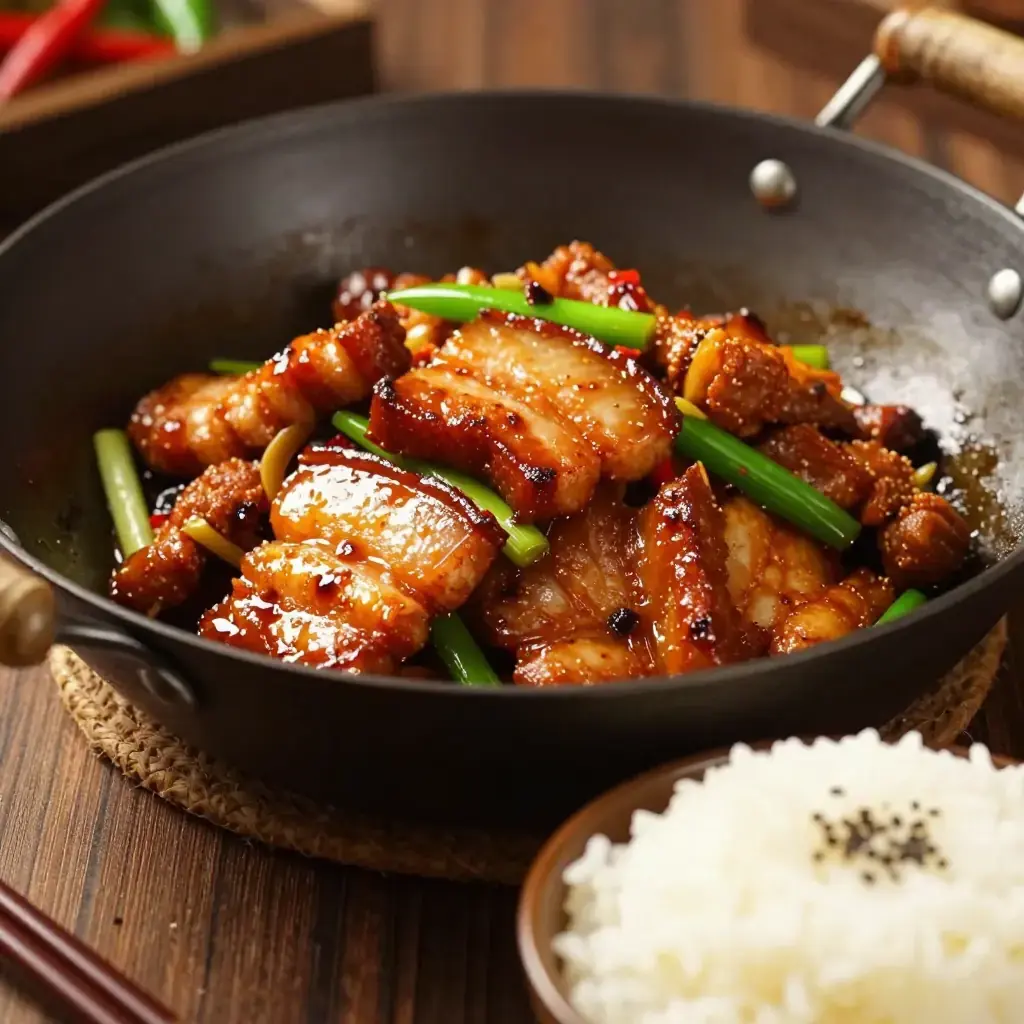
Hui Guo Rou
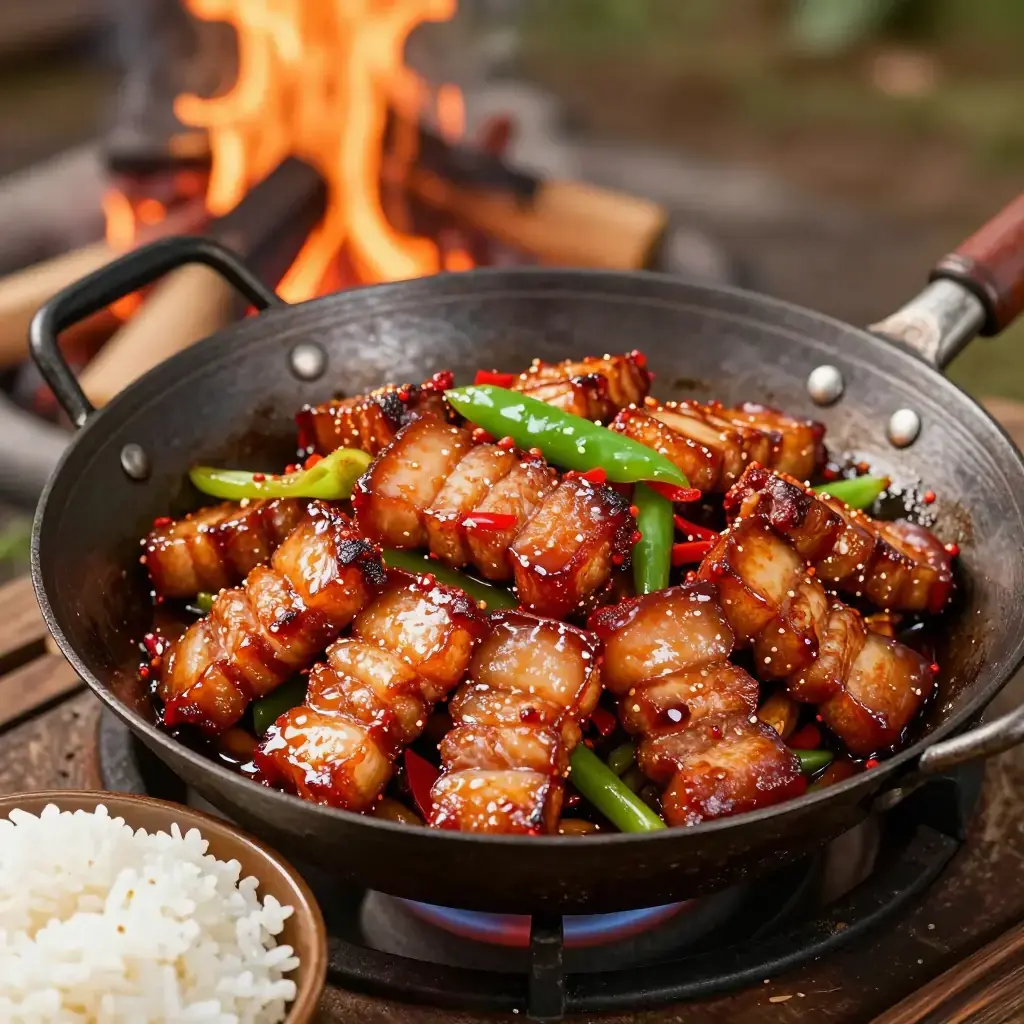
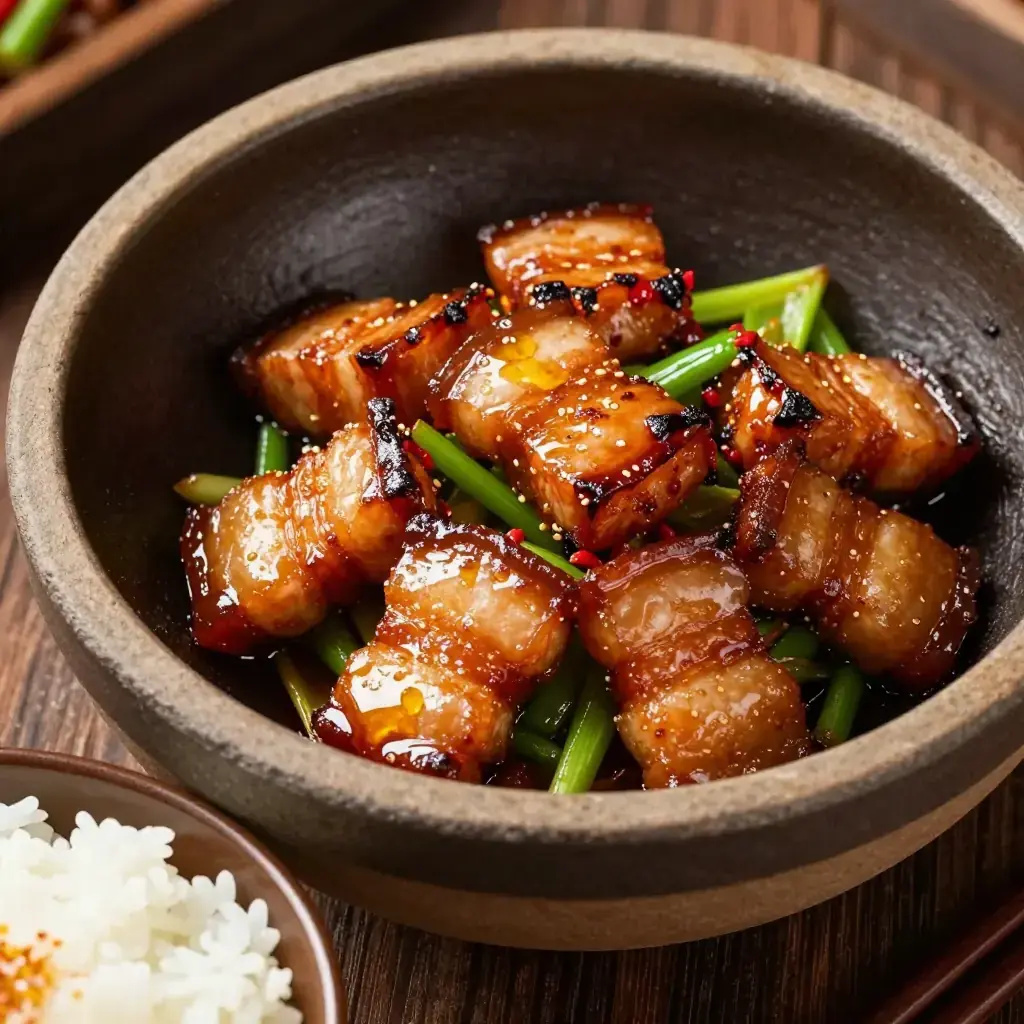
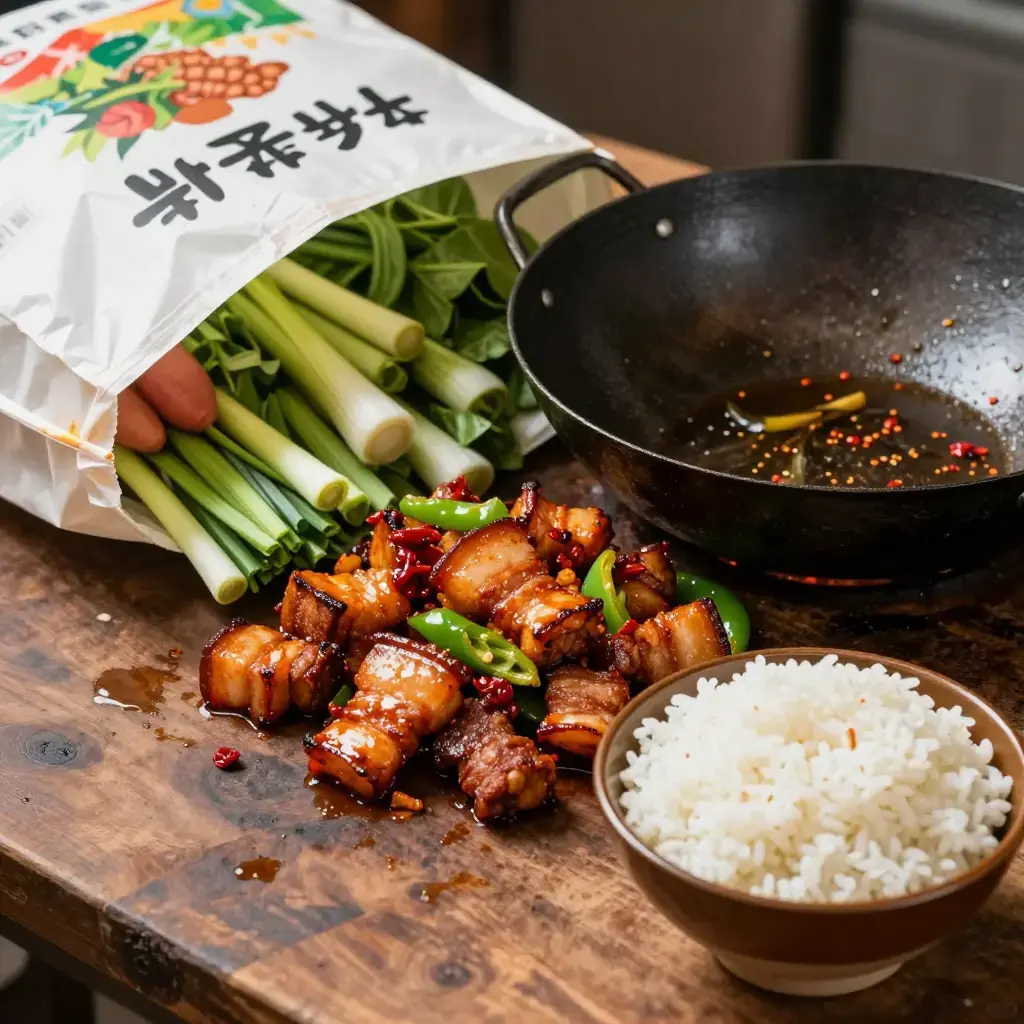
Hui Guo Rou — literally 'back-to-the-wok meat' — is one of Sichuan's most beloved home dishes. Pork belly is first poached whole with aromatics, then sliced thin and returned to a blazing wok where it curls and blisters against doubanjiang (fermented chilli bean paste) and the sweetness of green leeks. The result is a harmony of smoke, spice, and umami that defines Sichuanese home cooking.
Serves: 4
Ingredients
- 600g (1.3 lb) skin-on pork belly, in one piece
- 3 stalks leek, white and pale green parts, sliced diagonally 4cm (1.5 in)
- 1 green bell pepper, cut in 3cm (1 in) pieces
- 2 tbsp (30ml) doubanjiang (Pixian fermented chilli bean paste)
- 1 tbsp (15ml) sweet bean paste (tianmianjiang)
- 1 tbsp (15ml) Shaoxing wine
- 1 tsp dark soy sauce
- 1 tsp sugar
- 2 tbsp (30ml) neutral oil
For poaching:
- 3 slices fresh ginger
- 2 scallion stalks
- 1 tbsp (15ml) Shaoxing wine
Instructions
- Place pork belly in a pot and cover with cold water. Add ginger, scallion, and Shaoxing wine. Bring to a boil, reduce heat, and simmer for 25–30 minutes until just cooked through and a chopstick can be inserted with slight resistance. Remove and cool completely (refrigerate 30 minutes for easier slicing).
- Slice cooled pork belly crosswise into 3mm (⅛ in) thick pieces.
- Heat a wok over high heat until smoking. Add oil and pork belly slices in a single layer. Stir-fry 3–4 minutes until edges curl and fat renders slightly, developing light browning. Push to the side.
- Add doubanjiang to the cleared space. Fry in the pork fat for 1 minute until the oil turns red and fragrant. Add sweet bean paste and fry 30 seconds.
- Add Shaoxing wine, dark soy sauce, and sugar. Toss everything together to coat the pork.
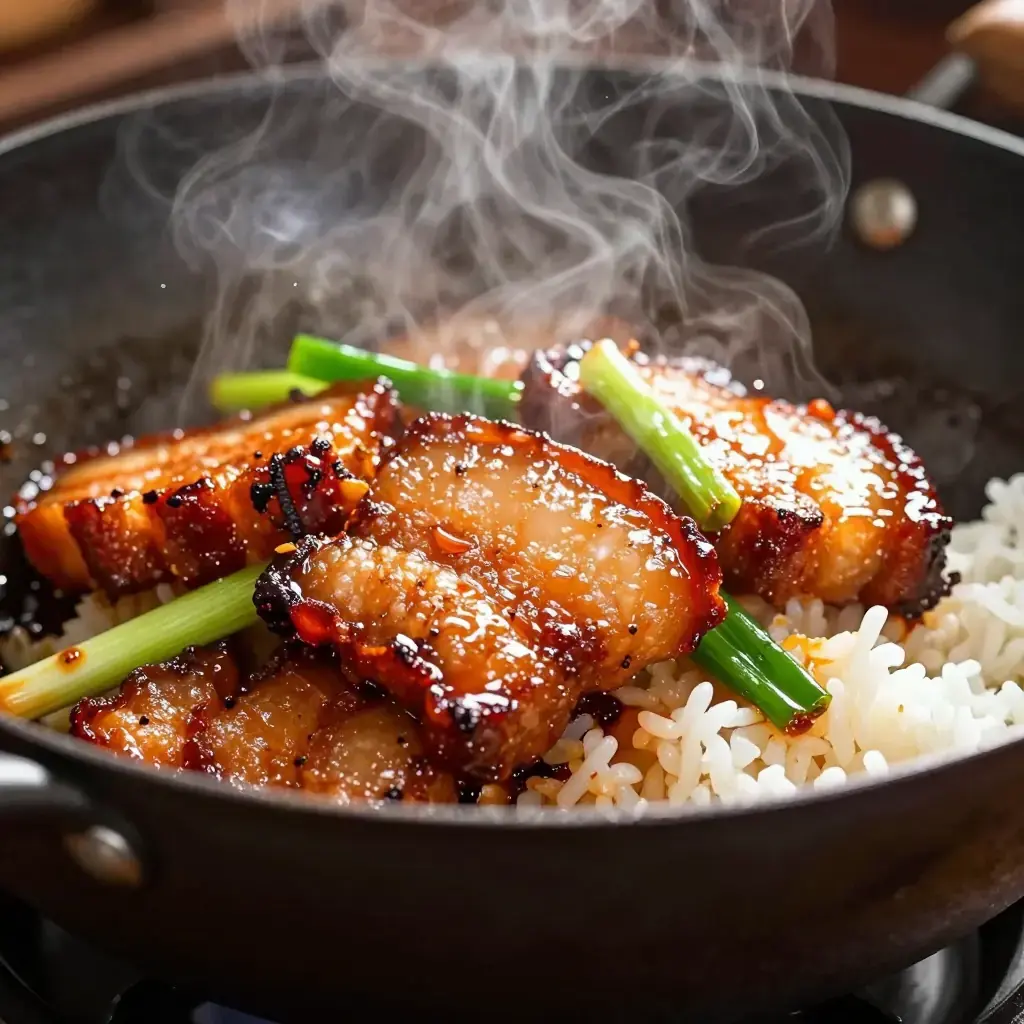
- Add leeks and bell pepper. Stir-fry over high heat for 2–3 minutes until leeks are tender-crisp and slightly charred. Serve immediately with steamed rice.
Cook's Notes: The poaching step can be done a day ahead — the cold pork slices more cleanly. Leeks are traditional but Chinese garlic shoots (suancai miao) are the classic choice when in season.
All Revisions
generated
# Hui Guo Rou Hui Guo Rou — literally 'back-to-the-wok meat' — is one of Sichuan's most beloved home dishes. Pork belly is first poached whole with aromatics, then sliced thin and returned to a blazing wok where it curls and blisters against doubanjiang (fermented chilli bean paste) and the sweetness of green leeks. The result is a harmony of smoke, spice, and umami that defines Sichuanese home cooking. Serves: 4 ## Ingredients - 600g (1.3 lb) skin-on pork belly, in one piece - 3 stalks leek, white and pale green parts, sliced diagonally 4cm (1.5 in) - 1 green bell pepper, cut in 3cm (1 in) pieces - 2 tbsp (30ml) doubanjiang (Pixian fermented chilli bean paste) - 1 tbsp (15ml) sweet bean paste (tianmianjiang) - 1 tbsp (15ml) Shaoxing wine - 1 tsp dark soy sauce - 1 tsp sugar - 2 tbsp (30ml) neutral oil **For poaching:** - 3 slices fresh ginger - 2 scallion stalks - 1 tbsp (15ml) Shaoxing wine ## Instructions 1. Place pork belly in a pot and cover with cold water. Add ginger, scallion, and Shaoxing wine. Bring to a boil, reduce heat, and simmer for 25–30 minutes until just cooked through and a chopstick can be inserted with slight resistance. Remove and cool completely (refrigerate 30 minutes for easier slicing). 2. Slice cooled pork belly crosswise into 3mm (⅛ in) thick pieces. 3. Heat a wok over high heat until smoking. Add oil and pork belly slices in a single layer. Stir-fry 3–4 minutes until edges curl and fat renders slightly, developing light browning. Push to the side. 4. Add doubanjiang to the cleared space. Fry in the pork fat for 1 minute until the oil turns red and fragrant. Add sweet bean paste and fry 30 seconds. 5. Add Shaoxing wine, dark soy sauce, and sugar. Toss everything together to coat the pork. 6. Add leeks and bell pepper. Stir-fry over high heat for 2–3 minutes until leeks are tender-crisp and slightly charred. Serve immediately with steamed rice. **Cook's Notes:** The poaching step can be done a day ahead — the cold pork slices more cleanly. Leeks are traditional but Chinese garlic shoots (suancai miao) are the classic choice when in season.Images
Tags
- authentic
- comfort-food
- dinner
- from-input
- sichuan
- stir-fried