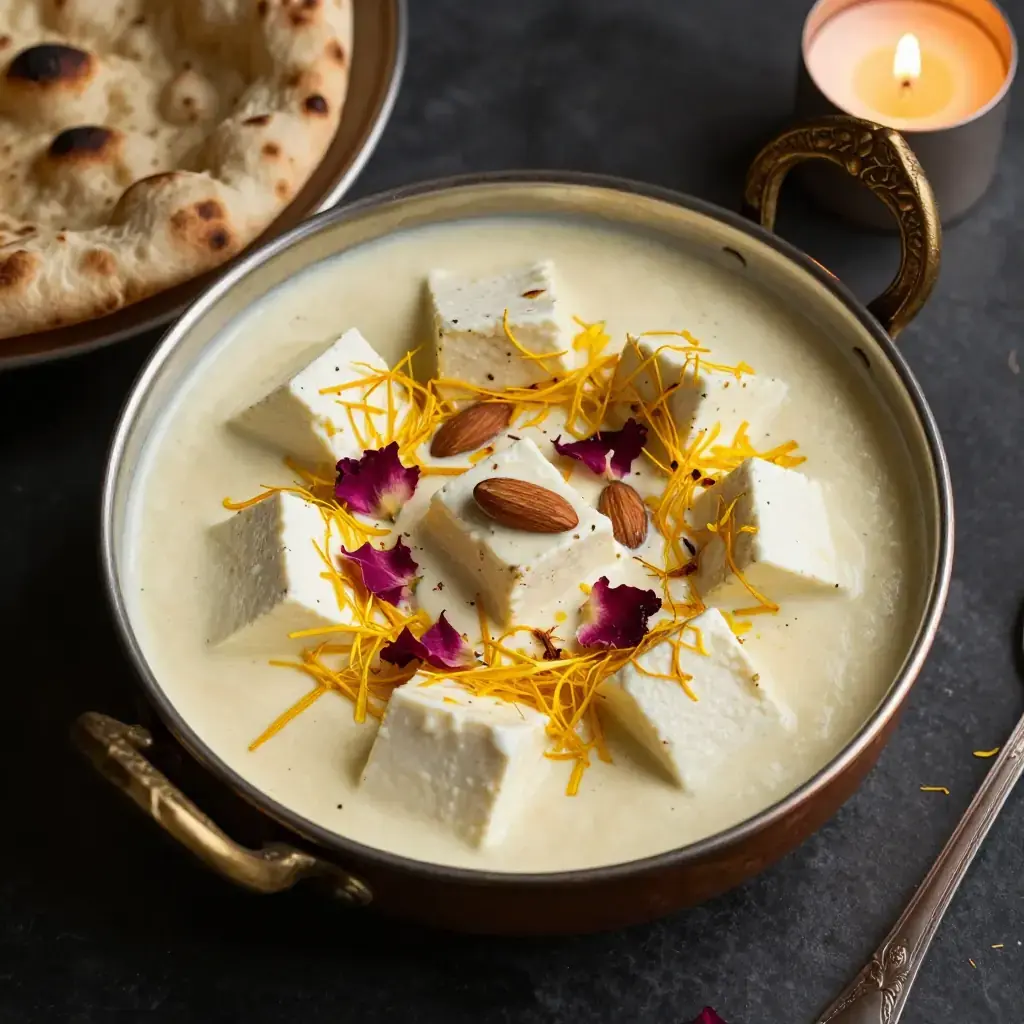
Shahi Paneer
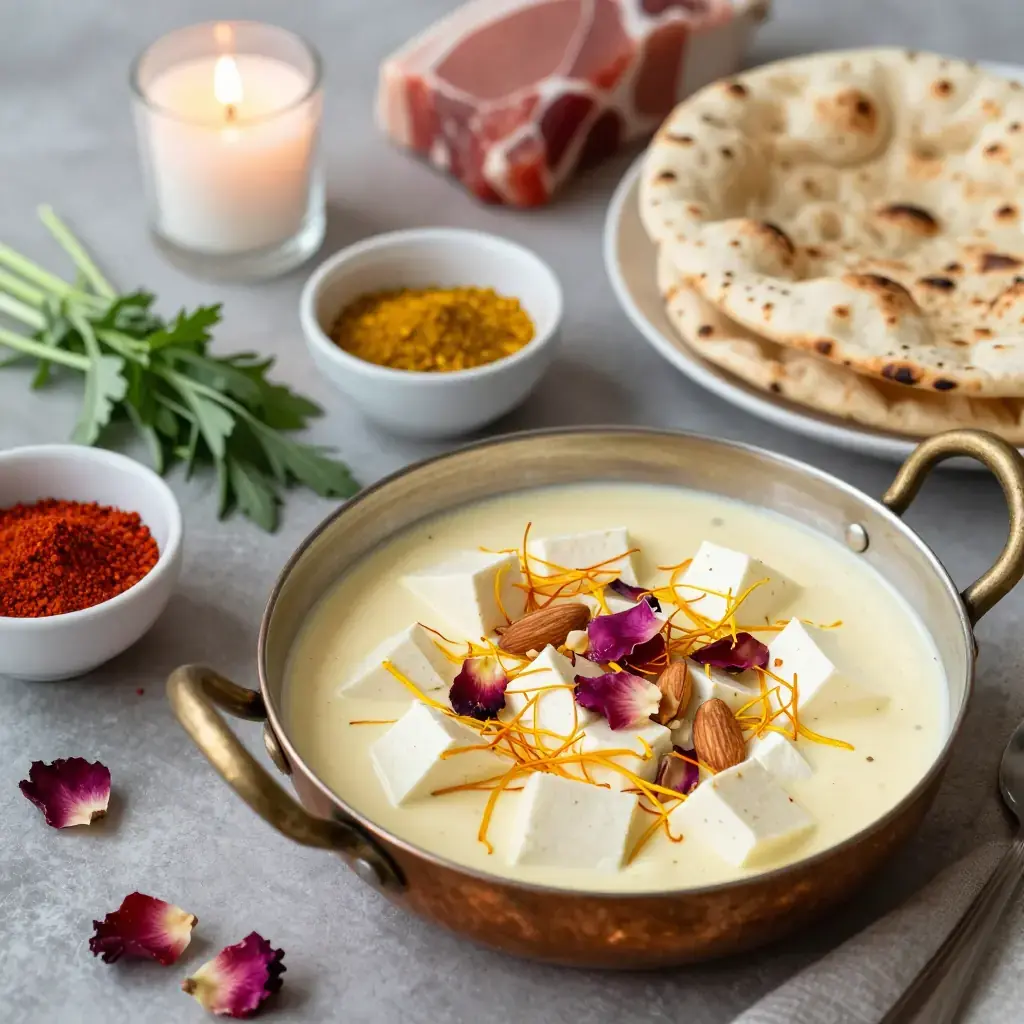
Shahi means "royal" in Persian, and this dish traces its lineage to the Mughal courts of Delhi and Agra, where Persian-influenced cooks combined cashews, cream, and saffron with fresh curd cheese to create banquet dishes of extraordinary richness. Unlike the tomato-forward restaurant versions common today, the authentic shahi version is cream-coloured, mildly perfumed with cardamom and saffron, and leans towards sweet over spiced.
Serves: 4
Ingredients
- 400g (14 oz) paneer, cut into 3 cm (1 in) cubes
- 2 medium onions, roughly chopped
- 50g (1¾ oz) raw cashew nuts
- 2 tbsp (30g) ghee or butter
- 3 green cardamom pods, lightly crushed
- 1 bay leaf
- 1 tsp (5ml) rose water
- 100ml (scant ½ cup) double cream
- 150ml (⅔ cup) full-fat yoghurt, whisked smooth
- 1 tsp (3g) white pepper
- ½ tsp (1g) ground cardamom
- Generous pinch saffron, bloomed in 2 tbsp warm milk
- 1 tsp salt (to taste)
- Toasted slivered almonds and rose petals to garnish
Instructions
- Simmer onions and cashews in 200ml (¾ cup) water for 15 minutes until soft. Cool and blend to a perfectly smooth paste. Pass through a sieve if needed.
- Heat ghee in a heavy pan over medium heat. Add cardamom pods and bay leaf; fry 30 seconds until fragrant.
- Add the onion-cashew paste and cook, stirring constantly, 8–10 minutes until it deepens slightly in colour and the ghee begins to separate at the edges.
- Reduce heat to low. Stir in whisked yoghurt a little at a time, mixing continuously to prevent curdling. Add the bloomed saffron and its milk, white pepper, ground cardamom, and salt.
- Gently fold in paneer cubes and cream. Simmer 5 minutes over low heat. Add rose water at the last moment.
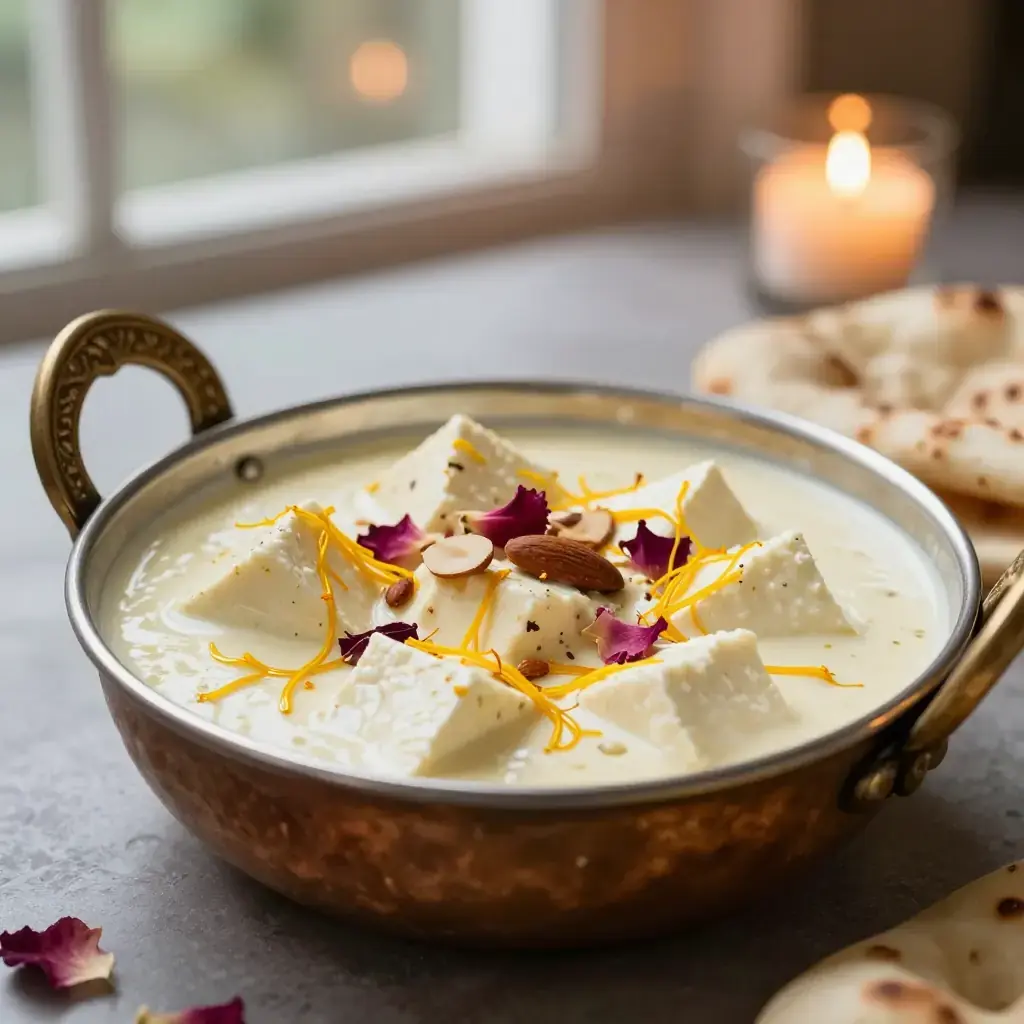
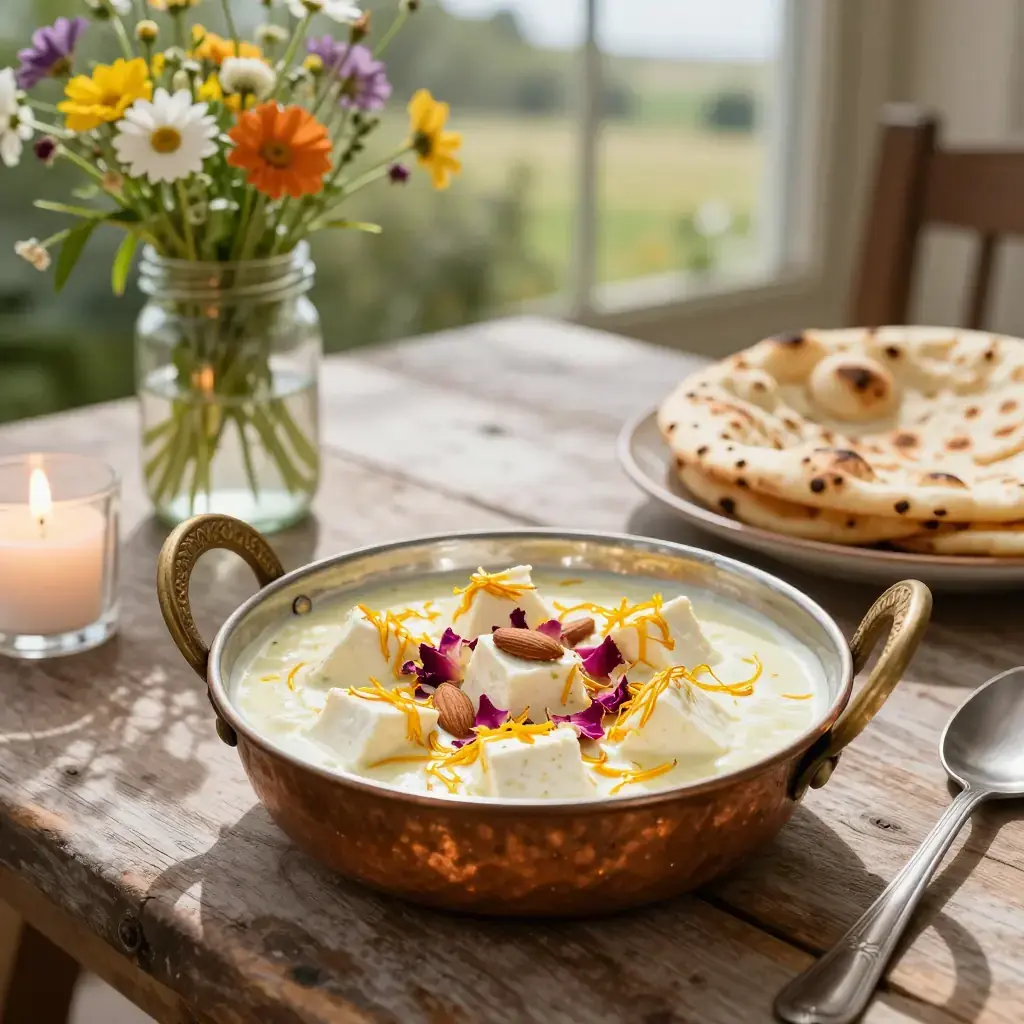
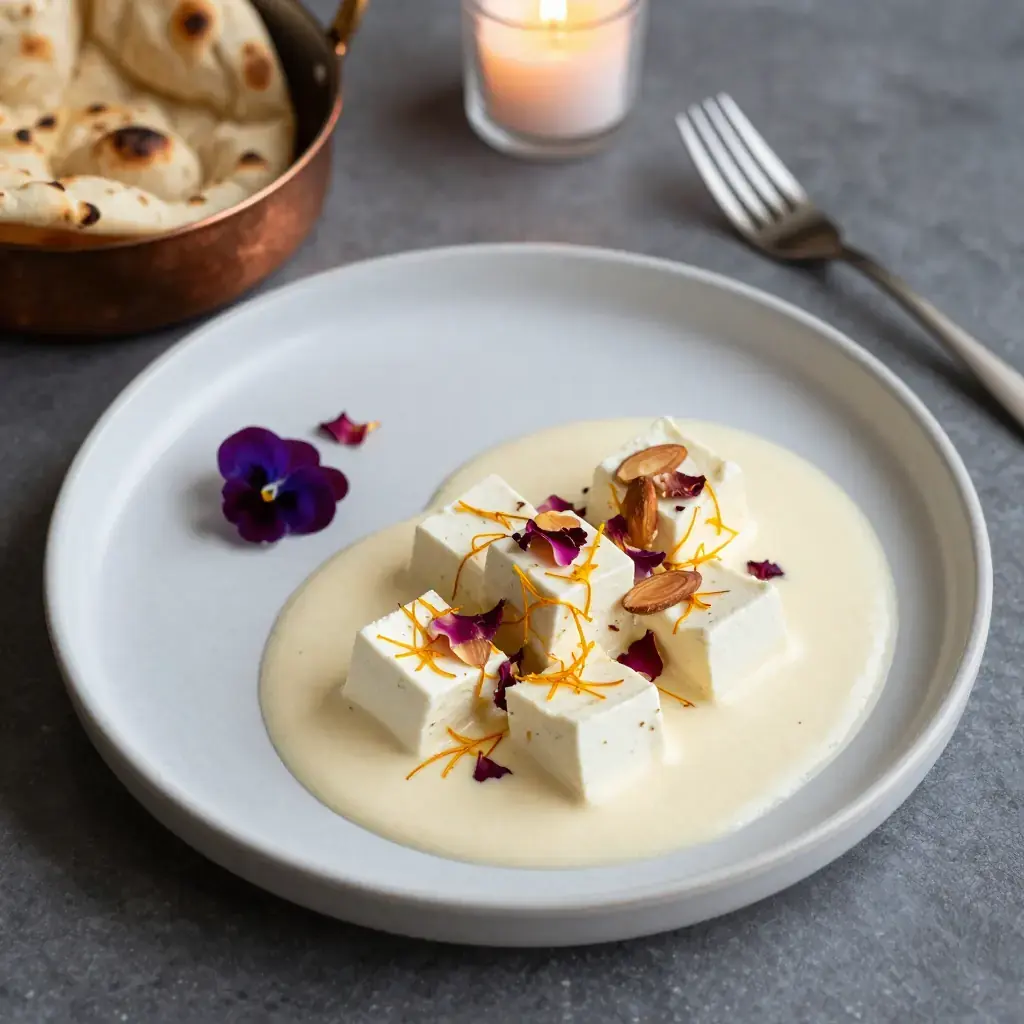
- Serve garnished with slivered almonds and rose petals alongside naan or basmati rice.
Cook's Notes: The sauce must never boil after the yoghurt is added — heat breaks the emulsion. Whisking yoghurt to room temperature before adding helps. Home-made paneer makes a noticeably better dish.
All Revisions
generated
# Shahi Paneer Shahi means "royal" in Persian, and this dish traces its lineage to the Mughal courts of Delhi and Agra, where Persian-influenced cooks combined cashews, cream, and saffron with fresh curd cheese to create banquet dishes of extraordinary richness. Unlike the tomato-forward restaurant versions common today, the authentic shahi version is cream-coloured, mildly perfumed with cardamom and saffron, and leans towards sweet over spiced. Serves: 4 ## Ingredients - 400g (14 oz) paneer, cut into 3 cm (1 in) cubes - 2 medium onions, roughly chopped - 50g (1¾ oz) raw cashew nuts - 2 tbsp (30g) ghee or butter - 3 green cardamom pods, lightly crushed - 1 bay leaf - 1 tsp (5ml) rose water - 100ml (scant ½ cup) double cream - 150ml (⅔ cup) full-fat yoghurt, whisked smooth - 1 tsp (3g) white pepper - ½ tsp (1g) ground cardamom - Generous pinch saffron, bloomed in 2 tbsp warm milk - 1 tsp salt (to taste) - Toasted slivered almonds and rose petals to garnish ## Instructions 1. Simmer onions and cashews in 200ml (¾ cup) water for 15 minutes until soft. Cool and blend to a perfectly smooth paste. Pass through a sieve if needed. 2. Heat ghee in a heavy pan over medium heat. Add cardamom pods and bay leaf; fry 30 seconds until fragrant. 3. Add the onion-cashew paste and cook, stirring constantly, 8–10 minutes until it deepens slightly in colour and the ghee begins to separate at the edges. 4. Reduce heat to low. Stir in whisked yoghurt a little at a time, mixing continuously to prevent curdling. Add the bloomed saffron and its milk, white pepper, ground cardamom, and salt. 5. Gently fold in paneer cubes and cream. Simmer 5 minutes over low heat. Add rose water at the last moment. 6. Serve garnished with slivered almonds and rose petals alongside naan or basmati rice. **Cook's Notes:** The sauce must never boil after the yoghurt is added — heat breaks the emulsion. Whisking yoghurt to room temperature before adding helps. Home-made paneer makes a noticeably better dish.Images
Tags
- dinner-party
- from-input
- gluten-free
- historical
- indian-north
- indulgent
- vegetarian